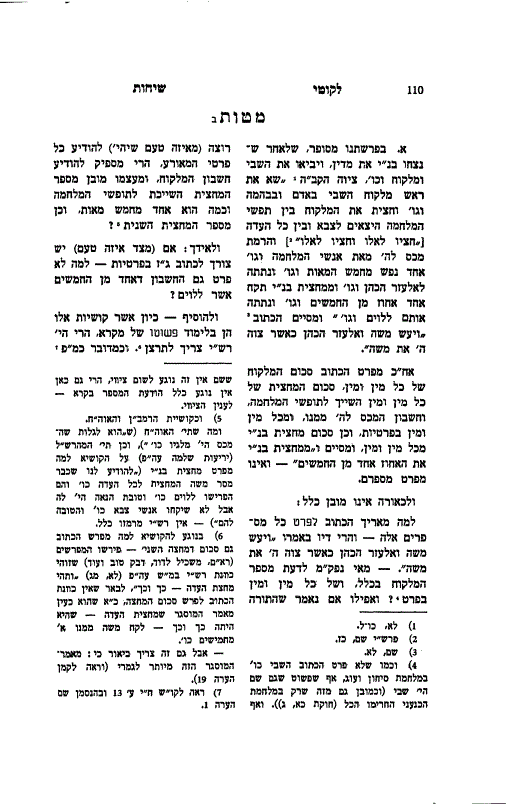
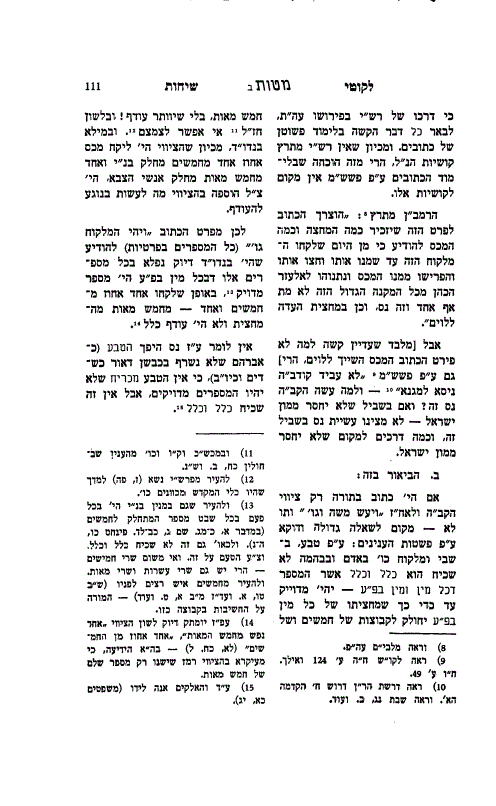
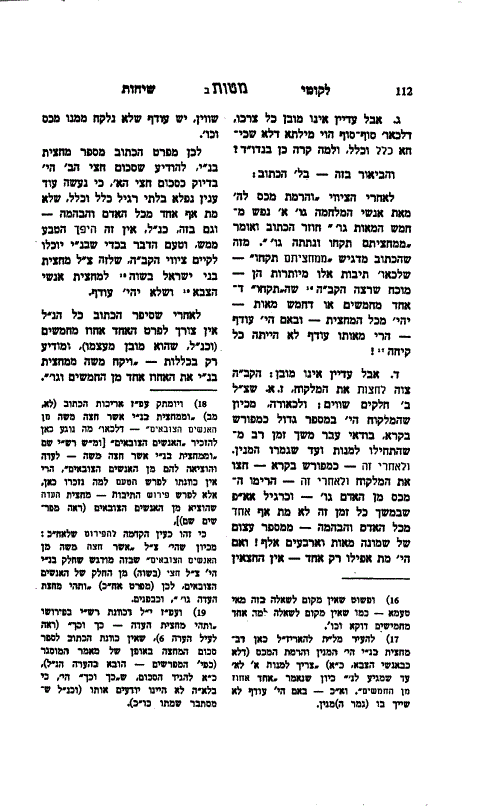
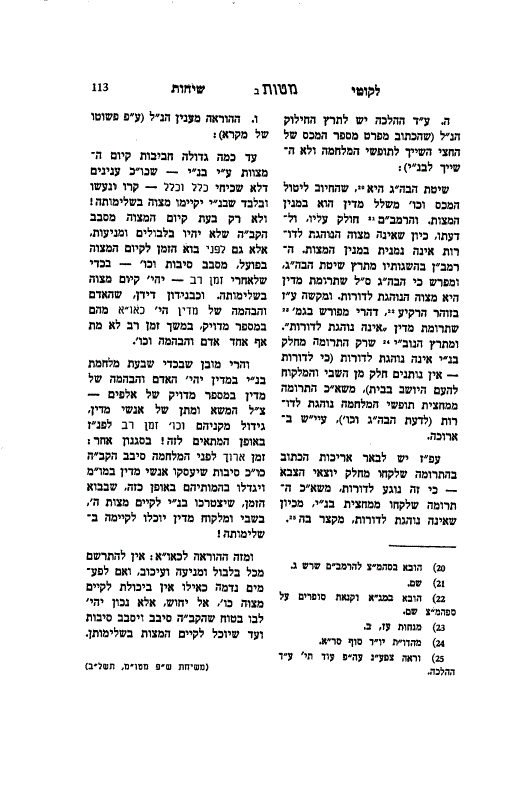
The Torah gives the exact calculation of the spoils to show that the number was divisible by half and by five hundred. The Torah also emphasizes that something completely unusual occurred: throughout the entire time that they counted and divided the spoils, not one of the animals died.
In our parsha, it is related that Hashem commanded the Jewish people to divide the spoils between those who went out to war and the entire congregation. From the portion of the soldiers, one out of every five hundred was to be given to the kohanim, and from the portion of the people, one out of every fifty was to be given to the Leviim.
Afterwards, the Torah details the full count of each type of animal, the count of the half that belonged to those who went to war, the amount of the levy from that portion for Hashem, and the total of the half that belonged to the Jewish people.
This requires explanation: why is it necessary to know the detailed count of each type of animal? And if there is a need for such detail, why does the Torah not mention the amount of the levy that the Jewish people gave to Hashem?
The explanation is: had the Torah only stated Hashem’s command to divide the spoils in half and to give a levy from each portion, there would have been a question about what to do with any remainder that could not be divided equally in half and by five hundred. In such a case, the levy that had to be given from that half would not have been taken from the remainder. After all, it is not at all common for the number of spoils to be divisible exactly in half and also by five hundred. There should therefore have been a specific command regarding the remaining spoils.
For this reason, the Torah gives the exact calculation of the spoils, to show that the number was indeed divisible by five hundred. Only in this way could the command “you shall take from it” be fulfilled properly.
The Torah also details the half that belonged to the Jewish people in order to emphasize something completely unusual: throughout the entire time that they counted and divided the spoils, not one of the animals died. Therefore, both the one out of five hundred and the half belonging to the Jewish people remained exact. After all this, there is no need to specify the number of the one out of fifty that the Jewish people gave, because it is understood on its own.
The lesson is: Hashem arranged many causes, long before the time of the war, so that Midian would have an exact number that could be divided in half and by five hundred. From this a person should learn that Hashem arranges many causes so that he will be able to fulfill a mitzvah.