
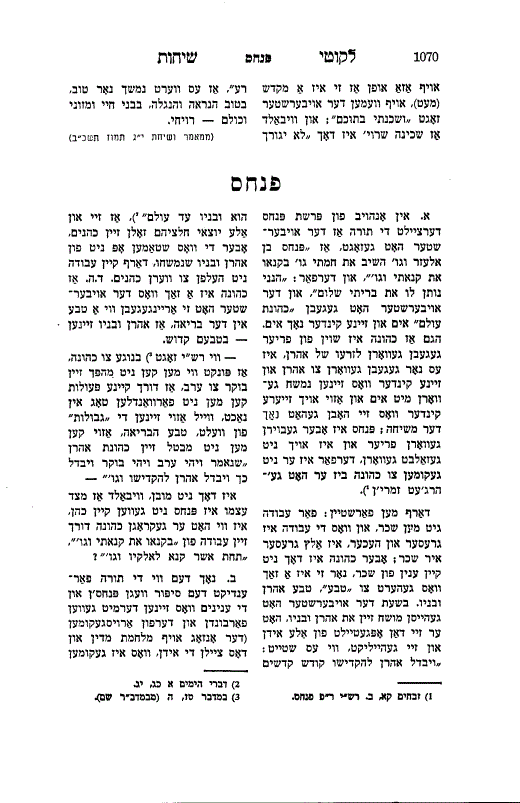
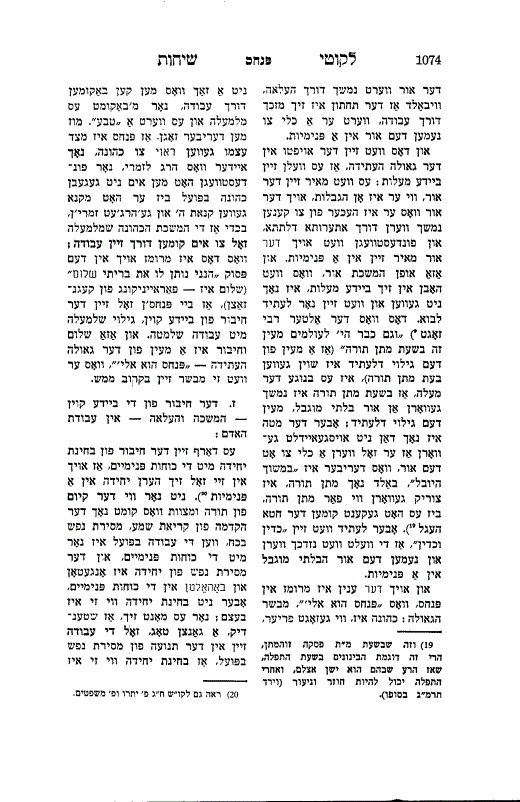
Pinchas' Priesthood—Though He Already Belonged to the Priesthood Before the Episode of Zimri, It Was Revealed Through His Service, So That There Would Be a Union of the Divine Bestowal from Above—Priesthood—and the Elevation from Below—Pinchas' Service.
It is necessary to understand how it is possible that Pinchas merited the priesthood through his service, when priesthood is an inherent status bestowed from Above through inheritance.
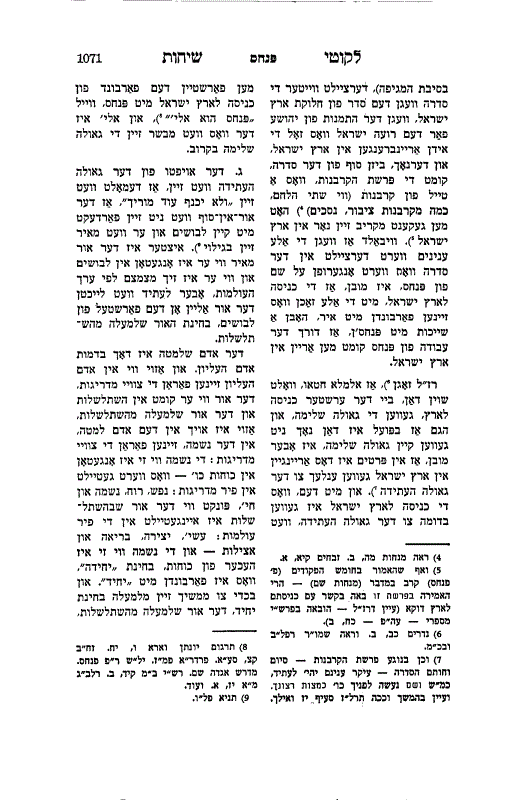
The explanation is as follows: Later in the Torah portion, the discussion turns to the entry into the Land of Israel. Had the Jewish people been worthy, they would have entered the Land immediately and thereby attained the future Redemption.
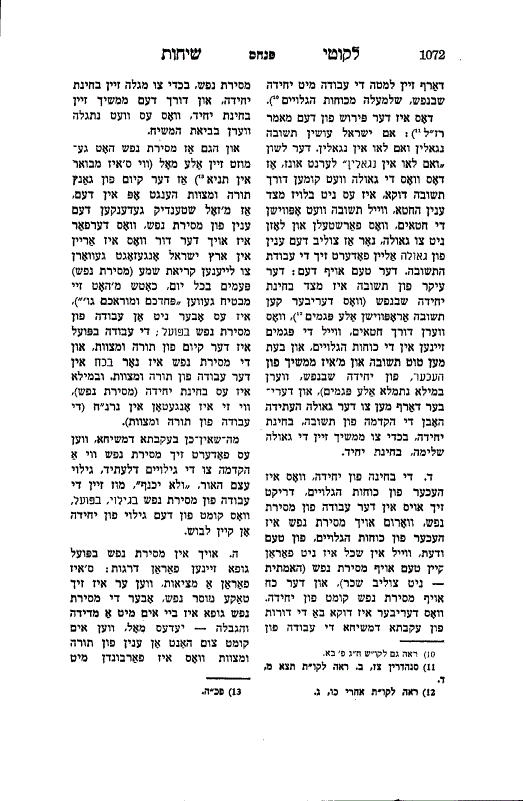
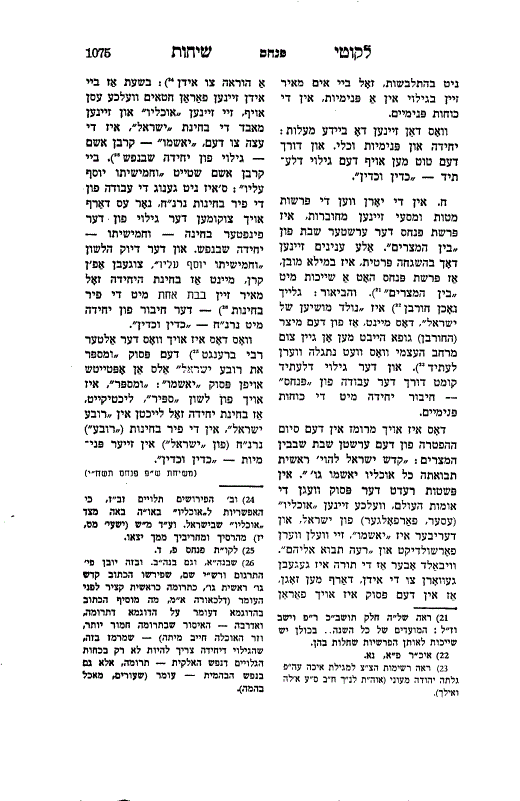
Regarding the future Redemption it is said, "Your Teacher will no longer be concealed"—meaning that the Divine light which transcends the entire order of spiritual progression (hishtalshelut) will be revealed within that very order. In terms of spiritual service, this means that the level of yechidah—the soul's innermost essence—will become manifest within the soul's revealed faculties.
This was the nature of Pinchas' self-sacrifice. He did not stop to consult the Shulchan Aruch, for this was a case of "the law exists, but it is not taught as practical instruction." His self-sacrifice transcended calculation and rational deliberation.
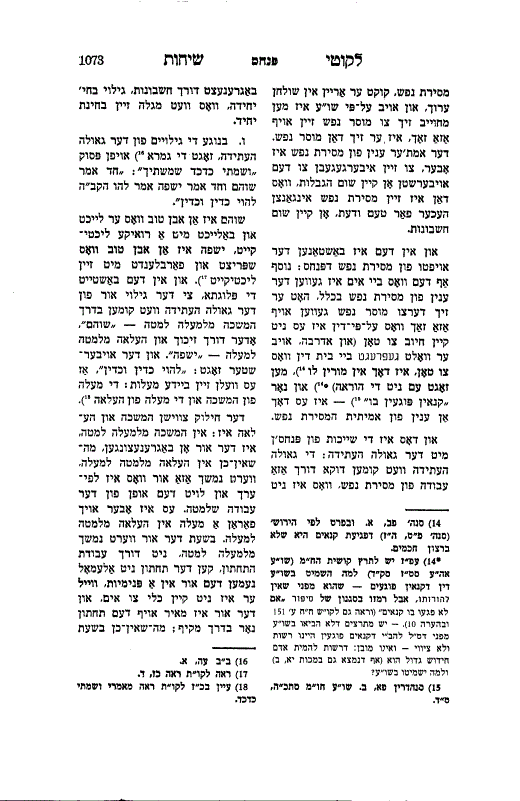
In the future, there will be the state described as "both this and this" (lehavoi k'dein u'k'dein): the union of the Divine flow from Above—which is infinite—with the elevation from below, through which that Divine flow is internalized.
This is why Pinchas' priesthood—which in truth already belonged to him even before the episode of Zimri—was revealed specifically through his service. In this way, there was a union between the Divine bestowal from Above—the priesthood—and the elevation from below through the devoted service of Pinchas.