
Likkutei Sichos Chelek Beis – Beha'alosecha
Introduction
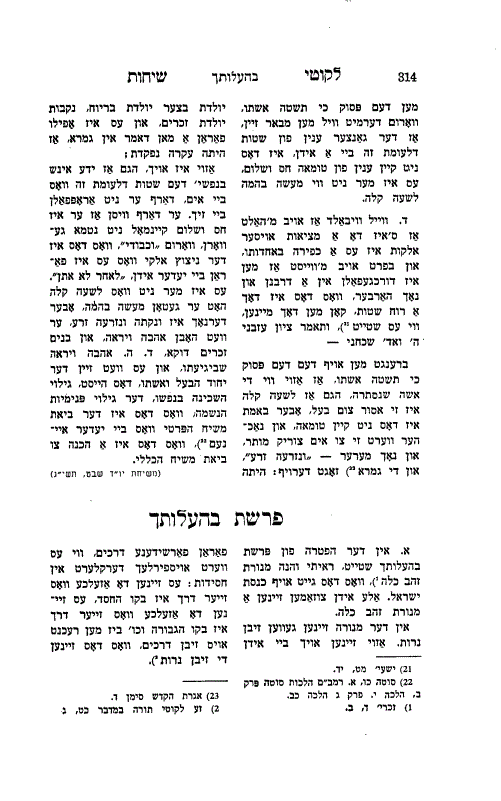
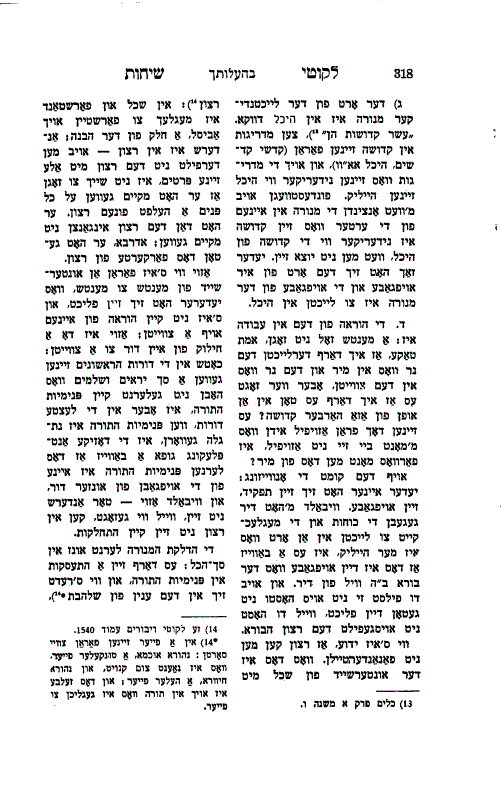
This sicha, from Likkutei Sichos Volume 2 on Parshas Beha'alosecha (page 314), explores the deeper meaning of the menorah and its branches as a metaphor for the Jewish people. The Rebbe discusses how, although there are multiple approaches to bringing another Jew closer to Hashem, the most effective and preferred method is through love (ahavah) and kindness (chesed). This approach was exemplified by the Chabad Rebbes and especially by Aharon, the Kohen Gadol, who kindled the menorah in the Beis Hamikdash.
The sicha draws from the haftorah of Parshas Beha'alosecha, which describes a vision of a golden menorah. The menorah represents all of Israel united, yet with seven distinct branches—seven different spiritual paths or approaches among Jews. Despite these differences, all are united in their purpose: to bring light into the world.
The Rebbe will analyze how each Jew serves Hashem according to their unique talents and inclinations—some through chesed (kindness), others through gevurah (stringency)—but ultimately, all are meant to illuminate the world. The Rebbe will emphasize that while every path is valid, the path of kindness is superior both as a goal and as a means. This was not only Aharon's way but also that of all Chabad leaders, who sought to ignite every Jewish soul with revealed love and pleasantness.
Saif Aleph
The haftorah for Parshas Beha'alosecha describes a vision: “ra'isi vihinni minoidas zohav kula”—“I saw and behold there was an entirely golden menorah.” This menorah symbolizes Knesses Yisroel—the collective Jewish people. All Jews together form one unified golden menorah. However, within this menorah there are seven branches or lamps, representing seven distinct spiritual pathways among Jews.
Chassidus explains that these seven branches correspond to seven different approaches in serving Hashem. Some Jews serve primarily through chesed—kindness—while others serve through gevurah—stringency or discipline—and so on for all seven types. Each branch is a unique passageway in avodah (service), yet all are part of one menorah.
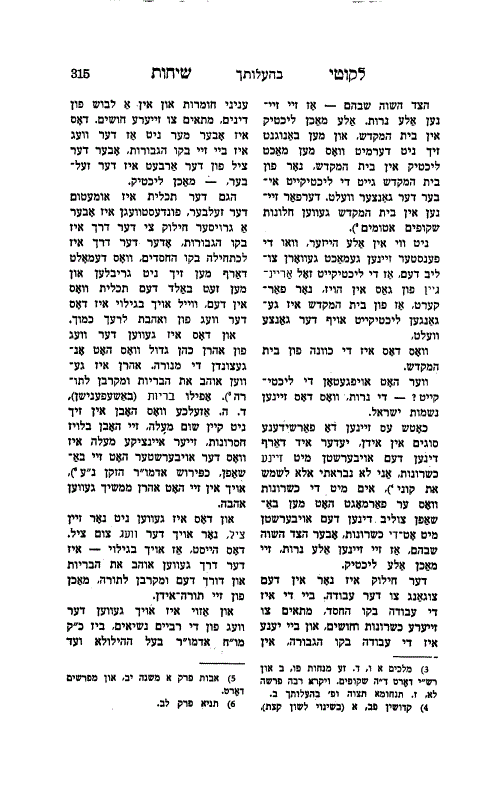
Despite these differences in approach, what unites them is that they are all “neriz”—lamps. All bring light into the Beis Hamikdash (Holy Temple). But we are not satisfied with merely illuminating the Temple itself; rather, from the Beis Hamikdash this light spreads out into the entire world.
This outward illumination is reflected architecturally: in the Beis Hamikdash there were special windows called “shkufim atumim,” as described in Melachim Aleph (Kings I) 6:4:
שְׁקוּפִים אֲטוּמִים
“Windows broad within and narrow without.”
Unlike ordinary homes where windows are designed to let outside light in, these windows were constructed so that light from inside would shine outward. This design expresses the purpose of the Beis Hamikdash—to radiate holiness and G‑dliness into the world beyond its walls.
Saif Beis
Who creates this light that spreads from the Beis Hamikdash? It is generated by “the lamps,” which represent Jewish souls. Although there are various types of Jews—each with unique talents and inclinations—every Jew must serve Hashem using their individual strengths. As our sages teach: “I was not created except to serve my Creator.”
This means that whatever abilities or talents a person possesses were given for one purpose—to serve Hashem. Each person must use their own kishronos (talents) in avodah. The difference between people lies only in their approach: some serve primarily through chesed (kindness), which fits their nature and strengths; others serve through gevurah (discipline or judgment), which suits their own abilities.
However, this distinction is only about the path taken—the kav (direction) of service—not about its ultimate goal. The purpose remains identical for everyone: to bring light into the world.
Saif Gimmel
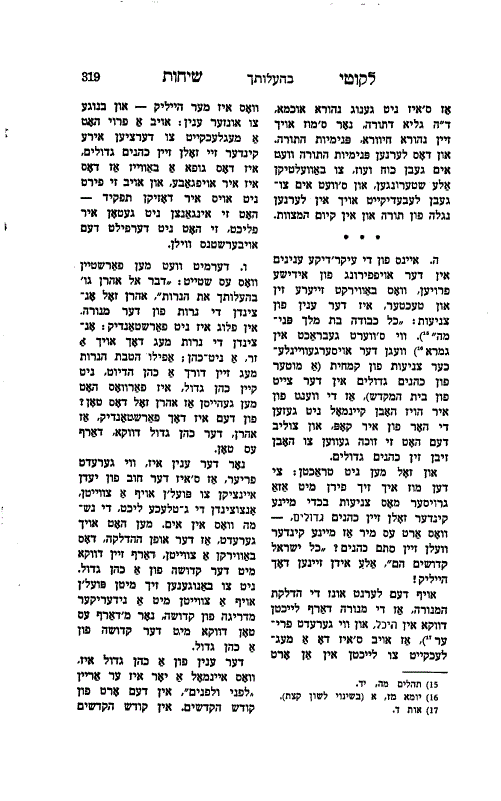
The Rebbe now addresses why it matters which path one takes if all ultimately bring light. While both chesed and gevurah can be valid approaches, there is still an important difference between them.
If someone’s avodah begins with kindness—from its very outset—it has an advantage over an approach rooted in stringency or discipline. When one’s service starts with chesed, there’s no need for deep introspection or effort to uncover hidden love or positivity—it is immediately apparent and revealed.
This open approach aligns directly with “ve’ahavta l’re’acha kamocha”—“love your fellow as yourself.” The path itself is loving and positive from beginning to end—not just as a hidden motivation but as an explicit method.
Saif Daled
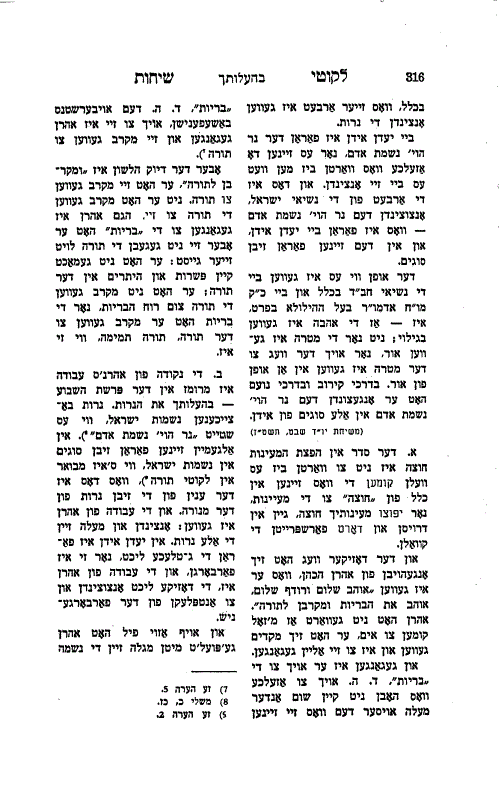
This was precisely Aharon’s way—the Kohen Gadol who lit the menorah in the Temple. Aharon was known for his love of all creatures (“ohev es habriyos”) and his efforts to draw them close to Torah (“m’karvan laTorah”). Even those referred to simply as ‘briyos’—‘creatures’—a term used when someone has no apparent merit except being created by Hashem—Aharon loved them too.
The Alter Rebbe explains that even those whose only virtue is that they were created by Hashem deserve love. Aharon extended his love even to such individuals—not only as a goal but also as his method for drawing them close.
This means that both his objective (to bring people near) and his approach (through revealed love) were aligned with kindness from start to finish.
Saif Hei
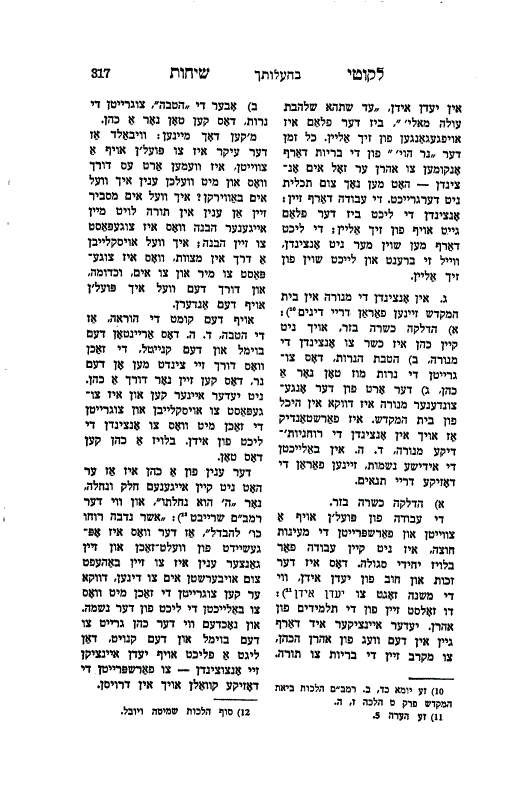
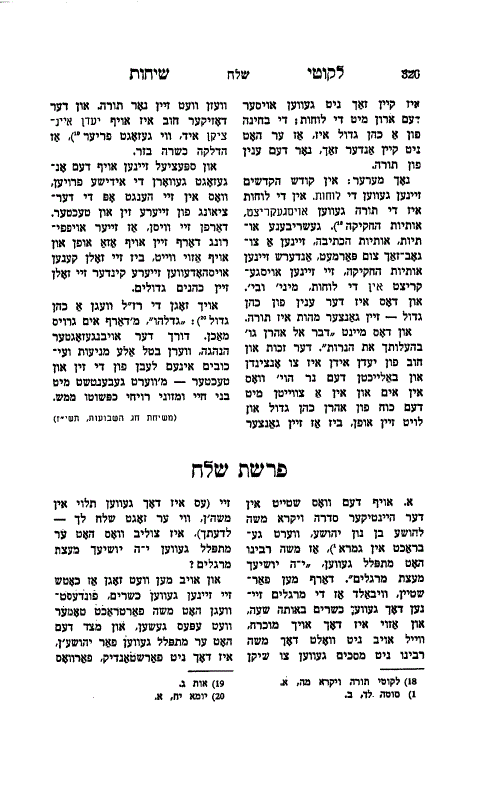
This same approach characterized our Rebbes—the Nesi’im of Chabad—including especially my father-in-law, the previous Rebbe (the Frierdiker Rebbe). Their work was always about igniting ‘the lamp of Hashem’, which is ‘the soul of man’, within every Jew regardless of background or type.
Every Jew possesses this divine lamp within—the neshama—but some wait until someone else comes along to kindle it for them. The task of Nesi’im Yisrael—the leaders of Israel—is precisely this: to ignite each Jew’s inner lamp so it shines brightly.
Saif Vov
The way this was done by our leaders—and especially by my father-in-law—was always openly loving (‘b’giluy’) and positive (‘b’darkei kiruv’, ways of bringing close). Not only was their goal illumination (‘ohr’) but even their methods were filled with light—with pleasantness (‘b’darkei noam’, ways of pleasantness).
Their outreach encompassed every category of Jew—all seven types corresponding to all branches of spiritual temperament—and always sought to awaken each person’s inner divine spark through warmth and closeness rather than harshness or distance.
Key Points
- The menorah described in Zechariah’s vision represents Knesses Yisroel—all Jews united as one entity yet expressing themselves through seven distinct spiritual paths corresponding to its branches.
- Each Jew must serve Hashem using their unique talents and inclinations—some via chesed (kindness), others via gevurah (discipline)—but all share a common purpose: bringing divine light into themselves, their surroundings, and ultimately illuminating the entire world beyond themselves.
- The architectural design of the Beis Hamikdash—with windows built so inner light shines outward—teaches us that holiness must radiate outwards rather than remain self-contained or inward-focused.
- Aharon HaKohen exemplified serving others through revealed love—even toward those whose only merit was being created by Hashem—and drew them close not just as an end goal but also through loving means from start to finish.
- This approach was adopted by all Chabad Nesi’im—including especially my father-in-law—who kindled every Jew’s soul using methods filled with warmth, pleasantness, and kiruv rather than harsh judgment or distance.
- The most effective way to inspire another Jew towards Torah observance is not merely by focusing on lofty goals but also by ensuring that every step along the way is suffused with genuine ahavas Yisroel—love for fellow Jews—and acts of kindness at every stage.