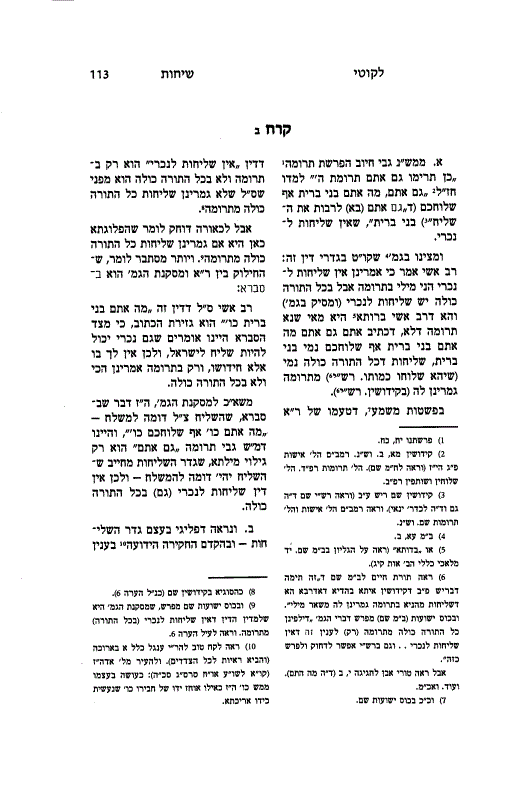
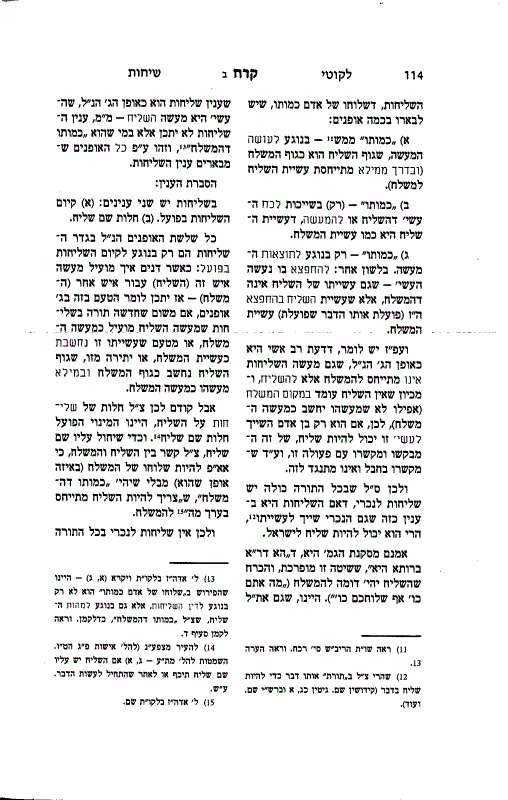
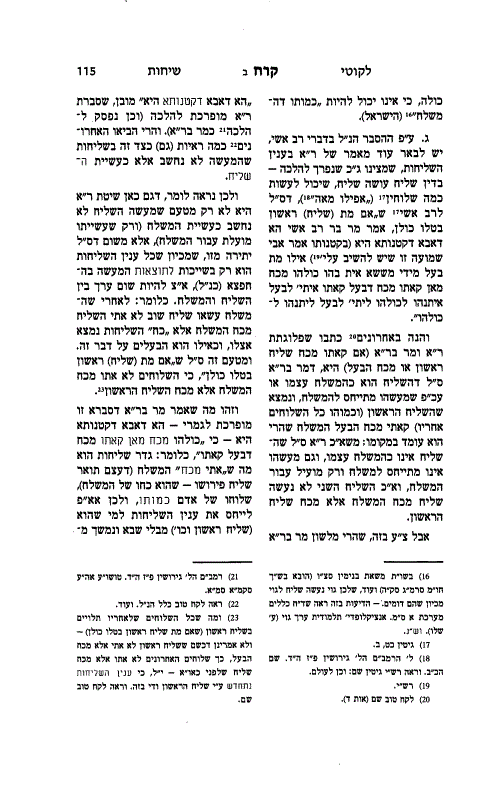
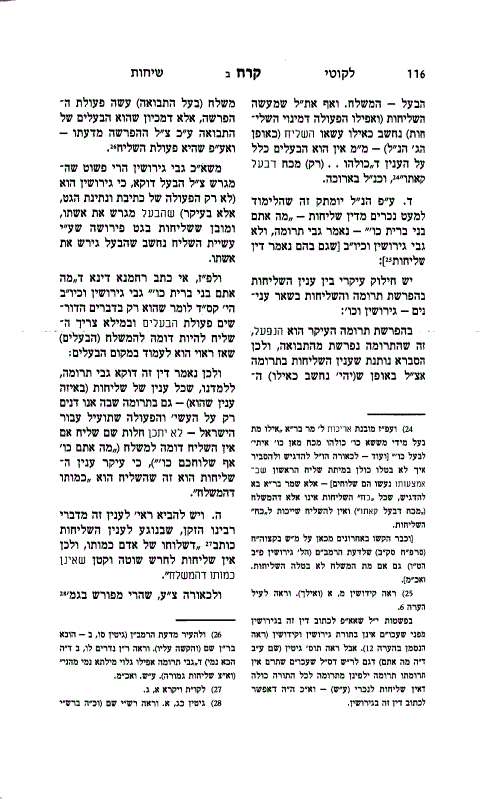
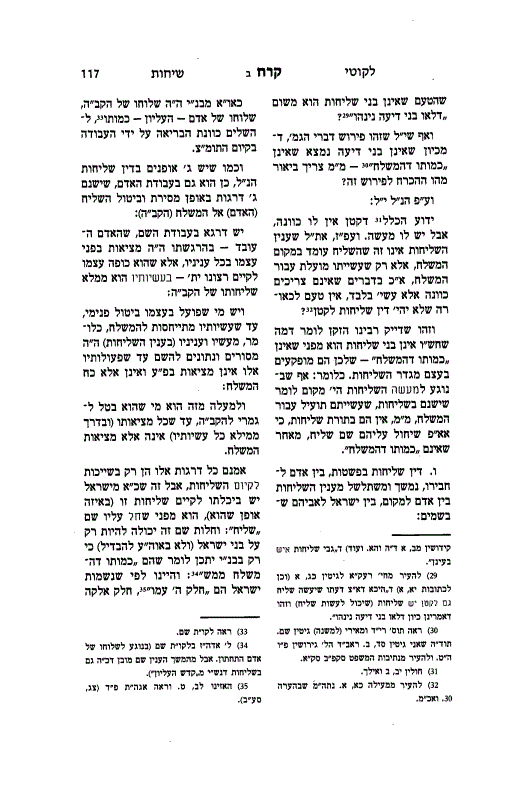
Regarding the laws of agency (shlichus), the Gemara entertains a possibility cited in the name of Rav Ashi that the rule excluding a non-Jew from serving as an agent—derived from the verse, “Just as you are members of the covenant, so too must your agents be members of the covenant”—applies only to terumah and not to the rest of the Torah. The Gemara, however, concludes: “Rav Ashi’s view is nonsense (bedusa).”
To understand Rav Ashi’s reasoning, we must first explain three levels of agency:
- The agent stands in place of the sender.
- Only the power of action (or the action itself) is attributed to the sender.
- The agency relates only to the object involved; the result is viewed as though the sender acted upon the object.
One may suggest that Rav Ashi understood agency according to the third model. Therefore, he maintained that a non-Jew could serve as an agent throughout the Torah. Although the non-Jew is not similar to the sender and is not personally identified with him, he can nevertheless produce the desired effect in the object.
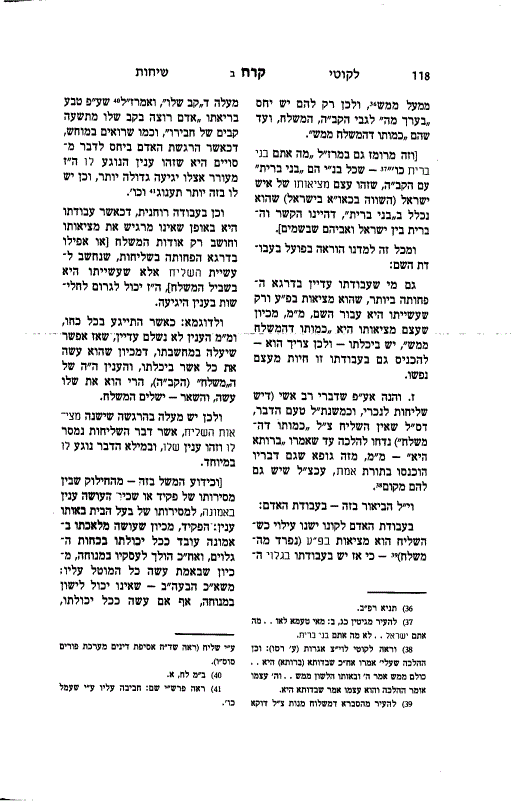
However, the Gemara concludes that “Rav Ashi’s view is nonsense,” because even according to the third model, the action performed upon the object can be considered the sender’s action only if the agent truly qualifies as an agent—that is, only if he bears a relationship and similarity to the sender. Therefore, the final conclusion is that a non-Jew cannot serve as an agent anywhere in the Torah.
The same approach can explain Rav Ashi’s opinion regarding a secondary agent (shaliach oseh shaliach). Rav Ashi maintained that if the first agent dies, all subsequent agents appointed through him lose their authority. His reasoning is that even though the sender still exists, the later agents do not relate directly to the sender. Once the first agent is no longer present, the chain connecting the later agents to the sender is broken. This follows his understanding of the third model of agency.
Mar bar Rav Ashi disagreed and stated:
“What my father said was from his youth. All of them derive their authority from the owner. When the authority comes from the owner, it reaches all of them.”
According to this view, even in the third model, agency is valid only because each agent ultimately derives his authority from the sender himself. Therefore, all agents remain connected to the original sender.
The entire concept of sender and agent has its spiritual source in the relationship between G‑d and the Jewish people.
In the service of a Jew there are likewise three levels:
- A person’s entire existence is nullified to G‑d, and his very identity is attributed to Him.
- Only his actions are attributed to G‑d.
- He remains an independent entity, but performs actions upon the world on G‑d’s behalf.
One must realize that the ability to serve as G‑d’s agent—in any of these forms—is possible only because every Jew possesses a Divine soul, a spark of G‑dliness that connects him to G‑d.
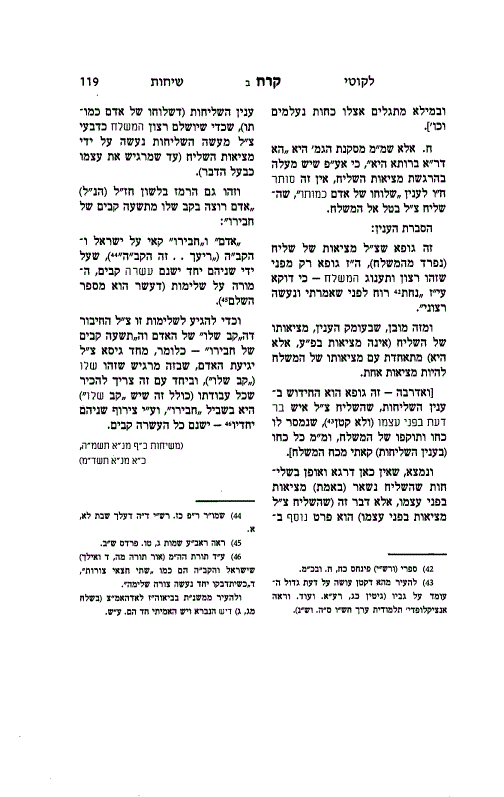
Rav Ashi’s initial assumption was that agency could exist even when a person remains an independent entity. In fact, there is an advantage to this: when a person feels that the mission is “his own measure of grain” (kav shelo), he approaches his work like a business owner rather than like a hired laborer.
Yet this idea is ultimately rejected as “nonsense.” Even when a person feels personal ownership and involvement in his mission, that feeling must exist solely because it is G‑d’s will.
This is alluded to in the Gemara’s statement:
“A person prefers one kav of his own to nine kavim belonging to someone else.”
However, the goal is that all ten kavim belong to “his Friend”—to G‑d. The person must first be completely devoted and nullified to G‑d, symbolized by the ten kavim of the other. Only because this is G‑d’s will does he also possess “his own kav”—the feeling that the mission is connected to his own personality and existence.