
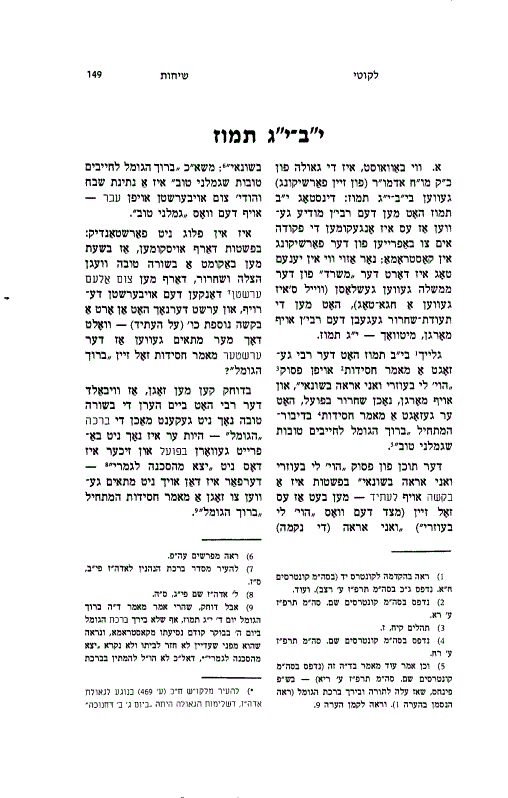
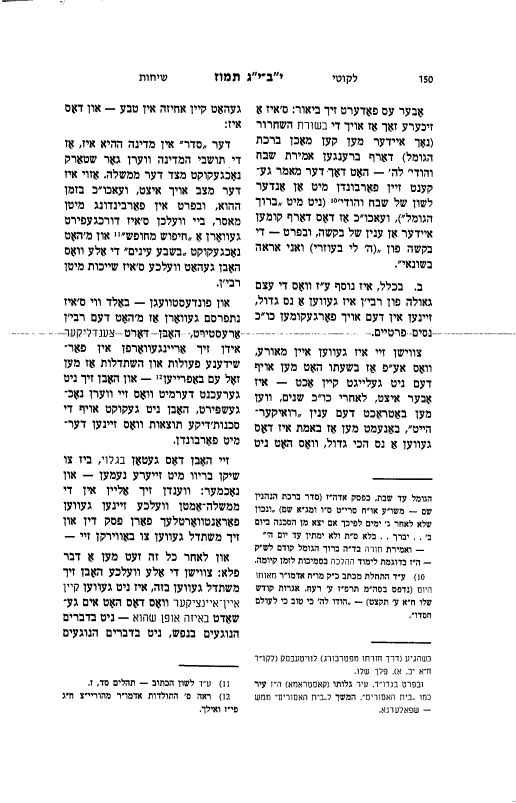
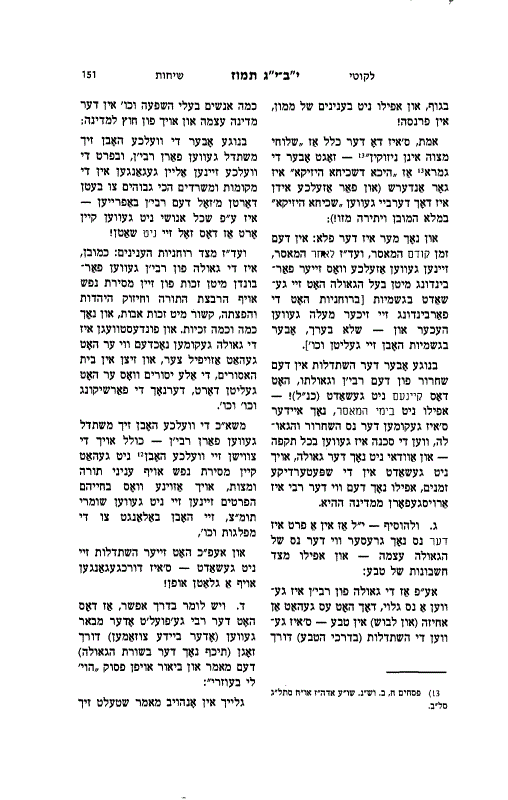
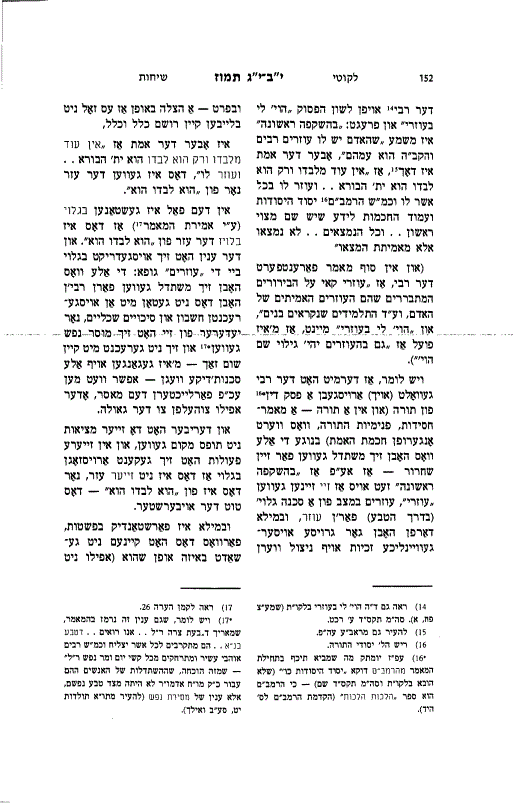
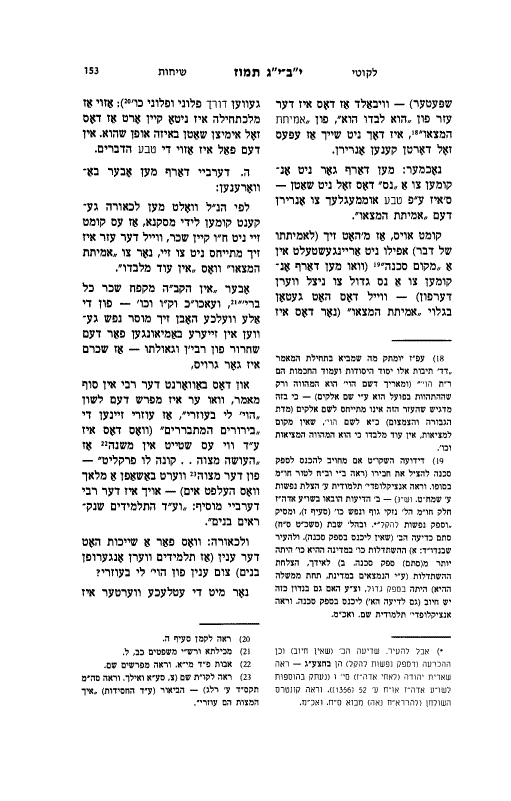
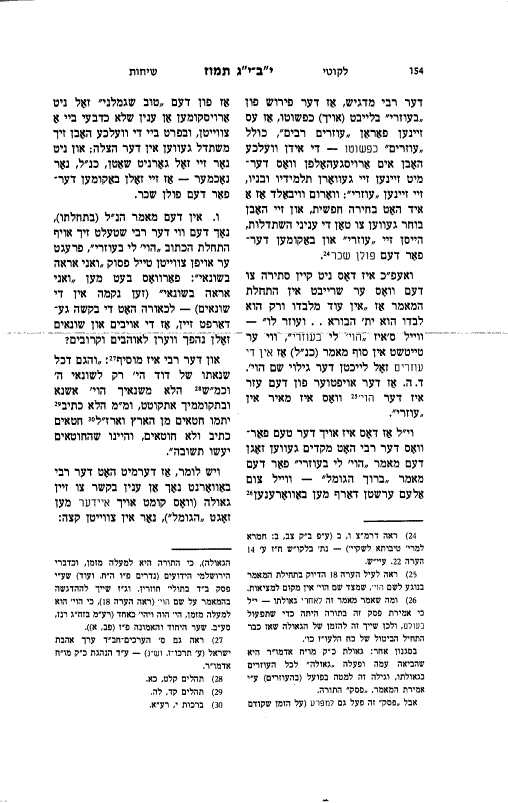
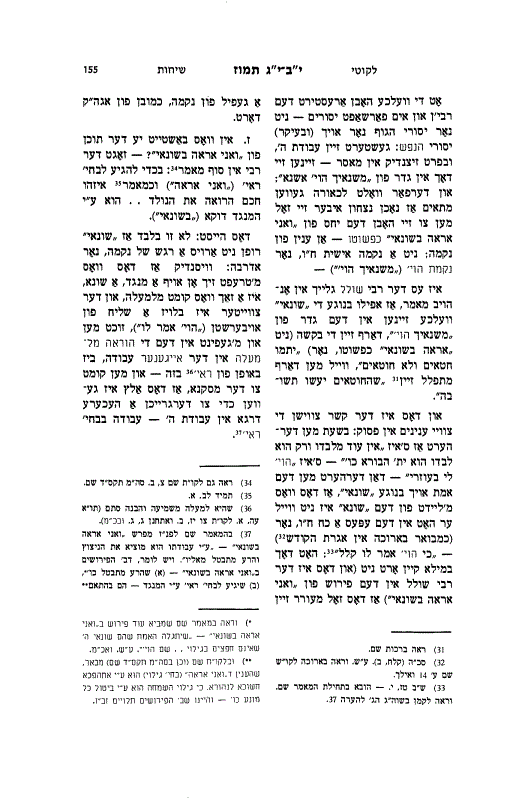
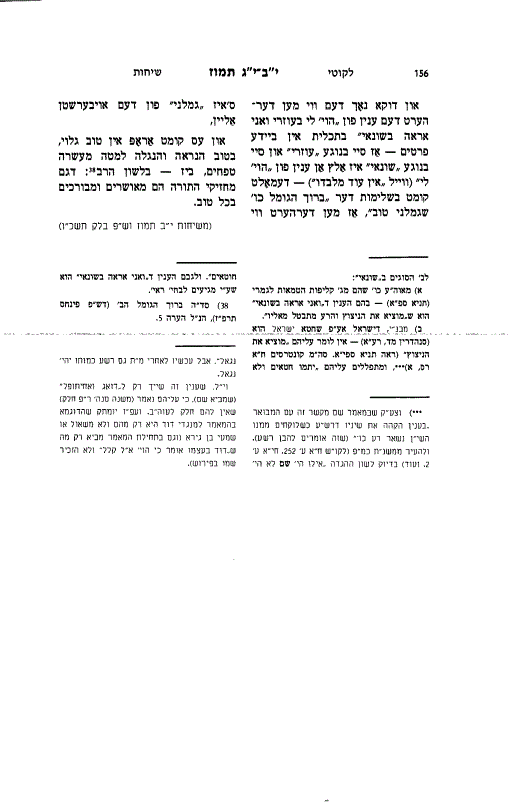
The Previous Rebbe related that contemplating the Baal Shem Tov’s teaching on Divine Providence, as explained in the maamarim of Rosh Hashanah 5687 (1927), gave him the strength to withstand the suffering of imprisonment.
This requires explanation.
All opinions agree that there is Divine Providence over human beings, and certainly over a righteous person and leader of Israel. If so, why was it specifically the Baal Shem Tov’s approach to Divine Providence that enabled him to endure the hardships of prison?
The explanation can be understood by first considering the unique approach of the Previous Rebbe.
Unlike Rabbi Akiva, who longed for the opportunity to fulfill the ultimate act of self-sacrifice, the Previous Rebbe did not seek mesirus nefesh. Rather, he simply carried out his mission. If self-sacrifice became necessary in order to fulfill that mission, he was prepared to give his life. His entire existence was devoted to fulfilling the Divine will.
Therefore, when he was imprisoned and unable to spread Torah and Judaism, he suffered greatly. Even though the imprisonment itself was clearly under Divine Providence, and therefore reflected Hashem’s will at that moment, he nevertheless experienced pain because his work of strengthening Judaism had been interrupted.
This can be compared to the difference between an employee and the owner of a business. An employee completes his assigned task and then goes home. The owner, however, continues thinking about the business even after doing everything possible, because the business is personally significant to him.
Similarly, the fulfillment of the Divine purpose mattered to the Previous Rebbe in the deepest way. Therefore, even though the principle of “Ones Rachmana patrei”—that one who is prevented by circumstances beyond his control is exempt—certainly applied, he still felt anguish that the work itself was not being accomplished.
Now, it is true that the imprisonment and subsequent liberation ultimately led to tremendous growth in the dissemination of Torah and Judaism, eventually affecting the entire world.
Nevertheless, the imprisonment itself was comparable to tzimtzum—concealment and restriction. The concealment itself appears contrary to the desired revelation, even though its ultimate purpose is to make a greater revelation possible.
Here lies the unique significance of the Baal Shem Tov’s teaching.
According to other approaches to Divine Providence, Hashem directly supervises human beings and also the animal, plant, and mineral realms insofar as they relate to human needs. Their significance is secondary to humanity.
According to the Baal Shem Tov, however, Divine Providence extends to every individual detail of the mineral, plant, and animal kingdoms in its own right. Every detail exists because it contributes directly to the fulfillment of the Divine purpose in creation.
The Providence is not merely because these things serve mankind; each detail has its own role in accomplishing Hashem’s intention.
Accordingly, the imprisonment itself was not merely a means to a future good. The imprisonment itself fulfilled the Divine purpose.
This was demonstrated by the fact that the imprisonment immediately awakened extraordinary self-sacrifice among the Jewish people, especially among those connected to the Previous Rebbe.
Even more significantly, the Rebbe refused to regard his opponents as possessing any independent reality. In his eyes they were:
“As nothing and absolute nonexistence.”
As a result, even within the prison itself there was a revelation of the truth that:
“There is nothing besides Him.”
The imprisonment itself became a vehicle for the revelation of G‑dliness.
The Lesson
A Jew must know that:
“The body follows the head.”
Since the world is directed by Divine Providence, nothing can ultimately prevent the mission of spreading Torah and Judaism.
At the same time, if a person finds himself in a situation where he is temporarily unable to engage in his desired work of spreading Torah and Yiddishkeit, he should remember the teaching:
“If you labor, you will find.”
He should contemplate that his present situation is also guided by Divine Providence.
Through such reflection, he will discover that even in that very circumstance there is a unique opportunity to reveal G‑dliness in the world and to contribute to the fulfillment of the Divine purpose.