
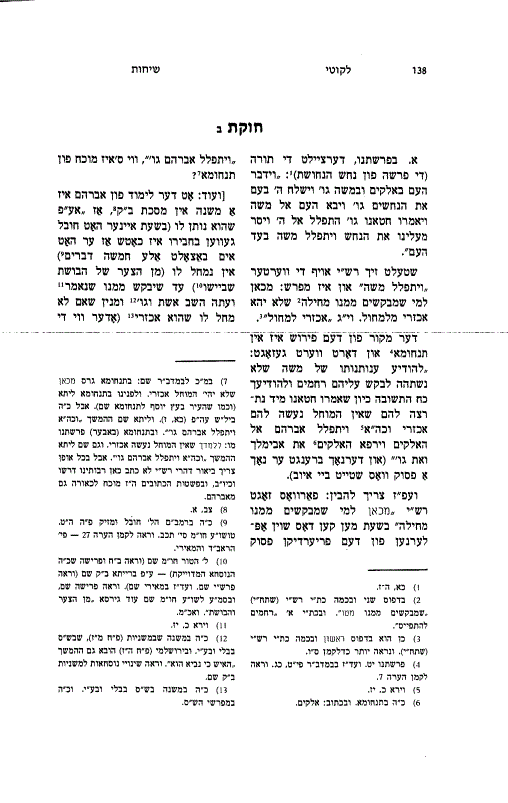
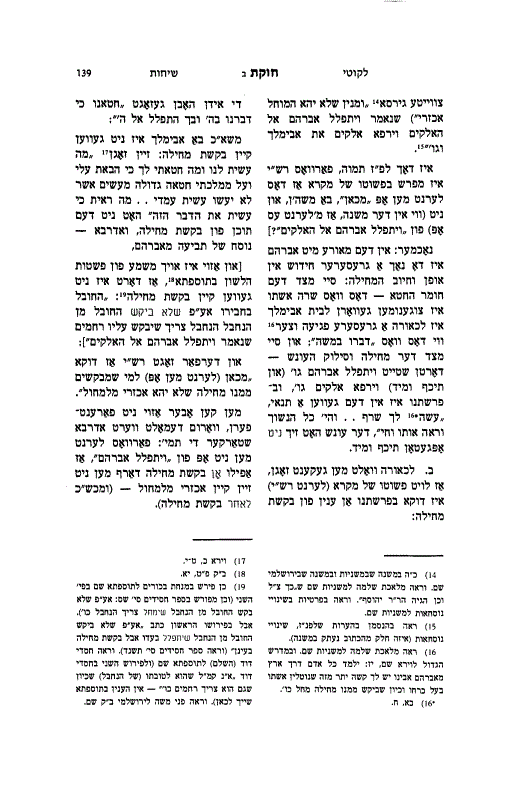
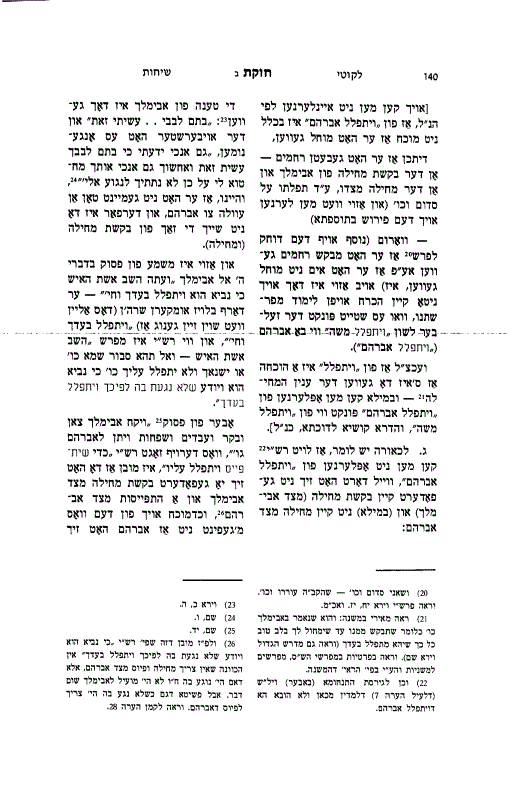
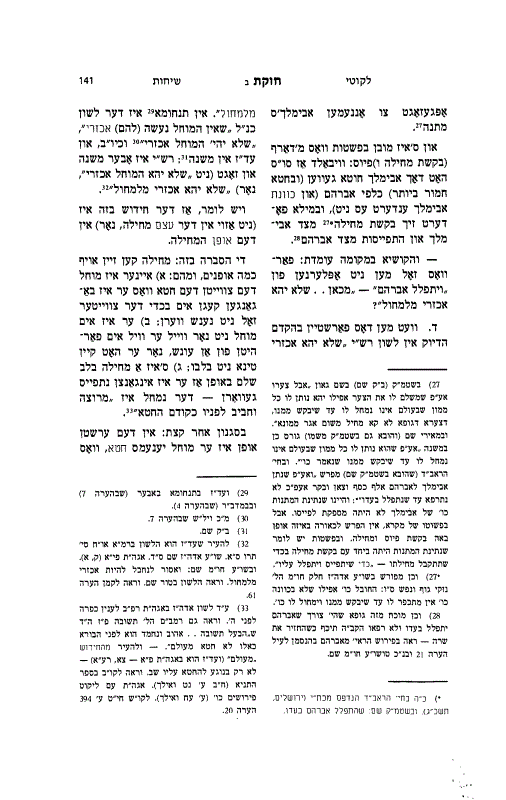
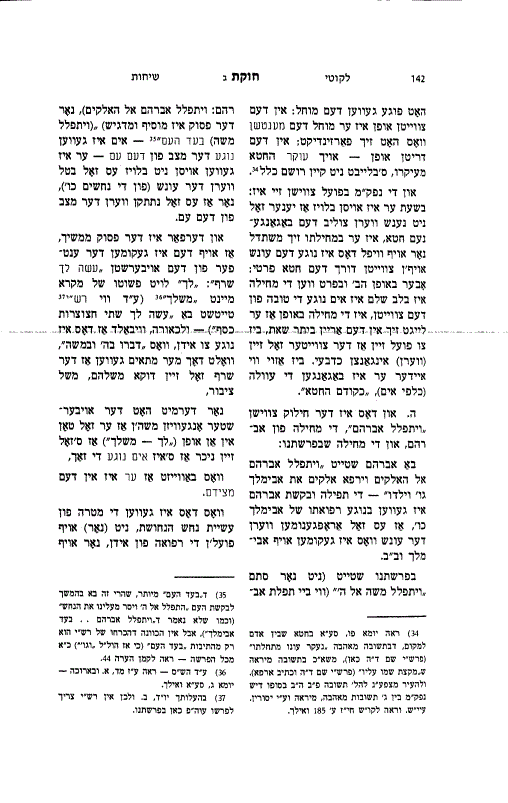
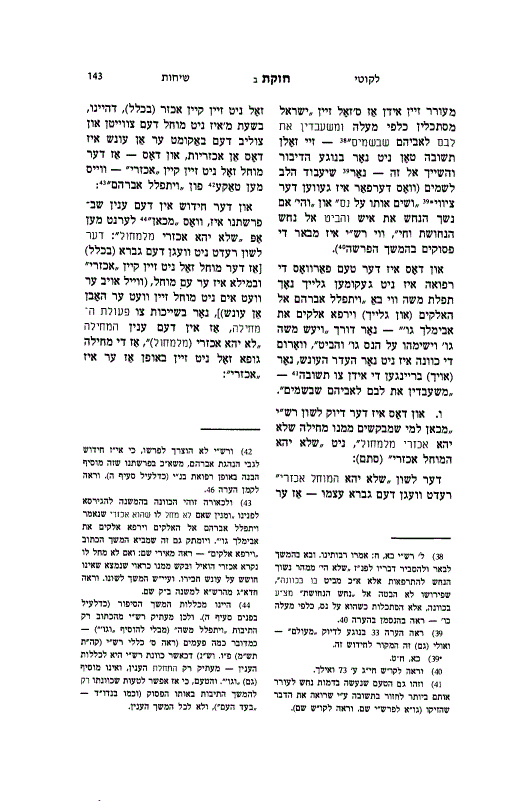
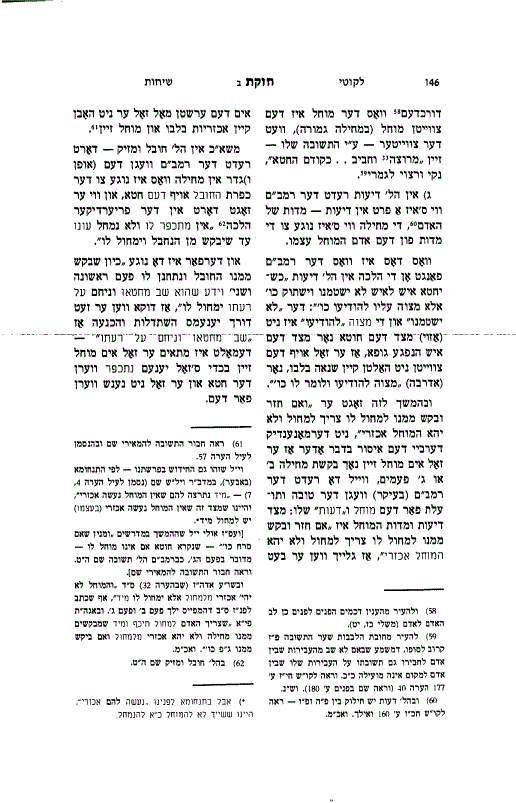
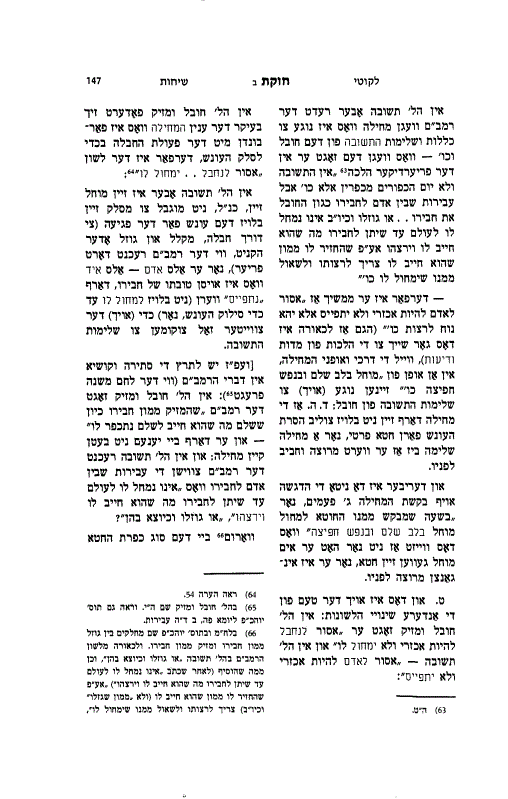
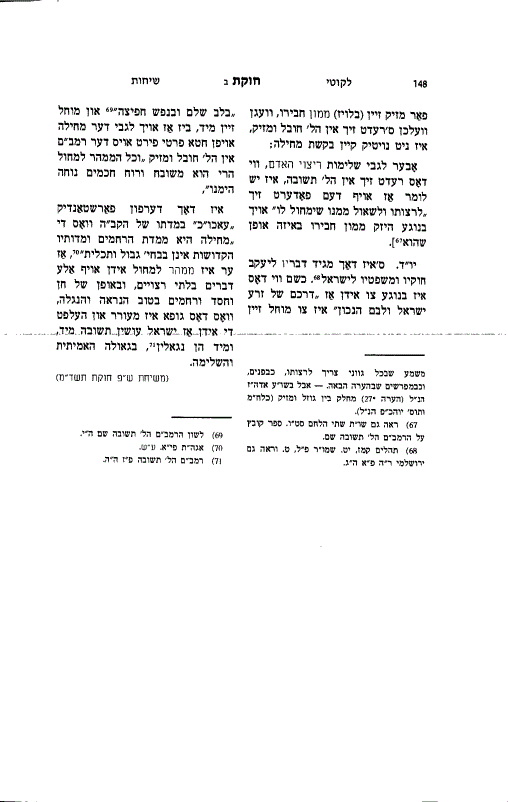
Our parshah relates the miracle of the valleys of Arnon.
Rashi explains at length that the Emorites planned an ambush. They said:
“When Israel enters the valley to pass through, we will emerge from the caves in the mountains above them and kill them with arrows and stones.”
However, a miracle occurred. One mountain moved from its place, drew near the mountain on the opposite side, and sealed the caves in which the Emorites were hiding, crushing them.
On the verse:
“And from there to the well” (Bamidbar 21:16),
Rashi explains:
“From there the slope came to the well. How so? The Holy One, blessed be He, said: ‘Who will inform My children of these miracles?’ The proverb says: ‘If you give bread to a child, inform his mother.’ After Israel passed through, the mountains returned to their places. The well descended into the valley, brought up the blood of the slain, together with arms and limbs, and carried them around the camp. The Israelites saw and sang a song.”
Several questions arise.
What does the proverb add to our understanding?
Why does Rashi choose the example of informing a child's mother rather than the continuation of the Talmudic proverb:
“One who gives a gift to his friend should inform him”?
Why does the proverb speak specifically of bread, something necessary for survival, whereas a miracle appears to be an expression of special affection?
And why does Rashi explain that the well brought the remains around the camp, unlike the Midrash, which says that the Israelites themselves came to the well and saw what it was bringing forth?
These questions can be understood by first addressing a broader issue.
Why does Rashi adopt the Midrashic explanation that “which turned aside” refers to the mountain itself? Seemingly, this is not the most straightforward reading of the verse. Other commentators explain it as referring either to the valley or to the movement of the Israelites.
The explanation is that Rashi is addressing a fundamental question:
Why did the Jewish people sing specifically for this miracle and not for the many other miracles that occurred during their journey through the wilderness?
Therefore, Rashi explains that this miracle closely resembled the splitting of the Red Sea.
The essential novelty of the splitting of the sea—which prompted Israel to sing—is expressed in the verse:
“Hashem will fight for you, and you shall remain silent.”
The victory came entirely from Hashem, without any action on Israel’s part.
The same was true here. Hashem defeated the enemy entirely on His own.
In one respect, this miracle was even more remarkable than the splitting of the sea. At the sea, the Jewish people knew they were in danger and witnessed their salvation. Here, however, they did not even know that danger existed.
Therefore Hashem asked:
“Who will inform My children of these miracles?”
This explains the proverb:
“If you give bread to a child, inform his mother.”
Bread is not an extraordinary gift. It is something that the mother is normally expected to provide. Therefore, if someone else gives bread to the child, the mother should be informed.
In the spiritual parallel, the “mother” is Moshe Rabbeinu, or more specifically the well that sustained the Jewish people. Whenever Israel lacked something, they generally turned to Moshe. Yet this miracle did not come through Moshe's intervention.
Accordingly, the “mother” here can be understood as the well itself.
The expression:
“The slope came to the well”
corresponds to the idea of “informing the mother.”
However, the purpose of informing the mother is that she, in turn, should tell her child.
Therefore the well itself revealed the miracle to the Jewish people by bringing the blood, limbs, and evidence of the defeated enemy and carrying them around the camp.
This explains why Rashi emphasizes that the well brought the evidence to Israel rather than requiring Israel to come and discover it themselves.
Only by actually seeing the miracle were the Jewish people moved to sing.
This parallels Rashi’s explanation on the words:
“Then Moshe sang,”
where he explains that when Moshe saw the miracle, it inspired him to sing.
Similarly here, the song was prompted by sight. The Jewish people witnessed not only the miracle itself but also Hashem’s special concern that they should know about it.
Their song therefore expressed gratitude not merely for being saved, but for Hashem’s extraordinary love in revealing to them “these miracles” that they otherwise would never have known had occurred.