

In Bilam’s prophecies, which are introduced with the phrase:
“And he took up his parable,”
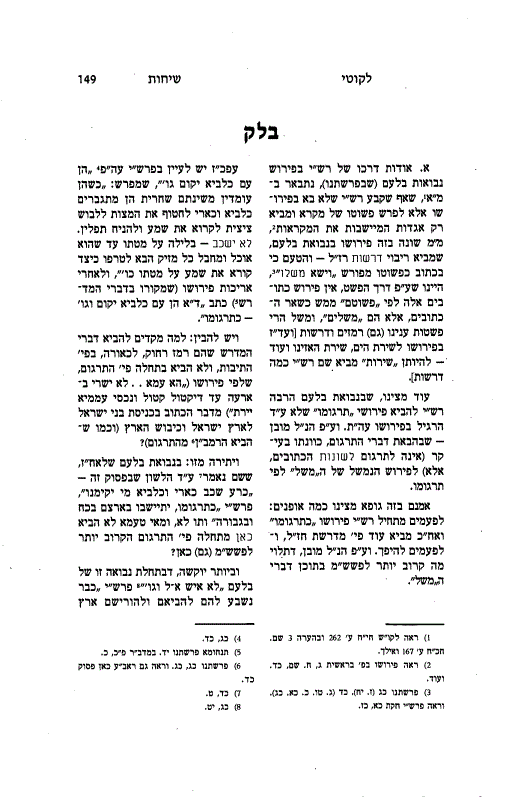
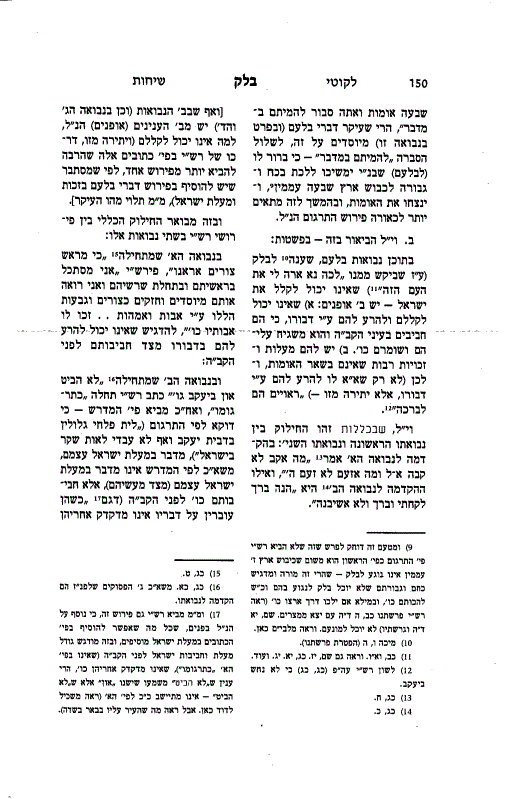
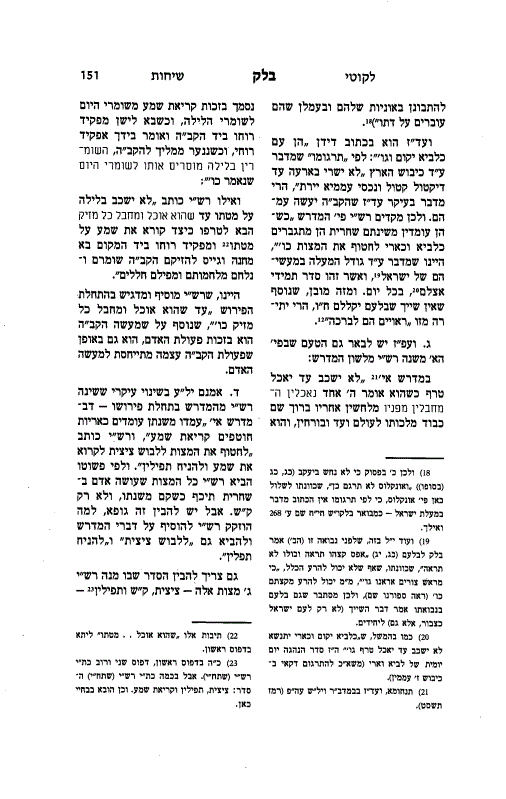
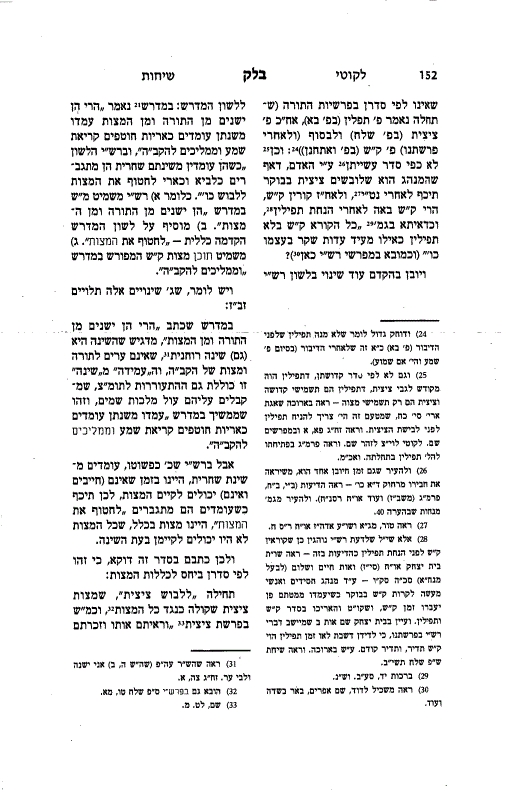
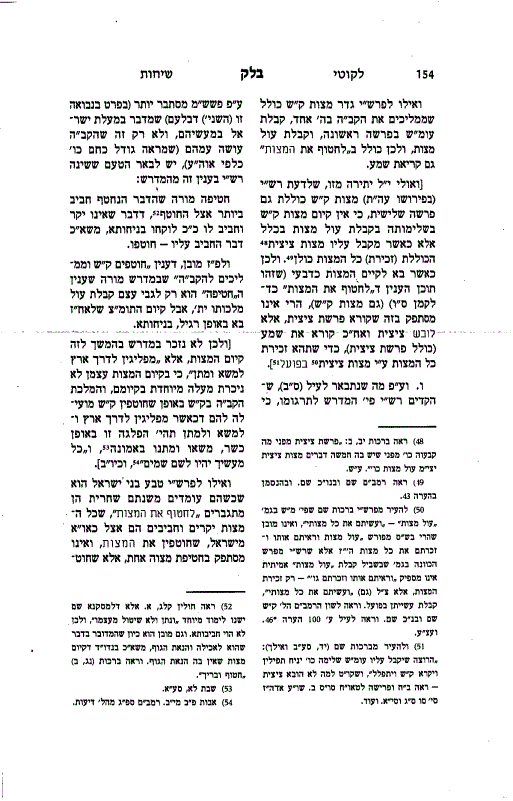
Rashi cites Midrashic and Targumic interpretations more extensively than elsewhere in the Torah. This is because a mashal (parable) inherently contains layers of meaning beyond the most literal explanation.
In general, Bilam conveyed two fundamental messages to Balak:
First Prophecy:
“G‑d has not cursed.”
Hashem loves the Jewish people, and therefore Bilam is unable to curse them.
Second Prophecy:
Bilam describes the virtues of the Jewish people themselves, explaining not only why they are not deserving of a curse, but why they are worthy of blessing.
These two themes explain a striking difference in the order in which Rashi presents the Midrashic and Targumic explanations.
The First Prophecy: Hashem’s Love for Israel
Since the central theme of the first prophecy is Hashem’s love for the Jewish people, Rashi first explains the verse:
“For from the mountaintops I see him”
as referring to the Jewish people being firmly established through the Patriarchs and Matriarchs.
This interpretation emphasizes their importance and belovedness before Hashem.
Likewise, regarding the verse:
“He has not beheld iniquity in Yaakov,”
Rashi first cites the Targum:
“There are no idol worshippers among the house of Yaakov,”
which speaks of the virtues of the Jewish people themselves.
Only afterward does he bring the Midrashic interpretation:
“When they transgress His words, He does not scrutinize them excessively...”
which highlights Hashem’s special affection for them.
The Second Prophecy: Israel’s Own Virtues
The second prophecy focuses primarily on the qualities of the Jewish people themselves.
Therefore, on the verse:
“Behold, a people rises like a lioness,”
Rashi first cites the Midrash:
“When they arise from their sleep in the morning, they seize the mitzvos...”
This interpretation emphasizes the initiative and spiritual greatness of the Jewish people.
Only afterward does Rashi bring the alternative interpretation, based on the Targum, that refers to the conquest of the Land of Israel.
Although that interpretation may be closer to the simple context—especially since Bilam had just spoken about Hashem’s promise to bring them into the Land—Rashi nevertheless places the Midrash first because it better reflects the central theme of the prophecy: the virtue of the Jewish people themselves.
Why Does Rashi Modify the Midrash?
There is another noteworthy difference between Rashi and the Midrash.
The Midrash states:
“They are asleep from Torah and mitzvos, but when they arise, they stand like lions and seize Krias Shema and proclaim Hashem’s kingship.”
Rashi omits the phrase:
“asleep from Torah and mitzvos,”
and instead writes:
“They seize the mitzvos—to wear tzitzis, recite Krias Shema, and put on tefillin.”
The explanation is that the Midrash refers not only to physical sleep but also to spiritual slumber. Therefore, when a person awakens spiritually, the primary emphasis is on accepting Hashem’s sovereignty through Krias Shema.
Rashi, however, is explaining the verse according to its simple meaning, where the sleep is ordinary physical sleep. Since one is exempt from mitzvos while sleeping, upon awakening one eagerly rushes to perform all the mitzvos available.
This also explains the order Rashi chooses:
Tzitzis — a comprehensive mitzvah about which the Torah says:
“You shall see it and remember all the commandments of Hashem.”
It represents all the mitzvos.
Krias Shema — the mitzvah that proclaims the unity of Hashem and acceptance of His sovereignty.
Tefillin — although a specific mitzvah, it commemorates the Exodus from Egypt, which serves as a foundation for many mitzvos.
Accordingly, Rashi emphasizes that the eagerness of the Jewish people is not limited to Krias Shema alone but extends to the entire realm of Torah and mitzvos.
The Connection to Yud-Beis Tammuz
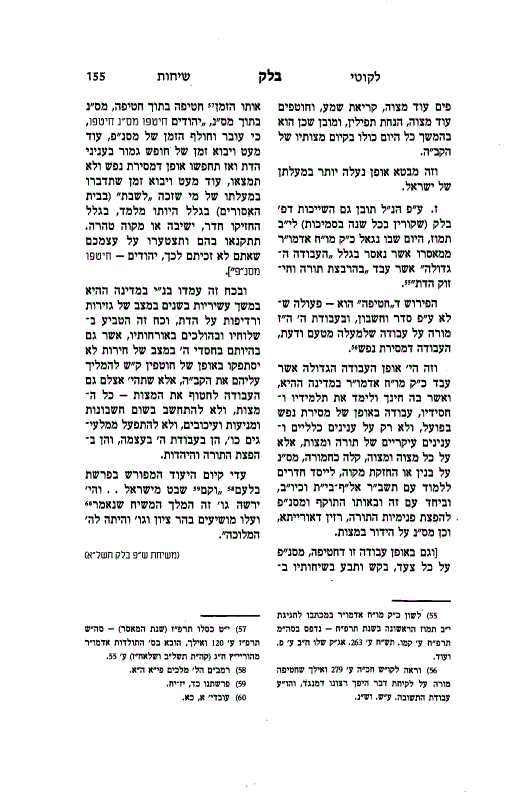
This also explains the connection to Yud-Beis Tammuz.
The concept of “snatching” a mitzvah reflects action that transcends calculation and deliberation. One does not stop to weigh considerations or obstacles; one seizes the opportunity immediately.
This was precisely the spirit of the Previous Rebbe, the Rebbe Rayatz, during his work in Soviet Russia.
He constantly urged and demanded:
“Jews, snatch self-sacrifice! Snatch opportunities!”
He implanted this attitude within his followers—that even after coming to lands of freedom and comfort, they should continue to fulfill Torah and mitzvos with the same urgency and devotion, without calculations, excuses, or hesitation.
The lesson is that a Jew should approach Torah and mitzvos with the eagerness of one who fears the opportunity might slip away—performing them with enthusiasm, determination, and a commitment that rises above all obstacles and all rational calculations.