A review in Likkutei Sichos, the third sicha on Parshas Naso.
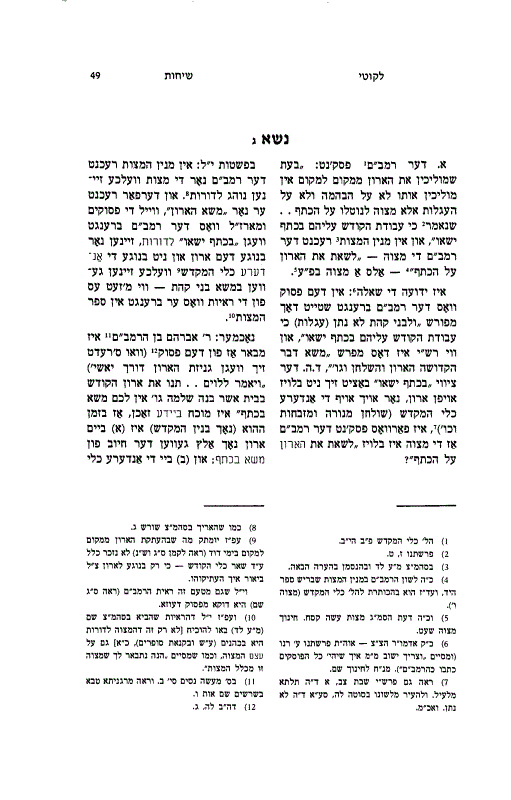
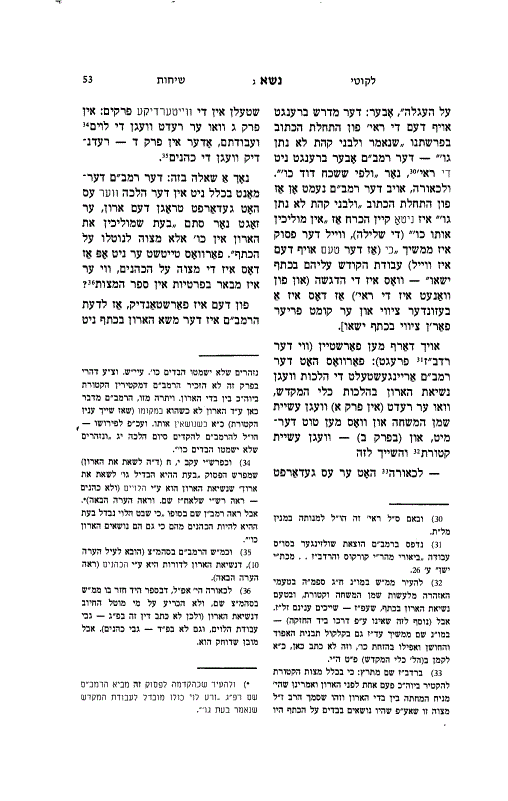
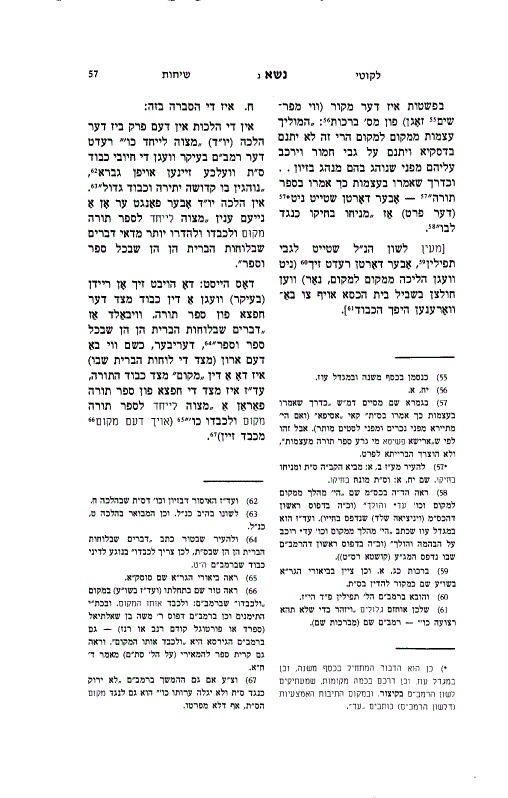
In the parsha, the Torah discusses how the Aron and the other keilim carried by the Bnei Kehas were transported not on wagons, but specifically on the shoulders. However, when we examine the Rambam, we find that he singles out the Aron alone as requiring transportation on the shoulder. This raises an obvious question: the pasuk the Rambam himself cites — “ky avodas hakodesh aleihem bakasef yisa’u” — refers not only to the Aron, but to all the sacred vessels carried by the Bnei Kehas. Why, then, does the Rambam emphasize specifically the Aron?
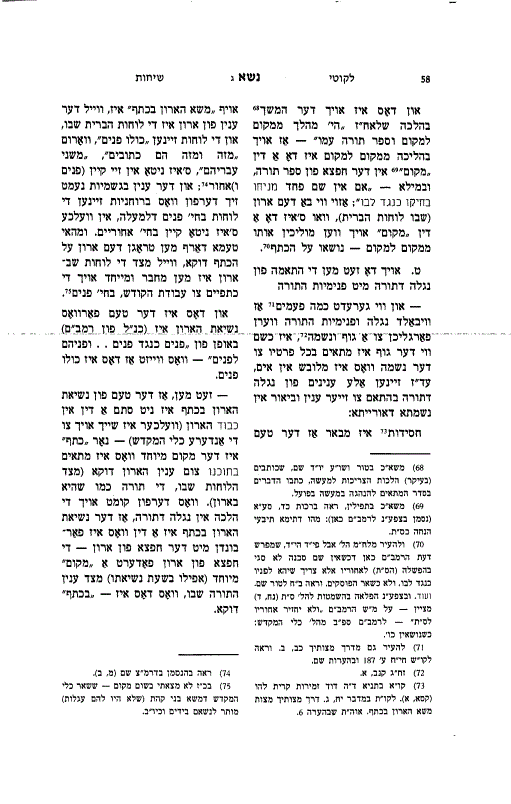
The Rebbe develops a profound explanation and ultimately arrives at a remarkable chiddush that also fits beautifully according to pnimiyus ha’inyanim: the Aron possesses a unique mitzvah. The obligation is not merely that one should not place the Aron on a wagon; rather, the very place of the Aron is upon the shoulders of the Levi’im. Just as the resting place of the Aron, when stationary, is in the Kodesh HaKodashim, so too, when it is being transported, its proper place is specifically on the shoulders. It is therefore not merely an obligation on the person carrying it, but a דין in the Aron itself — where the Aron must be. Based on this yesod, the Rebbe explains the precise language of the Rambam and the distinction between the Aron and the other keilim.
Aleph The Rambam rules:
“be’es shemolichin es ha’Aron mimakom lemakom — ein molichin oso lo al habehemah velo al ha’agalos, ela mitzvah litlo al hakasef, shene’emar: ‘ki avodas hakodesh aleihem bakasef yisa’u.’”
Whenever the Aron was transported from one place to another, it could not be carried on an animal or wagon. Rather, there is a mitzvah to carry it on the shoulder.
The other Levi’im — the families of Gershon and Merari — transported their portions of the Mishkan on wagons. The beams, curtains, and other structural components were all carried using agalos. However, the Bnei Kehas, whose task involved carrying the holy vessels themselves, were required to carry them “bakasef yisa’u” — on the shoulder.
The Rambam also counts this as a separate mitzvah in Sefer HaMitzvos: “laseis es ha’Aron al hakasef” — to carry the Aron on the shoulder. The Rambam presents this not merely as part of the general transportation of the Mishkan vessels, but as an independent mitzvah specifically associated with the Aron.
The Rebbe asks the well-known question:
The very pasuk the Rambam cites clearly refers to all the keilim carried by the Bnei Kehas. The Torah states:
“velivnei Kehas lo nasan ki avodas hakodesh aleihem bakasef yisa’u.”
Rashi explains “avodas hakodesh” as referring to the sacred vessels themselves — “ha’Aron vehashulchan v’go” — including the Aron, the Shulchan, the Menorah, the Mizbechos, and the other keilim.
If so, the command of “bakasef yisa’u” applies not only to the Aron, but to all the sacred vessels carried by the Bnei Kehas. Why then does the Rambam define the mitzvah specifically as carrying the Aron on the shoulder?
The Rebbe explains that, on a simple level, we may answer as follows:
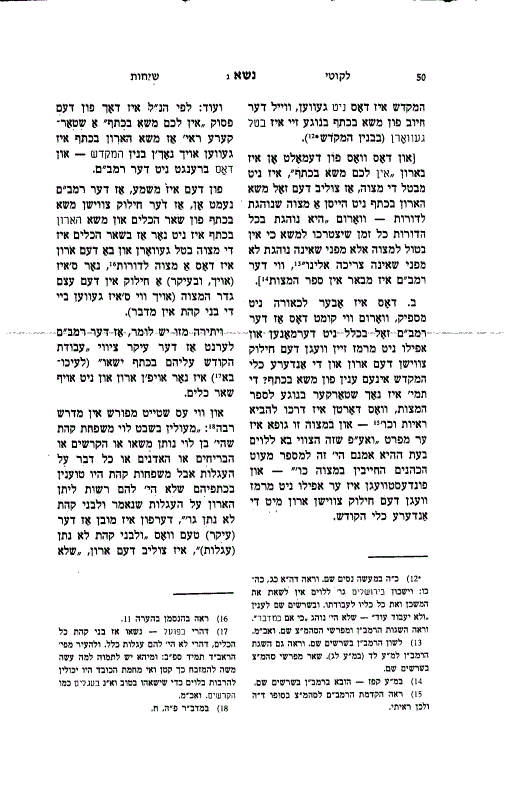
The Rambam, in his count of the mitzvos, includes only mitzvos that apply for all generations. The obligation to carry the Aron on the shoulder continued beyond the travels in the desert and remained applicable even in later generations. The obligation regarding the other keilim, however, applied only during the period when the Mishkan was transported from place to place. Once the Beis HaMikdash was built and became a permanent resting place, those vessels were no longer transported.
The Aron, however, retained its unique status even afterward.
The Rebbe notes that the Rambam brings proofs from pesukim and Chazal demonstrating that the obligation of carrying the Aron on the shoulder continued even after the Midbar period. These proofs relate specifically to the Aron and not to the other keilim.
Furthermore, Reb Avraham ben HaRambam explains this from the verse describing how Yoshiyahu hid the Aron before the destruction of the Beis HaMikdash:
“tenu es Aron hakodesh babayis asher banah Shlomo… ein lachem masa bakasef.”
From this verse we see two points:
First, even during the era of the Beis HaMikdash — long after the journeys in the wilderness had ended — there still existed an obligation concerning the Aron of “masa bakasef,” carrying it on the shoulder. Yoshiyahu tells them that they will no longer have this avodah only because the Aron was being hidden away before the coming destruction.
Second, this language is said only regarding the Aron and not regarding the other keilim. This indicates that the mitzvah of carrying the other keilim on the shoulder ceased once the Beis HaMikdash was built, since they no longer required transportation. Their mitzvah was limited to the era of travel in the Midbar.
The Aron, however, remained fundamentally different. Its mitzvah of “bakasef yisa’u” continued permanently throughout the generations whenever transportation of the Aron would be necessary.
The fact that the Aron eventually ceased being carried after Yoshiyahu hid it away does not mean the mitzvah itself was abolished. Rather, there was simply no practical possibility of fulfilling it, because there was no Aron available to transport. As the Rambam explains regarding such mitzvos, this is not considered that the mitzvah ceased to exist; the mitzvah remains eternally applicable whenever the circumstance would arise.
Accordingly, the Rambam singles out specifically the Aron because only the mitzvah of carrying the Aron on the shoulder is a mitzvah hanoheges ledoros, applicable for all generations. The obligation regarding the other keilim existed only during the era when the Mishkan was transported.
Naso 3 – Part 2 Beis Based on what we explained previously, the distinction between the Aron and the other keilim is that the mitzvah to carry the Aron on the shoulder applies ledoros — for all generations — whereas the mitzvah to carry the other keilim on the shoulder applied only during the era of the Midbar, until the building of the Beis HaMikdash.
Accordingly, the mitzvah of carrying the Aron would be counted among the eternal mitzvos, while the mitzvah regarding the other keilim would not, since temporary mitzvos are not counted in the general enumeration of the mitzvos.
However, the Rebbe rejects this explanation.
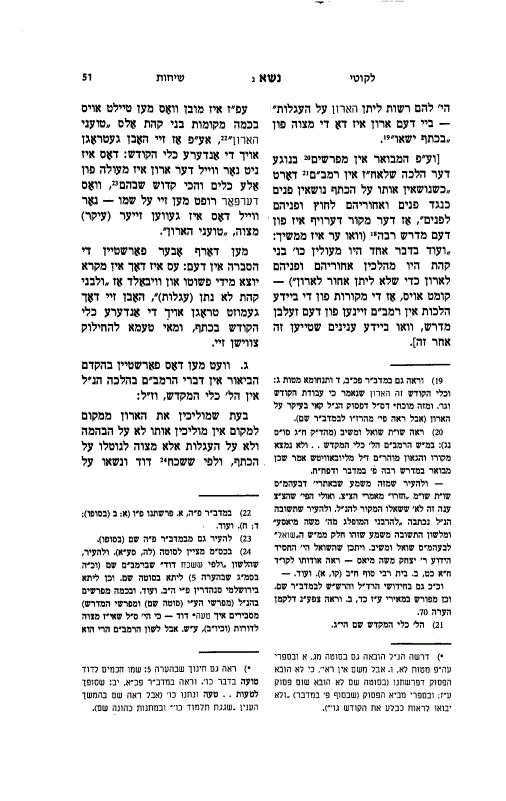
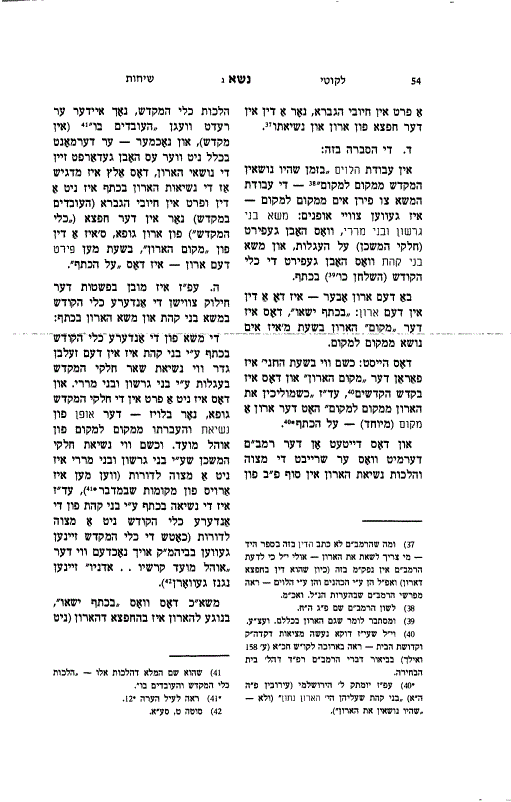
The Rebbe explains that there is a fundamental difference between the mitzvah of carrying the Aron and the carrying of the other keilim. In fact, the Rebbe argues that even during the original travels in the Midbar, when the Bnei Kehas carried all the sacred vessels, the primary mitzvah centered specifically around the Aron. The prohibition against placing the Aron on wagons was the essential point, and because of the Aron, the Bnei Kehas were not given wagons at all. Consequently, the other keilim as well were carried on the shoulder together with the Aron, but the core mitzvah concerned the Aron itself.
The Rebbe proves this from the Rambam’s language in Sefer HaMitzvos. If the entire distinction were merely that one mitzvah applied ledoros while the other did not, then the Rambam should at least have mentioned this difference explicitly.
The Rebbe writes:
“dos iz ober lichora nit maspik.”
This explanation alone is insufficient. Why does the Rambam not even mention — or at least hint to — the distinction between the Aron and the other keilim regarding the obligation of carrying on the shoulder? If the entire difference is simply that one mitzvah continued for generations while the other did not, the Rambam should have clarified that point.
This question becomes even stronger in Sefer HaMitzvos, where the Rambam typically elaborates and provides proofs and explanations for the mitzvos.
Indeed, regarding this mitzvah itself, the Rambam discusses at length how, although the command was originally given to the Levi’im — specifically the Bnei Kehas — nevertheless the obligation later applied to the Kohanim as well. The Rambam carefully explains the details of who is obligated in the mitzvah and under what circumstances.
Yet despite all this elaboration, the Rambam never even hints that the mitzvah of carrying the Aron differs from the mitzvah of carrying the other keilim merely because one is temporary and the other eternal.
From this omission, the Rebbe concludes that there must be a deeper distinction — an essential difference in the very definition of the mitzvah itself.
The Rebbe brings an additional proof.
According to the earlier explanation, the clearest proof that carrying the Aron remained an ongoing mitzvah after the Midbar comes from the verse regarding Yoshiyahu, who hid away the Aron before the destruction of the Beis HaMikdash. There the Navi states:
“ein lachem masa bakasef.”
“You no longer have the burden upon the shoulder.”
This verse explicitly refers to the Aron and demonstrates that even during the era of the Beis HaMikdash, the mitzvah of carrying the Aron on the shoulder still existed.
If so, asks the Rebbe, why does the Rambam not cite this verse at all? If the distinction between the Aron and the other keilim is rooted in the fact that the Aron’s mitzvah continued ledoros, this verse should have served as the Rambam’s strongest proof.
The fact that the Rambam entirely omits this proof indicates that the distinction is not merely historical or technical — that one mitzvah continued longer than the other — but that there is an intrinsic difference between the mitzvah of carrying the Aron and the carrying of the other keilim.
And this distinction existed even in the Midbar itself, during the era of the Bnei Kehas.
The Rebbe goes even further.
Not only is the mitzvah of carrying the Aron fundamentally different from the other keilim, but according to the Rambam, the primary command of “bakasef yisa’u” applies specifically to the Aron alone.
Regarding the other keilim, there may have been an ideal manner of transportation on the shoulder, but the strict obligation — le’ikuva — that it must not be transported in any other way applies specifically to the Aron.
The Rebbe cites an explicit Medrash Rabbah:
“me’ulin beshevet Levi mishpachas Kehos…”
Among the tribe of Levi, the family of Kehas was distinguished. Other Levi’im transported the beams, sockets, bars, and other parts of the Mishkan on wagons. However, the family of Kehas carried their burden upon their shoulders.
The Medrash then states explicitly:
“shelo hayah lahem reshus liten ha’Aron al ha’agalah.”
They had no permission to place the Aron on a wagon.
The Medrash singles out specifically the Aron. From here it is understood that the primary reason the Bnei Kehas were not given wagons was because of the Aron itself.
Thus, the essential mitzvah of “bakasef yisa’u” applies specifically to the Aron.
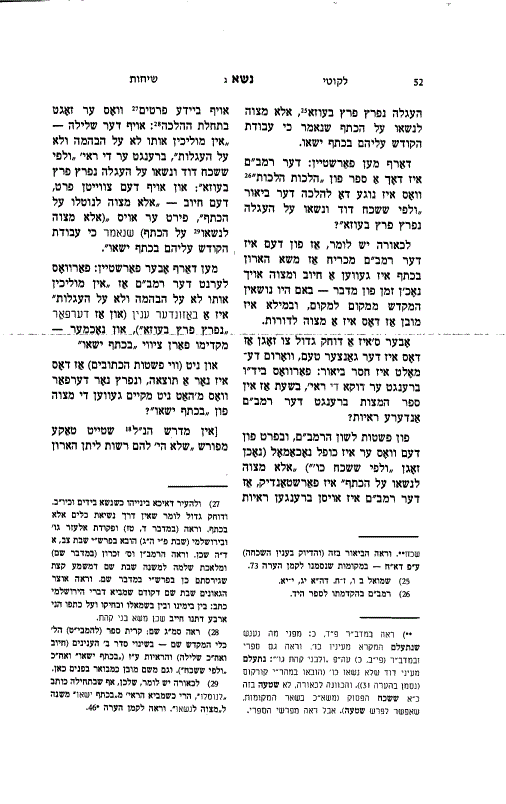
The Rebbe further notes that the Rambam appears to base himself directly on this Medrash Rabbah, because the next halacha in the Rambam also parallels the continuation of the same Medrash.
The Rambam rules that those carrying the Aron walked facing the Aron, with their backs outward:
“nos’im פנים keneged panim… upneihem lifnim.”
The carriers faced inward toward the Aron so that their backs should never face it.
The meforshim explain that the source for this halacha is likewise the Medrash Rabbah, which continues immediately afterward:
“Bnei Kehas hayu mehalchin achoreihem upneihem la’Aron kedei shelo liten achor la’Aron.”
The Bnei Kehas walked in such a way that their faces remained toward the Aron so that their backs would not face it.
Accordingly, both halachos in the Rambam — carrying the Aron specifically on the shoulder and facing the Aron while carrying it — stem from the same Medrash Rabbah and both revolve specifically around the Aron.
This further demonstrates that the central mitzvah of the Bnei Kehas was the carrying of the Aron.
Based on this, the Rebbe explains why in many places Chazal refer to the Bnei Kehas specifically as “nos’ei ha’Aron” — the carriers of the Aron — even though they carried other keilim as well.
This is not merely because the Aron was the holiest and most elevated of all the vessels. Rather, it was because the essence of their mission and their primary mitzvah centered around the Aron itself.
Nevertheless, the Rebbe asks, this still requires explanation.
The simple reading of the pasuk seems to indicate that all the keilim carried by the Bnei Kehas were transported on the shoulder because they were not given wagons:
“velivnei Kehas lo nasan…”
Since they were not given wagons, they necessarily carried all the sacred vessels on their shoulders.
If so, where do we see in the pasuk this distinction between the Aron and the other keilim? The pasuk itself does not appear to differentiate between them.
This is the point the Rebbe will continue to explain in the next section of the sicha.
Gimmel
To better understand the distinction the Rebbe established earlier between the Aron and the other keilim, the Rebbe first analyzes the precise wording of the Rambam in the relevant halacha in Hilchos Klei HaMikdash. Through a careful examination of the Rambam’s language, the Rebbe uncovers several seemingly difficult details that ultimately lead to a deeper understanding of the Rambam’s approach.
The Rambam writes:
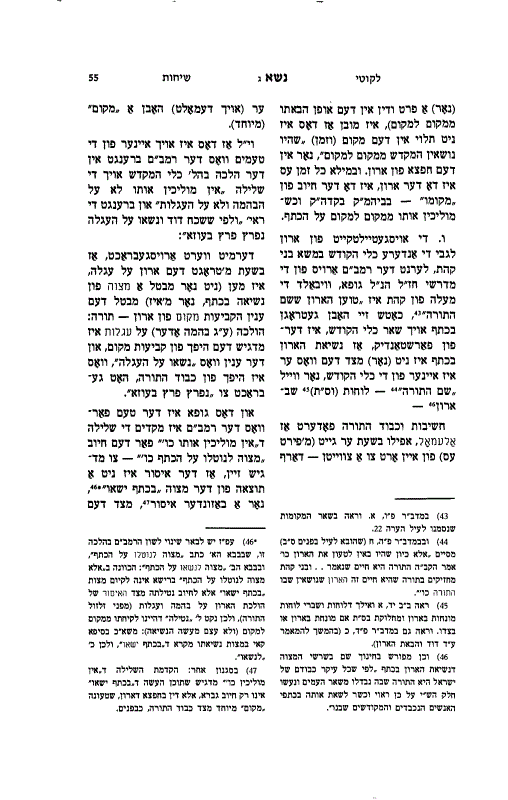
“Be’es shemolichin es ha’Aron mimakom lemakom, ein molichin oso lo al habehemah velo al ha’agalah, ela mitzvah litlo al hakasef.”
“When transporting the Aron from place to place, one may not transport it on an animal or on a wagon; rather, it is a mitzvah to carry it on the shoulder.”
The Rambam then adds:
“U’lefisha sheDavid shachach veholicho ba’agalah nifratz b’Uzzah.”
“Because David forgot and transported it on a wagon, there was a breach through Uzzah.”
This refers to the episode described in Shmuel Beis and Divrei HaYamim, when David HaMelech brought the Aron from the home of Avinadav to Yerushalayim. The Aron was placed on a wagon, and when Uzzah stretched out his hand to steady it, he died.
The Rambam concludes:
“Ela mitzvah litlo al hakasef, shene’emar: ‘Ki avodas hakodesh aleihem bakasef yisa’u.’”
“Rather, it is a mitzvah to carry it on the shoulder, as the verse states: ‘For the sacred service is upon them; on the shoulder they shall carry.’”
The Rebbe raises several fundamental questions.
First, why does the Rambam bring the story of Uzzah altogether? The Rambam is a sefer halacha and generally avoids recounting historical narratives from Tanach unless they are directly necessary for the legal ruling. Why is the story of David and Uzzah relevant here?
Second, the wording of the Rambam suggests that he divides the halacha into two distinct components. First, the Rambam states a prohibition:
“Ein molichin oso lo al habehemah velo al ha’agalah.”
“One may not transport it on an animal or wagon.”
Only afterward does the Rambam add a separate positive obligation:
“Ela mitzvah litlo al hakasef.”
“Rather, it is a mitzvah to carry it on the shoulder.”
This implies that there are two independent halachos:
1. A prohibition against placing the Aron on a wagon.
2. A positive mitzvah to carry it on the shoulder.
At first glance, however, one might have assumed these are merely two sides of the same obligation. Since the Torah commands that the Aron be carried on the shoulder, automatically it may not be transported on a wagon. Why, then, does the Rambam formulate them as two separate ideas?
The Rebbe begins by considering a possible explanation for why the Rambam brings the story of Uzzah.
Perhaps the Rambam intends to demonstrate that the mitzvah of carrying the Aron on the shoulder applies not only during the travels in the Midbar, but throughout the generations. Since the episode with David occurred long after the Midbar period, this would prove that the mitzvah remained in force later as well.
However, the Rebbe rejects this explanation as insufficient.
If the Rambam’s sole purpose were to prove that the mitzvah applies לדורות — throughout the generations — then another difficulty arises. In Sefer HaMitzvos, the Rambam brings an entirely different proof: the verse concerning Yoshiyahu HaMelech hiding the Aron, where it says:
“Ein lachem masa bakasef.”
“You no longer have the burden upon the shoulder.”
Why does the Rambam use one proof in Sefer HaMitzvos and an entirely different proof in Mishneh Torah?
Moreover, the wording of the Rambam itself indicates something deeper.
After recounting the incident of Uzzah, the Rambam again repeats:
“Ela mitzvah litlo al hakasef.”
“But it is a mitzvah to carry it on the shoulder.”
This repetition indicates that the Rambam is not merely bringing a historical proof that the mitzvah continued in later generations. Rather, he is establishing two distinct halachos.
The Rebbe explains that the Rambam brings two separate proofs corresponding to two separate laws.
For the prohibition against transporting the Aron on a wagon, the Rambam brings proof from the story of David and Uzzah:
“U’lefisha sheDavid shachach veholicho ba’agalah nifratz b’Uzzah.”
Because David transported the Aron on a wagon, tragedy resulted.
This proves the negative aspect — that the Aron may not be placed on a wagon.
For the second component — the positive mitzvah to carry the Aron on the shoulder — the Rambam brings the verse:
“Ki avodas hakodesh aleihem bakasef yisa’u.”
Thus, according to the Rambam, there are two independent obligations:
• A prohibition against transporting the Aron on a wagon.
• A positive mitzvah that the Aron must specifically be carried on the shoulder.
The Rebbe now raises the central question:
How does the Rambam know that these are truly two separate concepts?
The simple reading of the verse seems to indicate only one idea. The Torah says:
“Velivnei Kehos lo nasan, ki avodas hakodesh aleihem bakasef yisa’u.”
“To the sons of Kehos he did not give wagons, because the sacred service was upon them; on the shoulder they shall carry.”
The straightforward implication appears to be that the reason they were not given wagons is because their task required shoulder-carrying. In other words, there is only one mitzvah: carrying on the shoulder. The absence of wagons is merely a consequence of that obligation.
Yet the Rambam clearly understands otherwise. He separates the halacha into two parts and even places the prohibition first:
1. One may not transport the Aron on a wagon.
2. One must carry it on the shoulder.
This is especially difficult because, in the simple reading of the verse, the prohibition against wagons does not appear independently at all.
Furthermore, regarding the incident of Uzzah, one might have assumed that the tragedy occurred simply because they failed to fulfill the positive mitzvah of carrying the Aron on the shoulder. Yet the Rambam emphasizes something more specific: the problem was that they placed the Aron on a wagon.
Why does the Rambam define the sin in this manner?
The Rebbe suggests that perhaps the Rambam derives this from the Medrash Rabbah.
The Medrash states explicitly:
“Sheloh hayah lahem reshus liten ha’Aron al ha’agalah.”
“They had no permission to place the Aron on a wagon.”
The Medrash thus appears to understand that there is an independent prohibition against placing the Aron on a wagon.
The source for this is the opening words of the verse:
“Velivnei Kehos lo nasan.”
“To the sons of Kehos he did not give.”
According to the Medrash, this itself teaches a negative prohibition — they were not given wagons because the Aron may not be placed upon them.
Then the second half of the verse teaches the positive mitzvah:
“Bakasef yisa’u.”
“They shall carry on the shoulder.”
Accordingly, the Medrash naturally understands the verse as containing two separate concepts.
However, the Rebbe points out that the Rambam does not seem to derive the prohibition from the verse itself. If he did, he should have cited the verse directly as proof that the Aron may not be placed on a wagon.
Instead, the Rambam brings proof specifically from the story of David and Uzzah.
This indicates that the Rambam learns the verse differently — namely, that the verse itself speaks only about the positive obligation of carrying on the shoulder. The reason the בני קהת were not given wagons was simply because their avodah required shoulder-carrying.
If so, the question becomes even stronger:
If the verse itself only teaches the positive mitzvah of shoulder-carrying, from where does the Rambam derive an entirely separate prohibition against placing the Aron on a wagon?
And furthermore, why does the Rambam emphasize this prohibition first, before mentioning the positive mitzvah?
The Rebbe summarizes the question:
According to the Rambam, the halacha contains two distinct elements:
• A prohibition against placing the Aron on a wagon, proven from the story of Uzzah.
• A positive mitzvah to carry the Aron on the shoulder, proven from the verse in the Torah.
But what is the Rambam’s source for dividing the halacha in this manner?
The Rebbe then raises an additional question brought by the Radbaz.
Why does the Rambam place these laws in Hilchos Klei HaMikdash?
The earlier chapters deal with the anointing oil and the ketores. Seemingly, the laws of carrying the Aron belong later, in the chapters discussing the עבודת הלוים or the עבודת הכהנים.
Why, then, are these halachos placed specifically in the laws concerning the keilim themselves?
Another question:
The Rambam never specifies who carries the Aron. He merely states:
“Be’es shemolichin es ha’Aron…”
“When transporting the Aron…”
He does not identify the carriers as Levi’im or Kohanim.
This omission is striking, especially since in Sefer HaMitzvos the Rambam elaborates that although the mitzvah was originally assigned to the Levi’im, its essential fulfillment belongs to the Kohanim.
Why does the Rambam omit all of this here?
From this, the Rebbe derives an important יסוד:
According to the Rambam, the mitzvah of carrying the Aron is not fundamentally a personal obligation upon the carrier. Rather, it is a דין in the Aron itself — that the Aron must be transported in a particular manner.
The focus is not on who performs the carrying, but on how the Aron itself must be carried.
This יסוד will become the foundation for the Rebbe’s explanation in the next section, beginning with Os Daled.
Daled
The Rebbe now explains the fundamental distinction between the Aron and the other keilim of the Mishkan.
All the various parts of the Mishkan needed to be transported from place to place during the journeys in the Midbar. This responsibility was divided among the different משפחות הלוים — the families of Gershon, Kehos, and Merari — each carrying its designated portion of the Mishkan in its own manner.
However, the Aron possessed an additional and unique halacha. Beyond merely needing to be transported, the Aron required a specific מקום — a designated place — even while it was in transit. Just as the Aron has its permanent מקום when the Jewish people are encamped, so too it has a proper מקום while being carried from place to place.
The Rebbe explains:
In the avodas haLevi’im, when the Levi’im transported the Mishkan during the travels in the Midbar, there were fundamentally two different forms of carrying.
On one hand, there was the carrying performed by the families of Gershon and Merari. They transported the beams, curtains, sockets, and other structural components of the Mishkan using agalos — wagons.
On the other hand, the family of Kehos transported the sacred keilim — the Shulchan, Menorah, Mizbechos, and Aron — upon their shoulders.
These were simply the practical methods through which the various parts of the Mishkan were moved from place to place.
However, regarding the Aron, there exists an entirely additional halacha.
The obligation of “bakasef yisa’u” is not merely a law concerning the method of transportation. Rather, it is a דין in the Aron itself.
The shoulder is not simply the means through which the Aron is moved. The shoulder becomes the מקום of the Aron during transportation.
In other words:
Just as when the Jewish people were encamped, the Aron possessed a designated מקום — namely, the Kodesh HaKodashim — similarly, when the Aron traveled, it also possessed a designated מקום: the כתף, the shoulder.
This is the Rebbe’s great chiddush in understanding the Rambam.
The Rambam’s emphasis is not primarily on the obligation of the person carrying the Aron. Rather, the Rambam is defining where the Aron itself must be situated while it is being transported.
This explains several details in the Rambam.
First, the Rambam places these halachos at the end of the second chapter of Hilchos Klei HaMikdash — before beginning the chapters discussing the avodah of the Levi’im and Kohanim.
Why?
Because the Rambam is not discussing a halacha in the gavra — the individual performing the avodah. He is discussing a halacha in the cheftza — the Aron itself, one of the keilim of the Mikdash.
The issue here is not who carries the Aron.
Rather, the issue is: where must the Aron be?
The halacha is that the מקום of the Aron during transportation is specifically upon the shoulder.
This also explains another detail in the Rambam’s wording.
The Rambam never specifies who must carry the Aron. He does not emphasize Levi’im or Kohanim. He simply states:
“Be’es shemolichin es ha’Aron…”
“When transporting the Aron…”
This omission is deliberate.
Had the focus been upon the obligation of the carrier, the Rambam would have specified who bears that responsibility. Instead, the Rambam formulates the halacha generally because the essential point is not the identity of the carrier but the state of the Aron itself.
The Aron must be carried in a particular manner.
Thus, according to the Rambam, the mitzvah of carrying the Aron on the shoulder is fundamentally different from the transportation of the other keilim.
The other keilim merely required a practical means of transportation from place to place.
But the Aron required a מקום.
And that מקום, during its journeys, was the כתף — the shoulder upon which it rested.
Hei
The Rebbe now explains more clearly the essential difference between the Aron and the other holy vessels carried by the Bnei Kehos.
The other Klei HaKodesh were indeed carried upon the shoulders of the Bnei Kehos, but that carrying merely served as a method of transportation. By contrast, the Aron was carried in a completely different manner: the shoulder itself became the place of the Aron during its journey.
The Rebbe explains:
Based on everything discussed earlier, the distinction between the carrying of the other holy vessels by the Bnei Kehos and the carrying of the Aron on the shoulder now becomes very clear.
The carrying of the other sacred vessels upon the shoulders of the Bnei Kehos belongs to the same general category as the transportation of the other parts of the Mishkan by the Bnei Gershon and Bnei Merari upon wagons.
In other words, both were simply methods of moving the Mishkan and its vessels from place to place.
The Bnei Gershon and Bnei Merari transported the beams, curtains, and sockets using wagons, while the Bnei Kehos transported the Menorah, Shulchan, Mizbe’ach, and other sacred vessels upon their shoulders. But fundamentally, both forms of carrying were merely practical means of transportation.
The Rebbe emphasizes that this was not a defining characteristic within the vessels themselves.
The Menorah and the Shulchan did not become associated with the shoulder as their designated place. The shoulder was merely the means through which they were transferred from one location to another.
It was simply part of the process of transporting the Ohel Moed and its vessels during the journeys in the Midbar.
Accordingly, just as the transportation of the Mishkan components by the Bnei Gershon and Bnei Merari was not an eternal mitzvah for future generations, so too the carrying of the other sacred vessels by the Bnei Kehos upon their shoulders was likewise not a mitzvah for all generations.
That obligation existed only during the period when the Mishkan traveled through the wilderness.
The Rebbe notes that even after the Ohel Moed itself — together with its beams and sockets — was no longer in use and was hidden away, many of the sacred vessels themselves continued to exist within the Beis HaMikdash.
Nevertheless, despite the continued existence of those vessels, the mitzvah of carrying them upon the shoulder no longer applied.
Why?
Because their shoulder-carrying was never an intrinsic law within the vessels themselves. It was merely part of the temporary process of transporting the Mishkan from place to place.
Once the journeys ended, that mitzvah ended as well.
The Aron, however, was fundamentally different.
When the Torah says regarding the Aron, “upon the shoulder they shall carry,” this is not merely a law describing how the Aron should be transported.
Rather, it is a law within the very essence of the Aron itself.
The shoulder becomes the designated place of the Aron while it is in transit.
Therefore, this obligation is not dependent upon the historical circumstance of the Mishkan traveling through the Midbar.
Rather, it is rooted in the very identity of the Aron.
As long as the Aron exists, there remains an obligation regarding its proper place.
Just as when stationary the Aron belongs in the Kodesh HaKodashim, similarly, when the Aron is transported from place to place, its proper place is specifically upon the shoulder.
Vov
The Rebbe now continues to explain the unique distinction between the Aron and the other holy vessels carried by the Bnei Kehos, and how this entire approach is rooted in the statements of Chazal and the Midrashim themselves.
The question until now was: where does the Rambam derive this entire יסוד — that the Aron possesses a unique status, and that carrying it upon the shoulder is not merely a method of transportation but part of the very definition and place of the Aron itself?
The Rebbe explains that the Rambam learns this directly from the language of Chazal.
The Midrash Rabbah states:
“What was the greatness of Kehos? He carried the Aron in which the Torah rested.”
This wording is highly precise.
The Bnei Kehos carried many sacred vessels: the Menorah, the Shulchan, the Mizbe’ach, and the other keilim. Yet when the Midrash describes their unique distinction, it does not emphasize the keilim in general. Rather, it specifically highlights the Aron because the Torah was contained within it.
Inside the Aron were the Luchos, and as the Gemara in Bava Basra explains, a Sefer Torah as well rested within the Aron.
Thus, the uniqueness of the Aron is not merely that it was holier than the other vessels. Its distinction stemmed from the fact that it contained the Torah itself.
Accordingly, the Rebbe explains, the requirement that the Aron be carried specifically upon the shoulder expresses the honor and dignity due to the Torah.
The Aron requires a uniquely designated מקום even while it is traveling.
Just as the Torah possesses a permanent resting place when stationary, so too, while in transit, it cannot simply be treated as another object being transported from place to place.
The Rebbe explains that this idea also clarifies another important detail in the Rambam.
The Rambam first writes negatively:
“Ein molichin oso lo al habehemah velo al ha’agalos.”
“The Aron may not be transported upon an animal or upon wagons.”
Only afterward does the Rambam add the positive mitzvah:
“Ela mitzvah litlo al hakasef.”
“Rather, it is a mitzvah to carry it upon the shoulder.”
The Rambam then brings proof from the incident of David and Uzzah:
“U’lefisha sheDavid shachach veholicho ba’agalah, nifratz b’Uzzah.”
“Because David forgot and transported it on a wagon, there was a breach through Uzzah.”
The Rebbe explains the Rambam’s intent.
Transporting the Aron upon a wagon is not merely a failure to fulfill the positive mitzvah of carrying it upon the shoulder.
Rather, placing the Aron upon a wagon fundamentally undermines the dignity and designated מקום of the Aron itself.
When the Aron is placed upon a wagon or animal together with ordinary transported items, it becomes treated like a regular package being moved from place to place.
This stands in direct opposition to the honor owed to the Torah contained within the Aron.
Thus, the problem is not merely technical — that they failed to fulfill a positive commandment.
Rather, placing the Aron on a wagon constitutes a ביזוי התורה, a degradation of the honor of the Torah itself.
And this, explains the Rebbe, is why the Rambam emphasizes the punishment that occurred through Uzzah.
Had the issue merely been failure to perform a positive mitzvah, such a severe punishment would be difficult to understand. We do not generally find that merely neglecting a positive command results in such an immediate and dramatic punishment.
But according to the Rambam’s understanding, the issue was much deeper.
The Aron containing the Torah was treated improperly and disrespectfully by being placed upon a wagon.
Therefore, the incident of Uzzah was not simply punishment for failing to carry the Aron correctly. It resulted from the disrespect shown toward the Torah itself.
This is why the Rambam introduces the prohibition first.
The Rambam wishes to emphasize that the prohibition against placing the Aron on a wagon is not merely a byproduct of the positive mitzvah to carry it upon the shoulder.
Rather, it is an independent concept.
There exists a separate prohibition against transporting the Aron upon a wagon because doing so cheapens the dignity and honor of the Torah.
Only afterward does the Rambam discuss the positive mitzvah that the Aron must specifically be carried upon the shoulder.
Accordingly, the order of the Rambam now becomes completely understood.
First, the Rambam establishes the prohibition — the disrespect involved in placing the Aron upon a wagon — and therefore brings the proof from David and Uzzah.
Only afterward does the Rambam discuss the positive mitzvah of carrying the Aron upon the shoulder.
And the source for this entire approach is rooted in the words of Chazal themselves, who define the uniqueness of the Aron specifically through the fact that it contained the Torah.
Zayin
The Rebbe now brings a powerful proof to the entire explanation from the Rambam himself in Hilchos Sefer Torah.
Until now, the Rebbe explained that the Aron possessed a unique status because it contained the Torah. Therefore, carrying the Aron upon the shoulder was not merely a technical requirement of transportation, but an expression of the honor and dignity due to the Torah itself.
Now the Rebbe demonstrates that this same concept appears explicitly in the Rambam regarding a Sefer Torah.
The Rebbe quotes the Rambam at the end of Hilchos Sefer Torah:
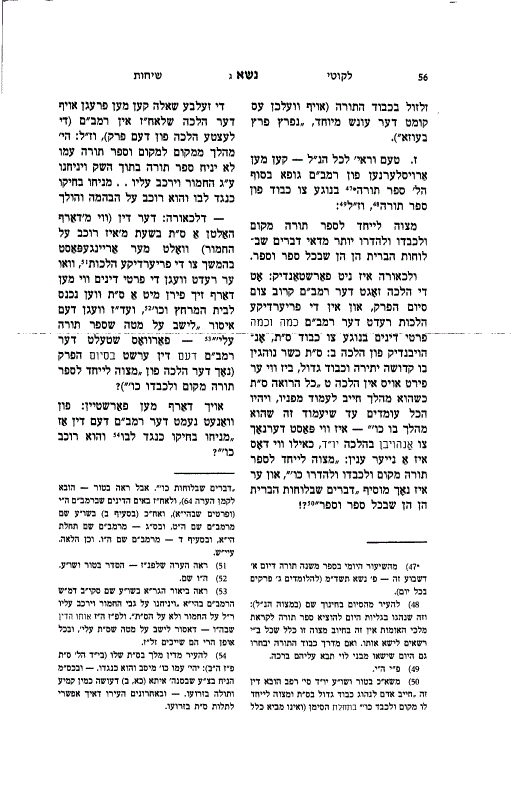
“It is a mitzvah to designate a special place for a Sefer Torah, to honor it, and to beautify it beyond ordinary measure, because the words of the Luchos HaBris are contained within every Sefer Torah.”
The Rambam emphasizes that a Sefer Torah requires a designated מקום — a specific place — together with exceptional honor and respect.
The reason is because every Sefer Torah contains within it the words of the Luchos.
The Rebbe now raises a question.
Seemingly, this halacha appears out of place.
Earlier in the chapter, beginning already from the second halacha, the Rambam discusses numerous laws concerning the honor due to a Sefer Torah:
A kosher Sefer Torah must be treated with exceptional holiness and great respect.
One must stand when a Sefer Torah passes.
There are laws regarding entering a bathhouse, sitting near a Sefer Torah, and many other details of proper conduct and respect.
If so, why does the Rambam suddenly introduce near the very end of the chapter:
“It is a mitzvah to designate a special place for a Sefer Torah…”
And why does the Rambam add:
“Because the words of the Luchos HaBris are within every Sefer Torah”?
What new concept is being introduced here?
The Rebbe explains that the Rambam is discussing two entirely different categories.
The earlier halachos concern the obligation upon the person to show respect toward the Sefer Torah.
But here the Rambam introduces something deeper:
The Sefer Torah itself requires a designated מקום.
This is not merely a law governing human behavior toward the Torah. It is a law defining the status and dignity of the Sefer Torah itself.
The Rebbe then points to the very next halacha in the Rambam, where the same pattern appears again.
The Rambam writes:
“If a person is traveling from place to place and has a Sefer Torah with him, he should not place the Sefer Torah inside a sack and place it upon the donkey and ride upon it. Rather, he should hold it against his chest, opposite his heart, while riding.”
Again, the Rebbe asks:
Why does the Rambam place this halacha specifically at the end of the chapter, immediately after the halacha about assigning a special place to a Sefer Torah?
Seemingly, this law should have appeared earlier together with the other practical laws governing respect for a Sefer Torah — such as not entering a bathhouse with it, not sitting upon a bed where a Sefer Torah rests, and similar halachos.
Why is this halacha reserved for the very end?
The Rebbe explains that this halacha also expresses the same foundational idea.
The issue is not merely that one must behave respectfully toward a Sefer Torah.
Rather, a Sefer Torah possesses an inherent dignity that demands a uniquely honorable מקום.
Therefore, when traveling, the Sefer Torah cannot simply be treated like luggage or another transported object placed into a sack upon an animal.
Instead, it must remain close to the person himself — opposite his heart.
The Rebbe now asks another question.
Where does the Rambam derive this detail — that the Sefer Torah must specifically be held “against his chest, opposite his heart”?
The source generally cited by the commentators is the Gemara in Brachos, which discusses transporting the bones of a deceased person.
The Gemara says:
One should not place the bones into a sack upon a donkey and ride upon them, because this constitutes degrading treatment.
And the Gemara adds:
“Just as this was said regarding bones, so too it was said regarding a Sefer Torah.”
Thus, the Gemara clearly teaches that one may not place a Sefer Torah disrespectfully upon an animal.
However, the Gemara never mentions the additional detail brought by the Rambam — namely, that one should hold the Sefer Torah against his chest and heart.
Where does the Rambam derive this from?
The Rebbe notes that a somewhat similar expression appears elsewhere regarding tefillin.
There, the Gemara discusses someone entering a bathroom and explains that he places the tefillin inside his garment near his chest in order to guard them respectfully.
However, that case concerns protecting tefillin from disgrace — not transporting them from place to place.
So where does the Rambam derive this specific formulation concerning a Sefer Torah?
The Rebbe explains that all of these details are building toward the same יסוד established earlier regarding the Aron.
The Rambam’s placement of these halachos — specifically at the conclusion of Hilchos Sefer Torah — reveals that he is no longer merely discussing the obligation of a person to honor the Torah.
Rather, he is defining the inherent dignity and designated מקום required by the Torah itself.
Just as the Aron containing the Torah required a unique מקום while traveling — namely, the shoulder — similarly, the Sefer Torah itself demands a uniquely honorable place even during travel.
It may not simply be placed among ordinary transported items.
Rather, it must remain close to the individual himself, opposite his heart, reflecting the dignity and sanctity of the Torah contained within it.
Cheis
The Rebbe now explains that the Rambam is discussing two entirely different categories of honor regarding a Sefer Torah.
Until this point in the chapter, the Rambam discusses the obligation upon the person to treat the Sefer Torah respectfully. However, beginning with the halacha of “Mitzvah leyached leSefer Torah מקום,” the Rambam introduces an entirely new concept: the special dignity and designated place required by the Sefer Torah itself.
The Rebbe explains:
In the halachos of this chapter up until halacha ten — the halacha stating that it is a mitzvah to designate a special place for a Sefer Torah — the Rambam primarily discusses obligations upon the person.
The focus until now is the conduct required of the gavra, the individual.
A person must conduct himself toward the Sefer Torah with extra holiness and great honor.
The Rambam discusses many practical obligations:
Standing for the Sefer Torah.
Not entering degrading places with it.
Not sitting improperly near it.
And other details concerning how a person must behave respectfully toward the Torah.
However, beginning with halacha ten, the Rambam introduces a completely new subject.
“Mitzvah leyached leSefer Torah מקום.”
“It is a mitzvah to designate a special place for a Sefer Torah.”
And furthermore:
“One must honor it and beautify it beyond ordinary measure, because the words of the Luchos HaBris are contained within every Sefer Torah.”
Here, explains the Rebbe, the Rambam is no longer speaking primarily about the person’s obligations.
Rather, he is discussing the dignity required מצד החפצא של ספר תורה — because of the very object and essence of the Sefer Torah itself.
Since every Sefer Torah contains within it the words of the Luchos HaBris, the Sefer Torah itself demands a uniquely honorable מקום.
The Rebbe explains that this parallels exactly the earlier discussion regarding the Aron.
Just as the Aron possessed a special מקום because it contained the Luchos HaBris, similarly every Sefer Torah requires a designated מקום because the holiness of the Luchos exists within it as well.
Therefore, the mitzvah is not merely to honor the Sefer Torah generally.
Rather, there must exist a מקום מיוחד — a specially designated place — for the Sefer Torah itself.
And not only must the Sefer Torah be honored, but even its place must be honored because that מקום is associated with the Torah itself.
The Rebbe then explains that this is also the continuation of the very next halacha in the Rambam.
The Rambam writes:
“If one is traveling from place to place with a Sefer Torah…”
The Rambam then rules that the Sefer Torah should not simply be placed into a sack upon an animal. Rather, it should be held against one’s chest, opposite one’s heart.
The Rebbe explains the deeper meaning.
Even while traveling from place to place, there still exists a דין מקום regarding the Sefer Torah.
The Sefer Torah must remain in a dignified and designated place.
Therefore, if there is no danger or pressing circumstance, the Sefer Torah should rest against the person himself — “becheiko keneged libo” — against his chest and heart.
This parallels precisely the halacha regarding the Aron.
Just as the Aron containing the Luchos required a designated מקום even while traveling — namely, the shoulder — similarly, the Sefer Torah requires a designated מקום during travel as well.
Its מקום is not upon an animal together with ordinary baggage.
Rather, its place is close to the individual himself, against his heart.
The Rebbe explains that this entire structure in the Rambam now becomes perfectly understood.
The Rambam specifically places these halachos at the conclusion of Hilchos Sefer Torah because here he is revealing the deeper foundation underlying all the previous laws.
The Torah itself requires a uniquely honorable מקום.
This also connects back to the earlier discussion regarding the Aron.
The prohibition against placing the Aron upon a wagon is not merely because one failed to fulfill the positive mitzvah of carrying it upon the shoulder.
Rather, placing the Aron upon a wagon constitutes a degradation of the honor due to the Torah contained within it.
That is why the punishment of Uzzah occurred.
And this is why the Rambam first emphasizes the prohibition against transporting the Aron upon a wagon before discussing the positive mitzvah of carrying it upon the shoulder.
The Rambam derives this understanding from the Midrashim of Chazal, which emphasize that the greatness of the Bnei Kehos was specifically that they carried the Aron containing the Luchos HaBris.
Everything revolves around the dignity and honor of the Torah itself.
And now, the Rebbe concludes, this entire explanation also aligns beautifully with the perspective of Pnimiyus HaTorah.
Tes
The Rebbe now concludes by showing how the explanation established in Nigleh — the revealed dimension of Torah — aligns perfectly with the explanation in Pnimiyus HaTorah, the inner dimension of Torah.
The Rebbe explains that this harmony itself is deeply significant.
As has been discussed many times, Nigleh and Pnimiyus HaTorah are comparable to a body and a soul.
Just as every detail of the body corresponds precisely to the soul invested within it, similarly every concept in the revealed dimension of Torah corresponds exactly to its deeper explanation within the inner dimension of Torah.
Thus, the halachic conclusions established earlier regarding the Aron are perfectly reflected in the explanations of Chassidus.
Chassidus explains the deeper reason why the Aron specifically had to be carried upon the shoulder.
The essence of the Aron was not merely the physical ark itself, but the Luchos HaBris contained within it.
And the Luchos possessed a unique quality.
The Torah describes the Luchos as being written “from both sides.” The writing penetrated completely through the stone.
Because of this, the Luchos possessed no distinction between front and back.
They were “kulei ponim” — entirely “face,” entirely inward revelation, without any element of concealment or externality.
Spiritually, the Rebbe explains, this reflects the fact that the Luchos derive from a level of complete פנימיות למעלה — a Divine level in which there is no concept of “back,” concealment, or externality at all.
Based on this, Chassidus explains why the Aron had to be carried specifically upon the shoulder.
Since the Aron contained the Luchos, carrying the Aron upon the shoulders elevated and connected even the shoulders themselves into the realm of avodas hakodesh, transforming them into an expression of פנימיות and holiness.
The shoulders themselves became connected to the level of פנים represented by the Luchos.
This also explains another halacha cited earlier by the Rambam.
The Rambam rules that those carrying the Aron walked “ponim keneged ponim” — face toward face — with their faces turned inward toward the Aron.
They walked in such a manner that their backs would never face the Aron.
This reflects the same idea.
Since the Aron containing the Luchos represents a level of “kulei ponim,” entirely פנים, there could be no מצב of “back” toward the Aron.
Everything had to remain פנים toward the Aron.
The Rebbe explains that from here we clearly see that carrying the Aron upon the shoulder is not merely a general law of honoring the Aron, something that might equally apply to the other vessels of the Mikdash.
Rather, the shoulder itself becomes the uniquely appropriate מקום for the Aron because of its inner content — the Luchos contained within it.
The shoulder is specifically suited to the essence of the Aron and the Torah contained within it.
Accordingly, this deeper explanation in Chassidus aligns perfectly with the halachic explanation established earlier in Nigleh.
Since the Aron possesses an intrinsic relationship to the Luchos contained within it, the Aron itself demands a uniquely designated מקום even during transportation.
Thus, carrying the Aron upon the shoulder is a דין in the cheftza shel Aron — a law within the very object of the Aron itself.
Just as when stationary the Aron’s proper place is the Kodesh HaKodashim, similarly when traveling its proper מקום is specifically upon the shoulder.
And this unique requirement stems from the Torah contained within the Aron.
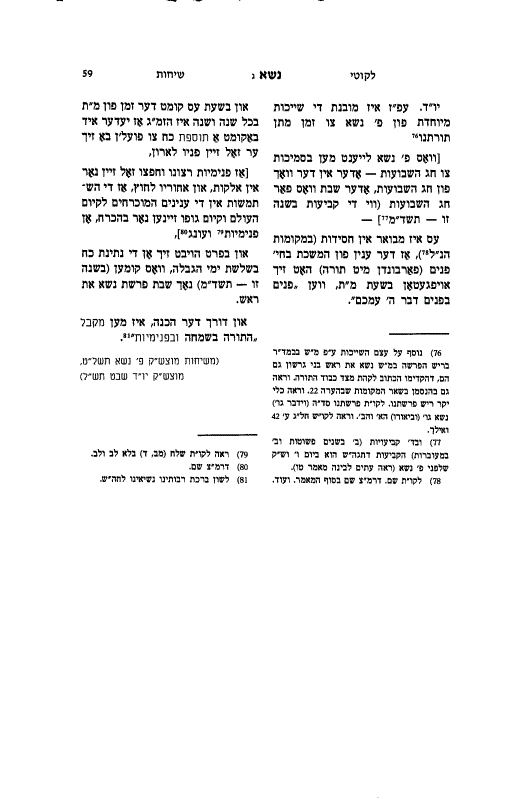
I see. And this explains the special connection of the portion of Nasso to the time of Matan Torah. Because this portion of Nasso is read close to Shavuos. Sometimes in the week of Shavuos. Shavuos is read in the Parshas Nasso. Sometimes in the week of Shavuos, sometimes in the Shabbos that precedes, Bamidbar and Nasso are read before Shavuos.
That year was the Kvius in Taf Shin Dalet Mem. This year it’s taking Parshas Nasso in Taf Shin Pe Vav. According to the schedule of a practical Likkutei Sichos. So it’s Taf Shin Pe Vav also, it’s in the Shabbos Nasso. That year it was Shabbos after Parshas Nasso. But it’s still next to. What’s the connection of Nasso with Matan Torah?
It's explained in Chassidus in the above places when it talks about the Aron carrying on the Kosov and the Inyan of Hamshochas Bechina’s Panim, which is associated, tied to the Torah. This was accomplished; the novelty came during Matan Torah. When Panim bePanim, Hashem spoke to you face to face. And when the time of Matan Torah comes every year, it’s a Zman Groma. That’s the time that is an opportune time that every Yid gets an additional power to influence and impact himself, that his face, his Pnimius, should be to the Aron. That his inner wishes and desires should be only to Godliness. And the back should be for the outside.
Those uses that the person uses from matters that are necessary for the world to be sustained and for the body to be sustained are just for has to, without inner, without pleasure. The pleasure and the Pnimius is only in Godliness. And that’s the extra Koch we get, that it should be the Panim from the Luchas. And that’s the idea of the Aron, which is Nasso’as Ha’aron in the Parsha that we read, on the Kosov, on the Pnimius.
And especially it starts during the three days of Hagboloh that come in this year, Taf Shin Dalet Mem, after Shabbos Parshas Nasso is Rosh... and this year it’s before, but then the Hachana is we receive the Torah with joy and in an inner. This is from Sichas Motzoi Shabbos Kodesh Parshas Nasso Taf Shin Lamed Tes and Motzoi Shabbos Kodesh Yud Shvat Taf Shin Lamed.