Introduction
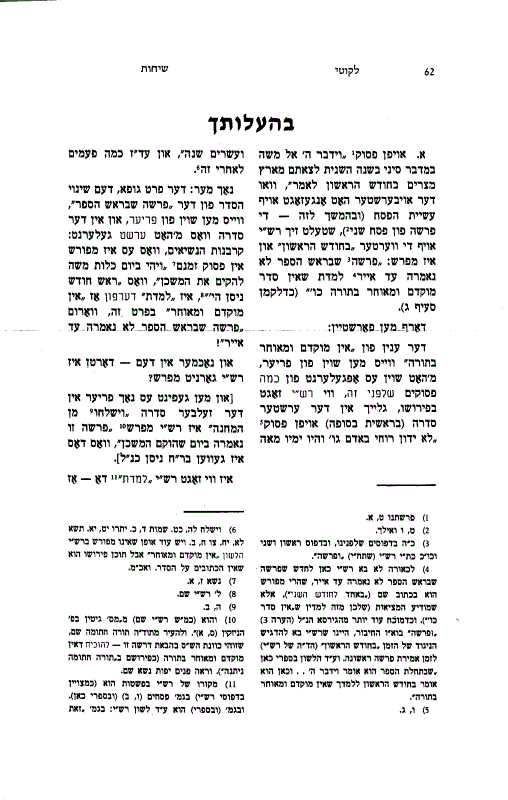
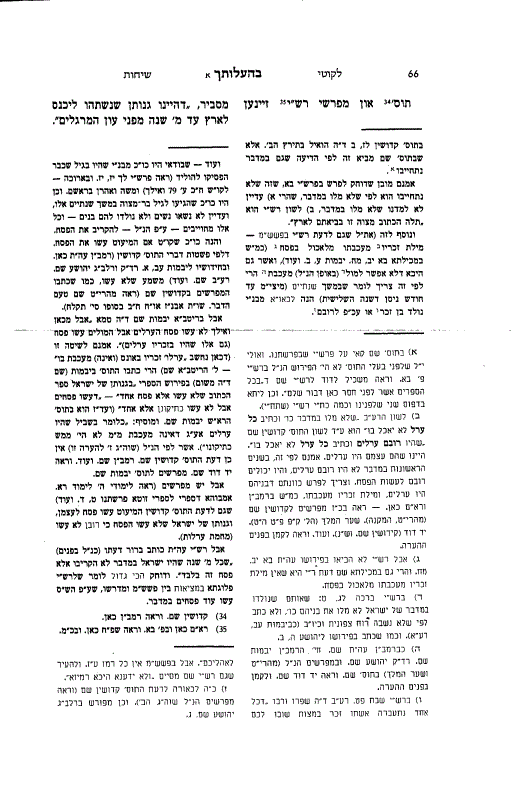
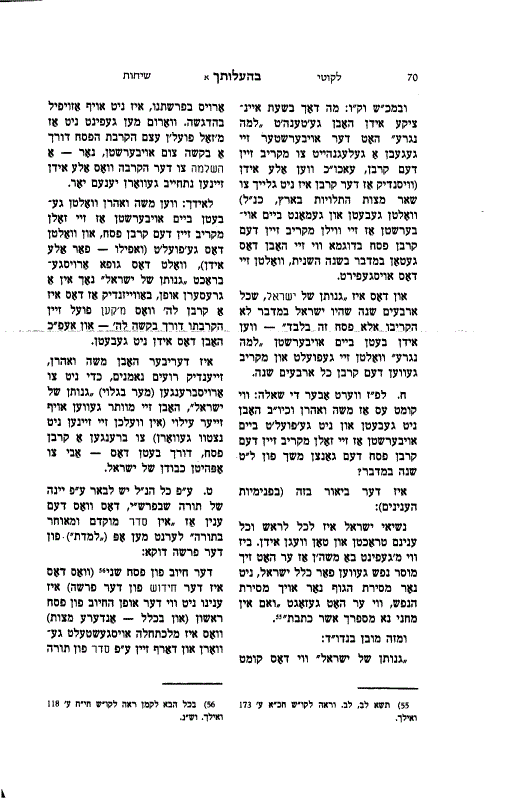
In this sicha, the Rebbe analyzes a Rashi in Parshas Behaaloscha that addresses the timing of Hashem’s command regarding the Korban Pesach. The question arises because the Torah presents the command for bringing the Pesach offering with a date that actually precedes the events described at the beginning of Sefer Bamidbar. Specifically, the command about Pesach was given on the first day of Nisan, while Bamidbar begins with events from the first day of Iyar. This apparent reversal in chronological order prompts Rashi’s commentary, which the Rebbe explores in detail.
Rashi notes that although the Torah sometimes specifies dates, it does not always present events in chronological sequence. In this case, even though we are told exactly when each event occurred, the Torah still places them out of order. The Rebbe points out that this is not a new observation—Rashi has mentioned before that “there is no earlier or later in the Torah,” meaning that narrative order does not always match historical sequence. However, here it is unique because both events are explicitly dated and yet appear out of order.
The Rebbe also discusses Rashi’s explanation for why Sefer Bamidbar does not begin with the command about Pesach. Rashi says it is due to “Genusan Shel Yisrael”—a criticism or deficiency regarding Israel. What is this Genusan? The Rebbe explains: Hashem did not instruct them to bring another Korban Pesach after their first year in the desert; they only brought one. But since Hashem never commanded them to bring another, they were not allowed to do so on their own initiative.
The Rebbe brings down answers from Tosafos and other commentators but focuses on a deeper point: perhaps their deficiency was that they did not ask Hashem for permission to bring another Korban Pesach, just as those who were unable to bring it at its proper time later requested and received Pesach Sheni as an opportunity. This lack of initiative carries an implicit criticism, which will be elaborated upon as we proceed through the sicha.
To set the stage historically: Hashem spoke to Moshe in the wilderness of Sinai during the second year after leaving Egypt. The Exodus occurred in Nisan during their first year; now, a year later—in Nisan again—Hashem gives Moshe this command about bringing the Korban Pesach. Later in Parshas Behaaloscha, we also encounter Pesach Sheni, when those who were unable to participate in the first offering requested another chance and were granted it.
Rashi comments specifically on the phrase “in the first month,” explaining that while Parshas Bamidbar (the opening section of Sefer Bamidbar) was spoken in Iyar—the second month—this section about Pesach was spoken earlier, in Nisan. The verse itself makes this clear at the beginning of each portion. From here we learn there is no strict chronological order in how Torah presents its narratives—a principle Rashi will expand upon further as we continue.
The Rebbe notes that this concept—that there is nothing earlier or later (no fixed chronology) in Torah—is not new; Rashi has stated it many times before. So why does Rashi say here “from here you learn” as if it’s a novel teaching? We have already encountered this idea from previous verses and discussions throughout Chumash.
This question sets up much of what will follow: understanding why Rashi emphasizes this point here and what deeper lessons can be drawn from how and why Torah sometimes departs from chronological order—especially when both dates are explicit and yet reversed.
Saif Aleph
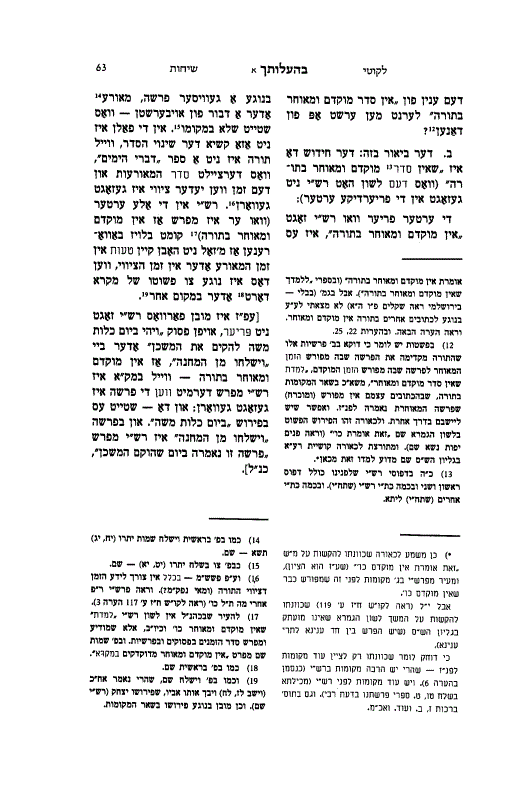
In the portion of Bereishis, towards the end, the Torah first discusses the children that Noach fathered. Then, at the end of the section, the verse states that Hashem declared He would not forever contend with man, and that man's days would be 120 years. The truth is, this statement was made before Noach's children were born, yet the Torah brings it down afterwards. As Rashi explains there, “there is no earlier or later in the Torah”—meaning that even though the verse about Noach’s children appears first, Hashem’s declaration actually happened earlier.
The Rebbe points out that this concept—of events being recorded out of chronological order—is not unique to Bereishis. We see it again in our portion, Parshas Naso, and even earlier in Parshas Beha’aloscha. It is already well established that certain events are recorded out of sequence. For example, some occurrences described before actually took place on Rosh Chodesh Nisan, which comes after events described at the beginning of Bamidbar (which is set in Iyar).
This specific detail—that things are out of order—is already known from previous portions. It’s not a new idea introduced here by “Vayedaber Hashem el Moshe.” When discussing Korban Pesach, we already know from before that things are not always written in chronological order.
For instance, we just learned about the offerings of the Nesi’im—the leaders of each tribe. The verse clearly states that these offerings began on the day Moshe finished erecting the Mishkan. When was that? As Rashi explains, it was on Rosh Chodesh Nisan. Yet earlier in Bamidbar it says events took place in Iyar—so we see again that things are written out of sequence.
Furthermore, even before discussing the offerings of the Nesi’im in Parshas Naso (chapter 5 verse 2), it says those who were impure had to be sent out from the camp. Rashi explains there as well that this command was given on the day the Mishkan was erected—again Rosh Chodesh Nisan—which predates what is stated at the beginning of Bamidbar regarding events in Iyar.
The Rebbe explains that what’s novel here is that while elsewhere we simply note things are out of order, here in our portion the Torah gives an explicit date. When a date is given, one would expect a clear chronological sequence. Yet even with precise dates provided—such as “on the first month of the second year after leaving Egypt”—the Torah still records events out of order.
This is different than other places where Rashi says “there is no earlier or later in Torah.” In those cases, it’s usually because a particular parsha or commandment appears out of sequence and could cause confusion about when something happened or was commanded. Rashi clarifies so we don’t misunderstand when an event occurred based on its placement in Torah.
Here though, since both parshas give exact dates—one referring to Iyar and another to Nisan—and yet they appear in reverse order, there’s a unique lesson: Even when Torah specifies times and seems to lay out an ordered sequence of commands and events, there still may be no strict chronological order.
Thus we learn a deeper chiddush: “Ein mukdam u’me’uchar baTorah”—there truly is no absolute ‘earlier’ or ‘later’ in Torah—even when dates are specified and an ordered narrative might be expected.
This answers our first question about what “ein mukdam u’me’uchar baTorah” means here—it applies even when times and sequences seem explicit.
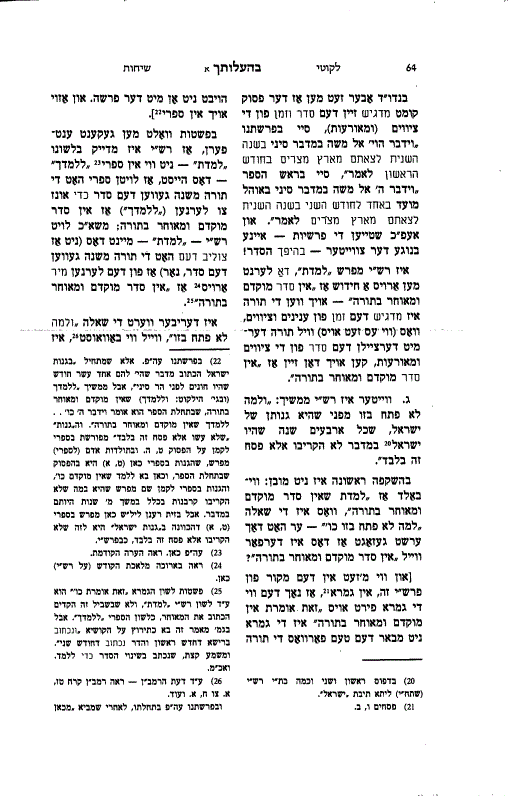
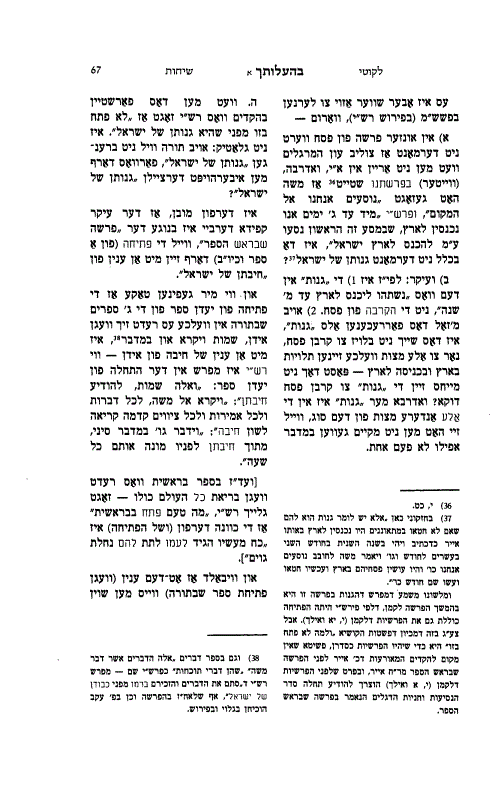
Now we move to Rashi’s next point: Why didn’t the Torah begin with Korban Pesach? Rashi answers that it would have been embarrassing for Israel—for all forty years in the desert they only brought this one Pesach offering. The Torah did not want to start with something highlighting this shortcoming.
At first glance this seems puzzling: If we just established there’s no set order in Torah (“ein mukdam u’me’uchar baTorah”), why does Rashi ask why Korban Pesach wasn’t placed first? If there’s no chronological sequence required, what difference does it make where it appears?
Saif Beis
The discussion begins with the question of why the Torah does not start with the mitzvah of Pesach, as raised by Rashi. The Gemara, which is the source for Rashi’s comment, concludes that “there is no earlier or later in the Torah”—meaning, the Torah does not always follow chronological order. However, after stating this principle, the Gemara does not explain why the Torah did not begin with this particular parsha. It simply notes that from here we learn there is no fixed order in the Torah’s narrative.
This leads to a deeper question: if there is no chronological order in the Torah, why does Rashi specifically ask why it did not start with this mitzvah? According to the Sifri, the Torah changed its order specifically to teach us this principle. But Rashi’s wording—“from here you learn”—implies that it is not that the Torah changed its order for this reason; rather, we simply derive from here that such a principle exists. So Rashi’s question remains: why did the Torah choose to write it this way?
Furthermore, Rashi’s language is precise. He does not ask why the Torah changed its order or why it did not start with this parsha. Instead, he asks why it did not “open up” with it. This nuance suggests a different focus in Rashi’s question—he wants to know about the opening of Sefer Bamidbar specifically, not just about chronological sequence.
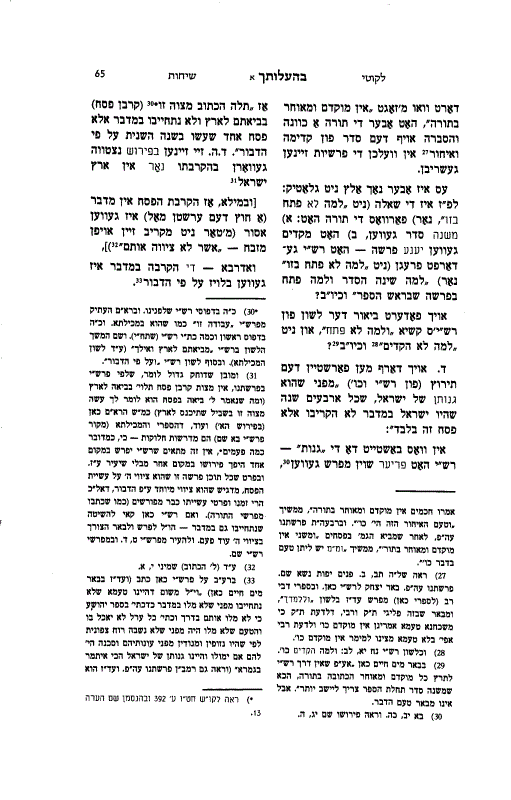
Turning to Rashi’s answer—that it would be an embarrassment (gnus) for Israel because during all forty years in the desert they only brought one Pesach offering—this too requires explanation. Earlier, Rashi already explained that bringing Pesach offerings was only commanded once in the desert; subsequent observance was explicitly tied to entering Eretz Yisrael. In fact, bringing a Pesach offering in the desert beyond that first time was prohibited unless Hashem directly commanded it.
Therefore, what kind of embarrassment could there be? The Jews were not allowed to bring additional Pesach offerings—they were following Hashem’s command precisely! The only time they brought it was when Hashem told them explicitly to do so.
Some explain that the embarrassment refers to their delay in entering Eretz Yisrael for forty years due to the sin of the spies (meraglim). Because of this delay, they missed out on many mitzvos—including bringing additional Pesach offerings—which could only be fulfilled in Eretz Yisrael.
However, this explanation is difficult according to peshat—the plain meaning of our verses. In our parsha about Pesach, there is no mention yet of any punishment related to the sin of the spies or a delay in entering Eretz Yisrael. On the contrary, at this point Moshe tells them they are traveling toward Eretz Yisrael and expects entry within three days.
If so, how can we say that their “embarrassment” is their failure to bring additional offerings due to a punishment that has not yet occurred? Moreover, if lingering in the desert and missing out on mitzvos is considered an embarrassment, then why single out Pesach? There are many other mitzvos dependent on being in Eretz Yisrael which they also could not fulfill during those forty years.
In fact, one could argue there is even more embarrassment regarding those other mitzvos—since they were never performed even once in the desert—whereas Pesach was at least observed once as commanded.
This brings us back to Rashi’s language: “Why didn’t [the Torah] open up with [this parsha]?” The Rebbe explains that it would be inappropriate for Sefer Bamidbar—the opening of a new book—to begin with something negative or embarrassing about Israel. When starting a sefer or any significant section of Torah, it should begin with something expressing love and dearness for Israel.
This pattern can be seen at the beginning of each sefer where Israel is discussed: Shemos (Exodus), Vayikra (Leviticus), and Bamidbar (Numbers) all open by highlighting Hashem’s affection for His people. As Rashi notes at each opening: in Shemos they are counted because they are dear; in Vayikra every communication from Hashem begins with an expression of endearment; and similarly in Bamidbar.
Saif Gimmel
The Rebbe begins by referencing Rashi’s comment that the census of the Jewish people in the desert is an expression of Hashem’s love for them—He counts them frequently because they are dear to Him. This theme of dearness, or chibosam, appears not only here but also in Sefer Bereishis, where Rashi asks why the Torah begins with creation rather than with mitzvos. The answer is that it demonstrates Hashem’s power and His intent to give Eretz Yisrael to His people, again highlighting the special relationship between Hashem and the Jewish people.
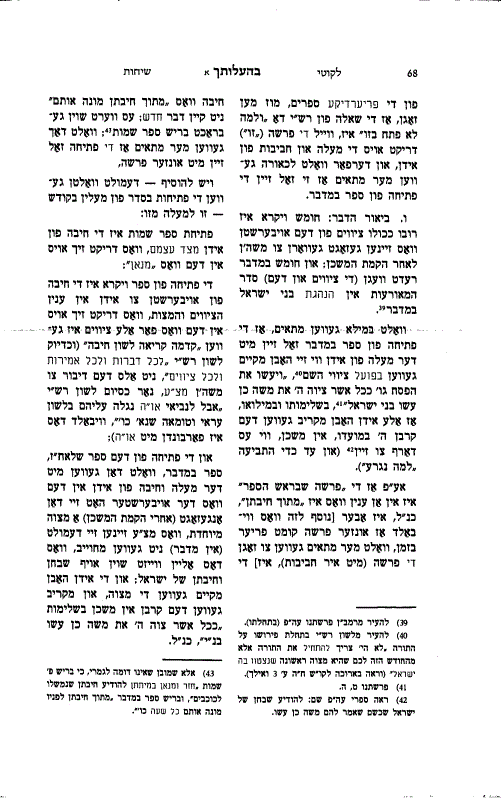
The Rebbe notes that this idea of opening a sefer with a demonstration of the Jewish people’s greatness is not new. In fact, it would seem even more appropriate for Sefer Bamidbar to begin with the parsha about the commandment to bring the Korban Pesach, since that episode so clearly expresses their virtue: “They did the Pesach just as Hashem commanded Moshe.” All of Bnei Yisrael participated fully and properly, offering the korban at its appointed time in the Mishkan. Even those who were unable to participate initially demanded, “Why should we lose out?”—showing their deep desire to fulfill Hashem’s will.
Although counting Bnei Yisrael also expresses their dearness, as Rashi notes (“because they are dear He counts them all the time”), this is not a novel idea—it was already mentioned at the beginning of Sefer Shemos. Therefore, it would have been even more fitting for Bamidbar to open with our parsha about Korban Pesach, which highlights their unique devotion and yearning for mitzvos.
If we had begun Bamidbar with this mitzvah, there would be a beautiful progression in how each sefer opens: Shemos would begin with the inherent dearness of every Jew (“their count”), Vayikra would highlight Hashem’s love expressed through giving mitzvos (as seen in its opening language), and Bamidbar would showcase how Jews actualize this love by fulfilling Hashem’s commands completely—even going beyond what was required.
The Rebbe explains that Vayikra opens with a language of affection—kriya, calling—which applies to all communications from Hashem to Moshe on behalf of Bnei Yisrael. This is contrasted with how Hashem communicates with prophets from other nations: temporarily and without this special affection. Thus, each sefer’s opening reflects a different aspect of Hashem’s relationship with His people.
Returning to our topic, opening Bamidbar with Korban Pesach would emphasize not only that Bnei Yisrael fulfilled Hashem’s command perfectly but also their eagerness—even those who were initially excluded (due to impurity) pleaded for another opportunity. Their request led to the institution of Pesach Sheni—a second chance—which further reveals their deep connection and longing for closeness to Hashem.
This episode demonstrates both their love for mitzvos and their refusal to accept spiritual loss. Even when circumstances prevented them from participating in Korban Pesach at its proper time, they did not resign themselves; instead, they approached Moshe and asked why they should be left out from serving Hashem.
This request embodies mesiras nefesh—self-sacrifice—and a profound desire not to miss any opportunity for divine service. It highlights how even those who were ritually impure (tamei l’nefesh adam) were determined not to lose out on bringing a korban for Hashem. Their plea resulted in Pesach Sheni—a new mitzvah born from Jewish yearning and initiative.
The Torah records this episode not just as history but as an eternal lesson: every Jew can always return and reconnect through teshuvah (repentance). The service of teshuvah is different from serving Hashem in a straight path; it comes after failure or distance. The phrase tamei l’nefesh adam alludes to one who has fallen or sinned but seeks return—this is hinted at by Rashi as well.
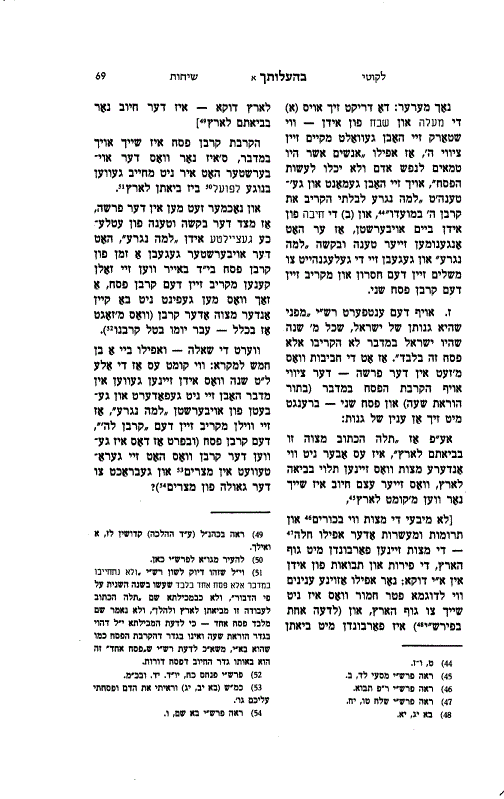
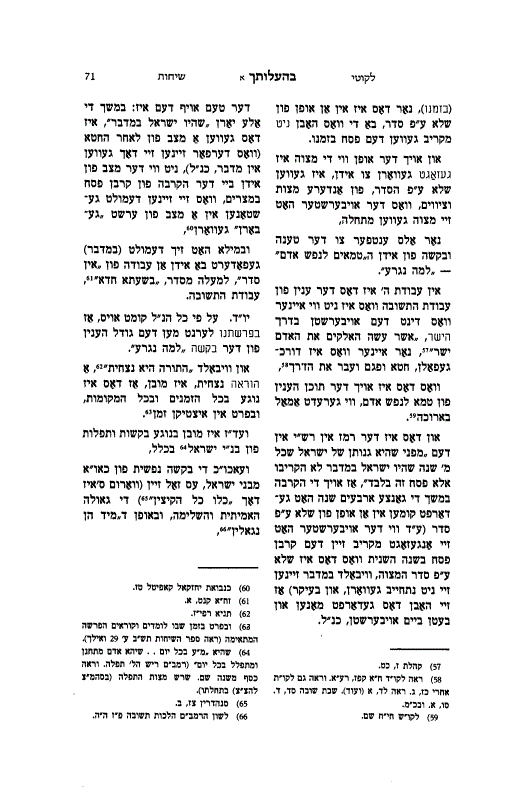
Rashi points out that during all forty years in the desert, Bnei Yisrael brought only one Korban Pesach—the first year after leaving Egypt. This fact carries an element of embarrassment: ideally, they should have sought opportunities for more korbanos even when circumstances were irregular (shelo al pi seder). The unique case of Pesach Sheni shows that when Jews demand closeness despite obstacles, new avenues open up for divine service.
The reason they did not bring additional korbanos during those years was because their situation was “after sin”—they were wandering due to past failures. Unlike immediately after leaving Egypt (when they were newly redeemed), life in the desert called for avodah beyond regular order—service characterized by teshuvah and renewal rather than routine observance.
This teaches us that sometimes spiritual progress requires breaking out of established patterns (seder) and reaching higher through heartfelt return (teshuvah). The story of Pesach Sheni exemplifies how sincere longing can create new opportunities even when none seem available according to strict rules.
From all this we learn an enduring lesson: whenever Jews cry out “Why should we lose out?”—refusing spiritual resignation—their plea has power across all times and places. The Torah is eternal; its lessons apply especially now as we await redemption.
This principle relates directly to our prayers today. Just as Bnei Yisrael persistently requested another chance, so too do Jews everywhere pray daily for redemption—“May the sprout of David your servant speedily flourish,” and “May You rebuild the Beis Hamikdash quickly in our days.” These prayers are expressions of our refusal to accept exile as final; we continually ask for complete geulah (redemption), confident that our heartfelt requests will be answered literally and speedily.
Key Points
1. The Torah sometimes presents events out of chronological order, even when explicit dates are given—such as the command for the Korban Pesach in Nisan appearing after events dated to Iyar—highlighting that narrative sequence does not always match historical sequence.
2. Rashi’s commentary emphasizes that “there is no earlier or later in the Torah,” and the novelty here is that this principle applies even when both events are precisely dated, teaching us not to assume a strict timeline based on textual order.
3. The Torah’s choice not to begin Sefer Bamidbar with the parsha of Korban Pesach is explained by Rashi as avoiding “Genusan Shel Yisrael”—an implicit criticism that they brought only one Pesach offering during forty years in the desert, though they were not commanded to bring more.
4. The embarrassment referenced by Rashi cannot be attributed solely to the delay in entering Eretz Yisrael or missing other mitzvos, since at this point in the narrative there was no punishment yet decreed; rather, it relates specifically to the unique situation of Korban Pesach and its potential for highlighting a deficiency.
5. Each sefer of Chumash opens with an expression of Hashem’s love for Bnei Yisrael: Shemos with their counting, Vayikra with affectionate language, and Bamidbar also begins by emphasizing their dearness through a census—demonstrating a pattern of starting on a positive note rather than with criticism.
6. Opening Bamidbar with the mitzvah of Korban Pesach would have further highlighted Bnei Yisrael’s virtue—their complete fulfillment of Hashem’s command and their deep yearning for mitzvos, as seen especially in those who demanded a second chance through Pesach Sheni.
7. The episode of Pesach Sheni reveals the power of Jewish initiative and longing; when Jews refuse to accept spiritual loss and cry out “Why should we lose out?”, new opportunities for divine service can emerge—even leading to new mitzvos being instituted.
8. This narrative teaches an enduring lesson about teshuvah (repentance) and spiritual renewal: even after failure or distance from Hashem, sincere desire and refusal to give up can open new paths for connection and growth beyond established patterns.
9. The eternal relevance of these lessons is reflected in our daily prayers for redemption; just as Bnei Yisrael persistently sought closeness to Hashem in the desert, so too do Jews today continually pray for geulah, confident that heartfelt requests will be answered speedily and literally.