Introduction
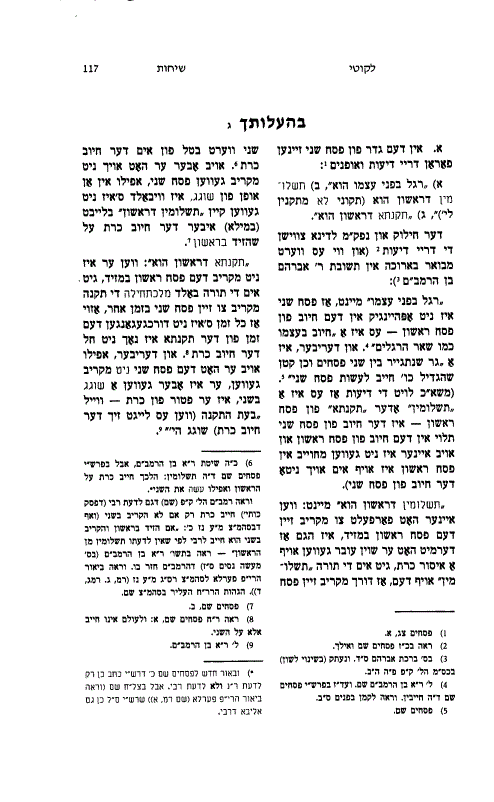
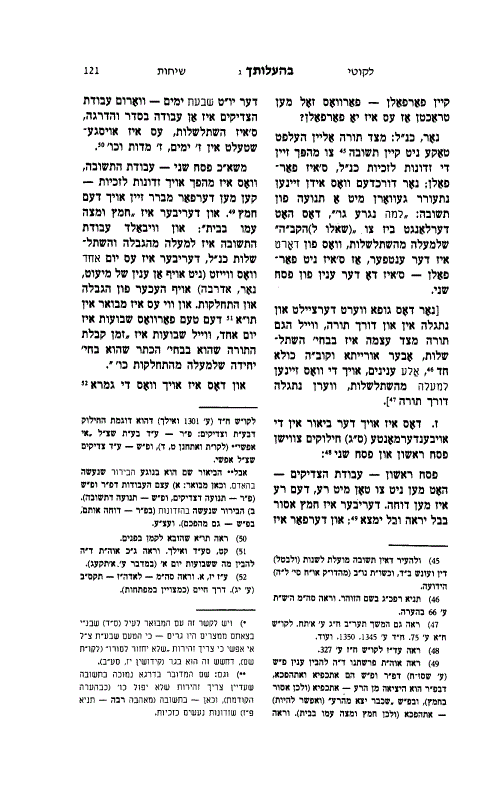
This sicha, from Likkutei Sichos volume 18, is the third sicha on Parshas Beha'aloscha. Here, the Rebbe explores the topic of Pesach Sheni and its deeper meaning. The discussion centers around three distinct interpretations of what Pesach Sheni truly represents.
The Rebbe approaches these interpretations both in terms of their practical halachic implications and their spiritual significance in Avodas Hashem. Throughout the sicha, he draws a parallel between Pesach Rishon and Pesach Sheni—explaining that Pesach Rishon corresponds to the level of tzadikim (the righteous), while Pesach Sheni reflects the level of baalei teshuva (those who return). Within the category of baal teshuva, there are further gradations, which will be explored as the sicha progresses.
Before delving into these spiritual dimensions, the Rebbe first examines the plain meaning (peshat) of Pesach Sheni, referencing sources such as the Rambam and his son. He outlines three primary opinions regarding how to define Pesach Sheni and what makes it unique.
The first opinion is that Pesach Sheni is a regel bifnei atzmo—its own independent festival. According to this view, it stands as a separate mitzvah and holiday, with its own identity on the 14th of Iyar. The Rebbe notes that this aspect will be clarified further later in the sicha. Importantly, Pesach Sheni is only observed by those who did not bring the first Pesach offering, raising questions about what it means for it to be considered an independent festival.
The second opinion holds that Pesach Sheni serves as tashlumim derishon—a make-up opportunity for those who missed out on bringing the first Pesach offering. In this sense, it functions as a form of compensation or fulfillment for what was missed during Pesach Rishon. However, even within this view, there are nuances regarding whether this make-up opportunity fully rectifies what was missed or if there are lingering differences.
The third approach will be discussed in detail as we proceed through the sicha. Each interpretation carries practical differences and reflects a unique perspective on how Torah views second chances and spiritual rectification.
Saif Aleph
There are three main opinions regarding the nature of Pesach Sheni and its relationship to the first Pesach. The first view is that Pesach Sheni is a regel bifnei atzmo—its own independent festival. According to this, if someone missed the first Pesach, they have another opportunity to bring the offering, but this does not retroactively fix or replace the original obligation. Rather, it is a separate chance to fulfill the mitzvah.
The second opinion holds that Pesach Sheni serves as a tashlum—a make-up for what was missed during Pesach Rishon. While it does not erase the fact that one missed the first opportunity, it allows for rectification by bringing the offering at a later date.
The third opinion, referred to as tekanto d’rishenu, maintains that Pesach Sheni actually repairs or fixes what was lacking in the first Pesach. If someone failed to bring the korban on Pesach Rishon, then by bringing it on Pesach Sheni, they fulfill and correct their earlier shortcoming.
The Rebbe explains that there are practical differences between these views, especially regarding their implications in halacha. For example, if we consider Pesach Sheni as its own festival (regel bifnei atzmo), then its obligation is independent of whether one was obligated in the first Pesach. This means that someone who was not Jewish during the first Pesach but converted before Pesach Sheni, or a minor who became an adult in between, would still be required to bring the offering on Pesach Sheni.
However, according to the other two opinions—that it is either a make-up or a correction for the first Pesach—the obligation of Pesach Sheni depends on whether there was an obligation for Pesach Rishon. If someone was not obligated in the first instance (such as a convert or minor), then there is no requirement for them to bring an offering on Pesach Sheni either.
This distinction leads to practical differences: according to the first opinion, both a convert and a minor who became obligated after Nisan would need to observe Pesach Sheni. According to the other two opinions, they would not.
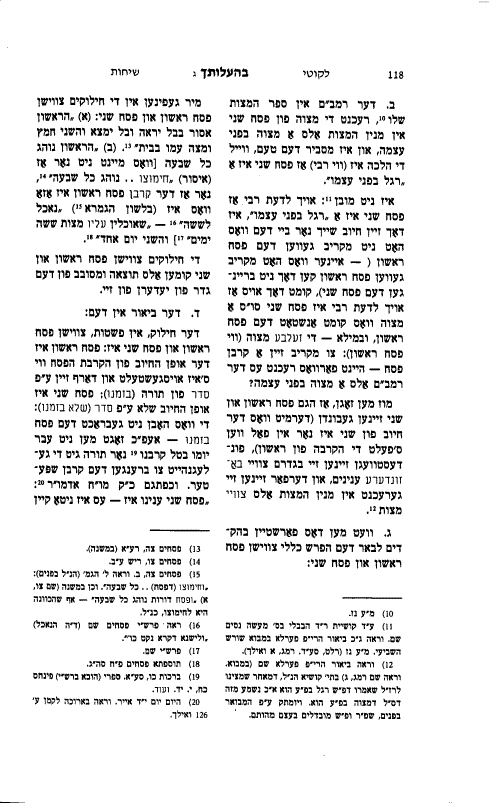
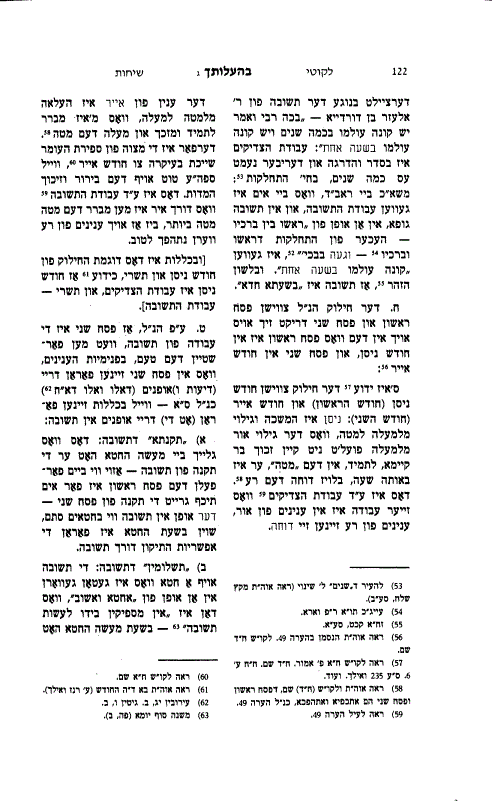
The Rebbe further distinguishes between tashlumim (make-up) and tekanto (correction). If we say that Pesach Sheni is merely a make-up for what was missed (tashlumim der rishon hu), then even if someone intentionally failed to bring the korban on Nisan 14th (Pesach Rishon), although they have already transgressed and are liable for karet (spiritual excision), Torah gives them an opportunity through Pesach Sheni to make up for it and remove this liability.
If such a person brings the offering on Pesach Sheni, he is absolved from karet. However, if he fails again—even accidentally—to bring it on Pesach Sheni, he remains liable for karet due to his initial failure at Pesach Rishon. The penalty is not for missing Pesach Sheni per se but for missing both opportunities without rectification.
If we follow the third opinion—that of tekanto, correction—then from the outset Torah provides this second chance specifically as a way of repairing what was lacking in fulfilling one's obligation during Nisan.
This nuanced discussion highlights how each view shapes our understanding of responsibility and rectification within halacha: whether second chances are independent opportunities or directly tied to previous obligations and failures.
Saif Beis
The discussion here focuses on the unique status of Pesach Sheini and how it differs from the first Pesach, both in halachic terms and in its spiritual implications. The Rebbe explains that if someone missed bringing the first korban Pesach, the Torah gives them an opportunity to bring a second offering on the 14th of Iyar—Pesach Sheini. As long as this second chance remains available, the person is not yet liable for karet (spiritual excision) for missing the first Pesach, since they still have a way to fulfill their obligation.
Therefore, even if someone fails to bring the second korban Pesach as well, but does so unintentionally (b’shogeg), they are exempt from karet. This is because at the time when they could have corrected their omission by bringing Pesach Sheini, their failure was accidental, and thus karet does not apply. The obligation of karet only comes into effect once all opportunities for correction have passed and if the omission was deliberate.
This leads to three perspectives regarding Pesach Sheini: If it is considered a regel b’fnei atzmo—an independent festival—then even a minor who became an adult or a convert who converted between Pesach Rishon and Pesach Sheini would be obligated to bring it. If someone missed the first offering intentionally but missed the second one accidentally, according to this view, they would not be liable for karet.
However, if Pesach Sheini is seen merely as tashlumim—a make-up for what was missed—then karet would apply for intentionally missing the first offering, regardless of what happens with the second. The third view sees Pesach Sheini as a takana—a corrective opportunity—so that as long as one still has time to bring it, liability for karet does not yet apply.
The Rebbe notes that these three approaches will later be connected to three levels in avodas ha-teshuvah—the service of repentance. For now, he turns to how Rambam rules: Rambam follows Rebbe’s opinion that Pesach Sheini is a regel b’fnei atzmo, an independent festival. This is why Rambam counts it as its own mitzvah in Sefer HaMitzvos.
The question arises: How can Pesach Sheini be truly independent if someone who already brought the first korban cannot bring the second? It seems that Pesach Sheini is only relevant when one did not bring Pesach Rishon. So isn’t it just a substitute rather than its own mitzvah?
The answer is that although the obligation of Pesach Sheini only applies when one missed the first offering, in their essential definitions they are two distinct mitzvos. Rambam therefore counts them separately in his enumeration of commandments. Even though there are cases—such as a convert or minor who becomes obligated between the two dates—where one brings only Pesach Sheini, its status remains unique.
Thus, while there is an undeniable connection between them (since bringing the first excludes you from bringing the second), each has its own character and halachic standing. The Rebbe will later explain how this distinction reflects different spiritual paths: Pesach Rishon representing tzaddikim (the righteous), and Pesach Sheini representing baalei teshuvah (those who return).
To further clarify these differences, we look at several practical distinctions between them. For example:
אורישון אסור בבל יראה ובל ימצא.
The first [Pesach] is prohibited regarding “you shall not see” and “you shall not find” [chametz].
ובשני חמץ ומצה עמו בבית.
But on [Pesach] Sheini, chametz and matzah are present together in his house.
This means that during Pesach Rishon there is a strict prohibition against owning or seeing chametz throughout all seven days of Passover. In contrast, during Pesach Sheini one may have chametz in their possession even while bringing and eating the korban.
Another difference: The korban of Pesach Rishon is associated with seven days of matzah eating (“kol shiva”), whereas for Pesach Sheini there is only one night where matzah must be eaten with the korban. This highlights another aspect of their distinct identities within halacha and practice.
Saif Gimmel
The Torah distinguishes between Pesach Rishon and Pesach Sheini in several ways, particularly regarding the laws of chametz and matzah. For Pesach Rishon, there is a prohibition against owning or eating chametz for seven days, and the mitzvah of eating matzah extends for those same seven days. The korban Pesach is brought on the 14th of Nisan and eaten that night, with the mitzvah of matzah continuing for an additional six days.
As Rashi explains, when the verse says "six days you shall eat matzah," it refers to the days following the initial night, making a total of seven. Thus, Pesach Rishon is closely associated with an extended period of matzah and a complete removal of chametz from one’s possession.
In contrast, Pesach Sheini is observed only for one day. The mitzvah to eat matzah applies solely at the time of bringing and eating the korban Pesach Sheini; there is no requirement to avoid chametz before or after that day. This distinction highlights a fundamental difference between the two observances.
Why are these differences present? They stem from the essential nature and definition of each offering. Once we understand what Pesach Rishon represents, it becomes clear why it requires seven days without chametz and an extended period of matzah. Similarly, understanding Pesach Sheini clarifies why these stringencies do not apply.
Peschat Rishon represents serving Hashem in an ideal state—what might be called the level of a tzadik. The obligation to bring the korban Pesach at its proper time reflects a service that follows the Torah’s order: everything is done as prescribed, at its appointed time on the 14th of Nisan.
Peschat Sheini, however, addresses those who missed this opportunity—whether due to impurity or being on a distant journey. Its very institution is not according to the regular order; it exists specifically for those who did not bring their offering at the right time. Normally, if one misses a mitzvah’s designated time, it cannot be made up later. Yet here, Torah provides a unique chance: even after missing the proper moment, one can still fulfill this mitzvah.
This idea is captured in the well-known saying from the Previous Rebbe: “Pesach Sheini teaches us that nothing is ever lost; it’s never too late.” No matter how distant or impure someone may have been—even if their failure was intentional—they are still given another opportunity to correct their past and fulfill what was lacking.
This dynamic mirrors the difference between a tzadik and a baal teshuva. A tzadik serves Hashem in a straight path—“asher asa Elokim es ha’adam yashar”—following Torah’s order from the outset. A baal teshuva has deviated from this path but is granted by Hashem an opportunity to repair what was missed and make up for deficiencies through sincere return.
Thus, Pesach Rishon corresponds to serving Hashem as a tzadik does: everything in its proper place and time, with no prior failings to correct. Pesach Sheini embodies teshuva—the ability to rectify past shortcomings even after missing out initially.
This distinction was evident historically as well. When Bnei Yisrael brought their first korban Pesach in Egypt, they were like newborns—just born as a nation with no previous sins or baggage. As described by Yechezkel’s prophecy and reflected in halacha regarding conversion (gerus), they were spiritually pure like newborn children: “a convert who converts is like a child just born.”
At that moment, they fulfilled both milah (circumcision) and korban Pesach—the two “bloods” referenced in “b’damayich chayi”—and began anew with no spiritual blemishes. Their service was like that of tzadikim: fresh, untainted by past mistakes.
This concept finds expression in Megillat Ruth as well: when Ruth converted, she was blessed with complete reward for seeking shelter under Hashem’s wings—a full new beginning akin to that first generation at yetziat Mitzrayim.
Saif Daled
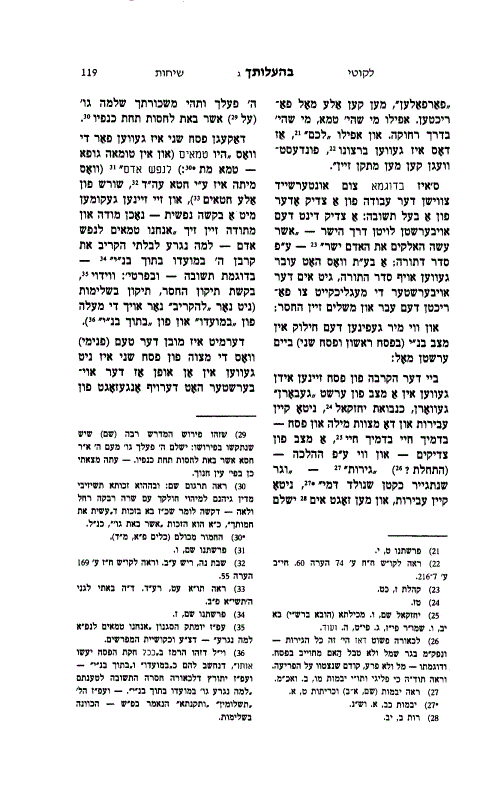
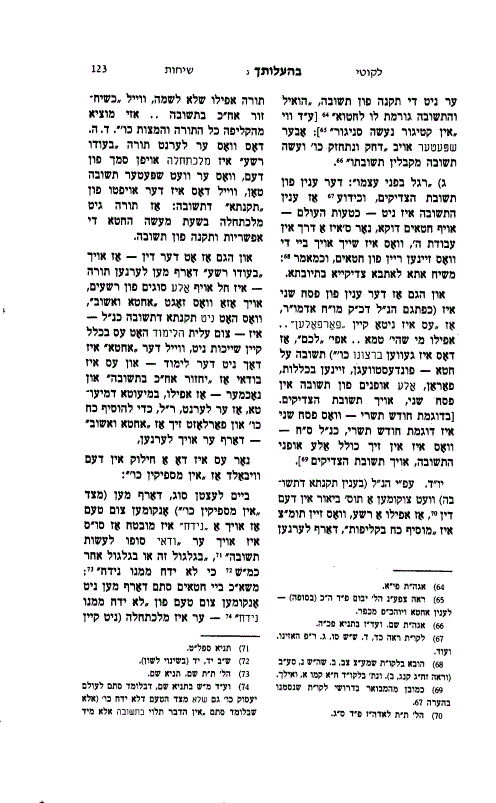
The origin of Pesach Sheni is rooted in the story of those who were defiled—specifically, individuals who were tmei meis, ritually impure due to contact with a corpse. The Torah describes them as tamei l’nefesh adam, defiled by a human soul. Death itself, which brings about this impurity, is a consequence of the sin of the Tree of Knowledge—cheit etz ha’daas. This original transgression by Adam is considered the root of all subsequent sins.
These people, aware of their impurity and its spiritual origins, approached Moshe with a heartfelt request. They openly admitted their state—“anachnu tmeim l’nefesh adam,” we are impure—and yet pleaded, “lamah nigara,” why should we lose out on bringing Hashem’s offering at its appointed time among the children of Israel? Their plea was not simply to participate but to be included fully and equally, as if they had never missed the opportunity. This attitude mirrors the essence of teshuvah—repentance and return—where one seeks not just to make up for what was lacking but to restore things completely.
Their approach involved both confession (viduy) and a request for tikun ha’choser, a full correction of what was missing. They did not settle for partial participation; they wanted their offering to count as if it had been brought at the proper time, together with all Israel. This drive reflects the core dynamic of teshuvah: not merely compensating for loss but achieving restoration in its fullest sense.
This context reveals an inner dimension behind Pesach Sheni’s institution. Rashi notes that these individuals merited an additional law because they asked for it. But why was Pesach Sheni not commanded from the outset like other mitzvos? In almost every other case, Hashem first instructs what must be done; here, only after these Jews expressed their yearning—“lamah nigara”—did Hashem respond with a new commandment.
This sequence teaches that teshuvah must originate from below—from the person himself. The movement toward return comes through the arousal of the individual, even when he is still in a state of impurity and cannot sense any spiritual revelation from above. Despite being distant from holiness, he initiates his own awakening and reaches upward through teshuvah. That is why Pesach Sheni came about only after their request—it had to be initiated by those who felt lacking and yearned for inclusion.
This also answers a question in the revealed part (nigleh) of Torah: Why did Hashem delay their opportunity by an entire month? With other festival offerings, if someone misses bringing them on Yom Tov, there are seven days afterward to make up for it. Here too, those who were impure on Pesach would have become pure soon after—so why wait until the next month?
The answer lies in understanding that Pesach Sheni is not just a technical makeup but represents an entirely new category—a distinct “regel bifnei atzmo,” its own festival and spiritual path. It occurs in another month altogether because it embodies something fundamentally different: teshuvah.
Teshuvah does more than fill in what was missing; it introduces a new mode of serving Hashem. While the service of a tzadik follows Torah’s order and deals only with matters already holy or at least permissible, it cannot elevate things that are inherently impure or forbidden—the three impure klipos are simply pushed away according to Torah law.
The unique power of a baal teshuvah, however, especially when his return is motivated by love (teshuvah me’ahavah), is that he can transform even intentional sins into merits—zdonos na’asos lo k’zechuyos. This means he elevates even those elements previously outside holiness and turns them into mitzvos themselves.
This transformative power comes from a level higher than the regular order (seder hishtalshelus)—from beyond creation’s structure. According to Torah’s usual perspective, there is no concept that sins can become merits; wisdom (chokhmah) and prophecy (nevuah) both agree that a sinner must pay for his wrongdoing. Only through this higher dimension does true transformation occur.
The sages teach that when asked what should happen to one who sins, wisdom and prophecy (and even Torah itself) respond with consequences or compensation—but only Hashem offers forgiveness through teshuvah. This underscores how Pesach Sheni represents not just compensation for missed opportunity but an entirely new spiritual possibility born from below—through yearning and return.
Saif Hei
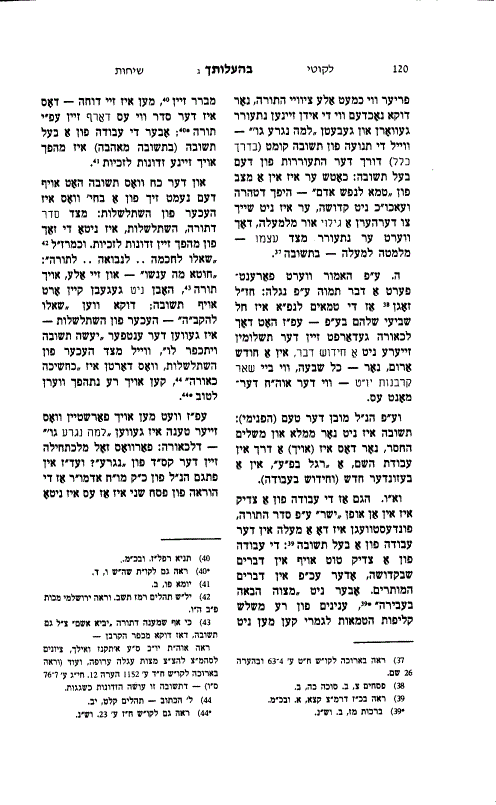
The earlier authorities—chokhmah, nevuah, and Torah—did not allow for repentance. If a person made a mistake, their response was negative: there was no way to fix it. But when the question was brought before Hashem, which is higher than the entire order of creation (hishtalshelus), the answer was different. Hashem responded: what should a sinner do? Let him do teshuvah and he will be forgiven. From this higher perspective, darkness is like light; even evil can be transformed into good.
The people who were impure at Pesach asked, “Why should we lose out?” They did not simply accept their fate—they protested and requested another chance. This echoes the teaching of my father-in-law, the Rebbe, that the lesson of Pesach Sheni is that it is never too late. Why would someone think it’s lost? Because from the perspective of Torah as it operates within hishtalshelus, it really is lost; teshuvah should not help, and it shouldn’t be possible to turn sins into merits—it’s too late.
However, when the Jews were aroused with a movement of teshuvah—“Why should we lose out?”—their plea reached Hashem Himself, beyond hishtalshelus. This brought about a new revelation: that it is not too late. Their cry of “loma nigara”—“why are we missing out?”—was essential. By expressing this longing and complaint, they tapped into a level higher than Torah as it exists within creation’s order. As a result, Pesach Sheni was instituted.
This process unfolds over time: initially, Torah itself does not provide for a second Pesach or for teshuvah to overturn punishment. But because Torah later speaks about teshuvah and incorporates this new ruling, we see that even matters beyond hishtalshelus become revealed through Torah.
איזה וכו' צ'בריחו כולו חד
But Torah and Hashem are truly one; all matters—even those beyond hishtalshelus—become revealed through Torah.
The Rebbe now explains how the two main differences between Pesach Rishon (the first Pesach) and Pesach Sheni (the second Pesach)—namely, that on Pesach Rishon chametz is forbidden and it lasts seven days, while on Pesach Sheni chametz is permitted and it lasts only one day—reflect these deeper ideas. The first Pesach corresponds to tzaddikim who operate within the order of creation; therefore, they have no dealings with negativity or evil. Evil must be pushed away completely—hence chametz is prohibited—and their service unfolds in an orderly fashion over seven days (corresponding to the seven emotions).
The service of tzaddikim is structured step by step; everything happens in its proper order and progression over seven days. This reflects their spiritual path: refinement comes gradually through separation from evil.
Pesaḥ Sheni, by contrast, represents the service of teshuvah—the baal teshuvah who can transform even negativity into good. That’s why chametz can be present during Pesach Sheni: even something negative can be elevated. And because this service transcends all limitations and order (hishtalshelus), it takes place in just one day—not because it's less important or shorter in value, but because it's above any division or limitation.
This idea is further illustrated by the Talmudic story where Rabbi cried upon hearing that some people acquire their share in the World to Come over many years while others do so in one hour. The step-by-step approach takes years—a gradual process—while teshuvah can happen in an instant when someone throws themselves fully into repentance without any division between head and heart.
This also explains why there’s a difference between tzaddikim and baalei teshuvah—and between the month of Nisan (when Pesach Rishon occurs) and Iyar (when Pesach Sheni occurs). Nisan represents revelation from above to below—the light comes down but doesn’t permanently refine what’s below; evil is merely pushed away. This parallels tzaddikim whose work focuses on light but doesn’t transform darkness itself.
Iyar represents elevation from below to above—the lower elements are refined and elevated permanently. That’s why counting the Omer mainly takes place in Iyar: this period accomplishes refinement of character traits from below upward, similar to how teshuvah transforms even negativity into good.
Saif Vov
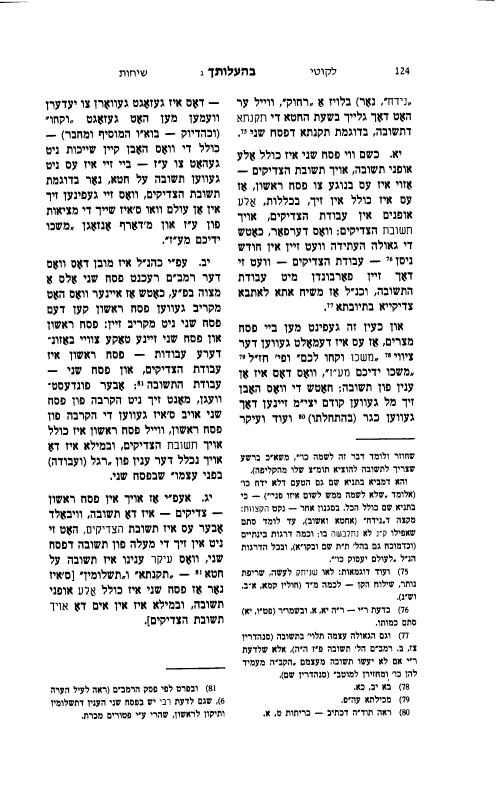
Generally, the distinction between the months of Nisan and Tishrei reflects two different spiritual paths: Nisan is associated with the service of the righteous—tzadikim—while Tishrei is connected to teshuva, repentance. More specifically, within Nisan and Iyar themselves, we see this contrast play out. The Rebbe now returns to explain how the three interpretations of Pesach Sheni discussed at the beginning of the sicha—whether Pesach Sheni is a correction (takanta) for missing Pesach Rishon, a make-up (tashlumim), or an independent festival (bifnei atzmo)—are reflected in the inner dimensions of teshuva.
Pesch Sheni represents the service of teshuva. Based on what was explained above, we can now understand why there are three opinions regarding Pesach Sheni, and how all three are valid—they are all “the words of the living God.” Each opinion corresponds to a different aspect of teshuva, and all three are present within Pesach Sheni itself.
In general, there are three types of teshuva. The first is takanta, immediate correction: as soon as one sins, there is already a path for rectification through teshuva. Just as someone who missed bringing the first Pesach offering can immediately correct it by bringing Pesach Sheni, so too with sin—the opportunity for teshuva exists right away.
The second type is tashlumim, making up for what was missed. This applies when someone sins intentionally with the thought that they will later repent (“I will sin and then do teshuva”). In such cases, teshuva does not provide immediate correction because the intention to rely on teshuva actually causes the person to sin. The principle here is that “the prosecutor cannot become the defender”—the very idea of relying on future repentance undermines its effectiveness. However, if a person later sincerely pushes themselves to do teshuva, they can still achieve it; it just isn’t available at the time of sinning.
The third level is where Pesach Sheni stands as an independent festival—bifnei atzmo. This represents teshuva not as a response to sin but as an ongoing path in serving Hashem. It’s not only for those who have sinned; even those who are free from sin—the tzadikim—have their own form of teshuva. As it’s said regarding Moshiach’s arrival: even tzadikim will be inspired to do teshuva.
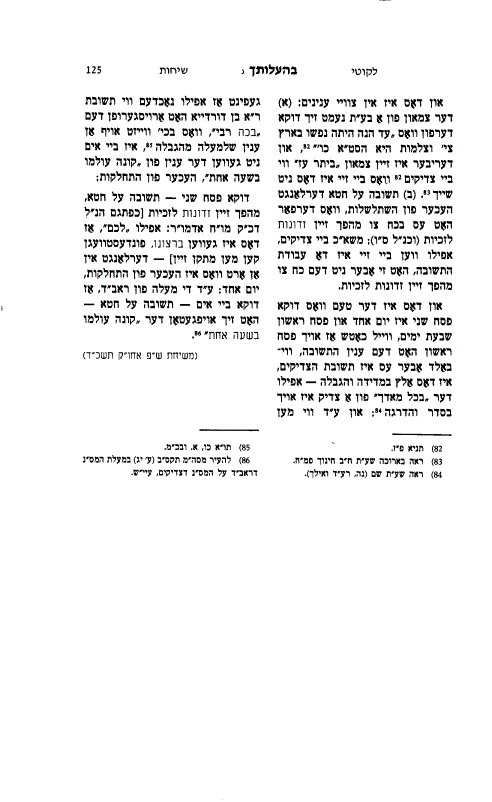
כדי לעשות תשובה אז הצדיק יעבוד על תשובה וזה אינדיפנטי, זה דרך ענבית ישראל זו התשובה השנייה להסביר פסח שני וגם איזה רעיון פסח שני יש אך אנחנו יודעים פסח שני כפיס גומנל דחק מרחום אדמור כמו שאמר הרבי אססס ניטוק קיין פרפאון זאת אומרת שזה לא מתאר זה נראה כמו שאנחנו מדברים על משהו שלא נפגש זאת אומרת שאנחנו מדברים על מיסט אפורטונטי כמו שאומר, אפיל מישהו יוטומי אפיל לוחם אפיל לוחם אפילו אם זה היה תנצ'ל או דוסיס גוון ברצוי נחולו שזה תשובה על חית תשובה על הסינד אז אנחנו רואים שאמרתי של הפרידיק הרבי, זה כל על הסינד ובגלל זה נבחרו ונפגשו כל איפונים של תשובה בפסח שני עדיין יש לכם כל מיני תשובה בפסח שני והפיס גומנל מדבר על מישהו שנפגש משהו, אבל זה לא נגיד שהאמת שיש לכם כל מיני תשובה איך תשובה הצדיקים גם תשובה הצדיקים, זו הרגל בפני עצמי וזה בדוגמאס חודש תשרי זה סימילר לתשובה פסח שני זה דוגמאס חודש תשרי פסח שני זה סימילר לתשרי וזה פסח שני זו תשובה של שנה וכמו שאמרתי איך תשובה צדיקים זה מכניס גם תשובה צדיקים גם תשובה צדיקים ביום הזה הרבי מגיד יותר על ההחלטה בין כשיש את התקונה ברגע כשאתה עושה את העבירה לתשובה או זה אין מה לדבר ביותר לעשות תשובה איך זה מיוחד בין ההלכה שגם אם אדם מנסה ללמוד תשובה ומנסה להשתמש בקליפס נראה ידעתי הנהל בעניין תקנת התשובה בסופו של תשובה וצוקום התייסס ביורדן דין זה יעדיף להתגלגל הלכה אז אפילו הראש איפה זה תייסס מי שקר בקליפס איש שאיבל ותייסס סוד הלכה איש דף לרנן תוירה אפילו של אילישמו אפילו אם זה לא בקרוב לטעניה כשיחזיר אחר כך בתשובה כי לאחר כך כשהוא עושה תשובה הוא יוצא עם תשובה אז היא מוציא מהקליפה כל התוירה במצב החולות והוא יחזיר מהקליפה כל התוירה והמצב כל התוירה של אילישמו מה זה אומר דף לרנן תוירה באידי רושם כשהוא מתגלגל תוירה כשהוא עדיין רושם איש מלכת חילוי יש תקון פה להתחיל אנחנו מנסים כשהוא יחזיר תשובה אחר כך כשהוא יחזיר הוא יחזיר תשובה כי זה מה שתקון התשובה מקבל להתחיל יש את ההחלטה לאחר כך כשהוא יחזיר תשובה התוירה מייצג במהלך כשאתה עושה את השן תקון התשובה היכולה זה נראה שזה מדבר על רושם שלא נפגש את ההחלטה לעשות תשובה כי הוא לא אמר אחת ואושר אבל בקטגוריה השנייה של רושם שהדיברנו עליה תשובה בהם איך אנחנו נציג את זה להם רבי אקספלין והוא גם ולכן אז איך בידי רושם דרמה לנדן תוידה אז זה יהיה חליף לכל סוגים של רושם זה יהיה לכל סוגים של רושם איך עזב וזוק אחת ואושר אפילו אחת שאומרת אני אעשה תשובה והוא אומר הוא לא אמר את החלטה של התשובה כי אם אני מדבר בידי רושם זה תשובה אז זה אז זה אספקט אז אפילו אם אני מדבר בידי רושם זה לא אומר שזה לא משנה עם ההלכה של תוידה וזה זה אם את beating שאנחנו יודעים לא לא זה igen זה זה לא זה זה זה טוב זה [...] בגלל שהוא אומר איך תבעשו והוא הוא מנגן בצורה נגד הוא מנגן הוא עדיין צריך ללמוד אבל יש חילוק במלצת סוג דאפמן מצד חילוק בקטגוריה האחרונה הוא עושה את זה בצורה נגד ללמוד בגלל שאומרים לו הוא לא יכול הוא לא יכול לומר שזה טקנטי ואז צריך ללמוד איך תבעשו איך שאומרים לו הוא גם מנגן איך תבעשו הוא גם יכול לבנות אבל הוא לא נגן הוא לא נגן הוא רק הוא רק רחוק אבל למה הוא לא נגן בגלל שהטקנטי נמצא שם אבל בגלל שבזמן של האנושים יש מי שצריך לתכנן בגלל שטקנטי להתכנן לפסץ רישי אם לא תבנה הפסץ הראשון תבנה הפסץ השני יביאו לערוץ כמו שאמרנו במסה של איון אנחנו מדברים על תשובה שהיא מתכנת לכל מיוחדים של תשובה גם לצדקים המסה של ניסון מתכנת גם לאספקט לצדקי מתייבת לצדיקים בפסץ השני כמו שהפסץ הראשון מתכנן לתשובה גם לצדיקים גם לצדיקים כמו שאמרנו זו התשובה של צדיקים כמו שהפסץ הראשון מתכנן לצדיקים זו התשובה של צדיקים זו התשובה של צדיקים כמו שאמרנו זו התשובה של צדיקים כל מתכשיוים כל דברים ולצדיר סציקים וגם לצדיקים ולצדיקים אםezeב אברך זה יוזמן זה יוצא בצדיקים כנעל משיח אז אתם רואים משיח ייתן צדיקים לצדיקים אז זה גם צדיקים כמו שהם יוצאים לצדיקים אוקיי אנחנו נמצאים בפסח מצרים
This passage discusses how even tzadikim engage in their own form of teshuva—not as a response to sin but as an independent spiritual path. This connects to how Pesach Sheni functions both as a correction and as an independent festival. The Rebbe also notes that even when someone learns Torah not for its own sake (lo lishma), if they later do teshuva, all that Torah learning is elevated and redeemed from its negative state.
The discussion then turns to Pesach Mitzrayim (the original Passover in Egypt). Those who circumcised themselves before leaving Egypt were considered like converts at the outset. There were instructions given individually—some were told “take” (referring to preparing for the korban Pesach), while others were not included in this command because they were not yet fully part of Bnei Yisrael’s covenantal status.
This illustrates that there are people whose existence in this world requires them to be brought in—they may not be obligated yet but must still be included through special effort. This parallels how Pesach Sheni operates: even if someone could not bring the first offering due to circumstances beyond their control (such as impurity or distance), they are given another opportunity through Pesach Sheni.
This leads into a deeper question: If one already brought the first korban Pesach, he cannot bring another on Pesach Sheni—so how can we say that Pesach Sheni is an independent mitzvah? The answer lies in understanding that just as there are aspects of mitzvos relevant specifically for tzadikim (who did everything right initially), so too does Pesach Rishon contain elements relevant only for tzadikim.
The unique quality of teshuva associated with Pesach Sheni does not possess certain advantages found in other forms—for example, it may lack the transformative power described elsewhere (“turning sins into merits”). Nevertheless, since Pesach Sheni encompasses all types of teshuva—including those appropriate for tzadikim—it serves both as a make-up and as an independent spiritual path.
This brings us to two key differences between regular baalei teshuva (those returning from sin) and tzadikim (the consistently righteous). First is the intense thirst and yearning found specifically among baalei teshuva; their souls have experienced spiritual dryness (“a parched land”) and thus yearn more deeply than those who never strayed. Second is their ability—through true repentance—to transform past sins into merits (zdonos na'asu lezechuyos). Tzadikim do not have this power because they never sinned; their service remains measured and ordered.
This distinction explains why Pesach Rishon lasts seven days while Pesach Sheni is only one day: The extended celebration reflects ongoing growth step by step—the way of tzadikim—whereas baalei teshuva can sometimes achieve dramatic transformation in an instant.
The story about Rabbi Elazar ben Durdaya illustrates this point: despite his previous limitations—even after much crying and striving—he could only acquire his share in Olam Haba (the World to Come) through a single momentous act of sincere repentance. This shows that while both paths are valid and necessary within Judaism, each has its own unique strengths and limitations.
Key Points
1. The sicha explores three primary interpretations of Pesach Sheni: as an independent festival (regel bifnei atzmo), as a make-up opportunity (tashlumim) for Pesach Rishon, and as a corrective act (tekanto d’rishenu) that repairs the missed mitzvah. Each view has distinct halachic and spiritual implications.
2. The practical differences between these opinions affect who is obligated in Pesach Sheni. If it is independent, converts or minors who become obligated between Nisan and Iyar must bring it; if it is only a make-up or correction, only those originally obligated in Pesach Rishon are included.
3. Pesach Rishon and Pesach Sheni differ in their laws: Pesach Rishon prohibits chametz for seven days and requires eating matzah throughout, while Pesach Sheni allows chametz and mandates matzah only with the korban. These differences reflect their distinct spiritual roles—Pesach Rishon for tzadikim, Pesach Sheni for baalei teshuva.
4. The institution of Pesach Sheni arose from the plea of those who were impure at the time of Pesach Rishon. Their heartfelt request—“why should we lose out?”—demonstrates the power of teshuva initiated from below, even when one feels distant from holiness.
5. Teshuva transcends the regular order of creation (seder hishtalshelus). While Torah, wisdom, and prophecy see missed opportunities as irreparable, Hashem’s response allows for forgiveness and transformation—turning even intentional sins into merits through sincere return.
6. The contrast between Nisan (Pesach Rishon) and Iyar (Pesach Sheni) parallels two modes of divine service: Nisan represents revelation from above (the path of tzadikim), while Iyar embodies elevation from below (the path of baalei teshuva), refining even what was previously distant or impure.
7. The three halachic views on Pesach Sheni correspond to three levels within teshuva: immediate correction (takanta) available right after sin; make-up (tashlumim) when one initially relied on future repentance; and an ongoing, independent path relevant even to tzadikim who have not sinned but seek ever-higher closeness to Hashem.
8. Even Torah study performed not for its own sake (lo lishma) can be elevated through later teshuva. This demonstrates that all forms of avodah can be redeemed and uplifted when one returns sincerely to Hashem.
9. Both tzadikim and baalei teshuva have their unique strengths: tzadikim serve step by step in orderliness (seven days), while baalei teshuva can achieve dramatic transformation in a single moment (one day). However, only baalei teshuva possess the power to turn past failings into merits through deep yearning and repentance.
10. Ultimately, Pesach Sheni teaches that “nothing is ever lost”—there is always a second chance. This lesson applies to every Jew at every level, inspiring both correction for past shortcomings and ongoing growth in divine service, whether as a tzadik or a baal teshuva.