Likutei Sichos Vol. 026 - Parshas Zachor - Purim


A wonderful Likkutei Sichos in Chelek Chof-Vov. This is the Sichah for Parshas Zachor and Purim. It is a very detailed and many brilliant chidushim as usual. The Rebbe explains a Gemara, the machlokes between the Bavli and the Yerushalmi. And mainly the Rebbe shows us the specialty of writing down the Megillah, which is part of the remembrance of Amalek. We know the Gemara, as we'll discuss in detail, we find the story of Amalek both in Parshas Beshalach, in Ki Seitzei repeated in the Mishneh Torah, in the book of Devarim, and then we find it in the Yehoshua, and then we find it in the Megillah. And the Rebbe points out a, uses the language in the Gemara, that the Megillah is not just Kesuvim, the Megillah is BaSefer, it has the status like a Sefer Torah. It's a very interesting concept that we say that the Torah isn't gonna be batul, and the Megillah, while all other Nevi'im and Kesuvim are going to be batul. We'll see exactly what that means also, that they're going to cease to be. The Rebbe learns that there is a special mitzvah in the Megillah to write the Megillah, which represents the idea of Amalek, the words, the work of erasing Amalek. As the Rebbe will explain. We'll go step by step.

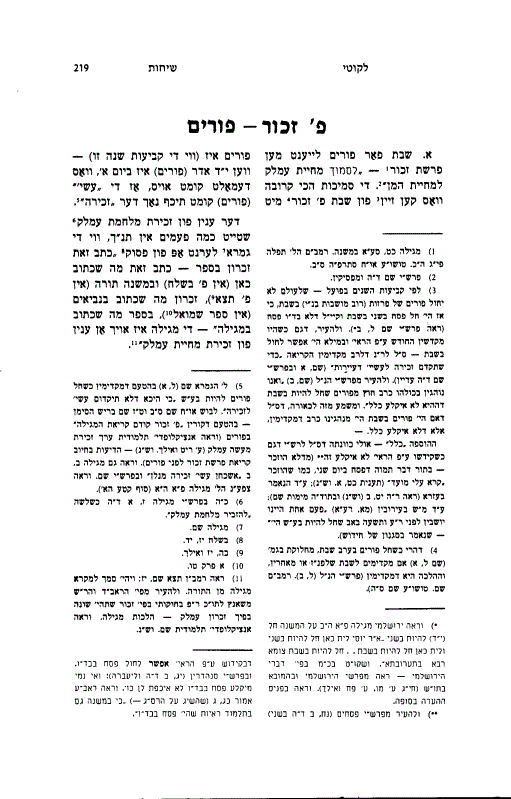
First in the beginning, the Rebbe just gives us a, special that year Purim was on Sunday. And the Rebbe pointed out that when Purim is on Sunday, you have all the various different remembrance of mechiyas Amalek, erasing Amalek next to each other between Shabbos and Sunday. On Shabbos, we cover both the Parshas Zachor, so that's from the Parshas Ki Seitzei, Mishneh Torah, and we also read in the Haftorah from Parshas Zachor, from the story of Agag, which is Amalek with the King Shaul, which is brought down. So you have two of the stories. And then on Purim itself that follows on Sunday, we have the Megillah, of course, that would be a Motzei Shabbos if the Purim is on Sunday. And also the following day on Purim day, we read from the Parshas Beshalach also, so we cover all four places in where it is mentioned and we read about the erasing of Amalek, as we will see. And the Rebbe explains that very special.

But then the Rebbe goes through to explain it is more than just mentioning it many times, but there is a special power to mention it in the Megillah. We'll go step by step in the Sichah Parshas Zachor Purim, Aleph. Shabbos far Purim, leint men Parshas Zachor. The Shabbos that precedes Purim, we read Zachor. Now that doesn't matter when Purim comes out, the Shabbos before Purim will do the Parshas Zachor. And the reason why we read the Parshas Zachor before Purim, because the remembering and erasing Amalek is connected to Purim in which we erase Haman who was a descendant from Amalek, and he continued the work of Amalek to fight against the Jewish people. So we read it beforehand, lismoich mechiyas Amalek l'mechiyas Haman, so that we will have erasing Amalek which we read in the Torah about remembering, 'Timche, machoy timche, zecher Amalek' to erase him, that should come before we erase Haman, l'mechiyas Haman, when we read about Haman, we bang Haman. So before we do the Megillah, we should read about the for Purim, before we erase Haman, we should erase Amalek who is his great-great-grandfather. So therefore we'll always read Parshas Zachor before Purim.

Now, what is the closest proximity that you can have of leaning about mechiyas Amalek to the mechiyas Haman? Is in the schedule when Purim is on Sunday. So it turns out that on Shabbos you just erased him, you erased Amalek, and on Sunday you're erasing Haman. The smichus achi krovah, the closest possible that can sein von Shabbos Parshas Zachor mit Purim, that can be between the Shabbos in which we read Zachor and Purim, is vie die kvias shana zu, is the kvias of that year, and Yud-Dalet Adar Purim is b'Yom Aleph, that the 14th of Adar which is Purim is on Sunday. Vos damolt kumt ois, then it turns out in that schedule, as die asiyah, Purim is when we actually erase him, Haman, kumt teikef noch der zchira, comes immediately after remembering to erase, we actually erase. So on Shabbos we remember 'machoy timche' to remember to erase, and on Purim we're actually erasing Haman. And that's the closest possible times that we can have the remembering it to the actual fulfillment erasing Haman when we read the Megillah.

So the Rebbe says that the inyan von zchira m'chemes Amalek, this idea we find this many, we find this many times in the Torah, and what happens is that all these times in the Torah, Nevi'im, Kesuvim, different places, are all read within the span of these two days of Shabbos and Sunday in this case. Der inyan von zchiras Amalek steht kama p'amim Tanach, it says many several times in Tanach. Vie die Gemara lernt es op von pasuk, the Gemara learns this from the verse. It says in the pasuk in Beshalach, Yud-Zayin, Pasuk Yud-Dalet, the Aibershter says to Moshe Rabbeinu after the war with Amalek, he took Yehoshua 'uvchar lanoo anashim u'tzei hilachem b'Amalek', after that the pasuk says 'Ksov zois'. So what is the 'write this'? What is the 'zois', this, refer to? The two things in Torah, Mishneh Torah. Maseh ksav kan in Parshas Beshalach, what's written in over here in Parshas Beshalach, u'b'Mishneh Torah in Parshas Seitzei. So that's the 'zois' that was written here. And write this as a zikaron, as a remembrance, and that refers to maseh ksav b'Nevi'im, that which we find in the Prophets, which is the Haftorah from Shabbos Parshas Zachor in Sefer Shmuel. That's in the book of Shmuel. So 'Ksov zois zikaron', that's in the Nevi'im in Shmuel. BaSefer, there is 'Ksov zois BaSefer', maseh ksav b'Megillah, and the 'Sefer', that's what's written in Megillah. Die Megillah is oich an inyan von zchiras m'chemes Amalek, the Megillah is also the idea of remembering to erase Amalek. That's why these are all the four places in which we find that we erase Amalek. And we'll discuss in a minute is this four, is this three, as we'll see soon, that will be part of the discussion.

So the Rebbe says, u'fi zeh kumt tsu an iyluy b'kvias shana zu. So based on this there is an advantage the way the year is set up, as men leint bli hafsek zman, that you read without any interruption of time in between, noch anand, continuously, alle erter in Torah SheBeKsiv, all places in the written Torah, vo es vert geredt vegen m'chemes Amalek, in which is discussed the erasing of Amalek. How so? B'Yom Shabbos Kodesh, on the day of Shabbos, leint men Parshas Zachor b'Mishneh Torah. Then we read the 'Zachor es asher asah lecha Amalek' in Parshas Ki Seitzei which is in Mishneh Torah. Un oich die Haftorah on Shabbos maseh ksav b'Nevi'im, that which is written in the Prophets in Shmuel. That's the Haftorah for Parshas Zachor. Un teikef l'achrei zeh, and immediately afterwards which is b'Motzei Shabbos, Motzei Shabbos, leint men maseh ksav b'Megillah, then we read that which is written in the Megillah. So that's immediately Motzei Shabbos. U'l'mochoroso, and the next day on Purim day, leint men oich maseh ksav kan. What is written kan? Maseh ksav kan, ksov maseh ksav kan, Parsha 'Vayavo Amalek'. So we do kan, and we do Mishneh Torah, and we do the Megillah, and we do from Shmuel and it's all done within Shabbos and Sunday.

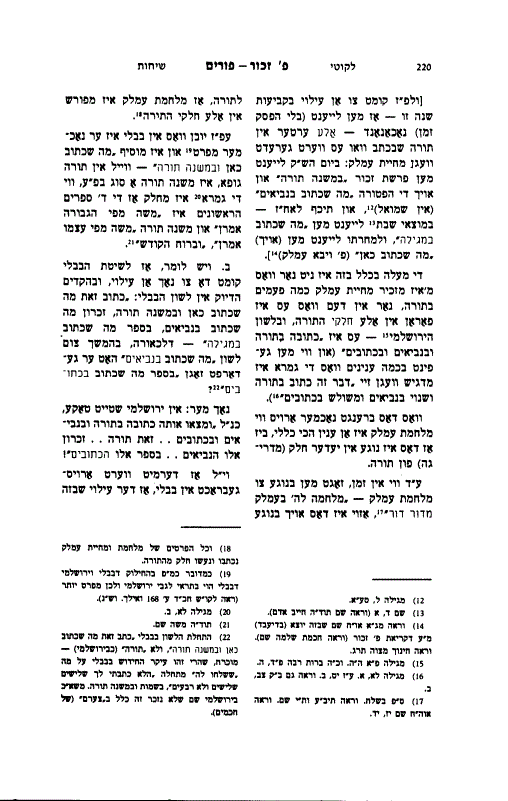
So the Rebbe explains, when we're saying that it's mentioned in all parts of Torah, it's not just that it is many times in the Torah, but in every section. We have it in Torah and we have it in Mishneh Torah, we have it in Nevi'im, and we have it in Kesuvim. So we have it in all sections. Die maileh b'chlal b'zeh is nit nor vos m'is mazkir m'chemes Amalek kama p'amim b'Torah, it's not just that we're mentioning erasing Amalek several times in the Torah. Nor in dem, but in consist vos es is faran in alle chelkei HaTorah, we find it in all portions of the Torah, all sections of the Torah, we find about m'chemes Amalek. Un b'lashon HaYerushalmi, and the Rebbe's using now the language that it says in Yerushalmi, which you know Tanach is Torah, Nevi'im, and Kesuvim. And within Torah it's Torah, Mishneh Torah. So it says in the Yerushalmi, ksuv b'Torah, which is the two parts in Beshalach and in Ki Seitzei. Und b'Nevi'im, in Shmuel, u'b'Kesuvim, and in the writings, which is the Megillah. U'm'gefin b'kama inyanim, we find in many ideas that the Gemara is madgish, the Gemara emphasizes vegen zei, about those matters, that 'davar zeh ksuv b'Torah, v'shonuy b'Nevi'im, u'm'shulash b'Kesuvim'. This item, the Gemara would say about a subject, that it's written in the Torah, it's been repeated in the Nevi'im, and it's been tripled, a third time in the Kesuvim. So that gives it not only that it's many times, but it gives it the validity of all sections of Torah. Vos dos bringt noch mer arois, the fact that it's in all sections, this expresses even more, vie m'chemes Amalek is an inyan achi kloli, that the war that we wage against Amalek is a very general idea, and that's why it's mentioned in every part. Bis as dos is nogaya yeder chelek madregah von Torah, so to the extent that this is important in every portion, which means in every level of Torah, the level of Torah, level of Nevi'im, and level of Kesuvim. Al derech zeh, al derech vie in zman. Just like when we talk about the time, when is the war with Amalek? All the time, in generation to generation. The war with Amalek in Torah is in all sections of Torah: Torah, Nevi'im, Kesuvim. Al derech vie in zman, just like in time, zogt men b'nogaya tsu m'chemes Amalek, we say as it pertains to the war with Amalek, 'milchamah l'Hashem b'Amalek midor dor', that the war that Hashem has with Amalek is from generation to generation. Azoi is dos oich b'nogaya l'Torah, the same thing is as it applies to Torah. As m'chemes Amalek is mefurash in alle chelkei HaTorah, it's been articulated, expressed very specifically in all sections of the Torah.

So in the Yerushalmi he says ksuv b'Torah, and repeated in the Nevi'im, and then in the Kesuvim. That's all the sections of the Torah. In Bavli he adds that within Torah itself there is two sections. And the Rebbe's saying these are different sections because the section of the four Chumashim are in a higher level than the level of Mishneh Torah, which Moshe Rabbeinu m'pi atzmo amron, he's saying by himself. U'l'fi zeh yuvan vos in Bavli is noch mer mefaraish. Based on this that we want to say that it's in every section, we can understand why in the Bavli he's even more specific, detailed even more. Un is mosif maseh ksav kan u'b'Mishneh Torah. And he adds what's written here, which is the Parshas Beshalach, 'ksov zois', that's in the Parsha Beshalach, and in Mishneh Torah. Veile in Torah gufa is Mishneh Torah a soog bifnei atzmoh. Because within Torah itself, the repetition of Torah is a category by itself. And since we're trying to say that m'chemes Amalek is in all categories of Torah, we want to say all categories: Torah, Nevi'im, Kesuvim, but within Torah also in all categories. In regular Torah and Mishneh Torah, the repetition of Torah. Vie die Gemara is machalik, as the Gemara makes a difference, as die daled sfarim harishonim, the first four books, Bereishis, Shemos, Vayikra, Bamidbar, is Moshe m'pi HaGevurah amron. Moshe said it in the name of Hashem, as if Hashem is speaking, Moshe is giving over the words of Hashem. But in Mishneh Torah, Moshe m'pi atzmo amron, he's saying it as if he's saying 'v'nosati esev b'sadcha', Hashem is saying but he's saying it as himself, u'b'ruach hakodesh, he said it with ruach hakodesh, but he's not saying it in the name of Hashem, but he's saying it with ruach hakodesh what Hashem is saying. So there is a difference in the Gemara, you see. So the Gemara in the Bavli wants to say how we find the idea of m'chemes Amalek in all areas of Torah, so it articulates even more: in Torah, in Mishneh Torah, in Nevi'im, and also in Kesuvim, also in the Megillah.

And here the Rebbe comes up with a chidush which the Rebbe is going to basing the Sichah, going to explain this. Is that according to the Bavli, it's not just that the Megillah is the Kesuvim, represents Kesuvim, represents the writing because Megillah is part of Kesuvim. But actually according to the Bavli, Megillah gets the strength of a Sefer like Torah ShebeKsiv, even more than the Nevi'im. As the Rebbe will explain all these details. But it's important to remember that the Rebbe show us from the wording in the Gemara that the Gemara doesn't say that it's written b'Kesuvim. That says in the Bavli, Torah, Nevi'im, u'Kesuvim. Was said and duplicated and tripled. But in the Gemara in the Bavli, it doesn't say that. It says it's in Torah, Mishneh Torah, in the Nevi'im, and in the Megillah. It doesn't say in Kesuvim. It seems in the language of Kesuvim. The Rebbe says no, no, no. The Gemara is very precise saying to you not representing Kesuvim in general, there's something unique about the way the Torah's written in the Megillah.

Let's look inside in os Beis. V'yesh lomar, we can say, as l'shittas HaBavli kumt do tsu noch an iyluy, that according to the view of the Bavli we have another advantage. One advantage we just discussed, that in the Bavli he splits the Torah into two parts, in the regular Torah and Mishneh Torah. In the Yerushalmi we don't have that. But the Rebbe says an additional prat, an additional aspect that there is an advantage in the way it's brought down in the Gemara in Megillah. In the Yerushalmi it says b'Kesuvim, and in the Gemara in the Bavli it says b'Megillah, that it's written not as part of Kesuvim. Let's look inside. U'b'hakdam hadiyuk in lashon HaBavli. First I want to introduce, the Rebbe says, look at the language of the Bavli. Ksov zois, so the pasuk says 'write this'. What is 'write this', what is 'this'? Maseh ksav kan u'b'Mishneh Torah. What's written here, this is the portion of Beshalach in which the pasuk says 'ksov zois', and also that's written in Mishneh Torah in Ki Seitzei. Then it says write this zikaron, as a remembrance. That is maseh ksav b'Nevi'im. That is what's written in the Prophet. Now notice what does it say now? Then it says BaSefer, maseh ksav b'Megillah. Here the Bavli says what's written in Megillah. It doesn't say maseh ksav b'Kesuvim. If you followed the line of the Gemara, b'Torah, Mishneh Torah, b'Nevi'im, it should say b'BaSefer maseh ksav b'Kesuvim. 'Ksov zois zikaron' is Nevi'im, and BaSefer Kesuvim. Similar to the lashon that we have in Yerushalmi, that it's in the Nevi'im and Kesuvim. Noch mer in Yerushalmi steht takeh k'nal, in the Yerushalmi it stays takes like we said before, u'matzo oiso ksuva b'Torah, and they found the m'chemes, erasing Amalek written in the Torah, u'b'Nevi'im, u'b'Kesuvim. Zois, 'ksov zois', 'zois' is Torah. Zikaron is eileh HaNevi'im. BaSefer eileh HaKesuvim. So it's Torah, Nevi'im, and Kesuvim in the Yerushalmi. But in the Bavli it doesn't say Torah, Nevi'im, and Kesuvim. It says two times Torah, Mishneh, but Nevi'im and Megillah. And the Rebbe says this is very precise, there is a tremendous advantage Megillah versus saying Kesuvim.

V'yesh lomar, as d'mit vert aroisgebracht in Bavli, with this saying it this way, the Bavli expresses, as der iyluy sheba'zeh, what is the advantage in the Megillah, is nit nor vos es steht in alle chelkei HaTorah, it's not only the fact that this is written in all portions of the Torah, Torah, Nevi'im, Kesuvim. It's more than that. Nor oich in dem vos yeden chelek kumt tsu a toikif v'chomer meyuchad, but that in every part of it is added a force and another seriousness because the fact that it's written Torah, the fact that it's written in Nevi'im, and then the fact that it's written in Kesuvim. Kesuvim doesn't add a seriousness to what's written in the Nevi'im. Nevi'im have a seriousness over Torah because if you violate the words of a Navi you get misa, if you violate words of the Torah you don't, you have rules when and where, but still there is a concept of violating the words of a Navi. If a Navi prophecy if you violate it you get the death penalty sometimes. But there's no such a thing by Torah, violating a mitzvah, unless the mitzvah that you have the death penalty, but a general mitzvah, even though the Aibershter, this is the Aibershter saying, and that's a prophet saying, but still there is an advantage. So when we talk about Navi adding on top of Torah we see that. But Kesuvim, how does Kesuvim add to that? And that's why Rashi doesn't use the word Kesuvim. Rashi uses the word BaSefer. BaSefer adds, as the Rebbe will explain brilliant. Un derfar is meshaneh in Bavli. And that's why he changes in the Bavli, un zogt nit 'b'Kesuvim', doesn't say b'Kesuvim. Nor BaSefer, maseh ksav b'Megillah. He says specifically that it's written Megillah. Because b'Kesuvim we don't understand what would it be a more serious machoy emche about Amalek because it's written in Kesuvim. Meila that it's written Nevi'im, Nevi'im has a certain in a certain respect a more seriousness over Torah, but not Kesuvim.

D'hinei b'nogaya tsu Nevi'im is mhuvan der toikif vos kumt tsu l'gabei Torah. When we talk about Nevi'im we understand the force that is added more than Torah. Chotch Torah is l'maileh m'nevuah, m'Nevi'im, even though Torah is on a higher level than prophecy and prophets. Torah is on a higher level, and yet there is a stringency, there is a seriousness about Nevi'im. Is aber faran a chomer in divrei Nevi'im, there is a more stringency when it comes to the words of the Nevi'im. Vos Ha'over al divrei HaNavi chayiv misa. One who violates the words of the Navi is liable for death. Ma she'ein kein over al divrei Torah. But if you violate words of Torah, there's no death penalty for violating the words of the Torah. Now, that doesn't mean that all the time you violate the words of the Navi you're gonna get the death penalty, that's only in a very specific cases. Here we're saying that it's written in the Torah. V'af al pi as der onesh von over al divrei HaNavi is davka. When is there a punishment for violating the words of the prophet? Is specifically ov shomaya m'pi HaNavi a nevuah u'b'eis hanevuah, when he heard it from the mouth of the prophecy and during the time of the prophecy. Which means if the Navi wrote it down and you violate it that doesn't apply, there's no death penalty. Here we're talking about in the Torah it's been written down. But still is aber dos gufa a hocha'ah, but that itself is evidence. Yes, you're not always gonna get, generally you're not gonna get the death penalty if it was written down, but it shows you that Navi has a certain, sometimes violating the words of a Navi carries with it a death penalty and you don't find that by the words of the Torah which are not specifically punishable by death. Is aber dos gufa a hocha'ah, that in itself is evidence, as es is do a toikif in divrei Nevi'im b'chlal, that there is a force, there is a strength in words of Nevi'im, because sometimes when you'll violate it directly you'll get the death penalty. Afilu ob ven s'is nor ksav b'Nevi'im, but even if it's just written, un s'is b'poel nit farbundn mit onesh, in actuality it's not connected, there's no punishment for anything that has been written down. But it still gives you an understanding that Nevi'im's words come with a death penalty occasionally.

So there is an understanding what is added the fact that it was added in the Nevi'im. But what kind of an addition is it that it was also tripled in Kesuvim? What does Kesuvim add over the punishment of Nevi'im? And that's why the Gemara doesn't want to say that it's written in Kesuvim because that wouldn't add anything. And that's what the Gemara says it's written in the Megillah, because here in the Megillah, as the Rebbe will explain which will be the whole point of this Sichah, that in the Megillah there is a much more stronger point, even greater than the Nevi'im. It gives it a permanence because the Torah said to write down the Megillah BaSefer, and that Sefer gets the strength like the Torah itself. Nevi'im, the Rebbe will explain, I'm just giving you a brief of what the Rebbe's gonna say later on, Nevi'im's prophecy is just to hear what they're saying, but the Sefer itself is not part. So even if we have a nevuah which is important, so you know the nevuah, but the Sefer part, that's why they're gonna be batul, the books itself we don't need them, we need the prophecies, we need the instructions, but not the Sefer. But by the Megillah, the Torah said BaSefer, and that Sefer... this will be at length later on.

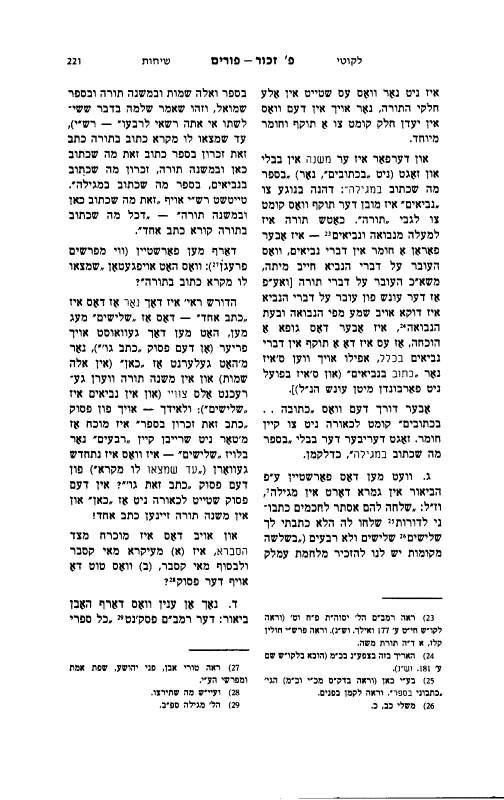
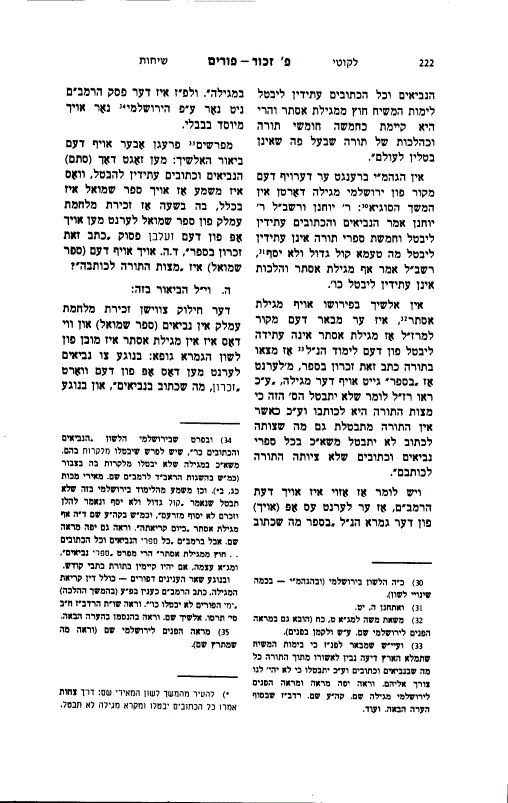
But let's go weiter. So now we're up to the Bavli doesn't just want to say b'Kesuvim because that wouldn't add anything, aber durch dem vos ksuv b'Kesuvim, but through the fact that it is written in the writings, kumt l'chora nit tsu kein chomer, this doesn't seem like it adds any more stringency. So why would... so it doesn't want to say like the Bavli says that it's written b'Kesuvim, so what? Zogt der riba d'Bavli BaSefer maseh ksav b'Megillah. That's why the Bavli says when it says BaSefer, it means that's written Megillah. Yes, there is a stringency kid'l'kamman, I'll explain to you what it is about the Megillah that it gives it that stringency. And the Rebbe, in order to understand that, gives us brings us in with another piece of Gemara that it's very perplexing. It's totally not understood. The Gemara says that originally Esther asked to be, to be written down, she wanted to write down, and the sages told her we can't write you down because there is a pasuk that says you can only do it three and not four times. Since it's already three times are there, Torah, Mishneh Torah, Nevi'im, we can't write it a fourth time. Until the Gemara says they found a pasuk..."Kesav Zos Zikaron Basefer." How is that help? Now, we learn that Torah and Mishneh Torah is not counted as two. So we have Torah is one, Nevi'im is two, and therefore what Esther was requesting, that she should be written, that's three, so we don't have really four. So originally we thought that Torah and Mishneh Torah is considered two, Nevi'im is three, so we can't do anything writing for Esther. But now that we conclude that the Torah and Mishneh is one, it's the Torah, so two is Nevi'im and three is Kesuvim. Very surprise, but the Gemara says until they find this Pasuk. This Pasuk doesn't seem... the only issue we have is Torah and Torah and Mishneh Torah, one or two. How this Pasuk doesn't tell us anything about that. But let's go look inside, it's a very perplexing piece of Gemara. What does it mean? And the Rebbe's explanation's gonna be earth-shattering, so explain. Vet men dos farshteyn al pi habiyur in Gemara dort in Megilla. We'll understand it based on the explanation in the Gemara there in Megilla. Vezay l'shon. So the Rebbe quoting now the Gemara Megilla. Sholcho lohem Esther l'chachomim. Esther sent to the sages. Kasvuni l'doros. I want you to write me down for generations. People will know about Esther Hamalka and the story with Achashveirosh. Sholcho lo, so they answered her, they sent her back. There's a Pasuk, Halo kasavti lach shlishim. It says in Mishlei, Perek Kaf-Beis, Pasuk Kaf, "I've written three times." The emphasis is three, shlishim velo reviyim. And only three and not four. That's how we understand that Pasuk. As Rashi taytches there... not... Rashi... yeah, Rashi taytches there. Bishlosha m'komos yesh lonu l'hazkir milchemes Amalek. There's only three places that we need to mention milchemes Amalek, which is Besfer V'eleh Shemos, that's in Parshas Beshalach, and Besfer Devarim, which this Pasuk is from, and Besfer Shmuel, that's three. Vezehu she-omar Shlomo b'davar... b'davar sheshilashto... if you made it shlish, three, iy atoh rishoy l'rabvo. You can't make four. As Rashi explains the Gemara, that's why we can't do four. Oh, ad shemotzu lo mikra. They found a Pasuk to allow this. What is the Pasuk? Where did the Pasuk say that you can write... Pasuk didn't say that you can write four. It still says three. But they found in a Pasuk, what does it say in the Pasuk? "Kesov Zos Zikaron Basefer." The Pasuk says "write this zikaron basefer." So Kesov Zos mashe-kasov kan u'v'mishneh Torah. This "zos" refers to what's written in Beshalach kan and in Mishneh Torah in Ki Seitzei. Zikaron mashe-kasov b'nevi'im. That's by Shmuel. U'basefer mashe-kasov b'Megilla. So this is a third one, v'mmeila... Taytch Rashi oif... so how is that make this three but it's four? So Rashi says "Zos mashe-kasov kan u'v'mishneh Torah d'kol mashe-kasov b'Torah koroh kesav echod." This is called one. So it turns out that why is this not the fourth when she's asking to write her down? Because originally we counted the Torah two: one in Beshalach and the other one in Ki Seitzei. One in the Torah, one in the Mishneh. Now we're saying no. How is this answer written in the Pasuk? All what we're saying is we have a different way to count the three. Originally we counted one, two from the Torah (Beshalach and Ki Seitzei), and three was the story in Shmuel with Shmuel Hanavi. But now you want to change that. But what does it mean you found a Pasuk? Where does the Pasuk tell you that? The Pasuk just... actually this Pasuk says you can only write it three times. You just changed it. So what it mean you have to find the Pasuk? How does the Pasuk... what does the Pasuk tell you? And the Rebbe is going to explain this Pasuk is because it says here "basefer". And "basefer" is the Megilla. That's a whole another... we'll see, we have to wait to see. But this is the whole insight over here that the Rebbe brings out. We see from this Gemara. Otherwise the Gemara here is not to be understood. How... what changed with this Pasuk? Darfen farshteyn... so we need to understand... im meforshim fregn... as the commentators question. Vos hot oip-geton shemotzu lo mikra kasov b'Torah? What was accomplished that you found a verse that was written in the Torah? Hadoreh sheroyis doch nor... what we need evidence. We don't need evidence. Three and not four, we know that. We need az dos is kesav echod. Like Rashi says, that this is one writing. Whatever is in the Beshalach and Mishneh Torah is really one. Dos az shlishim megmen az dos kesav echod. Dos az shlishim megmen... no, no. But the fact that you're allowed to use a third time, hot men doch gevust oich fri'er un dem pasuk kesov. We knew that you're allowed to three. The only thing is we didn't know how to interpret the three. Nor hot gelernt... but the way we understood it originally was az kan in Eleh Shemos, in the book of Shemos in Parshas Beshalach, un in Mishneh Torah in Parshas Ki Seitzei, veren gerechent als tvey, that we need to count it as two. Un in Nevi'im is shlishim, the Nevi'im is the third one. So that's the way we counted. So we didn't... so how are you answering? We're not... you're not answering me. You have to answer or you have to explain why the Ki Seitzei and Beshalach are one really. Un de-idach oich fun Pasuk kesov zos zikaron basefer. Even in this Pasuk... is moiche'ach hamtonei-ish kayn r'veiyeh. But here we know you're not allowed to write four. It's not like this Pasuk come "Oh, I found a Pasuk you can write a fourth one." You also can't write a fourth one. Nor bloiz shlishim. You know you can write only three even in this Pasuk. So what it accomplish? Is vos is nis-chadesh gevoren. So what came up now? The new idea that we found this Pasuk. Ad shemotzu lo mikra as the Gemara use it lashon. They found a Pasuk, so that answered the question. Fun dem Pasuk Kesov Zos Gomer... They found this Pasuk Zos... now we understand we can write the Megilla. In dem Pasuk shtayt lachora nis... In this Pasuk it doesn't state az kan un in Mishneh Torah zaynen kesav echod, that in Beshalach kan where the Pasuk says and Mishneh Torah is one Pasuk, it doesn't say there. And that was the whole issue. Now, you're gonna say you don't need a Pasuk. It's so simple that the Torah is one. Okay, so what's the question and what's the answer? Un oib dos is moiche'ach mitsad hasvoro, if it's logical that it has to be counted as one, that's something that we understand on our own, is alef m'ikoro may kasavar u'le'sof may kasavar. So what was the question in the beginning in which you thought that it's two and now you know that it's one? What... what's the logic over here? Beis, vos tu oif de Pasuk? But the Pasuk in any event doesn't add anything. A very mysterious piece of Gemara. Until the Rebbe will explain it. And the Rebbe will explain it by first bringing down the Halacha of the Rambam, that the Megilla has a special longevity. How do we know that? And the Rebbe's gonna point to this "basefer". And therefore when they said "we found this Pasuk, moisu kesov zos basefer", the Megilla is considered to be the sefer. Ah, if it is a sefer, that's why we know that it can be equal to the Torah, and therefore it is counted as its own thing. As the Rebbe will continue to explain. In os dalet the Rebbe will bring down two sources for a Halacha in the Rambam. The Rambam rules that all the Sifrei Kodesh will... be bottel, they won't exist in the future, with the exception of the Megilla. The... Megillas Esther is going to remain. And the question is what's the source from the Rambam? So there is different sources. One source from the Yerushalmi. But the Alshich brings a source from this Gemara also from the Bavli where it says Kesov Zos Basefer. Since the Torah says over here about writing in the Megilla, there's a reference in the Torah. The Torah is eternal. So if the Torah references writing something and it's talking about the Megilla, then it must be that it's eternal too. And that's why the Rambam rules that the Megillas Esther, which the Torah referenced, it says basefer meaning the Megilla. But in that case the issue, if that is the case, so why would the prophet Shmuel be... Shmuel also has reference, kesov zos zikaron basefer. So zikaron goes on the Navi on Shmuel, and basefer goes on... on the Megilla. So the Megilla we're saying that because it's connected to the Torah, it's gonna be last forever. But how come all the Nevi'im will be bottel which includes also the Shmuel? And this is the key to the Rebbe's answer that there's a difference. The reason why the Megilla will be sustained even in the future is because the Torah... not just because the Torah mentions it, but because the Torah says basefer. When the Torah still uses the lashon for the Navi, over there it says zikaron. A remembrance doesn't have to last in a book, doesn't have to... we don't need the sefer Nevi'im while we need the horo-os. We'll wait, this is a very... beautiful explanation on the Rambam, which is gonna also lead us to the answer in our case, that how do we know from the Pasuk over here that we're allowed to write down the Megillas Esther when there's no seemingly proof in the Pasuk for that? Also the Pasuk says three. So this idea that the two of Mishneh Torah and the Torah is really one, that has nothing to do, where do we see that in the Pasuk? It's gonna all be sort of answered now. Dalet. First the Rebbe brings out noch an inyan vos darf hoben biyur. Another area that we need explain. The Rambam pasken, the Rambam rules that kol sifrei haNevi'im v'chol haksuvim asidin l'bottel l'yemos haMoshiach... all the books of the prophets and all the writings are destined to be nullified in the times of Moshiach, chutz... with the exception Megillas Esther. V'harei hi kayemes k'chamisha chumshei Torah. That will be standing, that will be sustained just as the five Chumashim of the Torah. U'khalacha shel Torah she-be-al peh she-eynom b'teylim l'olam. And as the rules, the laws of the Oral Torah which are never gonna... never cease, they're gonna be forever. So the Megilla is gonna stay. So where does the Rambam take this Halacha that all of the sfarim are gonna be bottel with the exception of the Megilla? So first we have the Hagos Maimonis. In Hagos Maimonis bringt er deroif de mokor fun Yerushalmi Megilla. He brings a source from the Talmud Yerushalmi in Megilla. Dorten in hemshech hasugya, over there in the continuation of the discussion of the Gemara, it says Rabi Yochanan Rabi Shimon ben Lakish. Rabi Yochanan and Rabi Shimon ben Lakish have a disagreement. Rabi Yochanan omar haNevi'im v'haKsuvim asidin l'bottel. All the prophets and the writings, everything is going to bottel, it's going to cease. V'chamisha sifrei Torah eynom asidin l'bottel. But the five books of the Torah, Bereishis, Shemos, Vayikra, Bamidbar, and Devarim, eynom asidin l'bottel, they're not destined to be bottel. Mai tayma? How come it's different? Because the Torah says with regards Matan Torah, it says kol gadol v'lo yasaf, a long loud voice, a big voice that never stops. Meaning the voice of Torah is eternal, it keeps on going, it'll never stop. Kol gadol v'lo yasaf. That's the opinion of Rabi Yochanan. Rabi Shimon ben Lakish omar, Rabi Shimon ben Lakish says af Megillas Esther v'halochos eynom asidin l'bottel v'chulu. That also Megillas Esther and the laws of Torah She-be-al Peh are not destined to be nullified, they'll still exist in the future. So it turns out that the Rambam uses this according to Hagos Maimonis, uses the source of the Yerushalmi and he rules like Rabi Shimon ben Lakish, Rish Lakish, and that's the source in the Rambam. That's one interpretation. But the Rebbe brings another interpretation where there's a source for the Rambam in the Bavli. I guess a not-the-only-one opinion, but there's a source in the Bavli. In Alshich b'peirusho oif Megillas Esther, in the Alshich's commentary on Megillas Esther, is er m'vayer de mokor l'mamar Chazal, he explains the source for the saying of our sages az Megillas Esther eyneh asidah l'bottel fun dem limud ana'av. Where do we know that Megillas Esther is not destined to be nullified as everything else? Fun dem Gemara that we quoted the whole time now, that Esther asked to be written down, and we learn from the Pasuk "Kesov Zos Basefer." Az motzu baTorah Kesov Zos Zikaron Basefer. It says write "basefer". Me-lerned az basefer gayt oif de Megilla. So what the Gemara says there "basefer" goes on the Megilla. Al kayn ro'u Chazal l'omar... that explains the Alshich. Therefore the rabbis of blessed memory saw fit to say she-lo yis-bottel hasefer hazeh, that this book isn't gonna be nullified. Why? Because the Torah says about basefer. K'mitzvas haTorah hi l'chosvei. The mitzvah of the Torah is to write it. It's the Torah writes to write it. V'al kayn and therefore kasher eyn haTorah misbotteles, just like the Torah does not become nullified, it continues to exist, gam ma she-tzivoso l'ichtov lo yis-bottel. Also what it instructed to write will not be nullified. So there has to be the Megilla because it says in the Torah to write the Megilla. Ma she-eyn kayn b'chol sifrei Nevi'im u'Ksuvim, but as opposed to all the other books of the Nevi'im u'Ksuvim, she-lo tzivoh haTorah l'chosvom, there's no command in the Torah to write them. So therefore they could be nullified. But the Megilla, which the Torah writes that you should write it, if there is Torah, there is the Megilla. We have to fulfill the command what's in there to write it down. Seems to be a good answer. The Rebbe thinks that this is probably the source of the Rambam too, not like the Hagos Maimonis says from Yerushalmi, but this is a good source for the Rambam in the Bavli, that it says to write it down in the Megilla. And if the Torah says to write it down, the Megilla has to stay too. But in that case, what about the Navi Shmuel, which is going to be... over there the Torah says kesov zos zikaron is zikaron goes on the book of Shmuel. V'yesh l'omar, the Rebbe says, azoi is oich da'as haRambam, this is actually the view of the Rambam, az er lernt es op oich fun de Gemara hanov, that he also learns it from this above Gemara. Basefer ma she-kasov b'Megilla. The Gemara says basefer she-kasov b'Megilla. And that way l'fi zeh is psak haRambam nit nor al pi haYerushalmi, it's not only according to the Yerushalmi, nor oich m'yusod b'Bavli, but it's also based on the Bavli. A lot of more in the horo-os, but we have enough to deal with the sicha itself, and we'll leave the horo-os for another time. Okay, seems like a good source. But meforshim fregn oib oif dem biyur Alshich, but the commentators ask on the explanation of the Alshich. Me-zog doch stam haNevi'im v'haKsuvim asidin l'bottel. It says in a general way, it seems like all the Nevi'im and Ksuvim will be bottel. Vos is mashma az oich sefer Shmuel is bichlal, that includes the book of Shmuel. Be-shoo, but it's still at the same time as z-chiras milchemes Amalek fun sefer Shmuel, where this remembering the war of Amalek that's in the book of Shmuel, lerned men doch op fun dem zelben Pasuk, we also learn it from the same Pasuk, "Kesov Zos Zikaron Basefer." That's also referencing the Navi Shmuel. Dos hayst oich oif dem sefer Shmuel is mitzvas haTorah l'chosvei, that also on the book of Shmuel the Torah said to write it. So since it's there too, so how can you make a difference between the Megilla and the Navi Shmuel? If you're saying that the reason why the Megilla is gonna stay because there's a reference from the Torah to the Navi Shmuel, to the story of m'chiyas Amalek in the book of Shmuel. So just like we can't erase the Megilla because... because the Torah commands it, how could we... have the bottel the... the prophet Shmuel? And if Shmuel is gonna be bottel, why isn't the Megilla bottel? So what... seems to be the same thing. And here the Rebbe is going to come up and say there is a difference in the Psukim when we say to remember the Megilla over there it says "basefer" and the way it says to remember the Navi Shmuel over there it says "zikaron." And "zikaron" or "commemorate" does not necessitate that the book of Shmuel should remain. Because even when we say that it's going to be bottel, it doesn't mean the instructions, the lessons, that's going to remain forever. When we say bottel, the book itself. But since the Pasuk did not say to write the book, so the book itself can be nullified. As opposed to the Megilla the Torah says basefer, that's part of the mitzvah that the Megilla needs to be... that the m'chiyas Amalek needs to be in the sefer, not just a zikaron. So we need a sefer to be there. Let's look inside. Hey. V'yesh l'omar habiyur b'zeh, so we can say the explanation of this. Der chiluk tvishen z-chiras milchemes Amalek in Nevi'im. The difference between remembering the war of Amalek as it's in the Nevi'im, in the sefer Shmuel, which is m'chiyas... which is erasing him by remembering the war, the whole story with Agag and Shmuel and Shaul HaMelech. Un vi dos is in Megillas Esther, and the way we remember it in the reading of Megillas Esther, is muven fun lashon haGemara gufa. We can understand the distinction in this language of the Gemara. Be-negeiah tzu Nevi'im, as it relates to the Nevi'im to Shmuel, lerned men dos op fun dem vort zikaron. Over there we learn it from the word zikaron, commemorate. Zikaron ma she-kasov b'Nevi'im. Remember that which is written in Nevi'im. Un be-negeiah tzu der Megilla, but as it... connect and as this pertains to the Megilla, lerned men dos op fun dem vort basefer. Over there we learn it from the word in the book. Ma she-kasov b'Megilla zikaron basefer. The word "basefer" in the Pasuk in Beshalach means what's written in Megilla. Dos hayst ma she-kasov b'Nevi'im is der chiyuv nor zikaron. That which is written in Nevi'im the obligation is nor zikaron, to remember. Der tzivui b'zeh is nit azoi de ksiveh az-etzmai. The command over there is not the writing on its own, it's not about writing. Nor vos der zikaron kumt adei de ksiveh b'Nevi'im. How do we remember it through the writing in Nevi'im? That's how you're gonna remember it. There's no... the command is to remember it. And you're gonna remember it by writing it down, but the command is to remember. Ma she-eyn kayn b'Megilla is der tzivui b'zeh basefer. Over there the command is in the sefer. Noysef oif dem be-siyubos Yehoshua. The Pasuk says "speak it to Yehoshua" durch dibur be-oznay, daber el oznay Yehoshua, speak to Yehoshua, azol zayn an addition Kesov Zos Basefer. It needs to be a ksiveh basefer. Ma she-kasov b'Megilla. This needs to be written in a sefer in the Megilla. That's what the Torah is saying in addition to telling it to Yehoshua orally, write it down in a sefer, the Megilla. V'yesh l'omar az dos is der chiluk tvishen dem Yerushalmi un dem Bavli. We can say and this is the difference between Yerushalmi and the Bavli. Remember before we showed that in the Yerushalmi it said Torah, Nevi'im and Ksuvim. In the Bavli it says Torah, Mishneh Torah and Beshalach, and Nevi'im and kesev b'Megilla, dos is Ksuvim. Because according to the Bavli, the Rebbe was to explain we're coming to learn specially that you have to write it down in Megilla, that's... it's not just to have it in another place in the Ksuvim as it's written in the Yerushalmi, but to specifically that you have to write it down in a Megilla, that's the command, that to write down this story in a Megilla there's a chiyuv of writing down. And the Rebbe says, v'yesh l'omar az dos is oich der chiluk tvishen dem Yerushalmi un dem Bavli. In Yerushalmi kent men op-lernen, Yerushalmi we're coming to learn az z-chiras maiseh Amalek darf zayn gishriben, that this story of mentioning Amalek needs to be written in three places, in Torah, Nevi'im and Ksuvim. BaTorah, baNevi'im u'baKsuvim. Un b'valdes me-gefind es nor baTorah u'baNevi'im, and since we find it in only in the Torah and Nevi'im, un nit baKsuvim, and we didn't find it in Ksuvim, is muven az dos is der mokor fun ksivehs haMegilla kedey azol zayn m'chiyos z-chiras maiseh Amalek oich ben haKsuvim. So that becomes the source of writing the Megilla so that you have also the memory also in the Ksuvim, ben haKsuvim. That you have it in the Torah, you have it in Nevi'im and Ksuvim. U'basefer eileh haKsuvim. That's the way the Yerushalmi learns, so we need to have this story of m'chiyas Amalek in the Torah, in the Nevi'im and therefore there is a Megilla. Men teylt aber nit ois Megilla bifney az-mitsmai. We're not... it's nothing special about the Megilla. It's about being in the Ksuvim, Megilla is part of the Ksuvim, but it's not unique to Megilla, we're not talking only about Megilla, we're talking about Ksuvim. Men teylt aber nit ois Megilla bifney az-mitsmai. Dos is nit kayn din prat in ksivehs haMegilla. This isn't just a din, a detail a Halacha in writing the Megilla. It's to have it in Ksuvim, not to write the Megilla. Nor a din prat Ksuvim. This is a din, a detail in Ksuvim, that also in Ksuvim we should have m'chiyas Amalek. Az mis-masker m'chiyas Amalek oich baKsuvim. That we mention erasing Amalek also in Ksuvim. That's the way we learn it in the Yerushalmi. Loiten Bavli aber lernt men op fun basefer. But according to the Bavli, lerned men op fun basefer. Not that it's written in the Ksuvim. The Rebbe said before the chiluk. We say ma she-kasov b'Megilla. This is a specific sefer writing what's written in Megilla. Az es is a spetsyele ksiveh fun Megilla. The Torah wants here to be writing the Megilla. Nit de domeh tzu de ksiveh fun sh'ar haKsuvim. It's not similar to the writing of the rest of the writings. Un oich nit vi de ksiveh fun milchemes Amalek ma she-kasov baNevi'im. It's also not compared to the writing of the war of Amalek as it's written in the prophecy. Vos is nor a geder hech-shor, writing it there is a preparation fun zikaron. In order to remember you have to write it down. There is something unique about the Megilla, you have to write it. Ma she-eyn kayn baMegilla is nis-chadesh gevoren a din fun basefer. Here a novel Halacha is you have to write a sefer. A sefer fun m'chiyas Amalek. Not that the m'chiyas Amalek should be found in Ksuvim, but that you should write m'chiyas Amalek in a Megilla. Der tzivui is oif maiseh haksiveh. That the act of writing down the Megilla, this is the command of the Pasuk. Az dos azol zayn a sefer, that this should be a book, it should be a Megilla. Be-signan acher. To say it differently, dos is nit nor a din prat in Ksuvim, this isn't just a detail in Ksuvim that we find az milchemes Amalek azol zayn nis-kar baKsuvim that the war with Amalek should be mentioned in the Ksuvim. Nor a din in milchemes Amalek, this is a Halacha in the war of Amalek, which is ha-revi'i, that's the fourth time. The fourth time because if we count the Mishneh Torah as two. Az es darf zayn basefer. This fourth time, one, two and three, the Navi is mentioning it to remember it, but here the Torah wants that to be written in a sefer. So now we understand how this Gemara before changes that now we can comply with Esther's request. But it's a fourth, how can we write a fourth one? Vav. Al pi zeh is oich muven der chiluk hasvoros. Now we understand the different of the ideas. Vos m'tchila sholcho lohem, in the beginning they wrote, Halo kasavti lach shlishim, shlishim velo r'veiyim. Originally it said I wrote three, can't write in a fourth time. The three Beshalach, Mishneh Torah Ki Seitzei, and Shmuel. Can't do a Megilla. Shlishim r'veiyim. U'be-maskono, then the Gemara concludes ad shemotzu lo mikra kasov baTorah. They found a Pasuk. How does the Pasuk change? Me-tchila hot men gelernt in the beginning they were learning az de chilukei ha-m'komos vo nis-kero milchemes Amalek that the different places where the war of Amalek is mentioned is far-bunden mit de chilukei dargas b'ruach hakodesh, that's associated the different levels of ruach hakodesh. So you have a level of Torah, you have a level of Mishneh Torah and you have a level of Navi. So that was the thoughts, so therefore you can't write anything else, a fourth level. Vos nor dan vert es a cheylek fun kisvei ha-kodesh, then it can become, then it becomes a part of the kisvei hakodesh if it's done by ruach hakodesh, then it can become holy. Can't just write it and become holy. It has to be b'ruach hakodesh. Oib ruach hakodesh nemer... If it was said b'ruach hakodesh. De Gemara is mamshich, the Gemara continues, aber m'meyla, and therefore, darf men rechenen she-be-kan, the one in Beshalach, v'she-be-mishneh Torah in Ki Seitzei, als tvey bezunder, two separate. Varum es do a chiluk tvishen de dalet sfarim rishonim un Mishneh Torah, because there is a difference between the first four books in the level of ruach hakodesh and the Mishneh Torah and Ki Seitzei. K'ni-sefer alef. V'al derech zeh dos vos nemer b'Shmuel adei Navi, the fact that it was said through the Navi, is a bezunder sug v'din nevuoh, it's a separate category, it has a law of prophecy. U'm'meyla ken men nit moisef zayn dem ruach hakodesh she-bi-mey Esther. This ruach hakodesh that takes place in Esther we can't add.


Gentle at that. Vos is a soveg achal ligmary, which is a totally new category. It's not Ruach HaKodesh, it's not Nevi'im, it's not the same level. Noch azman fun Nevi'im u'nevuah. After the time of the prophets and the Nevuah, we can't add anything else. No Ruach HaKodesh. 


Libiyim achronim zman haksouvim. Even the time of the ksovim, after the ksovim were finished, which was also a time of Nevi'im, it was time of Nevuah, it's still the other ksovim. Megillas Esther is the last coming after everything. Borum ksovti loh shlishim loh revii'im. I said three and not four. We can't have a fourth category of level of Ruach HaKodesh. 


La’achar zeh amru motzu le’mikra kasuv ba’torah. But then they said they found a pasuk that's written in the Torah. Dos is farbundun vit’n oifen vis is kasuv ba’torah. This is connected not because of its prophecy, but this is something that the Torah says to write down. De lib’er lerna men in dem pasuk "ksov zos." That’s why now we're learning the pasuk right here, which would be both Beshalach and Mishneh Torah in Ki Seitzei. Der khillek hanal zvish’n de daled sforim hashonim un Mishneh Torah is in dem oifen ha’amir’a. That’s in the way it was said. The first four books of the Torah were said Moshe Rabbeinu by Hashem, and the Mishneh Torah pi atzmo omra. Different way of saying it. 


Ober in dem geder ve din ksivah, but in writing, "ksov zos" is mash’e kasuv kan ve mishne torah. Writing doesn't make a difference. It's written. We're not going into any more levels of Ruach HaKodesh, how it was said. We're talking about written. Written, what difference—it's a Torah, same Torah, whether it's Beshalach or it’s Mishneh Torah. Is mash’e kasuv kan be’Mishneh Torah beidem zelben geder. They're both defined as one. So now the "ksov motzu kasuv ba’torah." That’s why then we have to say it's about the ksiv’a Torah. So what difference does it make if it's Mishneh Torah—same Torah. 


Al pi zeh is muvun der hemshekh der khillek zvish’n nevi’im un megilla. So now we understand the continuation between the prophets and the Megilla. Az dos is nit nor vos m’lerna op az de ksivah darf zain nokh tvei mol. Not like we're learning it needs to be another two times, just like we learn according to the Yerushalmi that it needs to be Torah, Nevi’im, and Ksovim. There needs to be the two more times. Nor dos zain a tvei bazundere suge ksivah. There are two categories in writing. You have it written in the Torah, and you have a zikaron, and you have a sefer. These are two separate categories of writing. Nevi’im is nor a hekhshir zu zikaron. In Nevi’im, when you write it down, it's to remember. The purpose is to remember. It’s not you’re writing down the story in a Megilla. Mash’e ken mash’e kasuv be’megilla as opposed to what’s written in Megilla, vos m’lernt op fun "ba’sefer," writing it in the sefer, is dos a din ksivah ba’sefer. That has the halakha that you have to write it in a sefer. 


You have it written in Torah, you have it remembered in Nevi’im, and you have a halakha to write it in a Megilla, in a sefer. Dos heist az Megilla is al derekh mash’e kasuv kan be’mishne torah that the Megilla is similar to what was written in a Mishneh Torah, which is all about writing. Chamisha Chumshei Torah. Av’ekhena steht meforush "ksov zos." In Megilla it says "write this," not the level of zikaron. 


And therefore, so what comes out, what was niskadesh here when it said "motzu kasuv ba’torah"? It's not about the level of Ruach HaKodesh and the distinctions, which wouldn't qualify Esther’s Ruach HaKodesh that was in a later generation. But now we're saying motzu kasuv in the Torah, it’s basically both Mishneh Torah is really one and the zikaron is the navi to remember from it, but it's not the mitzvah to write it in the navi. And the Megilla is a mitzvah to kovei that's in "ba’sefer." 


And the Rebbe adds that this is actually what Esther asked for. Esther didn't just ask to be have it written down. Esther asked it to be written down that it should get a validity of Torah, that it should be for always and never be batel. V’yesh lomar zain, we can say ados gufe is der perush in bakashas Esther. This itself is the interpretation of what Esther asked for. Vi’eshteit in bavli, as it's written in the Bavli, "ksovuni l’doros." Write me down for generations. What was she asking? Zot gebetn az dos zol nit nor farshriben veren as a teil fun ksovim. It shouldn't just be written just as part of the Ksovim or the writings. Un nit mer nor "ksovuni l’doros." She only wanted but no, nor "ksovuni l’doros." She wanted the writing—it shouldn't just be "ksovuni be’ksovim." "Ksovuni l’doros" meaning a ksav vos oif im is do a din v’chiv ksav de’torah. It should be such a writing that is l’doros like Torah's, vos damolt vert es nit batel is l’doros. Then it does not cease ever. It's for generations because it's Torah and she wanted to be written l’doros, so it should have the power of a written eternity like Torah. 


U’bifrat loit dem Rogatchover, especially according to the insight of the Rogatchover, m’khli is mairikh be’negeya dovar hakasuv ba’torah. He goes into great length as it pertains to something which is written in the Torah. He says if something is in the Torah, it's continuous, it's constant, it's always. Az have dovar nimshakh u’poel tomid. It’s something which continues and it's always impacting. Something that is recorded in the Torah. Even if later on in the storyline that thing ceases, it changed. As for example, Moshe Rabbeinu said "if you don't forgive the Jewish people, erase me from Your Torah." Now, the Eibeshter did forgive the Jewish people, and Moshe Rabbeinu was not erased from the Torah. So what would be if somebody would say "I want to make a vow, and I want it to be like Moshe Rabbeinu said, 'erase me from the Torah'"? Are we going to say, well, that's not a good vow because that didn't stand because the Eibeshter did not erase him because the Eibeshter did forgive? The Rogatchover says it's still a good neder. Why? Mikeivun de’hashevu’a ksuva ba’torah. Since the shevu'a is in the Torah, it doesn't matter that it was resolved. Have dovar ha’nimshakh. It's something that extends ke’ilu hashevu’a yeshne tomid. It's as if the shevu'a is constantly. So it's a continuous shevu'a. We don't care that later on it was resolved because it's written in the Torah. Torah is continuous. 


Un dos is der ilui in de nitzchiyos fun Chamisha Chumshei Torah. This is the advantage and the eternity of the five books of the Torah, az lo yibaltu. They never cease. Khotch kol hatorah kulo nitzchiyos be’khlolo u’be’prato. All of the Torah, Nevi’im and Ksovim, everything in its general and its details. When we say it's going to be batel, we're not talking God forbid that there's going to be all the laws and all the rules from the Nevi’im are going to be batel. Kol hatorah kulo nitzchiyos be’khlolo u’be’prato is as the Rambam... this would include everything vos in dem zain nikhlah be’pashtus divrei nevi’im. That would include also the words of the prophets. They're forever. In inyonei Torah be’khlal, when we talk about Torah eternity, we're talking about the rules, the instructions, is zehr nitzchiyos. What does it mean that they're forever? In dem vos de tzivuim un horous baiten zich nit. Is the fact that the instructions and the lesson don't change. Un in zeh vet keinmol nit zain kein shinui yeerainu tosefos. There will never be a change, never anything diminished and never anything added to the instructions of the Torah. M’darf zeh shtendik mekayem zain. You need to always observe. That means the eternity of Torah. You're always continuously always commanded you have to do it always. 


U’be’Chazal zogen oikh be’negeya le’nevi’im. And in Chazal also tell it with regards to the prophets, that there were many, many more prophets and many more books could have been, but not everything was important for generations. But that which was important for generations was written down, so that means that whatever is in the Nevi’im is for generations. Nevu’ah, that's what he says, Chazal zogen be’negeya le’nevi’im. Nevu’ah she’hutzrecha l’doros. That a Nevu’ah that was necessary for generations, that was written down. 


Aber de nitzchiyos fun Chamisha Chumshei Torah... So the eternity of the Nevi’im and the Ksovim is with regards to the instruction, that it's always, there's no change. But the eternity of Chamisha Chumshei Torah is be’oifen is in such a way az der tzivui atzmo shtendik faran. The command itself is constantly there. The command is there, not the commandment, but the command itself. Vail Chamisha Chumshei Torah is inyonei ksav. The five Chumshei of the Torah is writing. Mash’e ken der ksav fun nevi’im but the writing of the Nevi’im is not a goal for itself, the writing, it's for the information there. Is nit als din ksav fnei atzmo. It's not because there's a law of writing on itself. Nor als hekhshir le’zikaron kenal. It's only preparing so that you can remember, so that you know and the details so you have written down. It’s hutzrecha l’doros, but they need it, but not that the writing itself, the ksav, the tzivui itself is nitzchi. 


Un dos is oikh der oftu fun Megilla. This is also the novelty of the Megilla, vos m’lernt es op fun "ba’sefer." From the word ba’sefer, ksov zos ba’sefer, what's written in Megilla. Az ir nitzchiyos is be’oifen fun nitzchiyos fun Chamisha Chumshei Torah. That its eternity is similar to the eternity of the five Chumshei of the Torah. Dvarim she’biksav. It’s a sefer. Zei zogen shtendik de inyonim. They continuously—they're a sefer, they keep on telling all the time these matters. 


With this explanation, the Rebbe also explains very well the language that the Rambam uses. It seemingly the Rambam should have said that the Megilla will not cease like everything else ceases. But the Rambam says it's going to exist like the Chamisha Chumshei Torah because he wants to emphasize this point is the sefer that it's a continuous like the Chamisha Chumshei Torah. Al pi zeh khes. Al pi zeh yuvan ve’yumtak diyuk leshon haRambam hanal. Based on that we can understand and it'll be sweetened the precise language of the Rambam brought down before. The Rambam says like this, "kol sifrei hanevi’im vekol haksouvim." All the books of the prophet, all the writings. "Asidin le’batel le’yimos hamashiach." Are destined to be nullified when the days of Moshiach. "Chutz mi’megillas Esther." With the exception of Megillas Esther. The Rambam seemingly should have said that it's not going to be batel. No. "Ve’harei hi kayemes ke’chamisha chumshei torah." He adds it's going to be sustained just like the Chamisha Chumshei Torah. De’lichoira, it would seem le’fi hemshekh signon haloshen "kol kulu asidin le’batel chutz mi’megillas Esther," to the flow of the style of the language, everything is going to be nullified with the exception of Esther, hot er gedarft zogen shelo tisbatel. Everything is batel, it's not going to be batel. Un er zolt zogen ke’chamisha chumshei torah she’einu batel l’olam. And it should say like the Chamisha Chumshei Torah not batel. But he says it's going to be kayem like them. Nor mit zogt un mevaer haRambam dem geder ve’ta’am. But this is what the Rambam is telling us, the definition and the reason vos Megillas Esther vert nit batel. Why it does not cease, why is it not batel. Ke’chamisha chumshei torah. Because it's like the five Chumshei of the Torah. Ve’harei hi kayemes. It is exists, it continues to exist. Beloshen hoveh. In the present, it is kayemes. Is nit a metzius vos is amol gezogt un gegeben gevoren. It's not something that was in the past was said and was given over in the past. Un ir toikhen vet oikh la’achar zman nit batel veren. And what's said in the past and the content and what's written in it is not going to be nullified. Much more than that, de’heros vil nit batel veren. The heros will not be batel. No. Der Rambam macht klor nor s’iz a metzius vos zi atzmo shtendik kayemes. The Rambam makes clearly that is such an entity that she herself is not the instructions continue that were said before, but it itself is continuously standing. Es vert gezogt shtendik. It's constantly being said. U’bemele is nit shaich al batel veren. So it can't cease because it's always being said. It's like the Chamisha Chumshei Torah which are always said. 


Mash’e ken sifrei hanevi’im ve’kol haksouvim. As opposed to the books of the Nevi’im and all the writings. Khotch zei zainen horous l’doros. Even though they're instruction for generations. Nitzrecha l’doros as the loshen is, those prophecies that were needed for generations. Zainen zei aber an inyon shel zikaron. They're remembering, but they're not being said then. V’yesh lomar az adarabe, and says it's not only that it's also but the when you say zikaron it means that it's in the past. Zikaron is shaich nor af a zach velkhe is nit lo’faneinu. You can only remember something which is not present before us. Zi is nit be’geder fun ksav sefer. It's not in the defined—it's not a writing, it’s not a sefer which tells us right now. Der red reden atzmom de rede reden atzmom zaine nit nimshakh tomid. The speaking itself doesn't come, it spoke before, it’s the lesson for the future as opposed to the sefer which is currently, it's currently being said and that's why it's not batel because it's always. The lesson you can hear from the past, but the sefer is present. 


Now the Rebbe is going to explain in the inner matter of things that why is it eternal? The war with Amalek is eternal, it's ba’sefer. And the Rebbe is going to explain be’pnimius inyonim. Tes. Der ta’am vos davke bei milchemes Amalek gefint men a hadgosha meyuchedes ba’torah ofen inyon fun l’doros. Why is it specifically by the war with Amalek we find the special unique emphasis in the Torah that it needs to be for a generation? Nitzchiyos. We say the Megilla is nitzchiyos. Why? Biz ba’sefer needs to be in a sefer, it's like the Chamisha Chumshei Torah. Khotch alle inyonim haksouvim ba’Chamisha Chumshei Torah zainen nitzchi. Although all matters that are written in the Torah are eternal. But still, within eternity also there's differences. Is meforush ba’torah she’be’ksav gufe kenal se’alef "ki yad al kes yud-kei milchama l’hashem ba’Amalek m’dor dor." The Eibeshter hand on the kisei yud-kei is a war with Amalek for generation, generation. Ein Hashem sholem ve’ein hakisei sholem ad she’yimoche zaro shel Amalek. It's a constant battle against Amalek m’dor dor. V’yesh le’hosif be’ta’am hadovar. We can add the reason for it. Er is der velkher hot gebracht. Amalek is the one that brought alle iberike all other oikh kol umos ha’olam also all nations of the world zu milchema kavyakhol neged Havaya. He brought them to wage war so to speak against Hashem. Ba’Hashem u’bekisei. In Hashem and the Eibeshter’s throne, the Eibeshter being in charge, Hashem’s throne. Durch dem vos korkha. What he did was he called off—he kira, he called it off. De’ambatya reshas says the example that Rashi in the Chazal tell us that it was like a boiling hot tub. Nobody wanted to go in, and Amalek jumped in. So he called it off for everybody else. Nobody wanted to start up with the Jewish people. Everybody was afraid. And because he started up, he caused everybody else to follow and to take away that fear that was there against starting up with the Yidn. So he was the cause for the other nations waging war against Hashem as well. Kira de’ambatya reshas ve’acheirim l’fanei others. 


U’be’pnimius ha’inyonim yesh lomar. So now the Rebbe's going to explain it in the inner matter of things. S’iz yadu’a be’biur inyon "reishis goyim Amalek." It's known in the explaining what we say that "reishis goyim Amalek," he is the first of the nations. Az de zayin umos the seven nations of Eretz Yisrael that occupied Eretz Yisrael zainen keged de zayin middos ra'os. They correspond to the seven bad character traits, specific character traits. Vos in zei is shaich berur ve’zichuch. In them in these seven negative character traits it is possible to sort out and to refine. Biz zu ishapkha. You can turn it around. Mash’e ken Amalek but Amalek is not one of the seven nations, that’s he’s a category by himself. Is keged b’chinas keser de’kelipah, khutzpa. He corresponds and is against the level of Keser of kelipah which is khutzpa. Malchuso beli taga. It’s a kingdom without a crown. U’lakhen achriso adei oveid. And that's why he has to get lost. There's no sorting out, there's no refinement, there's no turning around. Because he corresponds, Amalek is Keser de’kelipah. He corresponds to Keser de’kelipah, that’s Amalek. It’s a malchuso beli taga. And therefore he's going to get lost. Dos is der l’umas zeh fun dem Keser ha’amiti fun achdus Hashem. That is the opposite, the other side of the true crown of the unity of Hashem. That's Amalek. Vis in avoda meint es, what does it mean in our service to Hashem? How does this translate? Az er is minaged zu der emuna ve’da’as ba’Hashem. He opposes the belief and the knowledge in Hashem. Un zu der b’chinas re’usa de’liba vos is le’ma’ala min ha’sekhel bi’kdusha. He opposes to that yearning and running of the heart which is higher than the intellect in kdusha, the devotion in the holiness which is beyond the reason. He opposes that. Un deriber hot men de zayin umos. And therefore, the seven nations tike be’kenesasan l’eretz as soon as they entered the land m’hot zei beshigen we beat them. Mash’e ken mit Amalek is a shtendike milchama. Amalek there's a continuous war. Biz az is be’oifen until it's in such a way as is a shevu’a...Yodo shel Hakadosh Baruch Hu hurmo lishovo bikisoi. Hashem raised His hand to swear by His throne, liois lo milchomo ve'eivo be'Amalek oiloimei, that He will have a war and a hatred with Amalek forever.


Vorum? Because ba'avodas yom yom, the seven emotional character traits vern nishapach venisborer, become turned around and sorted out in zman fun sha'as hakoisher de'tefilla when there's an opportune time when you're davening, you overcome and you sort out these character traits.


Mashe’ken klipas Amalek as opposed to the klipa of Amalek, vus iz yodeya es ribono u’mikavein limros bo. He knows his Master but still intentionally rebels against Him.


Un dos iz doch bechol amadreigos be’avodas Hashem. That Amalek is found in all levels in service of Hashem. Afilu ven a Yid poilt un er hot emuna v’yidaya ba'Hashem, even when a person effects and he does have this belief and the knowledge in Hashem through his hisbonenus shelo, through his reflection meditation, v'yodaito hayoim, you know today, un oich be’avodas Hashem git er zich iber be'kabolas ol she'lemalo min hasechel, and also in his service of Hashem he gives himself over with accepting the yoke beyond rational, beyond his intellect, kumt oich dorten b'chinas Amalek bedakos.


Even Amalek also in that level he comes there in a very refined way, in a thin way. Vorom mitzadem vus er is reishis goyim because he's the top and the first, the beginning of the nation, mit'chinas Kesser de'klipa, and he's the level of Kesser. Er is dorten un er rert bechol amadreigo. That's why he exists and he touches in every step, in every level.


Un deriber is bei Amalek bifrat mudgash der inyan fun midor dor. That's why by Amalek specifically is emphasized the idea from generation to generation. Amilchomo nitzchis, an eternal war. Vorum er rert bechol dor because he touches in every generation, which means bechol amadreigo, in every level.


Un der Rebbe zogt v'yesh lomar bederech efshar, we can say possibly, as far gefint men that's why we find azai ribui that there's a great amount of discussion and Torah teaching, Chassidus, in the derushei Raboisinu Nesi’einu, in the Ma’amorim, in the discourses of our Rebbes our leaders, in velchen men is mivayer ba’arichas in which they explain at length dem inyan fun reishis goyim Amalek, the idea that Amalek is the first of the nation, v'achriso adei oiveid, and his end that he’ll be totally lost.


Un mechiyas Amalek be'pnimiyus ha'Torah, they talk about what does it mean to erase Amalek in the inner of Torah, un be’avodas Hashem and in service of Hashem. Un men hot es ibergechazert and they used to repeat that, af al pi she'im be'es hamedrash beli chiddush, so it must have been something new, so anytime there’s a teaching there must be new, but it was a repetition every year bechol shono. Why is it such an obsession with teaching us about Amalek about that?


Der Rebbe explains kols zman men gefint zich noch be'golus, as long as we are still in Golus, afilu l'achrei kol ha'aliyos be’avodas Hashem, even after the elevations in the service of Hashem, is noch do b'chinas Amalek bechol makoim, there still exists the level Amalek in every place.


Un men darf kegnim milchomo biz mechiyas Amalek, you need to wage war against him until you erase Amalek. U'lemachroso the next day, vider milchomo be'Amalek loy de'darga fun moichor, you gotta wage war again according to tomorrow’s level, un matzav ha’oilam fun moichor and the situation condition of the world the next day. So if you got rid of him today you still gotta deal with him tomorrow.


Un mibald as reishis goyim Amalek kenach and since that he’s like above the head the beginning of the nation, iz dos nit azoi fil legamrei bekoiyach odom atzmoi mit em milchomo hobn. So this is not so much, it’s not totally up to the person by his own power to wage war with him.


Mashe'ken the milchomo mit di zayin umos midos rois, as opposed to the milchomo with the seven nation bad character traits, that the person can sort of handle by himself. But here Amalek that's too hard to handle yourself. Men darf onkumen tzu nesinas koiyach lemalo, you need a give you a boost, to give you the strength from above.


Macho emche es zecher Amalek, I will erase zecher Amalek. Vus dos geit un vert nimshach ve'gegebn, this goes and it extends and comes drawn from sodim de'Kudsha Brich Hu, in the hidden of Kudsha Brich Hu, durch sodim de'Oraisa, through the hidden of Torah, Chassidus, un durch sodim de'Yisroel to the hidden of the Yidden through the Rebbes, durch Raboisinu Nesi’einu, through our Rebbes our teachers, un zeire derushei Chassidus, and their expounding of Chassidus, gilui be’oifen fun ta'am achapos with revelation at least a taste fun sodim de'Oraisa from the hidden of Torah.


The Rebbe the sodim of Yisroel gives us a taste fun sodim de'Oraisa, it gives us the koiyach of mechiyas zecher Amalek she'bechol echad mi'Yisroel, to be able to erase the remembrance of Amalek that's in every Yid, bis tzu dem inyan bedakos, till the idea in the refined way Amalek, asher korcho, the coldness we have in the service of Hashem.


So that's what we need and that's why the Rebbe had to give and talk the Ma’amorim because they're giving us the koiyach because that's a challenge that we can't handle on our own. And we need the Rebbe as the pasuk Macho Emche and at least to take away that coldness that Amalek gives.


U'kesheim az dos is geven der ershte milchomo be'Amalek, just as what took place in the first war with Amalek, az dos is geven farbunden mit koiyacho shel Moishe, it was tied to Moishe's koiyach. The war the vegavar yad vegavar Amalek asher yarim Moishe yodo, Moishe raised his hand that’s when the Yidden were successful.


Men darf hoben Anshei Moishe, you need the people the Anshei Moishe who went to the war. Un azoi oich besha'as amilchomo gufa, to begin with they send people of Moishe, those were the enlisted people that went to wage war. So they were Anshei Moishe un azoi besha'as amilchomo gufa and also during the time of the war, vehoyo ka'asher yarim Moishe es yodoi vegavar Yisroel gemer, when Moishe Rabbeinu raised his hands, that’s when the Jews were successful overpowered Amalek.


U'v'derech zeh in amilchomo bimei Mordechai v'Esther, and similarly during the war in Mordechai and Esther we needed Mordechai the leader. Az ven Homon hot gevolt ma'avid zein es kol ha'Yehudim, when he wanted to destroy all the Jews, derfar vus zenen zein Yehudim, because they were Yehudim.


Yehudim means that they believe and they agree in the unity of Hashem, moiyim u'misyachadim be'achdus Hashem, they agree and unite in the unity of Hashem, bechol yoim u'vechol makoim, every day and every place they unite in Hashem's unity.


Un Homon be'achris is geven b'chinas klipas Amalek, and Homon which came from the klipa of Amalek hot menaged geven uf dem, he opposed this. Iz di hatzola fun di Yidden geven the savior of the Yidden took place mitzad zeire mesirus nefesh b'echad, their self-sacrifice on one, with the one and only Mordechai HaTzaddik.


Durch zeire farbundenkeit mit Mordechai Yehuda HaTzaddik, Mordechai the Jew, the one who is moidim misyachad, and the Tzaddik shehoyoh k'Moishe bedoiroi, as brought down he was like Moishe in his generation as brought down in Esther Rabbah.


So this is all through the Tzaddikim. And in similar ways is also our Rebbes in every generation. Azoi is dos bechol dor vador, so it is in every generation and generation, az men darf onkumen tzu dem koiyach fun hispashtus d'Moishe she'bechol dor, we need the expansion of Moishe of every generation, Nasi Hador the leader of the generation, u'vedoireinu and in our generation, Nasi Hador the leader of the generation, the Rebbe der shver, my father, the Rebbe my father-in-law.


Kedei limchois es afilu zecher Amalek, in order to be able to erase that even the remembrance of Amalek we need the Rebbe's help. And that's why the Ma’amorim were said. Un durch der hiskashrus tzu Tzaddik, because this is Amalek, Amalek is a problem that we need the help from the Rebbe.


Un durch der hiskashrus tzu Tzaddik by being tied to the Tzaddik, u'vus yeder einer tut kol mashe'be'yichultoi be'avodoisoi and each one does what he has the ability in his service le'koinoi, to his Master to Hashem, limchois es zecher Amalek to erase how much you can do on your own to erase the remembrance of Amalek. Oismecken yede tnua vus b'nigud le'Elokus, to erase any type of movement which opposes to Godliness.


Is dos memayer be'poal, so this hastens actually the milchomo l'Hashem be'Amalek midor dor, the war that the King that Hashem has with Amalek from generation to generation. Midor de'Meshicha u'midor ad alma de'osei, dor dor is the dor of Moshiach and the dor of the world to come as it says in Targum Yonatan ben Uziel translating the word midor dor.


Ven es vet mikuyam vern ki macho emche es zecher Amalek, then it will be fulfilled I will erase the remembrance of Amalek mitachas hashomayim from underneath the skies. Un az vet zein HaShem shalem v’hakisei shalem, Hashem’s name will be full, Yud-Kei-Vav-Kei not Yud-Kei, the Kisei will be full not Kes sholem.


Un ich demolt vet Megillas Esther kayomes, and Megillas Esther will be still existing un yimei ha’Purim, the days of Purim loy yevatlu will not cease shene’emar v'yimei ha’Purim ha’eileh loy ya’avru mitoich ha’Yehudim, these Purim days will not pass from the Yidden v'zichrom loy yasuf mizaram and the remembrance will never cease from their seed. This is Sichas Purim v'Shabbos Parshas Tisa v'Shabbos Parshas Vayakhel Pekudei in 5742.

 
Leave Feedback