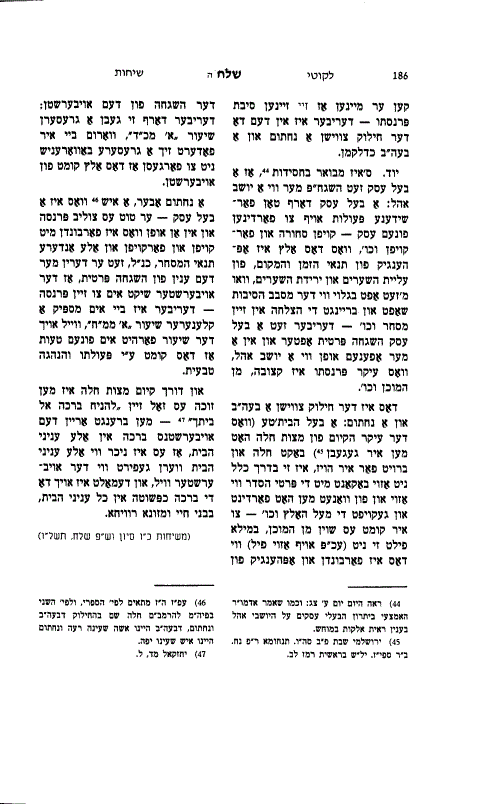
Regarding the verse (Numbers 15:20):
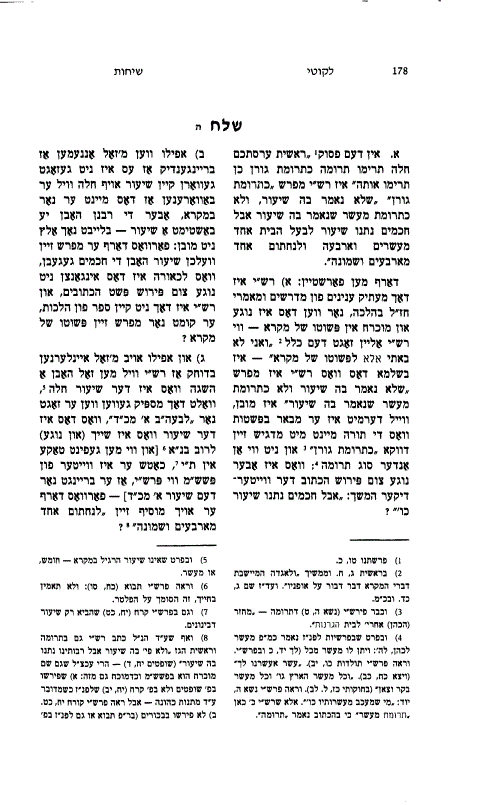
“From the first of your dough you shall set aside a challah as a gift to the L‑rd; like the gift of the threshing floor shall you set it aside.”
Rashi comments:
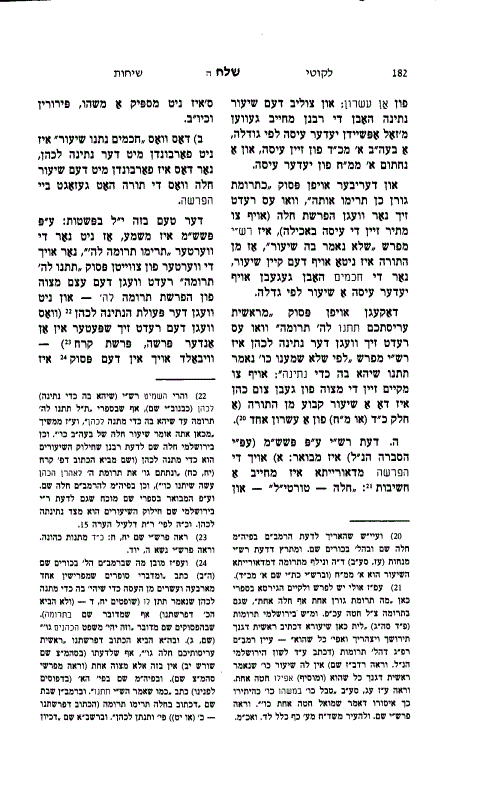
“Like the gift of the threshing floor” — regarding terumah no specific measure was stated in the Torah. However, the Sages established a measure: one twenty-fourth for a homeowner's dough and one forty-eighth for a baker's dough.
At first glance, this is difficult to understand.
Rashi's purpose is generally not to teach halachic details. Moreover, in this case, the fact that the Sages established a specific measure would seem to run contrary to the verse's emphasis that challah is “like the gift of the threshing floor,” regarding which no measure was specified.
Explanation
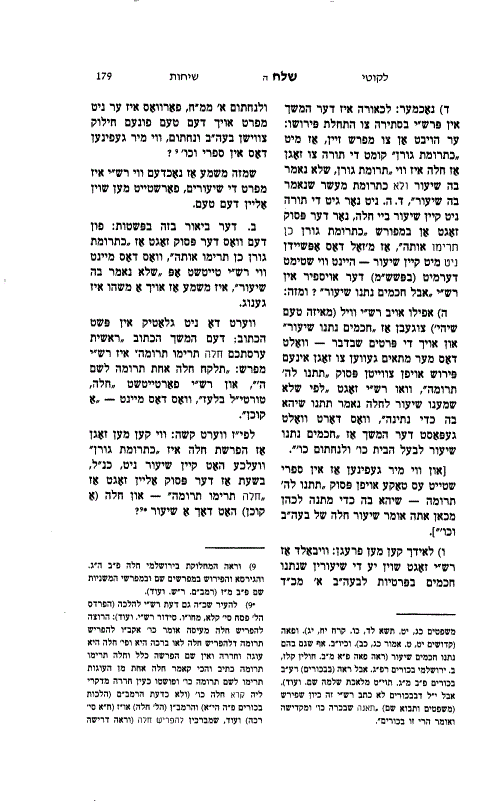
From the expression:
“Like the gift of the threshing floor,”
which Rashi explains means:
“No measure was stated regarding it,”
it appears that even the smallest amount would suffice for challah.
However, the continuation of the verse states:
“A challah shall you set aside for the L‑rd.”
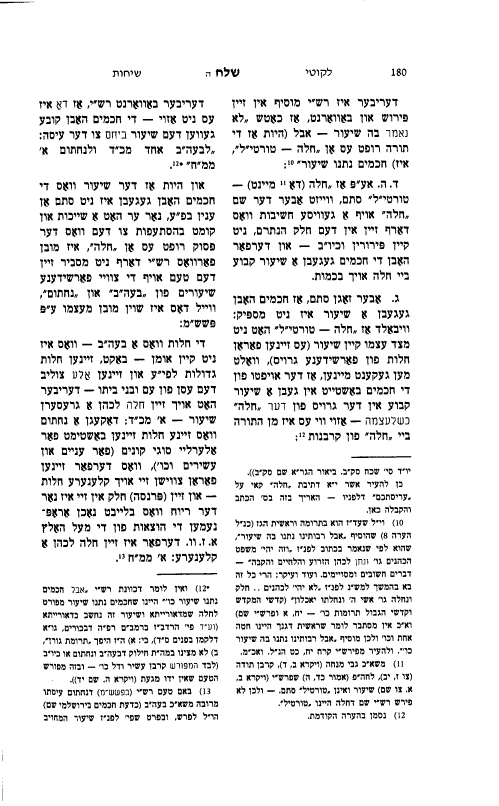
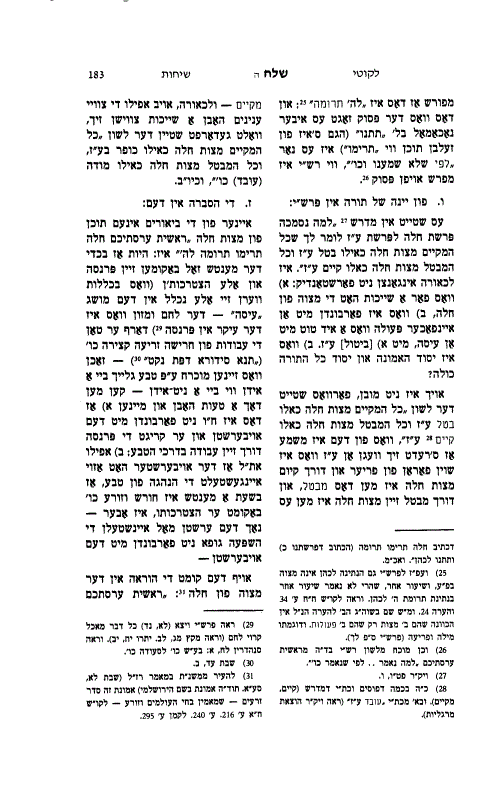
Rashi explains that challah means a baked loaf (tortil in Old French). This implies something substantial and recognizable, something possessing significance and size.
Therefore, Rashi adds that although the Torah did not specify a measure, nevertheless, because the Torah uses the term “challah”, the Sages established a minimum amount.
One might think that the Sages established a required size for the piece of challah itself. Therefore, Rashi clarifies that the measure relates to the dough from which it is separated.
A homeowner, who generally bakes larger loaves, gives a larger proportion:
one twenty-fourth.
A professional baker, who bakes loaves of various sizes for different customers, gives a smaller proportion:
one forty-eighth.
A Remarkable Halachic Insight
The Rabbi Yechezkel Landau explains that challah contains two distinct aspects:
- Separating challah removes the dough from the status of tevel (produce from which the required gifts have not yet been separated). For this purpose, even the smallest amount suffices.
- Giving the separated portion to the priest. For this, the portion must be substantial enough to qualify as a meaningful gift.
However, according to Rashi, even the Torah-level act of separation requires something possessing the significance of a “challah”—a loaf or substantial piece. A mere crumb or insignificant fragment would not suffice.
This is because the phrase:
“A challah shall you set aside for the L‑rd”
already indicates that the separated portion must possess the importance associated with a loaf.
The Inner Meaning
The Midrash states:
Why is the section of challah placed next to the section of idolatry?
To teach that whoever fulfills the mitzvah of challah is considered as though he has nullified idolatry, and whoever neglects the mitzvah of challah is considered as though he has practiced idolatry.
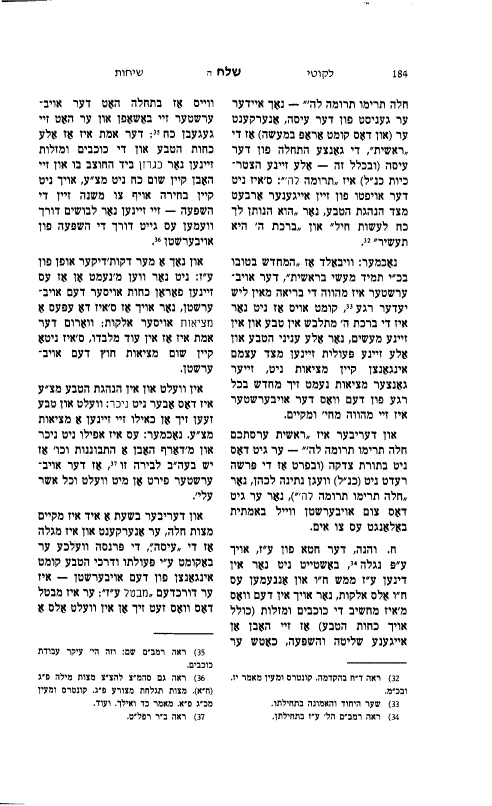
The explanation is that idolatry, in its subtle form, consists of viewing the world as an independent reality.
When a person does not separate challah, he fails to recognize that all natural processes—plowing, planting, harvesting, and baking—ultimately come from G‑d. Because he does not acknowledge that dependence upon G‑d, he does not feel compelled to dedicate a portion back to Him.
In this sense, he is perpetuating the core error of idolatry: the belief that nature possesses independent existence.
By contrast, one who separates challah demonstrates that even the most ordinary natural processes derive their existence and blessing from G‑d.
Thus, separating challah negates the subtle form of idolatry.
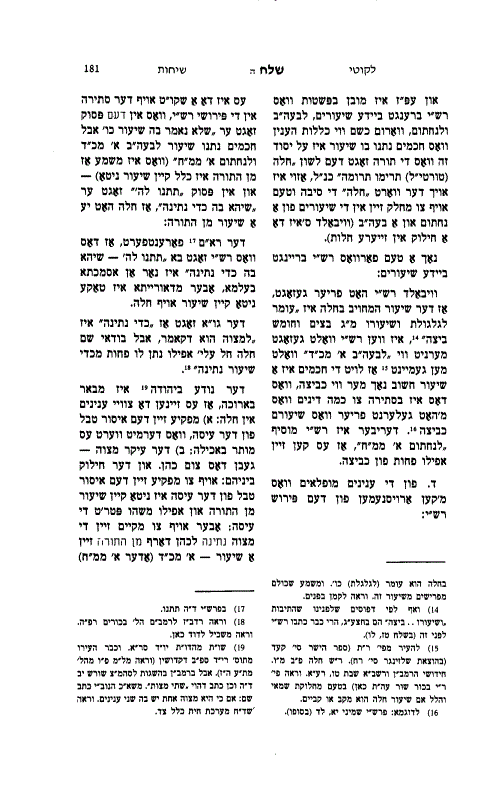
Why Is There No Fixed Measure?
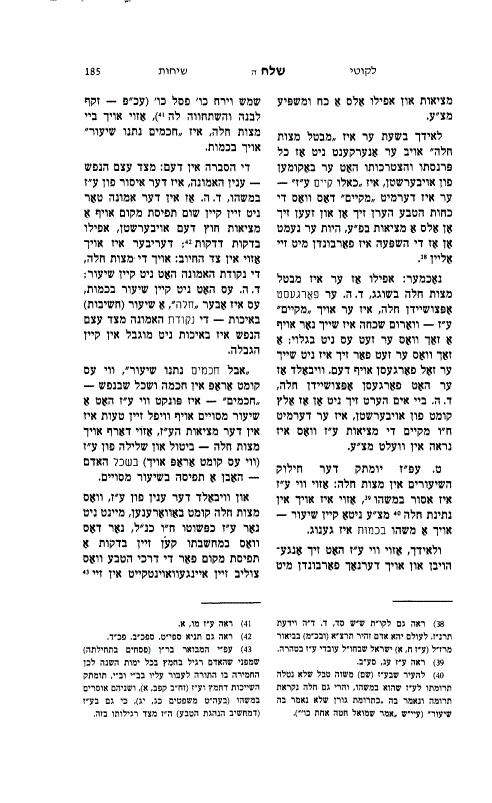
The prohibition of idolatry applies even to the smallest amount; there is no minimum measure.
Similarly, challah has no Torah-mandated minimum measure.
This is because the essential point of faith transcends all distinctions and measurements. Faith is an indivisible reality.
The Sages, however, established specific measures because they sought to bring faith into the realm of understanding and practical application.
The Difference Between a Baker and a Homeowner
A professional baker is constantly involved with the outside world and regularly witnesses Divine providence in his business affairs.
Since he more readily perceives G‑d's hand in daily life, a smaller measure is sufficient:
one forty-eighth.
A homeowner, on the other hand, bakes only for himself and is less engaged with the broader world.
Because he does not encounter manifestations of Divine providence as frequently, a larger measure is required:
one twenty-fourth.
This larger amount helps bring faith more deeply into his understanding and consciousness, enabling him to recognize that all natural success and sustenance ultimately come from G‑d.