

The Precision of Participation:
Understanding "Vayamtziu" and the Role of Aharon's Sons
I. The Linguistic Mystery
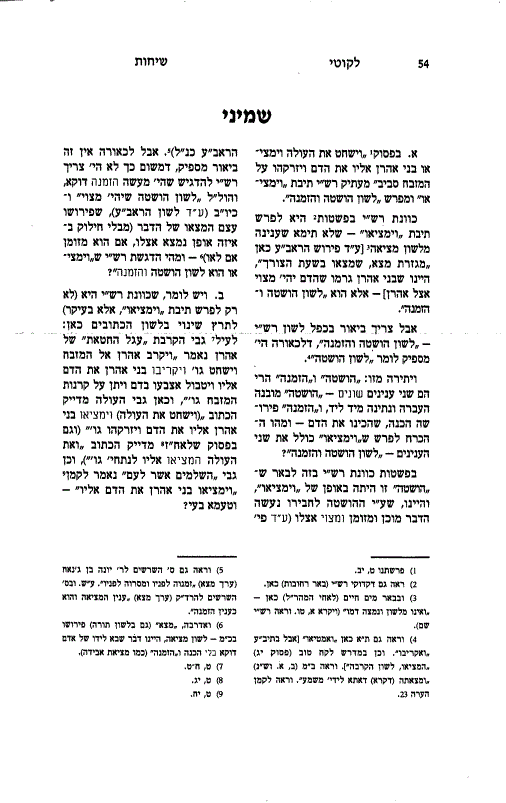
In the description of the inaugural sacrifices (Shmini L’Miluim), the Torah employs a curious change in terminology regarding the role of Aharon's sons.
-
By the Chatas (Sin Offering): The Torah says, "Vayikrevu Bnei Aaron es hadom"—The sons of Aharon brought the blood near (Vayikra 9:9).
-
By the Olah (Burnt Offering): The Torah changes its language: "Vayimtziu Bnei Aaron eilav es hadom"—The sons of Aharon presented/provided (Vayamtziu) the blood to him (Vayikra 9:12).
II. Rashi’s Double Definition
Rashi is immediately bothered by the word Vayamtziu. He explains its meaning as:
"לשון הושטה והזמנה" — "An expression of reaching out (passing) and preparation."
This raises several questions:
-
Etymology: Typically, Vayamtziu stems from the root Matza (to find). Why does Rashi reject the interpretation of the Ibn Ezra—who says it simply means the sons caused the blood "to be found" by Aharon—and instead choose "reaching out"?
-
Redundancy: If the word means "reaching out/passing," why does Rashi add the second word, "preparation"?
-
The Shift: Why does the Torah switch from Vayikrevu (bringing close) to Vayamtziu (passing/preparing)?
III. The Halachic Distinction: Chatas vs. Olah
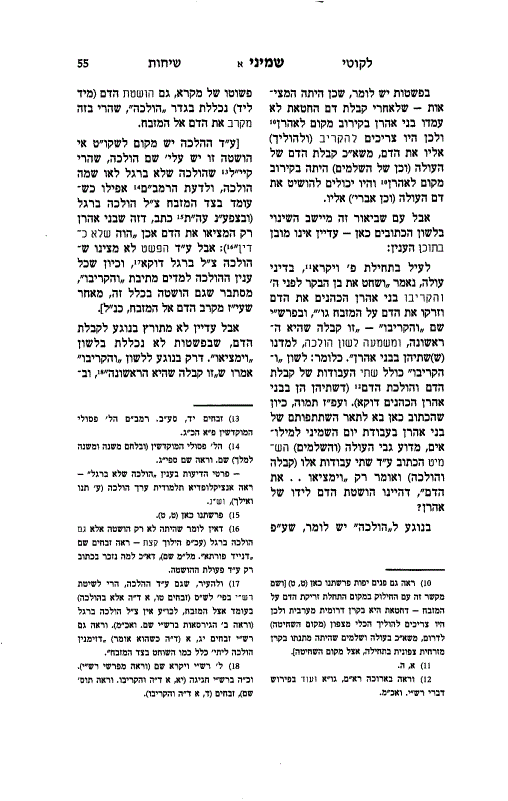
The Rebbe explains that Rashi’s commentary is designed to answer why the Torah changed its wording. The answer lies in the technical method of how the blood is applied to the Altar:
-
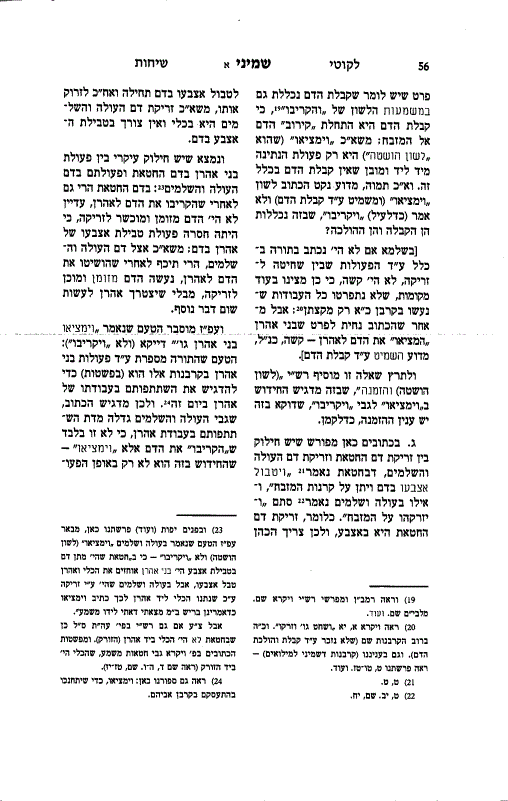
The Chatas (Partial Readiness): The blood of a Chatas is applied using the finger (Etzba). Even after the sons "brought" the vessel to Aharon, the service was not ready. Aharon still had to perform an essential act: dipping his finger into the blood. Thus, the sons only "brought it close" (Vayikrevu).
-
The Olah (Total Readiness): The blood of an Olah is thrown directly from the vessel (Kli) onto the walls of the Altar. There is no middle step of dipping a finger. Consequently, the moment the sons "handed" (Hoshoto) the vessel to Aharon, the blood was already completely prepared and ready (Hazmanah) for the final act of sprinkling.
IV. The Significance of "Hazmanah" (Preparation)
This is why Rashi insists on the word "Preparation." He is telling us that in the case of the Olah, the sons’ involvement was far more significant. They didn't just move the blood from point A to point B; they delivered a "finished product."
This also explains the later verse regarding the limbs of the Olah: "Ve-es ha-Olah himtziu eilav le-netache'ah." The sons didn't just bring the animal; they chopped it into the specific pieces (Netachim) required, so that when it reached Aharon’s hands, it was instantly ready to be placed on the fire.
V. The Inner Dimension: The Eighth Day
The Torah uses Vayamtziu specifically on the Eighth Day of the inauguration to emphasize the unique level of participation by Aharon's sons.
While Aharon was the High Priest performing the service, his sons acted with such Zerizus (holy alacrity) and precision that they removed every possible delay. Their "passing" of the blood was simultaneously a "preparation" of the blood.
The Takeaway: True assistance in a holy task isn't just about showing up or "bringing" a contribution near. It is about Hazmanah—refining and preparing our part so thoroughly that the transition to the Divine service is seamless and instantaneous.