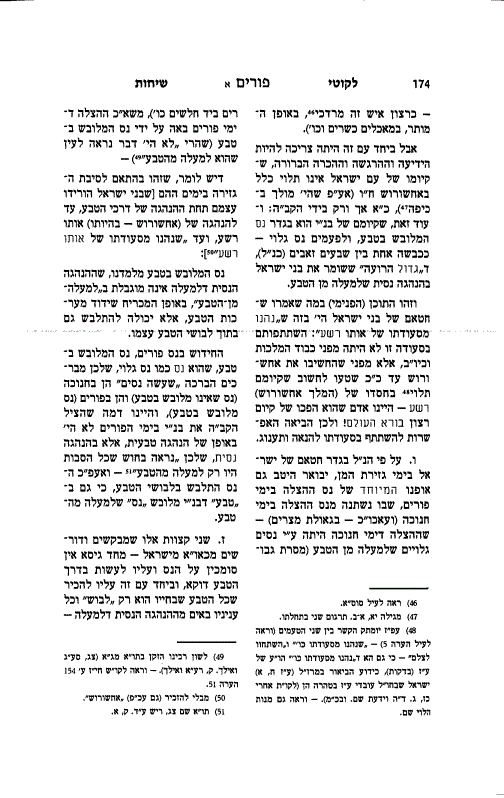
. The Core Problem: Why such a harsh decree?
-
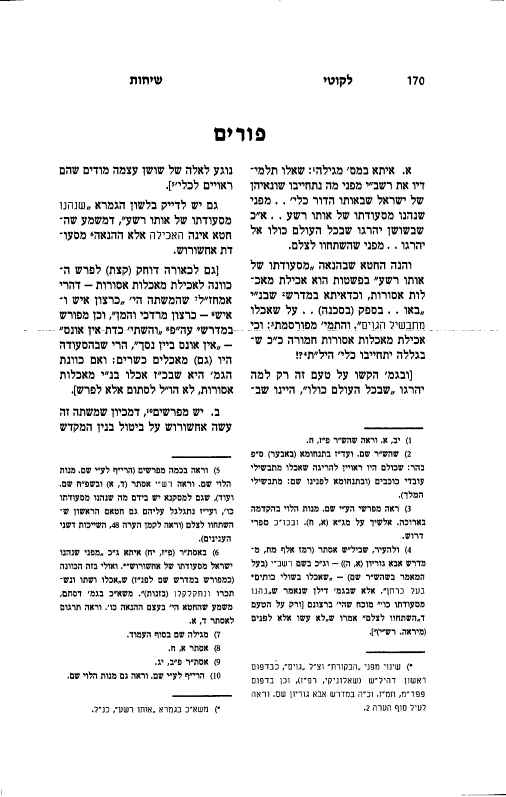
The Talmudic Dilemma: The students of Rabbi Shimon bar Yochai ask why the Jews deserved "destruction" (Klaya). The answer given is: "Because they enjoyed the meal of that wicked man (Ahasuerus)."
-
The Disproportionate Penalty: You should emphasize the Rebbe's question here: eating non-kosher food (or even enjoying a non-Jewish party) is a sin, but it doesn't normally trigger a decree of total annihilation including innocent children.
-
The Word "Enjoyed": Note that the Gemara doesn't just say they "ate." It says they benefited/enjoyed (Nehenu). This suggests the issue was internal—their emotional investment and the "honor" they felt being invited.
II. The Sheep and the 70 Wolves
-
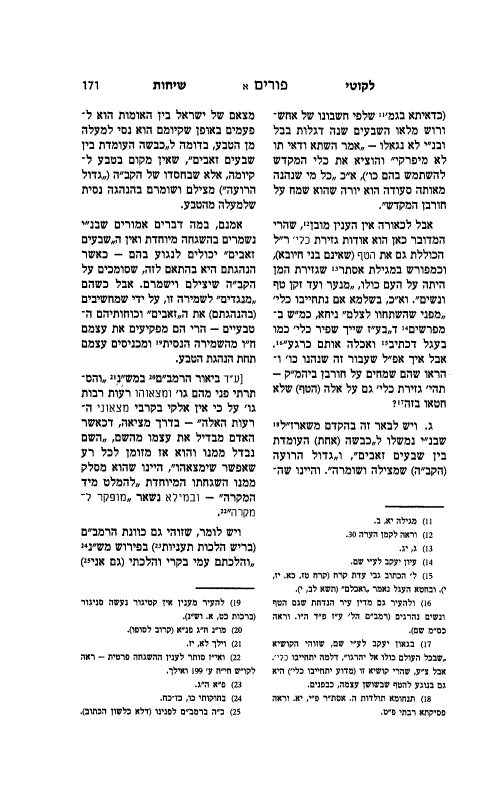
The Natural Impossibility: The Rebbe introduces the Midrashic metaphor: Israel is a single sheep among 70 wolves. Naturally, the sheep should be devoured instantly.
-
The "Great Shepherd": The only reason we survive is a constant, miraculous Divine supervision (Hashgacha).
-
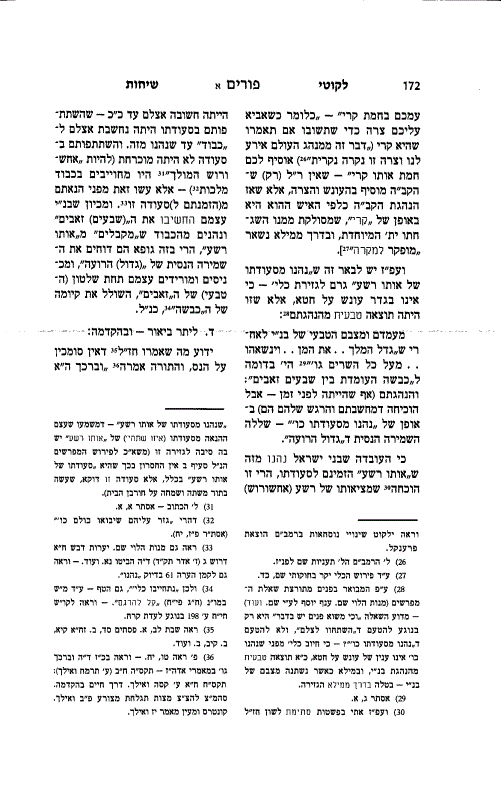
Removing the Shield: This is the "Aha!" moment of the Sicha. It wasn't that Hashem "attacked" the Jews as a punishment. Rather, by participating in and enjoying a party that celebrated the destruction of the Temple, the Jews showed they believed Ahasuerus and the "wolves" were the ones in charge.
-
The Result: Because they gave credence to nature, Hashem "hid His face," leaving them subject to the laws of nature. In nature, a sheep among wolves is "hefker" (abandoned)—leading naturally to Haman's decree.
III. Nature as a "Garment" (Levush)
-
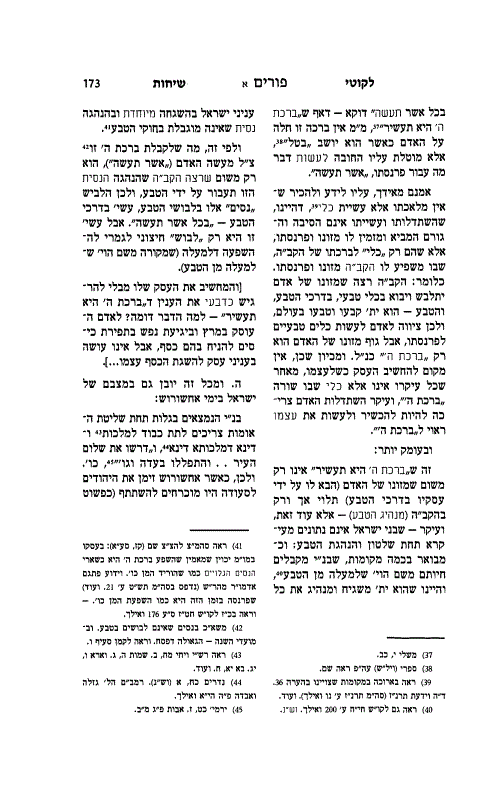
The Requirement of Effort: Hashem wants us to work ("In all that you do"). We must create a "vessel" in nature, like a pocket to hold money.
-
The Mistake of the "Pockets": The Rebbe uses a sharp analogy: a man who spends all his time sewing pockets but does nothing to actually earn the money. The "vessel" is just a formality; the blessing comes from above.
-
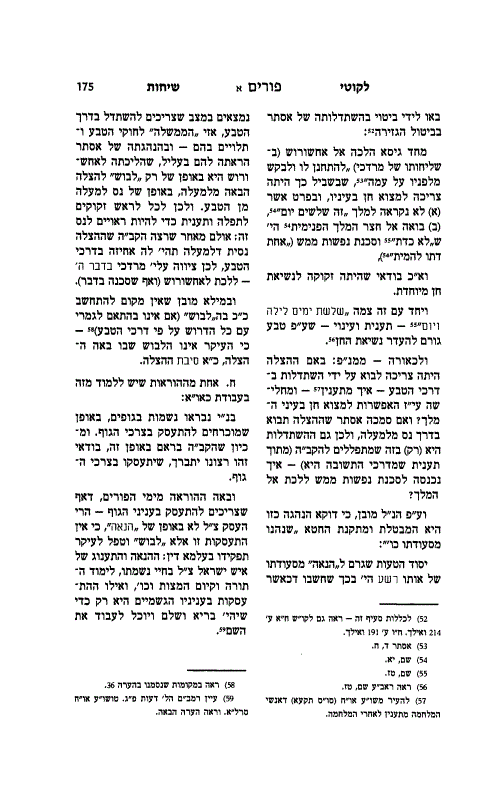
Esther’s Paradox: This is a great point for your class. Esther went to the king (a natural effort), yet she fasted for three days. Fasting makes a person look weak and less "favor-finding"—it's counter-productive to the natural goal.
-
The Lesson: Esther showed that the "cause" of the salvation was Hashem (the fast), while the "garment" was the visit to the king. She did the minimum natural effort required but placed all her "enjoyment" and faith in the spiritual cause.
IV. The Practical Lesson for Us
-
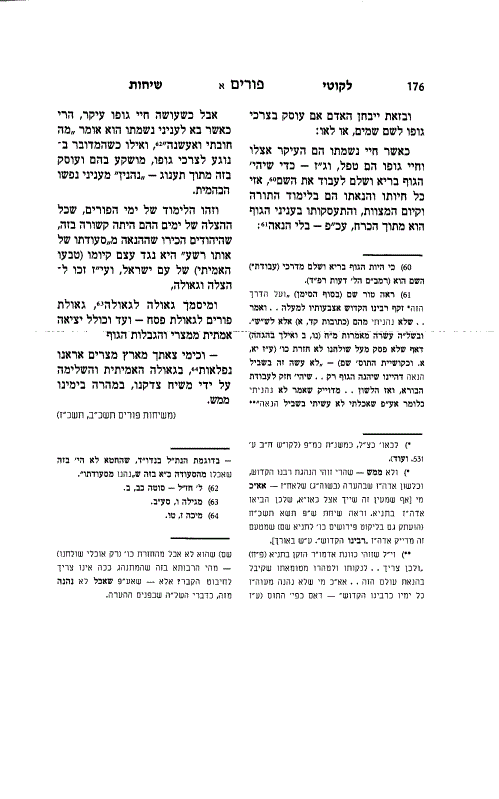
Necessity vs. Pleasure: We all have to deal with physical bodies and jobs. The Rebbe explains that the "test" is where our Hana'ah (pleasure) lies.
-
The Definition of a Healthy Life:
-
The Soul: Should be the source of our delight (Torah, Mitzvos).
-
The Body: Should be handled as a "necessity" so we can be healthy enough to serve Hashem.
-
-
Refining our Enjoyment: The sin of Purim was finding delight in the "wicked man's" world. The tikkun (fix) is finding delight in our Divine mission.
I. The Legal Problem (Section Aleph-Beis)
-
The Talmudic Question: Rabbi Shimon bar Yochai’s students ask: why the decree of Klaya (annihilation)?
-
The Answer: "Because they enjoyed the meal of that wicked man."
-
The Difficulty: * Eating non-kosher is a sin, but it doesn't carry a death penalty for an entire nation (including children).
-
The Gemara uses the word "Enjoyed" (Nehenu). If the sin was just eating, it would say Achlu.
-
The Depth: The party was explicitly celebrating the fact that the 70 years of exile (by Ahasuerus's miscalculation) had passed and the Jews were still not redeemed. They were using the Keilim (vessels) of the Beis HaMikdash. To "enjoy" that meal was to be totally insensitive to the destruction of the Temple and to accept exile as a permanent, "natural" reality.
-
II. The Sheep and the 70 Wolves (Section Gimmel)
-
The Metaphor: Chazal compare Israel to one sheep among 70 wolves.
-
The "Great Shepherd": Naturally, the sheep should be dead. The only reason it lives is because the Shepherd (Hashem) intervenes with miraculous protection (Hanhoga Nissis).
-
The "Hiding of the Face": When a Jew says, "Ahasuerus is the one in charge; his party is where it's at," they are choosing to live by the rules of the "wolves."
-
Result: It wasn't a punishment from Hashem; it was the removal of the Shield. Once the miraculous protection is gone, the "natural" events (Haman's decree) simply catch up to the sheep.
III. The Depth: Nature as a "Garment" (Section Daled-Vav)
-
The Requirement of Effort: Hashem says, "I will bless you in all that you do." You cannot sit back and wait for a miracle; you must make a vessel (Kli).
-
The Paradox of the Jew: Even when a Jew works a job or engages in nature, their sustenance is actually coming from a level higher than nature (Shem Havaye).
-
The "Pocket" Analogy: Imagine a man who spends his whole day sewing pockets (the vessel) but ignores the business that brings the money.
-
The Business = Prayer, Torah, and Mitzvos.
-
The Pocket = Your physical job.
-
The Mistake: Shushan's Jews treated the "pocket" (Ahasuerus's favor) as the "money" (the source of life).
-
IV. Esther’s Strategy: A Study in Extremes (Section Zayin)
-
The Contradiction: Esther needs to find favor in the king's eyes. To do this naturally, she should be well-rested and beautiful. Instead, she fasts for three days.
-
The Resolution: Esther understood the Purim secret. She did the "natural" thing (going to the king) only because Hashem commanded us to make a "garment." But she put all her energy into the Cause (fasting and prayer).
-
The Lesson: The "garment" doesn't have to make sense. Even a "weakened" Esther could find favor because the miracle was doing the work; the king was just the scenery.
V. Practical Application: Testing Your "Enjoyment" (Section Ches)
-
The Test: How do you know if you are serving Hashem "through" nature or if you are "sunk" in nature?
-
Where is your Hana’ah (Pleasure)?
-
If you do Mitzvos as a "burden" (Mo-chovosi) but get excited about your physical comforts, you are like the Jews at the meal.
-
If your soul's life (Torah/Mitzvos) is where you find delight, and your physical life is just a "necessity" to stay healthy enough to serve G‑d, you have achieved the Purim transformation.
-
Summary Table for Students
| Concept | The Wrong Way (Shushan) | The Right Way (Esther/Torah) |
| Nature | The Source of Power | An External Garment (Levush) |
| Effort | Primary focus; relying on "wolves" | Secondary focus; creating a vessel |
| Pleasure | Delighting in physical honor | Delighting in the Soul's mission |
| Protection | Dependent on political favor | Dependent on the "Great Shepherd" |