Introduction
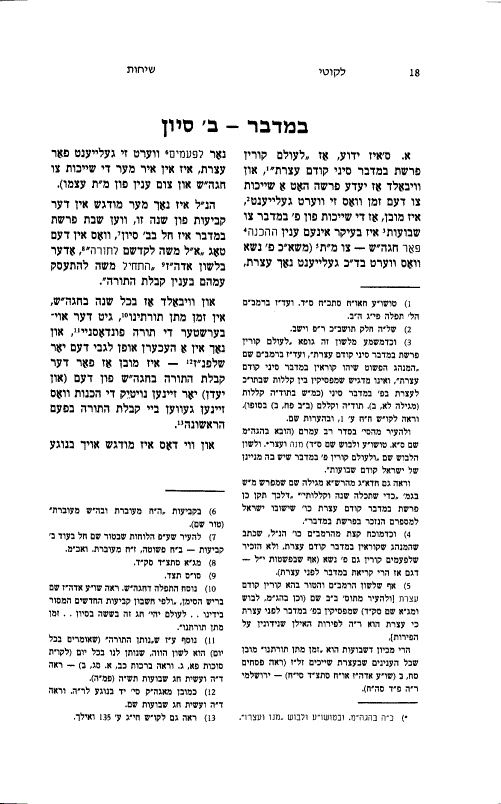
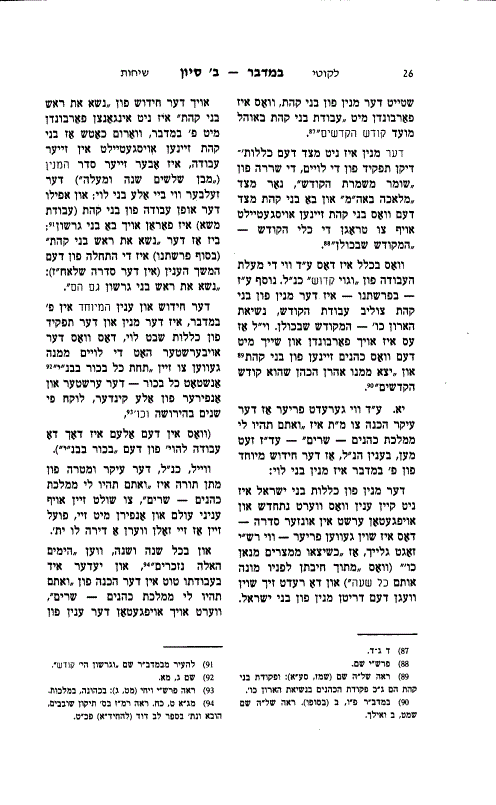
In this sicha, we will be studying Lekutei Sichos, Chelek Yud Ches, the third sicha for Parshas Bamidbar. This sicha is dedicated to the memory of R’ Elchanan Mendel ben Meir Yaakov, who passed away at a young age. As we learn this sicha, we do so as an elevation for his soul.
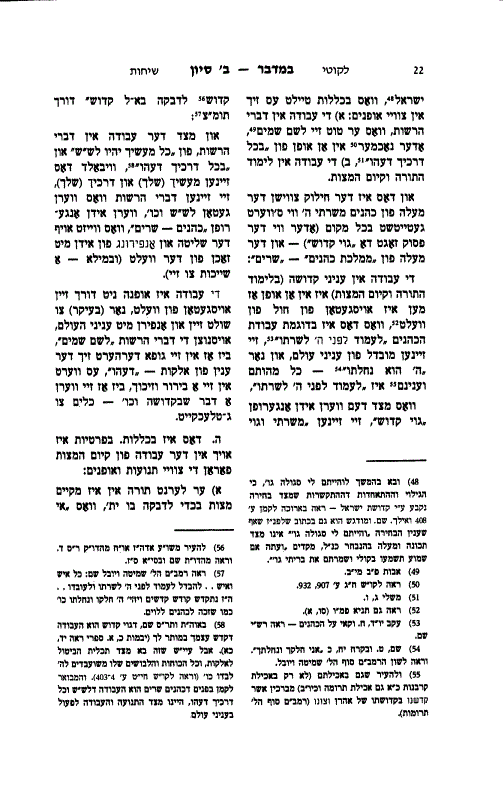
The Rebbe focuses on verses that Hashem spoke to Moshe Rabbeinu on the second day of Sivan. This is significant because it is right before Shavuos—the day of Matan Torah. The Rebbe discusses three verses and three distinct aspects that are highlighted in these verses. These ideas are all connected to the preparations for receiving the Torah.
This period—the days leading up to Shavuos—is a time specifically set aside for preparation. The Torah reading during this time is not random; rather, it is chosen because it helps us prepare ourselves for Matan Torah. Every year, as we approach Shavuos and receive the Torah anew, we need to focus on how to prepare ourselves in these three areas that the Rebbe will explain.
The Rebbe points out that there is always a connection between the weekly Torah portion and the time of year in which it is read. In particular, Parshas Bamidbar is always read before Shavuos. This is not coincidental; each parsha has a unique relevance to its season or occasion.
Therefore, when we read Parshas Bamidbar before Shavuos, it serves as a preparation for receiving the Torah. The content of Bamidbar helps us understand how to get ready for Matan Torah—how to make ourselves fitting vessels for this great event.
In contrast, Parshas Naso—which sometimes falls before Shavuos but more often is read after—has a different connection. Only in certain years does Naso come before Shavuos; usually it follows afterwards. This means that while Naso has its own link to Shavuos itself, Bamidbar is more directly tied to our preparations leading up to the holiday.
With this introduction, let us begin learning the sicha inside and explore how these three aspects from Parshas Bamidbar guide us in preparing ourselves for receiving the Torah on Shavuos.
Saif Aleph
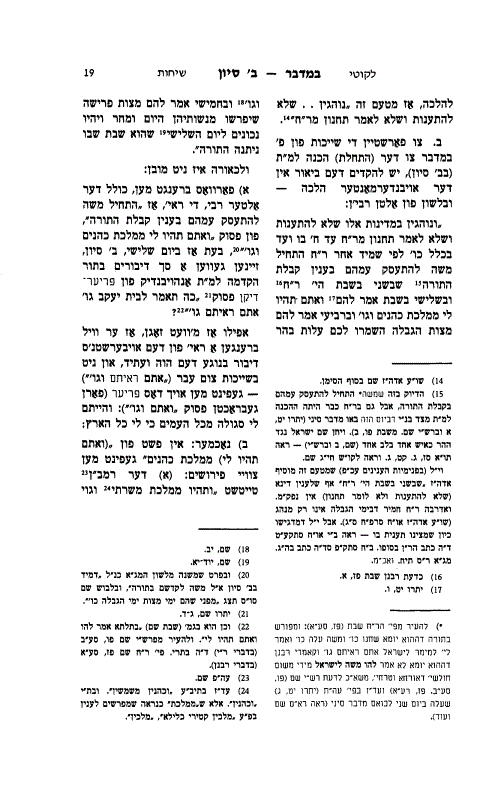
Parshas Bamidbar, which always comes before Shavuos—including in years when Parshas Naso is read after Shavuos—has a special connection to the preparations for receiving the Torah. The Rebbe points out that in these two parshiyos, we find expressions like “segula atem”—you are a treasured nation—and “mamleches kohanim vegoy kadosh”—a kingdom of priests and a holy nation. These phrases highlight the unique status of the Jewish people as they prepare for Matan Torah.
This connection is especially significant in the year when the Rebbe delivered this sicha, because that year Parshas Bamidbar was read immediately before Shavuos. The Rebbe explains that this arrangement mirrors what happened at the original giving of the Torah: on that day, Hashem commanded Moshe to sanctify and prepare the people for receiving the Torah. Moshe then instructed them to ready themselves, which included separating from their wives and preparing spiritually for three days leading up to Matan Torah.
Every year, during this time period, we relive and re-experience the giving of the Torah on a higher level. The Rebbe emphasizes that each year’s preparation should be just as intense and meaningful as it was at Har Sinai. This is reflected in our prayers, where we say that Hashem “gives” (in present tense) the Torah—indicating an ongoing process of receiving and internalizing Torah anew every year.
The days leading up to Shavuos are therefore not just commemorative; they are an active time of preparation. Even though we do not begin these preparations from Rosh Chodesh Sivan itself—since it falls on Shabbos or Sunday in some years—the main preparations begin from the second day of Sivan. This is why certain prayers like Tachanun are omitted during this period, marking it as a time set aside for spiritual readiness.
The Rebbe further explains that after arriving at Har Sinai on Rosh Chodesh Sivan, Moshe began preparing Bnei Yisrael for receiving the Torah by conveying Hashem’s instructions. These included separating from their spouses and being ready by the third day—a process that started immediately upon their arrival.
Now, turning to the verses themselves: The Torah says:
ואתם תהיו לי סגולה מכל העמים כי לי כל הארץ
"And you shall be to Me a treasured nation from among all peoples, for all the earth is Mine."
This verse precedes another key phrase:
ממלכת כהנים וגוי קדוש
"A kingdom of priests and a holy nation."
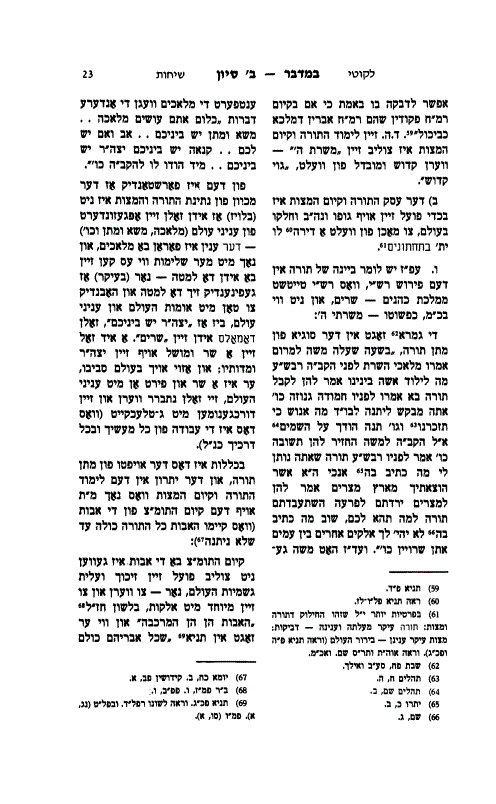
The Rebbe now addresses what exactly “mamleches kohanim” means. There are two main interpretations found among commentators. The Ramban teaches that “mamleches kohanim” means a kingdom of servants—kohanim being those who serve Hashem—and “goy kadosh” means to cleave to holiness and connect with Hashem.
The Mechilta similarly explains that all Jews were fit to eat sacred offerings like kohanim, emphasizing their elevated spiritual status at Sinai—almost like being kohanim gedolim (high priests).
Rashi, however, interprets “mamleches kohanim” differently: not as servants but as officers or princes—people of high rank rather than those who serve directly in priestly roles.
This leads to an important question: according to Ramban’s interpretation—that Jews are actual servants or priests—it makes sense how this connects with receiving and occupying oneself with Torah and mitzvos. Serving Hashem through Torah study and mitzvah observance fits naturally with being called a kingdom of priests.
But according to Rashi’s interpretation—that Jews are officers or princes—the connection is less clear. What does being an officer have to do with preparing for or receiving the Torah? This question becomes even stronger when considering how these titles relate specifically to our role at Matan Torah.
Saif Beis
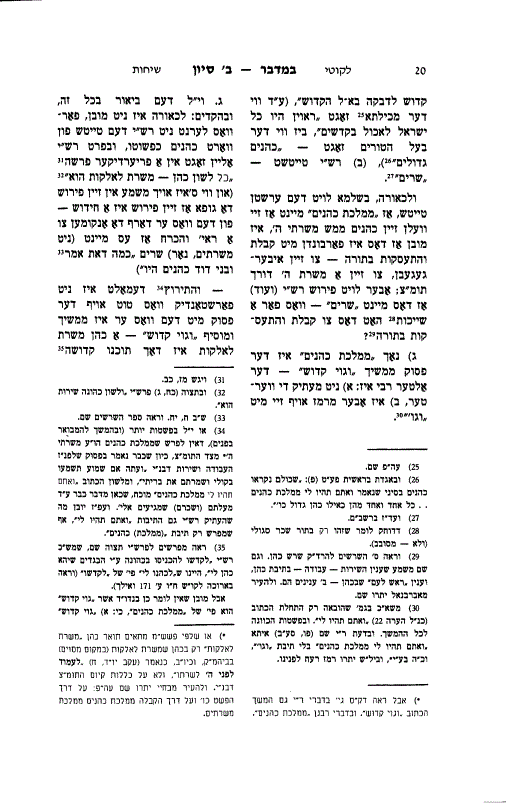
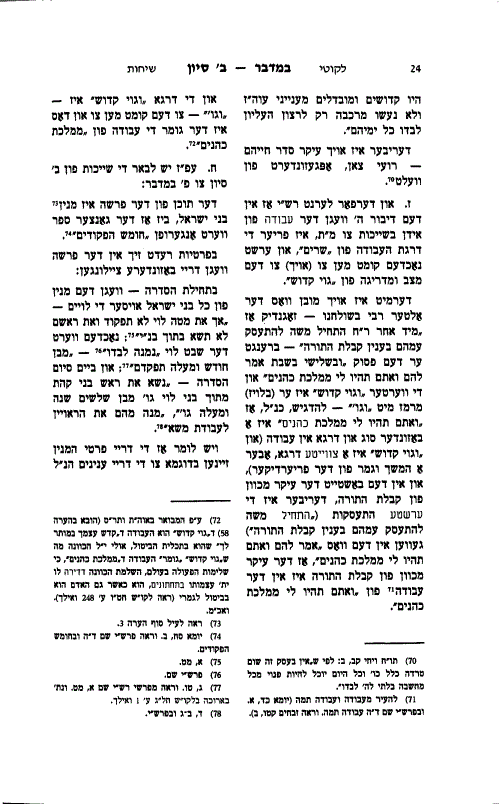
The Rebbe begins by addressing a question: if the previous explanation was that all of this is a preparation for Matan Torah, how does Rashi’s interpretation of mamleches kohanim—a kingdom of priests—connect as a preparation for Matan Torah? We aren’t bringing the possibility of “Yisrael,” which refers to the future, and that would seem to come first. Then we bring mamleches kohanim, which, according to Rashi, doesn’t even mean anything directly related to Matan Torah. Additionally, the Rebbe notes that after mamleches kohanim, the verse continues with goy kodesh—a holy nation. The Rebbe doesn’t quote these words directly but hints at them by saying “etc.” What’s going on here?
The Rebbe now explains why Rashi translates kohanim not in the usual way—as servants of Hashem—but instead gives an unusual translation. Rashi feels compelled to prove from the verse itself that it can’t mean simply “servants.” Normally, a kohen means someone who serves Hashem. In fact, Rashi himself says in a previous parsha that whenever you have the word kohen, it means someone who serves God.
This makes it clear that Rashi’s translation here is a novelty. He needs to bring proof and support for his interpretation that kohanim here means “important people” or “officers”—those who are higher up in rank—rather than servants of Hashem. The verse describes them as important people, higher in rank, so Rashi is pushing for this meaning rather than the usual one.
The reason for this is that if mamleches kohanim meant “servants of Hashem,” then what is the verse adding with the phrase “a holy nation”? If being a kingdom of priests already means serving Hashem and being holy, what does “holy nation” add? It seems redundant; you’d be going from being a servant (which already implies holiness) to being called holy again.
If kohanim meant servants of Hashem, then they are already distinguished and separated—kodesh. As we see elsewhere in Torah, when Hashem separates someone to sanctify him and his children as priests, they are already holy. So why would the verse need to add “holy nation” after saying “kingdom of priests”?
This leads Rashi to interpret mamleches kohanim differently here—not as sanctity or separation for divine service (as is usually meant by priesthood), but rather as officers or high-ranking individuals. According to this approach, there’s an ascending order in these verses: each phrase represents a higher level than the previous one.
The first level is “you shall be my treasure from among all nations”—the Jewish people are beloved and distinguished from other nations. The second level is not only are they treasured and set apart; they become high-ranking officers who lead and dominate within their domain. The third level is “a holy nation”—the Jews are completely separated and elevated above all worldly matters; they become a holy nation who serve Hashem like royalty.
The Rebbe explains that these three stages reflect how the Jewish people were chosen: first comes distinction (being treasured), then elevation (becoming officers), and finally sanctification (becoming a holy nation). Even within holiness itself (kedusha) there are levels—elevation within elevation.
If we look deeper into these three concepts and their inner meaning in our own service of Hashem, we find parallels. The first stage—being a treasured nation—reflects Hashem’s choice of the Jewish people. True choice (bechirah) comes entirely from the chooser; it isn’t about any quality or advantage in those chosen but about Hashem’s will alone.
This choice isn’t based on any greatness or merit among those chosen; darkness and light are equal before Him. Even when discussing spiritual flow from above—which could theoretically reach anyone—the fact that Hashem chooses Israel isn’t because others lack value but because He chose them out of His own will.
Citing Rashi’s language: don’t think you alone are mine because you have some unique greatness; rather, your dearness is recognizable because I chose you—not because others were unworthy but because I desired you.
This first stage has nothing to do with any inherent quality in Israel—it’s purely about Hashem’s act of choosing them.
The next stage involves our actual service. Generally, our service can be divided into two categories: one involves optional matters—things not commanded by Torah or mitzvos—which we do for the sake of Heaven (shem shamayim). This is one category.
The other category involves obligatory matters—the direct service through mitzvos themselves. This distinction reflects different aspects of our relationship with Hashem: sometimes we serve Him through elevating mundane activities (optional matters), sometimes through fulfilling His explicit commands (mitzvos).
This division also helps explain why Rashi interprets kohanim here as officers or leaders rather than servants: there are different ways Jews serve as representatives or leaders among nations—not always through direct divine service but also through their elevated status and influence.
The phrase goy kodesh, which follows mamleches kohanim, refers specifically to sanctity—to being set apart for holiness itself. While elsewhere in Torah priesthood may mean direct service to Hashem, here it refers more broadly to leadership and distinction among nations; only afterward does the verse speak about actual holiness (kedusha) as its own category.
Saif Gimmel
In this section, the Rebbe explores the deeper meaning behind the phrase “mamleches kohanim”—a kingdom of priests—and how it relates to our service of Hashem. Rashi interprets this as referring to a specific type of avodah, or divine service, that is distinct from other forms. The Rebbe explains that when a Jew lives a life of Torah and mitzvos, dedicating their actions to Hashem, it is not merely about separating oneself from the world or escaping its challenges. Rather, it is about engaging with the world in a way that brings holiness into every aspect of life.
This idea is illustrated by comparing our service to that of the kohanim. Just as the kohanim stand before Hashem to serve Him directly, so too every Jew is called upon to stand before Hashem through Torah study and mitzvah observance. This does not mean withdrawing from worldly matters; instead, it means elevating them by using even mundane activities for a higher purpose.
The Rebbe emphasizes that there are two domains in Jewish life: mitzvos—commanded actions—and devar reshus—optional matters. The ultimate goal is that even our devar reshus should be done “l’shem shamayim,” for the sake of Heaven. As the verse says, “b’chol derachecha da’eihu”—in all your ways, know Him. Every action can become an act of avodah if done with the right intention.
When Jews live this way, they become truly set apart—“sorim,” officers or princes among nations. This means being elevated and distinguished not by separating from society but by infusing daily life with purpose and sanctity. The Jewish people thus become “mamleches kohanim”—a nation whose very existence is dedicated to serving Hashem.
This approach is not about rejecting the world but about transforming it. By using even optional matters for holy purposes, we refine and elevate physicality itself. This process creates a “sorting” within reality—distinguishing between what serves holiness and what does not—until ultimately everything can be uplifted and connected to Hashem.
The Rebbe notes that this was not the case with angels or even with our forefathers before Matan Torah (the giving of the Torah). Their primary role was to be united with godliness—to be a “merkavah,” a chariot for the Divine Will—with no other desires or involvement in worldly matters. Their limbs were wholly separated from mundane concerns; they were vessels only for Hashem’s will.
However, after Matan Torah, Jews were given the unique mission to engage with and transform the physical world through Torah and mitzvos. This is why Moshe Rabbeinu argued against giving the Torah to angels—they do not have parents or eat bread; they do not live in a physical world where Torah can be fulfilled through tangible actions.
Thus, when Rashi explains “mamleches kohanim,” he highlights this special avodah: first comes the service of sorim—transforming one’s own nature and elevating physicality—and then comes reaching higher levels of holiness (“goy kodesh”). These are distinct stages in spiritual growth.
The Alter Rebbe in Shulchan Aruch also alludes to this progression when he cites the verse “v’atem tiheyu li mamleches kohanim” on Beis Sivan—the day Moshe began preparing Bnei Yisroel for receiving the Torah. He emphasizes “mamleches kohanim” as its own step before mentioning “goy kodesh.” This shows that becoming a kingdom of priests—a people dedicated to divine service—is foundational before reaching further sanctity.
We see these three levels reflected in Parshas Bamidbar as well: first, there is a general counting of all Jews (excluding Levi); second, there is a special count for Shevet Levi from one month old; third, within Levi itself, those who are thirty years old and up are counted for carrying out specific holy tasks. Each stage represents another level in spiritual refinement and dedication.
Saif Daled
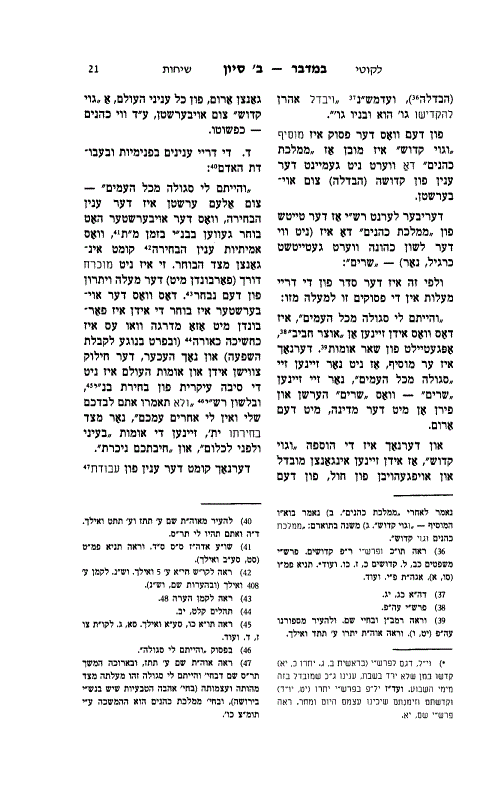
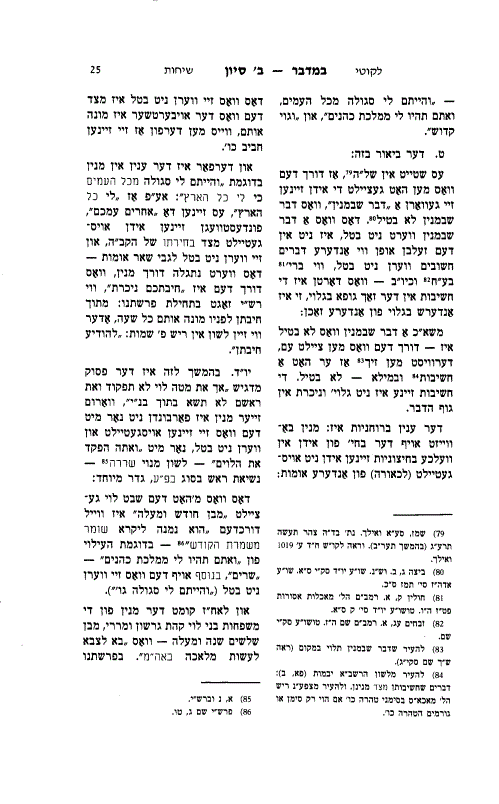
The Rebbe explains that the three ideas discussed earlier—atem tihi'u li segulah, chosenness, and appointment—are reflected in the way the Jewish people are counted. The first idea is that counting the Jews gives them importance, but there are different types of importance. Some things are inherently important, while others become important through something external, such as being counted.
The Meor Einayim and the Shaloh explain that by counting the Jews, they become a “matter of number”—a davar sheb'minyan—which means something that is counted does not become nullified. However, this is different from other important things that are not nullified because of their intrinsic value, like a complete living creature (beriah) or something alive (chai). In those cases, their importance is obvious and visible in their very being.
But when it comes to something that is only important because it is counted, its significance isn’t apparent on its own. The act of counting reveals and establishes its value. Spiritually, this teaches us about the Jewish people: externally, Jews may seem indistinguishable from other nations. So why aren’t they nullified among them?
The answer is that Hashem counts them. Through Hashem’s counting, their distinction becomes revealed—they are set apart and do not become nullified among the nations. This act of counting makes their dearness to Hashem recognizable.
This idea parallels what the verse says at Matan Torah: "V’atem tihiyu li segulah mikol ha’amim ki li kol ha’aretz"—“You shall be to Me a treasure from among all peoples, for all the earth is Mine.” Even though all nations belong to Hashem, He singles out the Jewish people through His choice and by counting them.
This special status is demonstrated every time Hashem counts the Jewish people—as Rashi says, “to make known their dearness.” That’s the first level: being counted out of love and distinction.
The Torah then introduces a second level: “Do not count them among [the rest],” meaning their count is separate and unique. The tribe of Levi receives a special appointment—they are given specific roles and responsibilities. This isn’t just about being dear; it’s about having a unique status and function within the nation.
The reason Shevet Levi was counted from one month old was so they could be designated as guardians of holiness—a role similar to being elevated into royalty or priesthood. In addition to not being nullified among others, they also become a “kingdom of priests,” as described in Yisro: “You shall be to Me a kingdom of priests and a holy nation.”
When we count the sons of Levi from thirty years old and up for service in the Mishkan, this marks yet another level—their readiness for active service in carrying out holy work. Among them, those who carried the holiest vessels had an even higher status.
So generally speaking, we’re talking about “a holy nation” in terms of serving in the Mishkan—the tasks and responsibilities involved. But specifically here we’re talking about Kehos—the family within Levi responsible for carrying the holiest items like the Aron (Ark). The Kohanim themselves come from Kehos; Aaron was a descendant of Kehos through Amram.
The Rebbe notes that just as preparation was key for receiving the Torah (“you shall be to Me a kingdom of priests”), so too here: preparation is central when discussing these various levels of service and counting within Shevet Levi.
This leads to a unique novelty found specifically in Parshas Bamidbar—the special counting of Shevet Levi as an entire tribe with its own distinct role. While other countings occur elsewhere (such as Kehos or Merari in Parshas Naso), only here do we see this comprehensive appointment: Levi replaces all Israel’s firstborns (bechorim) in serving Hashem.
The firstborns were originally meant to serve as leaders and receive double inheritance; now Shevet Levi takes on this spiritual leadership role instead. Their service transforms them into those who govern matters of holiness—and by extension, influence worldly matters so they become a dwelling place for Hashem.
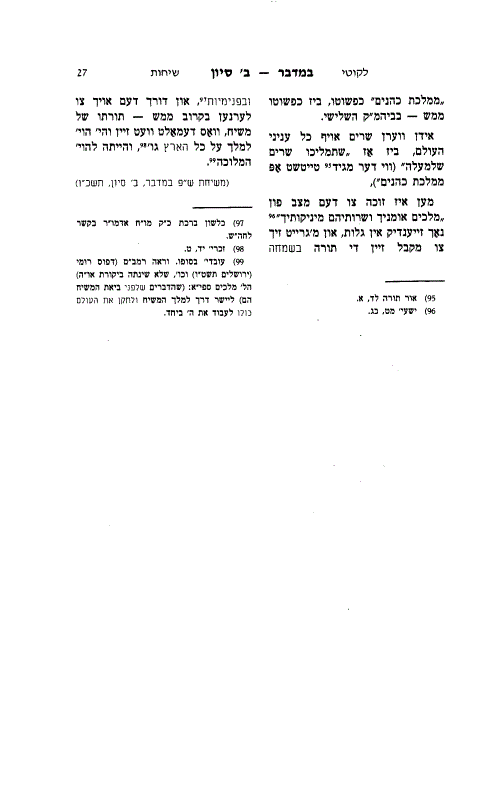
This transformation applies to every Jew: each year when we prepare for Shavuos by recalling our days and our service, we strive to fulfill our mission as “a kingdom of priests”—not only spiritually but also practically influencing our surroundings.
This ultimately leads us toward redemption: as prophesied by Chazal and translated by Onkelos (“mamleches kohanim”—making kings), we will merit that even while still in exile we prepare ourselves with joy for receiving Torah anew—and soon learn directly from Mashiach himself when Hashem will be King over all creation.
יהי רצון שנזכה בקרוב ממש לגאולה השלימה וללימוד תורתו של משיח במהרה בימינו אמן.
May it be Hashem’s will that we merit very soon the complete redemption and learning Torah from Mashiach himself speedily in our days—Amen.
Key Points
1. Parshas Bamidbar is always read before Shavuos, emphasizing its unique role in preparing the Jewish people for receiving the Torah. This timing is intentional, highlighting the connection between the parsha’s themes and the spiritual readiness required for Matan Torah.
2. The verses discussed—“segula atem,” “mamleches kohanim,” and “goy kadosh”—outline three ascending stages of Jewish identity: being a treasured nation, becoming a kingdom of priests (or officers), and reaching the status of a holy nation. Each stage represents a deeper level of distinction and sanctity.
3. Rashi interprets “mamleches kohanim” not as servants but as officers or princes, suggesting that the Jewish people are elevated to positions of leadership and influence among nations, rather than merely serving in priestly roles. This interpretation clarifies why “goy kadosh” follows as an even higher level of holiness.
4. These three levels reflect both Hashem’s choice of Israel (which is independent of their merits) and the subsequent elevation through their service—first by being chosen, then by acting as leaders, and finally by attaining true holiness through their actions and dedication to Hashem.
5. The Rebbe explains that Jewish service encompasses both mitzvos (commanded actions) and devar reshus (optional matters). The ultimate goal is to elevate even mundane activities by dedicating them to Hashem, thereby transforming all aspects of life into acts of divine service.
6. After Matan Torah, Jews were uniquely empowered to engage with and refine the physical world through Torah and mitzvos—a mission not given to angels or even the forefathers. This transformative avodah distinguishes Jews as “mamleches kohanim,” setting them apart in both spiritual and practical realms.
7. The counting of the Jewish people in Parshas Bamidbar reflects these themes: being counted reveals their dearness to Hashem; Shevet Levi’s special count highlights their unique appointment; and within Levi, further distinctions are made for those who serve in holier capacities. Each level corresponds to increasing degrees of spiritual responsibility and leadership.
8. The replacement of Israel’s firstborns with Shevet Levi for holy service demonstrates a shift from inherent status to one based on divine appointment and preparation. This serves as a model for every Jew’s journey toward fulfilling their mission as part of a “kingdom of priests.”
9. Ultimately, these preparations for Shavuos are not only about personal growth but also about influencing the world—making it a dwelling place for Hashem. This process leads toward redemption, when all will recognize Hashem’s kingship and learn Torah directly from Mashiach speedily in our days.