מבוא
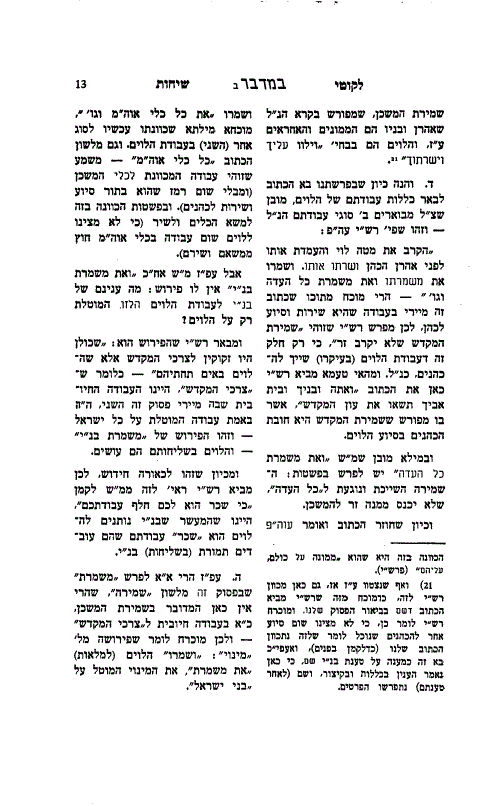
In this review, we’ll be studying the second sicha from Likkutei Sichos, volume 13, on Parshas Bamidbar. In this sicha, the Rebbe addresses a series of Rashis that at first glance seem inconsistent with each other. There are many questions about why Rashi phrases things the way he does—sometimes changing his wording or approach across different verses.
The main topic revolves around the role of the Leviyim—the Levites—in the Mishkan. What exactly was their primary task? What did their service consist of? The Rebbe will introduce a novel perspective that clarifies these issues by dividing the relevant pesukim into two distinct subjects.
First, there is the aspect of active service: the Leviyim performed positive, hands-on tasks in the Mishkan and later in the Beis Hamikdash. This included singing during offerings and carrying the Mishkan as it traveled from place to place. These were direct forms of avodah—active contributions to the sanctuary’s functioning.
But there was also another dimension to their service: guarding and protecting. The Leviyim had a responsibility to ensure that no unauthorized Israelites—referred to as Zarim—would approach or enter areas where they did not belong. Their presence served as a safeguard, maintaining proper boundaries within the Mishkan.
The Rebbe will demonstrate how, once we recognize these two categories—active service and protective service—all of Rashi’s comments fall into place. Each Rashi can be understood according to which aspect of Levitic duty it addresses, resolving apparent contradictions.
The parsha itself begins by discussing Aharon and Moshe before turning to the Leviyim as a group. The Rebbe notes an interesting point here: just as the Leviyim were counted separately because they were in a unique category—holier and more special than other tribes, counted from one month old—so too Moshe and Aharon are counted in a special way. This sets up an important theme for understanding both their roles and how they relate to the rest of Bnei Yisrael.
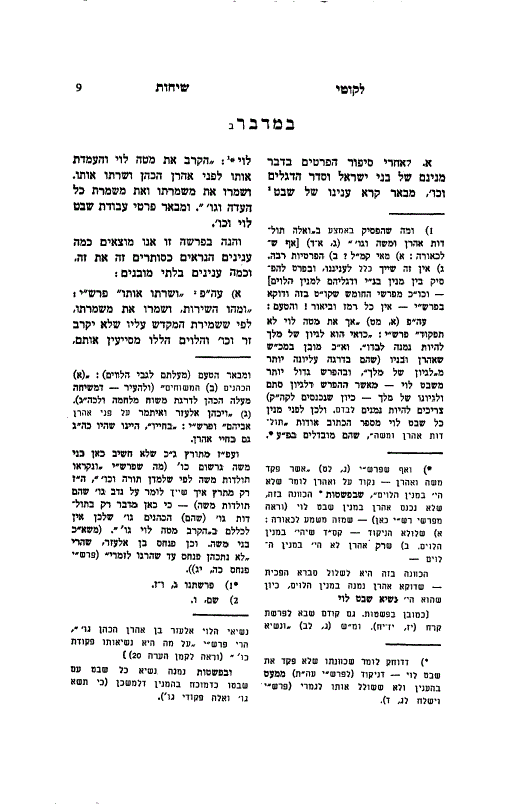
סעיף א׳
The Torah begins by describing the role of Aharon and the tribe of Levi. At the outset, there were only three Kohanim: Aharon and his two sons, since Nadav and Avihu had already passed away. Alongside them stood the entire tribe of Levi, which included many families—Amram, Yitzhar, Chevron, Uziel—and even earlier generations like Kehos, Merari, and Gershon. So, while there were only a few Kohanim at first, there were many Leviim.
The verse states:
הַקְרֵב אֶת מַטֵּה לֵוִי
Bring the tribe of Levi close. The Torah continues:
וְהַעֲמַדְתָּ אֹתוֹ לִפְנֵי אַהֲרֹן הַכֹּהֵן וְשֵׁרְתוּ אֹתוֹ
Place them before Aharon the Kohen, and they shall serve him.
Rashi explains what this service entails. He references another verse:
וְשָׁמְרוּ אֶת מִשְׁמַרְתּוֹ
They will guard his guard. Rashi interprets this as referring to the responsibility of guarding the Mishkan—a duty that primarily falls upon Aharon and the Kohanim. The Leviim are brought in to assist with this task; they help ensure that no unauthorized person (a zar) comes near.
This is further clarified in another passage:
וְשָׁמְרוּ אֶת מִשְׁמַרְתּוֹ וְאֶת מִשְׁמֶרֶת כָּל הָעֵדָה
They will guard his guard and also the guard of the entire community. The meaning of "the guard of all the community" is a subject for discussion later in the sicha.
The Torah thus distinguishes between Bnei Yisroel and Shevet Levi: Shevet Levi is placed before Aharon to serve him—meaning their service is directed toward assisting Aharon in his responsibilities.
The Rebbe notes that these verses introduce several aspects that seem contradictory or difficult to reconcile within Rashi’s explanations. There are also many details that are not immediately understood. In this section, the Rebbe will enumerate nine questions regarding these difficulties in Rashi’s interpretation.
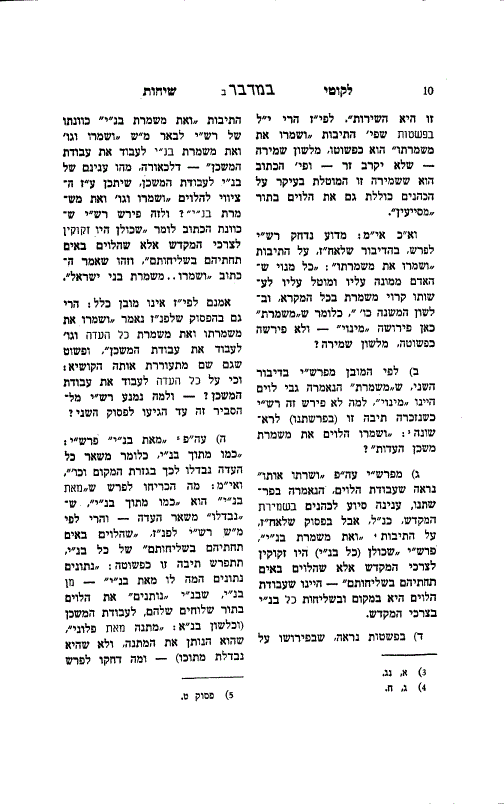
The first question arises from Rashi’s comment on:
וְשֵׁרְתוּ אֹתוֹ
Rashi asks: What is this service? He answers: "They will guard his guard." That is, since guarding the Mikdash is Aharon's responsibility—to ensure no zar enters—the Leviim support him by helping with this guarding. This is their service.
If so, it would seem straightforward that "וְשָׁמְרוּ אֶת מִשְׁמַרְתּוֹ" means simply that they help with guarding—guarding the Mishkan so no unauthorized person enters. The obligation rests primarily on Aharon (the Kohanim), but includes the Leviim as helpers.
However, when we look at Rashi’s next comment on a similar phrase, he gives a different explanation—not "guard," but "appointment." Rashi says that "mishmeres" here refers to an appointment or position assigned to someone—a responsibility or charge given by Hashem. Instead of saying they help with guarding, Rashi says they assist with fulfilling their appointed role.
This leads to a question: Why does Rashi feel compelled to interpret "mishmeres" here as "appointment" rather than its simple meaning of "guarding"? Why not maintain consistency and say they help with guarding?
This is the first difficulty: Why doesn’t Rashi explain "וְשָׁמְרוּ אֶת מִשְׁמַרְתּוֹ" in its plain sense—that they help with guarding? Why does he shift to an interpretation about appointments?
The second question arises because the word "mishmeres" already appears earlier in Bamidbar (Perek Aleph), yet there Rashi does not interpret it as an appointment—he leaves it as is. Why does he change his approach here?
סעיף ב׳
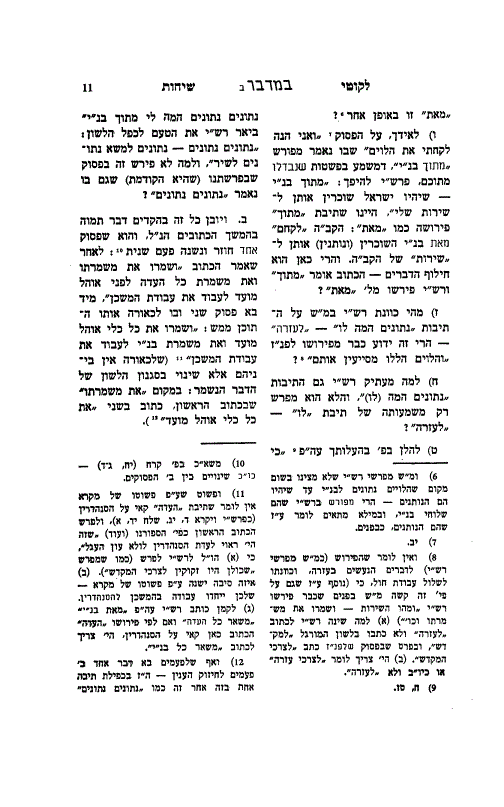
The Rebbe begins by addressing why Rashi interprets the word mishmeres differently in various places. In one verse, Rashi explains mishmeres regarding the Leviim as an “appointment” (minui), not a guard duty. Yet, earlier in the parsha, when the Torah first mentions mishmeres mishkan ha’edus, Rashi is silent—he does not explain it as an appointment. There, it seems to mean literal guarding: the Leviim are to guard the Mishkan. Why does Rashi only clarify minui later?
The Rebbe notes that in some places, Rashi implies that the Leviim’s job is to help the Kohanim with their responsibilities—specifically guarding the Mishkan. But elsewhere, Rashi suggests that the Leviim serve on behalf of all Bnei Yisrael, not just as assistants to the Kohanim. For example, on the verse v’sharsu oso, Rashi says their service is for “him”—meaning Aharon and his sons—but later, on v’es mishmeres Bnei Yisrael, Rashi explains that all of Bnei Yisrael were obligated in the needs of the Mikdash; only that the Leviim come in their place as agents (shluchim) of Klal Yisrael.
This raises a question: what is this “guard” or “appointment” of Bnei Yisrael? The average Jew had no specific task in the Mishkan—so what does it mean that there is a mishmeres Bnei Yisrael? Rashi clarifies: really, everyone was obligated in serving the Mikdash, but since not everyone could do so, Hashem appointed the Leviim as their representatives.
The Rebbe points out that this issue already appears earlier in Bamidbar when mishmeres kol ha’eidah is mentioned. There too, it seems to imply a communal obligation toward Avodas HaMishkan. Why does Rashi only explain this concept later and not at its first mention?
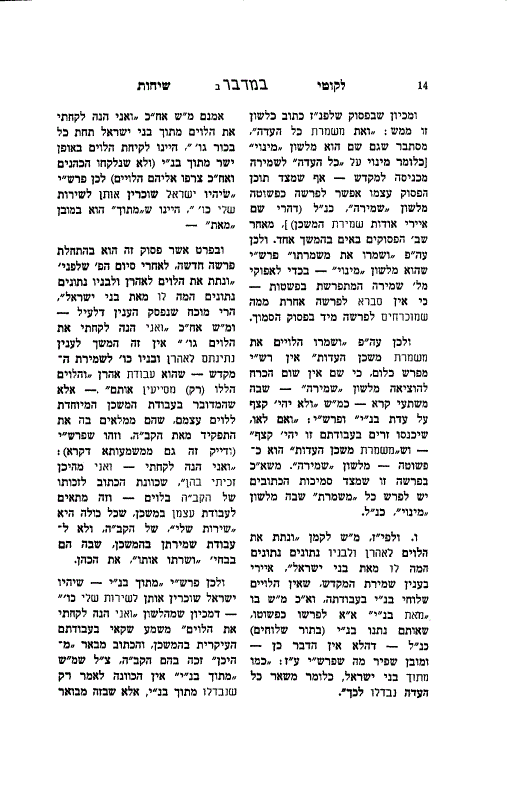
The answer lies in a careful reading of these verses. The Torah repeats almost identical phrases about the Leviim’s duties—first mentioning guarding Aharon’s charge and then again referencing guarding “all vessels of Ohel Moed.” The repetition suggests two distinct categories of Levitic service: one relates to protecting (guarding) and assisting Kohanim; another relates to positive acts like carrying and singing.
The first category is about preventing unauthorized entry into sacred space—a negative commandment fulfilled by active guarding. This benefits Bnei Yisrael by protecting them from transgressing boundaries they might not recognize themselves. The second category involves positive service: dismantling and assembling the Mishkan during travels and singing during offerings—tasks performed directly for Hashem and for which only Leviim were responsible.
This distinction explains why sometimes mishmeres means literal guarding (when discussing protection from unauthorized entry) and sometimes means an appointment or assignment (when referring to positive acts like carrying or singing). When both verses appear together, Rashi must clarify that mishmeres can mean “appointment,” since in one context (the second verse) it cannot refer to guarding against entry—it refers instead to fulfilling communal obligations through agency.
This also clarifies why earlier verses do not require such explanation: there, mishmeres simply means guarding against unauthorized entry—a straightforward interpretation given its context.
The Rebbe then addresses another nuance: when the Torah says me’ez Bnei Yisrael, Rashi explains it as “from among” Bnei Yisrael—they were separated from among their brethren for this role. Why doesn’t Rashi interpret it as meaning they were sent as agents (shluchim)? Because when discussing support roles for Kohanim (guarding), Leviim are not acting as agents of Israel but rather fulfilling a Divine appointment; they are separated for this task, not sent by Israel per se.
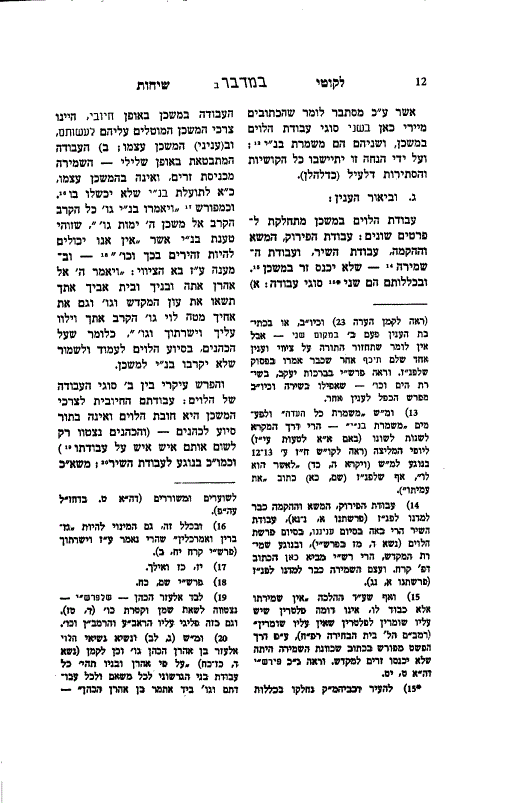
This contrasts with other contexts where Leviim serve directly on behalf of all Israel—such as carrying or singing—and there they can be described as agents or representatives of Klal Yisrael.
The Rebbe further notes that when a new parsha begins with Hashem saying He has taken Leviim from among Israel (mitoch Bnei Yisrael) for His own service—not merely supporting Kohanim—it emphasizes their unique role as Hashem’s direct servants. Here, Rashi explains that Israel “hires” them for Hashem’s service; thus, they act as agents on behalf of all Jews.
This resolves why sometimes “from among” means separation (for support roles) and sometimes agency (for direct service). The context determines whether Leviim are separated by Divine decree or sent by Israel as representatives.
The Rebbe also addresses why in Parshas Beha’aloscha, where it says Nesunim Nesunim Heim Oloy, Rashi explains this duplication refers to two types of Levitic service: carrying and singing. In our parsha, however, such an explanation would be out of place because here we discuss support roles for Kohanim—not those independent Levitic tasks.
This also clarifies why Rashi sometimes brings extra words like Nesunim Heim Oloy Le’ezro: he wants us to understand that here their giving is specifically for assistance—not agency—since they are supporting Kohanim rather than acting on behalf of all Israel.
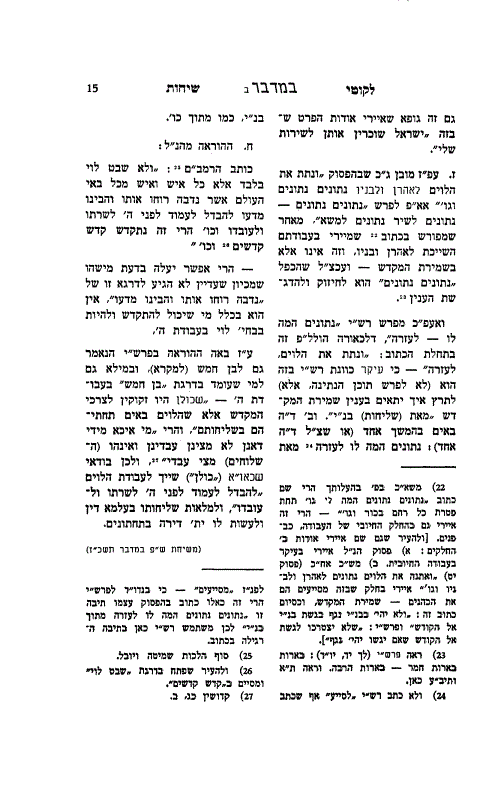
The Rebbe concludes with a powerful lesson: if every Jew can appoint a Levite as his agent for Avodas HaMikdash, it must be because every Jew possesses an inherent connection to this holy service. As Rambam writes, anyone whose spirit moves him can become “holy of holies”—not just those born into Shevet Levi. Even someone who feels spiritually immature (“a five-year-old”) retains this potential; appointing an agent proves you have some share in what he does on your behalf.
This teaches us that each Jew has within himself a spark capable of standing before Hashem—to serve Him and fulfill his mission in making a dwelling place for Hashem below. This is part of our collective inheritance and responsibility.
משיחת שבת פרשת במדבר תשכ"ז.
Key points
1. In this sicha, the Rebbe examines a series of Rashis on Parshas Bamidbar that appear inconsistent regarding the role of the Leviyim in the Mishkan. The central question is: what was the primary function of the Leviyim—what did their service entail? The Rebbe introduces a new perspective by dividing the relevant verses into two categories: active service (such as singing and carrying) and protective service (guarding to prevent unauthorized entry). Recognizing these two aspects clarifies all of Rashi’s comments, as each can be understood according to which aspect of Levitic duty it addresses. The parsha’s opening, which singles out Moshe and Aharon alongside the separate counting of the Leviyim, establishes a theme for understanding their unique roles within Bnei Yisrael.
2. The Torah begins by describing Aharon and the tribe of Levi. Initially, there were only three Kohanim—Aharon and his two sons—while the tribe of Levi included many families. The verse “Bring near the tribe of Levi” is followed by “Place them before Aharon the Kohen, and they shall serve him.” Rashi explains that this service refers to guarding—the responsibility to ensure no zar enters—which is primarily Aharon’s duty, with the Leviyim assisting him. However, in another comment, Rashi interprets “mishmeres” as an appointment or charge rather than literal guarding. This raises several questions: Why does Rashi shift from interpreting “mishmeres” as guarding to appointment? Why not maintain consistency? Furthermore, why does Rashi leave “mishmeres” unexplained earlier in Bamidbar but interpret it differently here? These are among nine difficulties regarding Rashi’s approach that the Rebbe enumerates in this section.
3. The Rebbe addresses why Rashi interprets “mishmeres” differently across verses. In one place, Rashi explains it as an appointment (minui), while elsewhere he leaves it as literal guarding. Sometimes Rashi presents the Leviyim as assistants to the Kohanim; other times, he describes them as agents (shluchim) representing all Bnei Yisrael. This raises a question: what is meant by “the guard/appointment of Bnei Yisrael,” given that ordinary Jews had no specific Mishkan task? Rashi clarifies that all Israel was obligated in Mikdash service, but since not everyone could serve directly, Hashem appointed Leviim as their representatives. The repetition of similar verses about Levitic duties suggests two categories: one about protection (guarding against unauthorized entry) and another about positive acts (carrying and singing). Thus, sometimes “mishmeres” means literal guarding; other times it means an appointment or agency. Earlier verses require no explanation because their context clearly refers to guarding; only when both types appear together must Rashi clarify their meaning.
4. The Rebbe further analyzes why Rashi sometimes interprets “from among Bnei Yisrael” as separation for a Divine task rather than agency. When discussing support roles for Kohanim (guarding), Leviim are separated for this purpose—not sent by Israel as agents. In contrast, when Leviim perform independent tasks like carrying or singing, they act as shluchim on behalf of all Israel. When a new parsha states that Hashem has taken Leviim from among Israel for His own service—not merely supporting Kohanim—it emphasizes their unique status as Hashem’s direct servants; here they are described as being “hired” by Israel for Hashem’s service and thus act as agents.
5. This distinction also explains why in Parshas Beha’aloscha, where it says “Nesunim Nesunim Heim Oloy,” Rashi interprets this duplication as referring to two types of Levitic service: carrying and singing. In our parsha, such an explanation would be inappropriate because here we discuss support roles for Kohanim rather than those independent Levitic tasks. Similarly, when Rashi adds extra words like “Nesunim Heim Oloy Le’ezro,” he intends to clarify that in this context their giving is specifically for assistance—not agency—since they are supporting Kohanim rather than acting on behalf of all Israel.
6. The Rebbe concludes with a lesson: If every Jew can appoint a Levite as his agent for Avodas HaMikdash, it proves that every Jew possesses an intrinsic connection to this holy service—as Rambam writes, anyone whose spirit moves him can become “holy of holies.” Even someone who feels spiritually immature retains this potential; appointing an agent demonstrates one’s share in what is done on his behalf. Thus, every Jew has within himself a spark capable of standing before Hashem—to serve Him and fulfill his mission in making a dwelling place for Hashem below—this being part of our collective inheritance and responsibility.