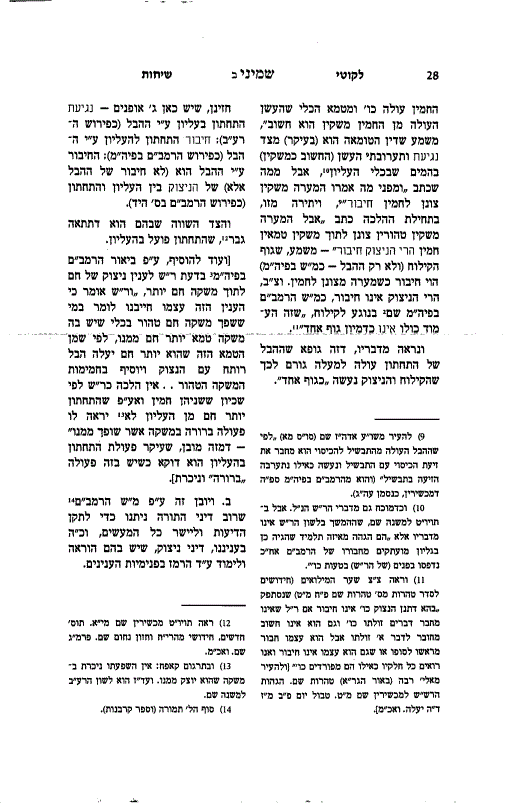
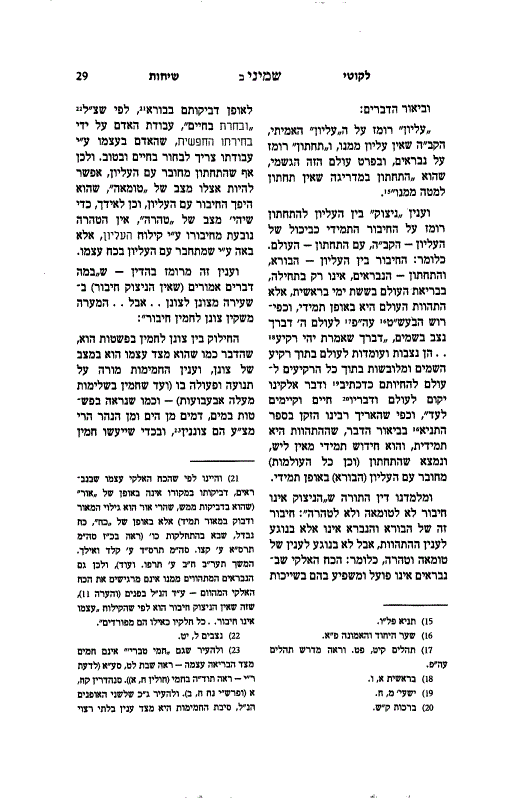
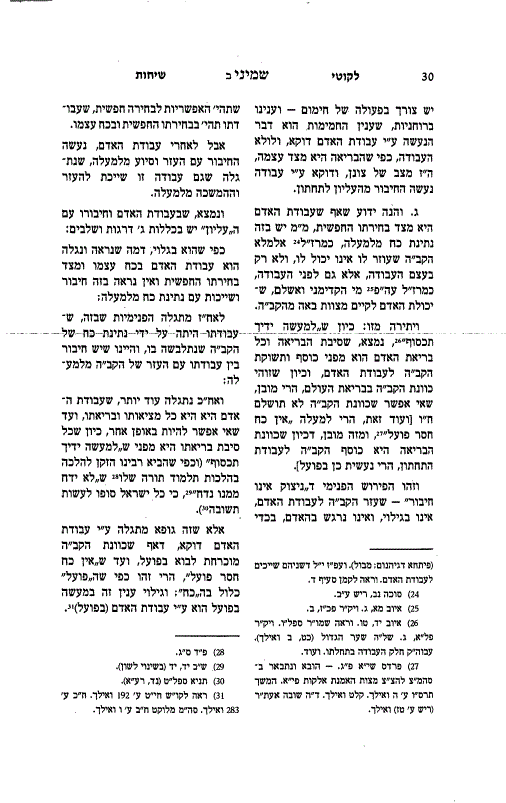
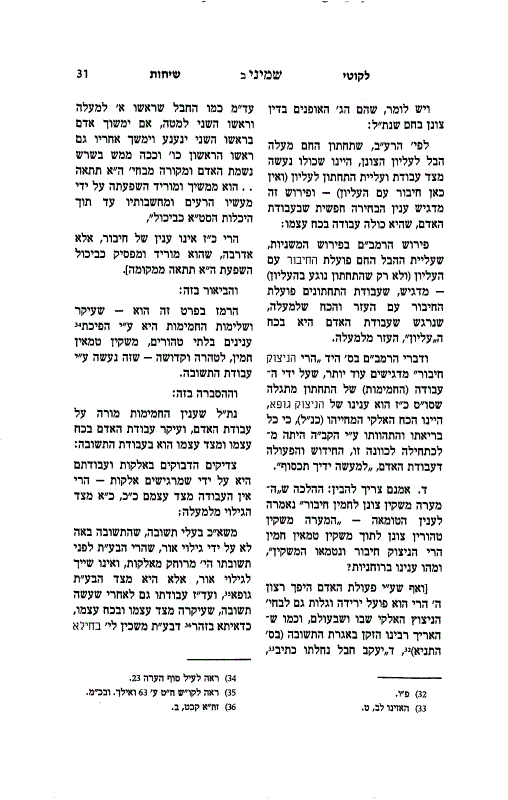
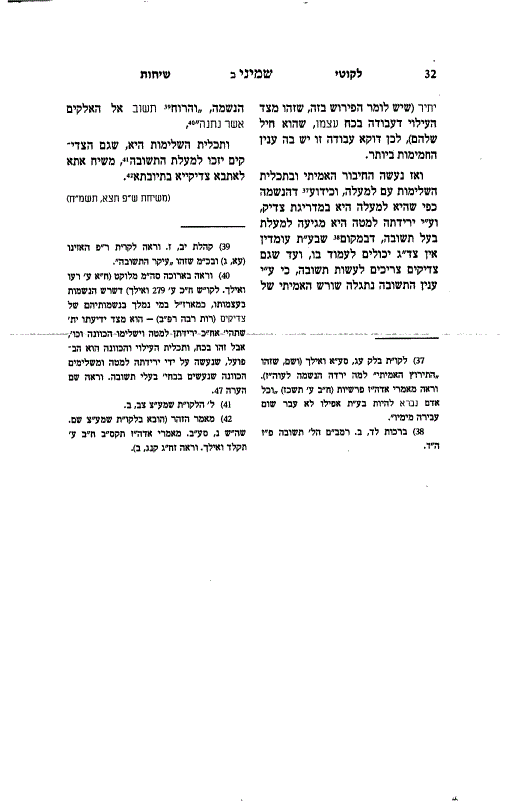
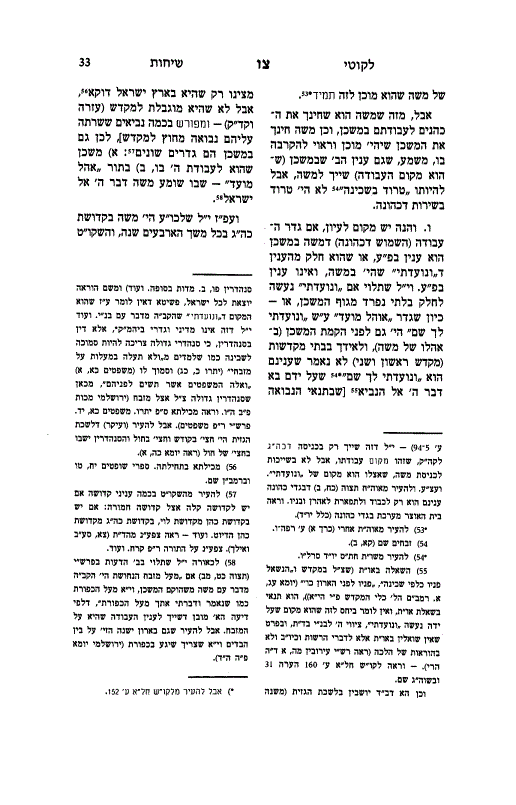
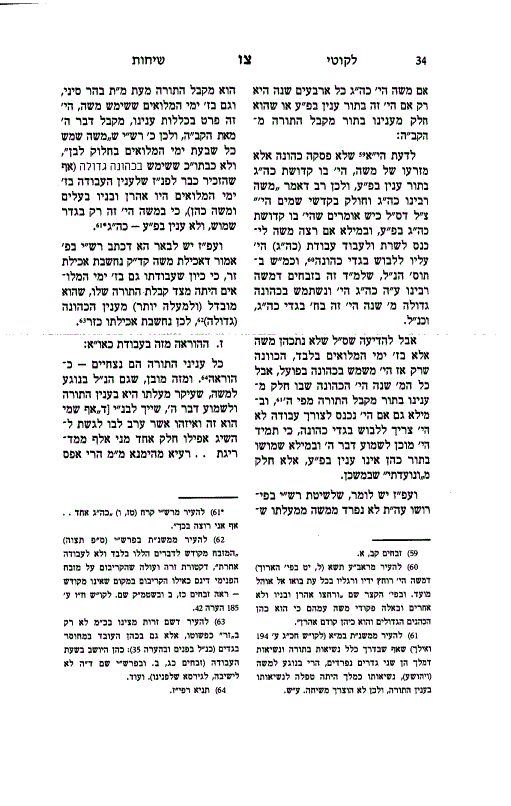
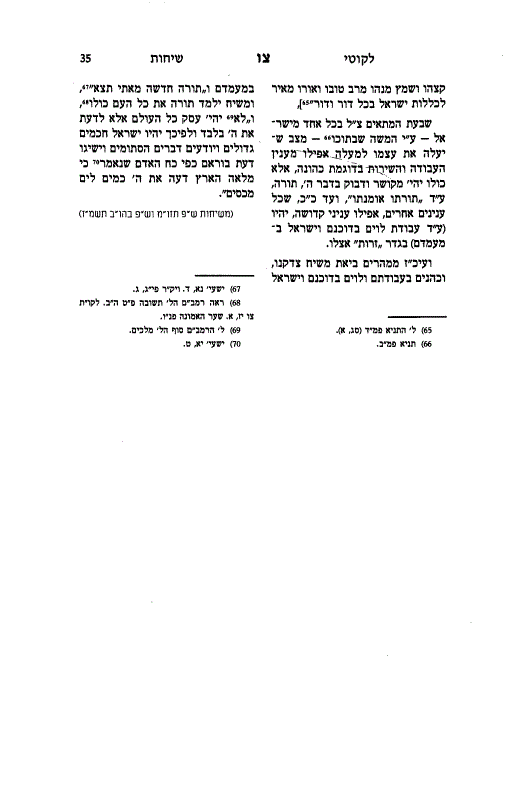
Likkutei Sichos – Chelek 32
Parshas Tzav
The Status of Moshe Rabbeinu During the Seven Days of the Miluim
אות א
We will review a sicha from Likkutei Sichos, Chelek Lamed-Beis (Volume 32) on Parshas Tzav.
This is a very intricate and detailed lamdish sicha in which the Rebbe analyzes the status of Moshe Rabbeinu during the seven days of the Miluim, the inauguration of the Mishkan.
The central question is:
What was the halachic status of Moshe Rabbeinu when he performed the service during the seven days of Miluim?
Was Moshe considered a Kohen, perhaps even a Kohen Gadol, or was he not a Kohen at all and simply performing the service by special command of Hashem?
The Gemara discusses this issue in Zevachim, and the Rebbe carefully analyzes the view of Rashi.
At first glance, Rashi seems to imply that Moshe was not actually a Kohen.
However, as the sicha develops, the Rebbe demonstrates that we must ultimately conclude that Moshe did possess Kehuna, but in a unique form connected to his role as the one who receives the word of Hashem.
The Rebbe ultimately explains that Moshe’s priesthood was different from the regular Kehuna of Aharon and his sons. Moshe’s Kehuna was connected to his role of entering the Mishkan to receive Hashem’s instructions in the Ohel Moed, the Tent of Meeting.
Because of this, Moshe did not necessarily need the full priestly garments of a Kohen Gadol. Instead, he served wearing only a chaluk lavan, a white tunic.
The Rebbe begins with the verse in our parsha describing the offerings of the Miluim:
“וַיַּקְטֵר הַמִּזְבֵּחָה.”
This refers to the sacrifices that Moshe Rabbeinu brought during the seven days of inauguration.
Rashi comments:
Moshe served during all seven days of the Miluim wearing a white tunic – “chaluk lavan.”
But this raises an obvious question.
A regular Kohen must wear four garments, and a Kohen Gadol must wear eight garments.
If Moshe Rabbeinu served in the capacity of a Kohen or Kohen Gadol, why did he wear only a white garment?
Where were the other garments?
Furthermore, Rashi does not explicitly say that Moshe served as a Kohen. Instead, Rashi only tells us what he wore.
But if Rashi’s purpose is to explain why Moshe was able to perform the sacrificial service, it would seem more logical for Rashi to say clearly:
Moshe served as a Kohen.
Indeed, in Toras Kohanim it explicitly states that Moshe served as a Kohen Gadol during the seven days of Miluim.
So why does Rashi not say this?
The Rebbe suggests that perhaps Rashi holds that Moshe did not serve as a Kohen at all.
Instead, Moshe may have performed the service simply because Hashem instructed him to do so, as a hora’as sha’ah—a temporary directive.
Moshe’s role during the Miluim may have been to train Aharon and his sons in the service of the Mishkan.
If so, Moshe performed the service not as a Kohen but as a messenger of Hashem.
The Rebbe explains that Moshe’s service during the Miluim could therefore be understood in two possible ways:
-
Moshe actually had the status of a Kohen, perhaps even a Kohen Gadol, but Hashem instructed him to serve wearing only a white garment.
-
Moshe did not have the status of a Kohen at all, and his service was simply a temporary instruction from Hashem.
The Rebbe now begins examining Rashi’s commentary elsewhere in the Torah to determine which interpretation is correct.
Recap
The Rebbe introduces the main question of the sicha:
Did Moshe Rabbeinu serve as a real Kohen during the seven days of Miluim, or did he simply perform the service as a temporary messenger of Hashem?
אות ב
To understand Rashi’s position, the Rebbe analyzes another Rashi in Parshas Shemos on the verse:
“וַיִּחַר אַף ה׳ בְּמֹשֶׁה.”
“Hashem became angry with Moshe.”
Rashi quotes two opinions.
Rabbi Yehoshua ben Korcha says that whenever the Torah states that Hashem became angry, the anger leaves some visible consequence.
However, in the case of Moshe Rabbeinu we do not see any such consequence. Therefore, this case is an exception.
But Rabbi Yosi disagrees.
He says that there was a consequence.
Originally, the Kehuna was supposed to come from Moshe Rabbeinu.
But because Moshe repeatedly refused Hashem’s command to go to Pharaoh, Hashem became angry and the Kehuna was transferred to Aharon.
This is hinted in the verse:
“הֲלֹא אַהֲרֹן אָחִיךָ הַלֵּוִי.”
Aharon was originally destined to remain a Levi, while Moshe would have been the Kohen.
But after Hashem’s anger, the roles were reversed. Aharon became the Kohen and Moshe remained a Levi.
From this Rashi it would appear that Moshe Rabbeinu was not a Kohen.
According to Rabbi Yehoshua ben Korcha, Moshe was never meant to be a Kohen in the first place.
According to Rabbi Yosi, Moshe lost the Kehuna.
Either way, Moshe ultimately did not retain the Kehuna.
If so, this supports the idea that Rashi understands Moshe’s service during the Miluim as not true Kehuna, but rather a temporary instruction from Hashem.
Recap
Rashi’s explanation of “ויחר אף ה׳ במשה” suggests that Moshe did not ultimately possess Kehuna, which would explain why Rashi does not describe Moshe’s service during the Miluim as priestly service.
אות ג
The Rebbe then analyzes the Gemara in Zevachim (101b).
The Gemara explains that the question of Moshe’s priesthood is actually a dispute among Tannaim.
Four different opinions are mentioned:
-
Rabbi Yehoshua ben Korcha – Moshe was never meant to be a Kohen.
-
Rabbi Shimon bar Yochai – Moshe lost the Kehuna because of Hashem’s anger.
-
The Chachamim – Moshe served as a Kohen only during the seven days of Miluim.
-
Yesh Omrim – Moshe became a Kohen during the Miluim and remained a Kohen for the rest of his life, although his children were Leviim.
The Amora Rav states that Moshe Rabbeinu was a Kohen Gadol.
Rashi explains that Rav must follow the opinion of the Yesh Omrim.
Why?
Because Rav explicitly says that Moshe was a Kohen Gadol, which implies a full priestly status.
If Rav followed the Chachamim, who say Moshe served only during the seven days, this would not necessarily mean that Moshe had full priestly status. It might simply mean that Moshe temporarily performed the service.
Therefore Rashi concludes that Rav follows the opinion that Moshe remained a Kohen permanently.
Recap
The Gemara presents several views about Moshe’s priesthood.
Rashi explains that Rav’s statement that Moshe was a Kohen Gadol follows the opinion that Moshe remained a Kohen throughout his life.
אות ד
The Rebbe now turns to a passage in Rashi in Maseches Avodah Zarah that appears to strongly support the idea that Moshe Rabbeinu was not a Kohen.
The Gemara there asks:
“במה שימש משה כל שבעת ימי המילואים?”
“With what did Moshe serve during the seven days of the inauguration?”
The question is: What garments did Moshe Rabbeinu wear when he performed the service?
One might think that perhaps Moshe wore the garments of the Kohen Gadol.
But Rashi explains that this is impossible.
The verse states clearly:
“ועשו בגדי קודש לאהרון אחיך.”
“They shall make holy garments for Aharon your brother.”
The priestly garments were designated specifically for Aharon.
Therefore Moshe could not wear them.
Rashi continues:
“ולא נשתמש בבגדי כהונה.”
“He did not serve with the priestly garments.”
And then Rashi adds an intriguing phrase:
“על פי הדיבור שימש.”
“He served by the word of Hashem.”
The Rebbe analyzes this expression very carefully.
What exactly does Rashi mean by this?
If the only point was to explain why Moshe was allowed to serve, Rashi could have simply said that Hashem commanded him.
But Rashi also notes that garments are not mentioned.
This suggests that Moshe’s service was fundamentally different from the service of a Kohen.
A Kohen who serves without garments is invalid, because the garments are an essential component of the priesthood.
But Rashi does not say that Moshe served without garments as a Kohen.
Instead, Rashi emphasizes that Moshe served “al pi hadibbur”—by divine command.
The Rebbe therefore explains that Rashi is implying something deeper.
Moshe’s service was not a case of a Kohen serving without garments.
Rather, Moshe was serving as a non-Kohen.
The service was performed simply because Hashem commanded it.
If this interpretation is correct, it would mean that according to Rashi, Moshe Rabbeinu was not a Kohen during the seven days of Miluim.
This would also explain why Rashi in Chumash describes Moshe as wearing merely a white tunic.
He was performing the service, but not in the category of Kehuna.
Recap
Rashi in Avodah Zarah says Moshe served “al pi hadibbur.”
The Rebbe explains that this suggests Moshe’s service was not priestly service, but a special act performed solely because Hashem commanded it.
אות ה
However, the Rebbe now presents several strong proofs from Rashi in Chumash that appear to show the exact opposite.
These proofs indicate that Moshe was indeed a Kohen.
The first proof comes from Parshas Tetzaveh, regarding the offering known as the Eil HaMiluim.
When the sacrifice was waved, both the owners of the sacrifice and the Kohen participated in the waving.
Rashi explains how this worked.
The Kohen would place his hands beneath the hands of the owner, and together they would wave the offering.
In the case of the Miluim sacrifice, Rashi explicitly states:
“אהרן ובניו בעלים ומשה כהן.”
“Aharon and his sons were the owners, and Moshe was the Kohen.”
Here Rashi clearly calls Moshe a Kohen.
This appears to contradict the idea that Moshe served merely as a non-Kohen by special instruction.
A second proof comes from Parshas Pekudei.
Rashi explains that on the eighth day of the Miluim, Moshe sanctified his hands and feet together with Aharon and his sons.
The implication is that Moshe was standing together with them in the realm of Kehuna.
This again suggests that Moshe possessed a genuine priestly status.
The third proof returns to the earlier Rashi in Parshas Shemos.
Rashi there cites the verse:
“בניו יקראו על שבט הלוי.”
“His sons will be called from the tribe of Levi.”
The Rebbe points out something very subtle.
The verse refers specifically to Moshe’s sons.
It does not say that Moshe himself lost the Kehuna.
According to Rabbi Yosi’s interpretation, the punishment of Hashem’s anger was that Moshe’s descendants would not inherit the priesthood.
But Moshe himself remained a Kohen.
In other words, Moshe retained the priesthood personally, but it was not passed on to his children.
Recap
Several statements of Rashi indicate that Moshe did possess Kehuna.
The priesthood may not have passed to his descendants, but Moshe himself remained a Kohen.
אות ו
The Rebbe now introduces a profound conceptual explanation.
The Mishkan served two different purposes.
First, it was a place for sacrificial service, the place where the Kohanim performed the avodah.
Second, it was the place where Hashem communicated with Moshe.
The Torah says:
“ונועדתי לך שם ודברתי אתך מעל הכפורת.”
“I will meet with you there, and I will speak with you from above the cover of the Ark.”
Thus the Mishkan functioned as the Ohel Moed, the Tent of Meeting.
This second function actually existed even before the Mishkan was built.
Before the Mishkan was erected, Moshe had his own tent outside the camp.
Anyone who sought Hashem would go there, and Hashem would speak with Moshe there.
This was already an Ohel Moed.
When the Mishkan was later built, the place where Hashem spoke with Moshe simply moved from Moshe’s personal tent into the Mishkan.
Moshe’s primary role was therefore to be the recipient of the word of Hashem.
He was constantly ready to hear the divine message and convey it to the Jewish people.
Because of this role, Moshe did not require special garments in order to enter the Mishkan to hear Hashem’s voice.
When Moshe entered the Kodesh Hakodashim to receive prophecy, he did not need the garments of the Kohen Gadol.
However, Moshe also had a secondary role related to the Mishkan.
He trained the Kohanim, inaugurated the Mishkan, and prepared it for service.
In that sense, Moshe also functioned in connection with Kehuna.
But this priestly role was not independent.
It was simply an extension of his primary role as the recipient of Hashem’s word.
This resolves the contradiction.
Moshe Rabbeinu did indeed possess the sanctity of Kehuna.
However, his Kehuna was not a separate role like that of Aharon.
It was part of his broader identity as the one through whom Hashem’s word entered the world.
Because of this, Moshe did not need the priestly garments.
His service during the seven days of Miluim was therefore performed wearing only a white tunic.
Recap
Moshe’s priesthood was not a separate institution like Aharon’s.
It was part of his unique role as the recipient and transmitter of Hashem’s word, which explains why he did not require priestly garments.
Final Summary of the Sicha
The Rebbe examines whether Moshe Rabbeinu had the status of a Kohen during the seven days of Miluim.
Rashi’s language initially suggests that Moshe was not a Kohen, since he served wearing only a white tunic and Rashi says he served “al pi hadibbur.”
However, other statements of Rashi clearly indicate that Moshe did possess Kehuna.
The Rebbe resolves the contradiction by explaining that Moshe’s priesthood was fundamentally different from the priesthood of Aharon.
Moshe’s primary function was to receive the word of Hashem in the Ohel Moed and transmit it to the Jewish people.
His role in the Mishkan was therefore connected primarily to Torah and prophecy, not to sacrificial service.
Because his priesthood was an extension of this unique role, Moshe did not require the standard priestly garments.
The deeper lesson is that the highest level of divine service is complete attachment to Torah and the word of Hashem, just as Moshe Rabbeinu exemplified.
Through strengthening our connection to Torah, we hasten the fulfillment of the prophecy:
“כי מלאה הארץ דעה את ה׳ כמים לים מכסים.”
ליקוטי שיחות חלק ל״ב – פרשת צו
מעמדו של משה רבנו בשבעת ימי המילואים
אות א
בסיחה זו דן הרבי בשאלה יסודית: מה היה מעמדו של משה רבנו בשבעת ימי המילואים – האם שימש ככהן, ואולי אפילו ככהן גדול, או שמא לא היה כהן כלל ושימש רק על פי ציווי מיוחד מאת ה׳?
בפרשת צו מתואר הקרבת הקרבנות בימי המילואים. רש״י כותב שמשה רבנו שימש כל שבעת ימי המילואים בלבוש חלוק לבן.
אך הדבר מעורר קושי גדול. כהן רגיל צריך לעבוד בארבעה בגדים, וכהן גדול בשמונה בגדים. אם משה שימש ככהן – כיצד שימש רק בחלוק לבן?
יתרה מזו: רש״י אינו אומר בפירוש שמשה שימש ככהן, אלא רק מציין מה לבש. לכאורה היה צריך רש״י לומר בפשטות שמשה שימש ככהן.
בתורת כהנים אכן נאמר שמשה שימש ככהן גדול בשבעת ימי המילואים. אם כן, מדוע רש״י אינו אומר זאת?
הרבי מציע שאולי לדעת רש״י משה לא שימש ככהן כלל. ייתכן שכל עבודתו הייתה רק מפני שהקב״ה ציווה עליו לעשות כן, כהוראת שעה. תפקידו של משה היה לחנך את אהרן ובניו לעבודת המשכן.
לפי זה אפשר להבין ששימושו של משה היה רק כשליח ה׳ ולא מצד כהונה.
אם כן עומדות לפנינו שתי אפשרויות:
-
משה היה כהן, אך ה׳ ציווה עליו לעבוד בחלוק לבן בלבד.
-
משה כלל לא היה כהן, אלא שימש רק משום ציווי מיוחד מאת ה׳.
כדי לברר זאת, הרבי בוחן מקומות נוספים בדברי רש״י.
Recap
השאלה המרכזית: האם משה רבנו שימש ככהן בשבעת ימי המילואים או רק פעל על פי ציווי מיוחד של הקב״ה.
אות ב
הרבי מביא את דברי רש״י בפרשת שמות על הפסוק:
״ויחר אף ה׳ במשה״
רש״י מביא שתי דעות.
לדעת רבי יהושע בן קרחה, בכל מקום שנאמר חרון אף – נשאר רושם. אולם כאן אין אנו רואים רושם כזה.
לעומת זאת רבי יוסי סובר שכן היה רושם.
בתחילה הייתה הכהונה אמורה להיות אצל משה רבנו, אך בגלל שסירב שוב ושוב לשליחות לפרעה – נלקחה ממנו הכהונה וניתנה לאהרן.
הדבר נרמז בפסוק:
״הלא אהרן אחיך הלוי״
אהרן היה אמור להישאר לוי, ואילו משה היה אמור להיות כהן.
אך לאחר חרון האף התחלפו התפקידים.
לפי זה נראה שמשה לא נשאר כהן.
אם כן, ייתכן שלדעת רש״י משה שימש בשבעת ימי המילואים רק מפני ציווי ה׳ ולא מצד כהונה.
Recap
מדברי רש״י בפרשת שמות נראה שמשה לא נשאר כהן, ולכן ייתכן שעבודתו בימי המילואים לא הייתה עבודת כהונה ממש.
אות ג
הרבי מביא את הגמרא בזבחים (ק״א).
שם מובאות ארבע דעות:
-
רבי יהושע בן קרחה – משה לא היה אמור להיות כהן כלל.
-
רבי שמעון בר יוחאי – משה איבד את הכהונה בעקבות חרון האף.
-
חכמים – משה שימש ככהן רק בשבעת ימי המילואים.
-
יש אומרים – משה נעשה כהן בשבעת ימי המילואים ונשאר כהן כל ימיו, אלא שבניו היו לויים.
האמורא רב אומר שמשה היה כהן גדול.
רש״י מסביר שרב סובר כדעת יש אומרים, שמשה נשאר כהן כל ימיו.
כי אם משה היה כהן רק לשבעת ימים – לא היה מקום לקרוא לו כהן גדול.
Recap
הגמרא מביאה דעות שונות לגבי כהונתו של משה, ורש״י מסביר שלדעת רב משה היה כהן גדול לאורך חייו.
אות ד
הרבי מביא ראיה מדברי רש״י במסכת עבודה זרה.
הגמרא שואלת:
״במה שימש משה כל שבעת ימי המילואים?״
איזה בגדים לבש?
אפשר היה לחשוב שלבש בגדי כהן גדול.
אך רש״י אומר:
״לא נשתמש בבגדי כהונה״
כי התורה אמרה:
״ועשו בגדי קודש לאהרן אחיך״
הבגדים נועדו לאהרן.
רש״י מוסיף:
״על פי הדיבור שימש״
הרבי מדייק: רש״י לא אומר שמשה שימש ככהן בלי בגדים, אלא ששימש על פי הדיבור.
כלומר, עבודתו לא הייתה מצד כהונה אלא משום ציווי ה׳.
כהן העובד בלי בגדים – עבודתו פסולה.
אך כאן אין מדובר בכהן העובד בלי בגדים, אלא באדם שאינו כהן שעובד מפני ציווי מיוחד.
לפי זה נראה שלדעת רש״י משה לא היה כהן בימי המילואים.
Recap
רש״י בעבודה זרה מדגיש שמשה שימש על פי הדיבור, דבר המרמז שעבודתו לא הייתה מצד כהונה.
אות ה
אולם הרבי מביא שלוש ראיות מרש״י עצמו שמשה כן היה כהן.
הראיה הראשונה מפרשת תצוה.
בקרבן איל המילואים, רש״י אומר:
״אהרן ובניו בעלים ומשה כהן״
כלומר משה היה הכהן שהניף את הקרבן.
זוהי אמירה מפורשת שמשה היה כהן.
הראיה השנייה מפרשת פקודי.
שם רש״י אומר שביום השמיני למילואים נתקדשו כולם לכהונה, ומשה קידש ידיו ורגליו יחד עם אהרן ובניו.
הראיה השלישית חוזרת לרש״י בפרשת שמות.
הפסוק אומר:
״בניו יקראו על שבט הלוי״
הפסוק מדבר על בניו של משה – שהם לויים.
משמע שהכהונה לא נמשכה לצאצאיו, אך משה עצמו נשאר כהן.
Recap
ישנן ראיות מדברי רש״י שמשה עצמו היה כהן, אלא שהכהונה לא נמשכה לבניו.
אות ו
הרבי מבאר יסוד עמוק.
למשכן היו שני תפקידים:
-
מקום עבודת הקרבנות.
-
מקום שבו ה׳ מדבר עם משה.
הפסוק אומר:
״ונועדתי לך שם ודברתי אתך מעל הכפורת״
המשכן היה גם אוהל מועד.
תפקיד זה כבר היה קיים קודם – באוהל של משה מחוץ למחנה.
כאשר הוקם המשכן, מקום הדיבור עבר לשם.
תפקידו העיקרי של משה היה להיות מקבל דבר ה׳ ולמסור אותו לישראל.
לכן כאשר נכנס לשמוע את דבר ה׳ – לא היה צריך בגדי כהונה.
עם זאת, משה גם חנך את הכהנים והקים את המשכן.
לכן היה לו גם קשר לכהונה.
אך כהונתו לא הייתה תפקיד עצמאי כמו אצל אהרן, אלא חלק מתפקידו הכללי כמי שמקבל את דבר ה׳.
לכן שימש בשבעת ימי המילואים בחלוק לבן בלבד.
Recap
כהונתו של משה הייתה חלק מתפקידו כמקבל דבר ה׳, ולכן לא נזקק לבגדי כהונה.
סיכום הסיחה
הרבי דן בשאלה האם משה רבנו היה כהן בשבעת ימי המילואים.
מצד אחד, לשון רש״י מרמזת שמשה שימש רק על פי ציווי ה׳ ולא מצד כהונה.
אך מצד שני יש ראיות רבות שרש״י רואה במשה כהן.
הרבי מסביר שכהונתו של משה הייתה שונה מכהונתו של אהרן.
תפקידו המרכזי של משה היה להיות מקבל התורה ודבר ה׳ באוהל מועד.
כהונתו הייתה חלק מתפקיד זה, ולכן לא נזקק לבגדי כהונה.
הלקח בעבודת האדם הוא שהעיקר הוא ההתקשרות לתורה ולדבר ה׳.
ועל ידי כך נזכה לגאולה השלמה, כאשר:
״כי מלאה הארץ דעה את ה׳ כמים לים מכסים״