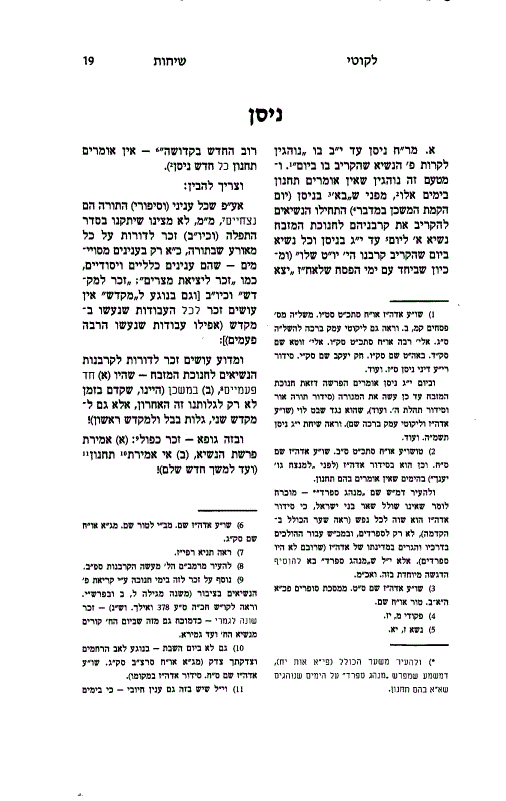
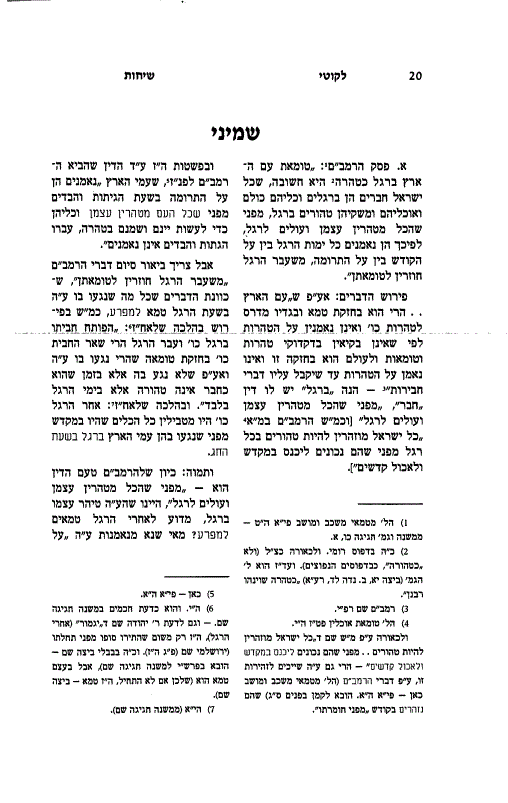
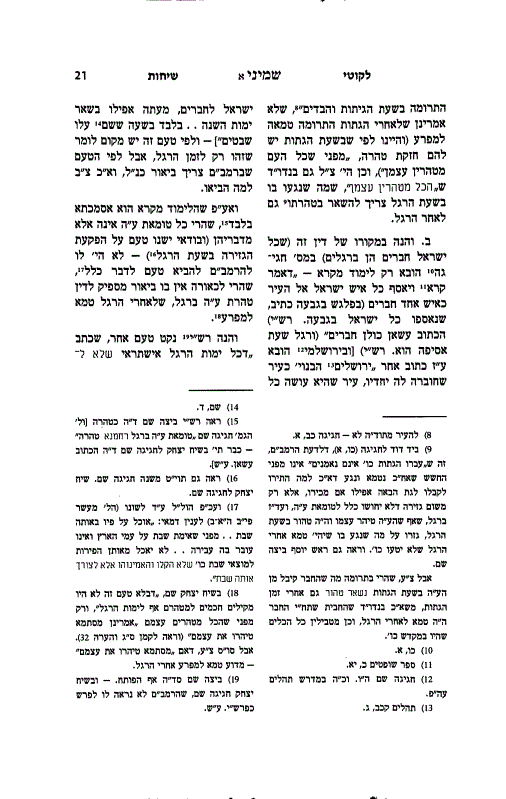
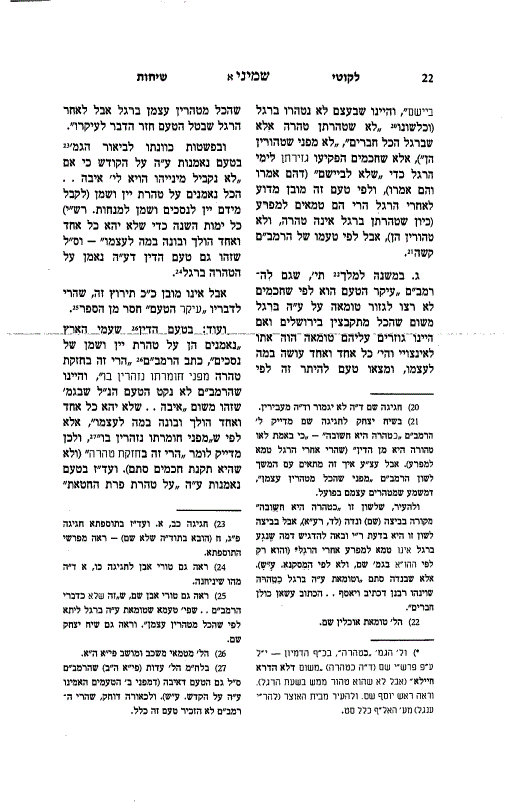
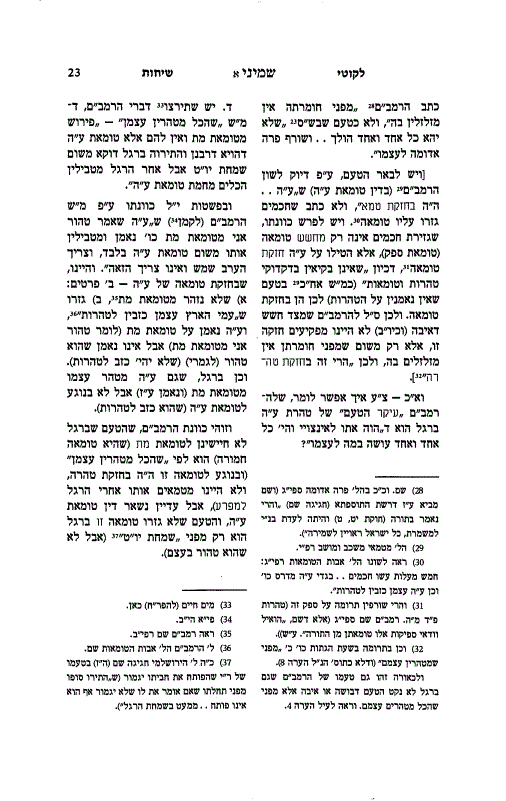
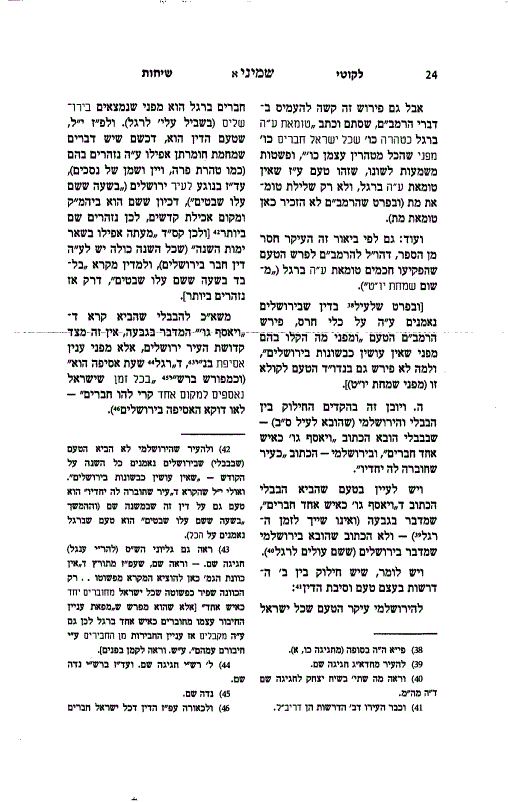
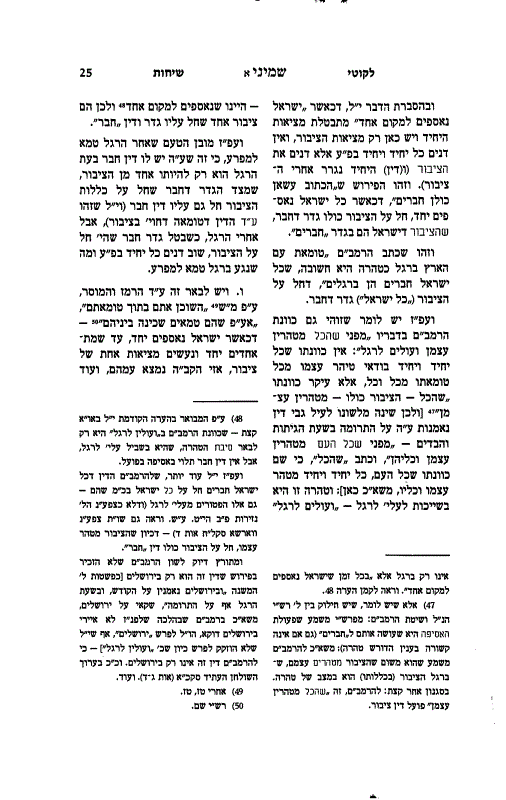
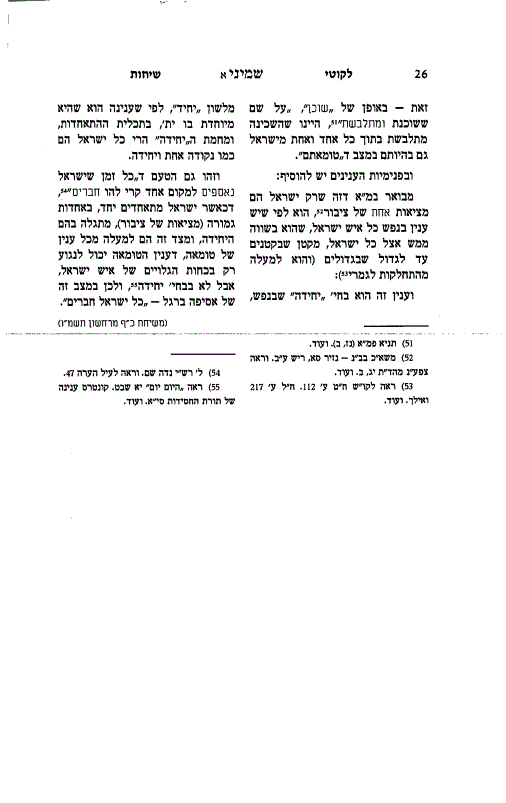
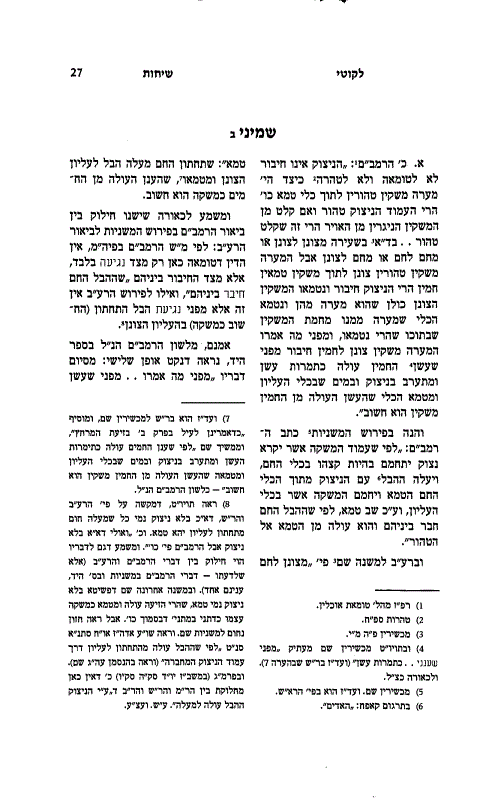
We’ll do a review in Likkutei Sichos in Chelek Lamed Beis. This is Volume 32; this is the sicha for Nissan.
The Rebbe discusses the unique remembrance that we do during the very beginning of the month of Nissan, in which we say the “Nasi” to correspond to the offerings that took place when they inaugurated the Mishkan. Each day, beginning with Rosh Chodesh Nissan, there was a Nasi, so we say the Nasi of the day every day. Also, we don’t say Tachanun during these days; this is all considered a holiday.
The Rebbe asks: How can it be that a commemoration of this magnitude—reading a portion and omitting Tachanun—commemorates something that was a one-time occurrence in the Midbar? Why is there such significance?
The Rebbe explains that what was accomplished through the Nesiim has a very lasting and permanent effect on our service today. That is why we say in the “Yehi Ratzon,” as the Rebbe will explain, that if we are from that tribe—which also means that we have, in some way, a connection to each of the tribes, since we read about all of them—we receive their sparks and their energy in order to continue our Avodah. This means that this is actually very significant. The reason is because we are talking about the Nesiim. The impact of a Nasi is much greater and more lasting than any other impact, and that is the significance.
The Rebbe will also explain, regarding our Nasi, speaking about the Frierdiker Rebbe and the Rebbe Rashab. The Rebbe Rashab’s Yahrtzeit is on Beis Nissan. The Rebbe speaks of that special connection and the impact of the Nasi, especially in the month of Nissan. Of course, the Rebbe does not say this explicitly in the sicha, but this also gives us an understanding regarding Yud Aleph Nissan—the Rebbe’s birthday—and this special connection, as the Rebbe develops this sicha.
Nissan.
First, the Rebbe brings from the Alter Rebbe’s Shulchan Aruch that from Rosh Chodesh Nissan until the twelfth day, the custom is to read from the Torah the portion of the Nasi who brought an offering on that day. So on the first day, on the second day, and so on, we read that part of the Torah which describes the contribution and offering of that Nasi.
Also, for this reason—because the Nesiim are the ones who brought Korbanos—it is customary not to say Tachanun during these days. Starting from Rosh Chodesh Nissan, the day the Mishkan was erected in the Midbar, the Nesiim began to offer their Korbanos for the dedication of the Mizbeach. There was one leader each day, from a different tribe, until the thirteenth of Nissan. The first twelve days had a Nasi each day, and therefore, because it was a festival for each Nasi on the day he brought his offering, it was considered a holiday.
When you combine those twelve days with the days of Pesach that follow—starting with the fourteenth, Erev Pesach, and the fifteenth—most of the month is filled with holiness. It is all a celebration; therefore, we do not say Tachanun for the entire month of Nissan.
This is all in the Shulchan Aruch, in the Siddur, and in the Alter Rebbe’s works. The question, however, is that this seems to be a very outstanding and unique commemoration for something that took place only once in the desert. To make it a permanent practice—to read the Nasi and omit Tachanun—is not something we usually find. We do not establish commemorations for everything that took place, only for very unique and fundamental events. Why would this event require that for generations we omit Tachanun?
We need to understand: although all the aspects and narratives of the Torah are eternal—meaning everything that occurred has an everlasting message—we do not find that they established a place in the order of davening to commemorate every event in the Torah. We only find commemorations for matters that are general, basic, and fundamental.
For example, we celebrate Pesach as a remembrance of the Exodus from Egypt. The Exodus is a central theme for the Jewish people, so we understand why it is commemorated. The same applies to things we do in memory of the Beis HaMikdash, which was a central part of Jewish life.
However, even regarding the Mikdash, we do not create commemorations for all the services that were done there, even those that were performed repeatedly. So the question remains: how is it that we establish a commemoration for generations for these offerings of the Nesiim, which were brought for the dedication of the Mizbeach? We commemorate this in two ways: first, by reading the portion of the Nasi in davening, and second, by omitting Tachanun for the entire month. Why did the Sages see fit to commemorate this particular one-time event that took place in the Mishkan, even before the Beis HaMikdash?
What is unique about this?
The Rebbe now explains that this is actually more than just remembering what took place. We have a very special prayer, and we are trying to draw down the energy that was revealed through those offerings so that it should impact us today. Most commemorations are simply remembering the past, but here we have a special prayer asking that what happened then should affect us now.
In the way we commemorate this, we find something unique. After saying the portion of the Nasi of the day, there is a custom to say the “Yehi Ratzon.” The wording is: “May it be Your will, Hashem my God and the God of my fathers, that if I, Your servant, am from that tribe…” Most people do not know which tribe they come from, but if I am from that particular tribe that I just read about, then we pray: “Let there shine upon me all the holy sparks and all the holy lights that are included in the sanctity of this tribe.”
We ask that these sparks should shine upon us for a purpose: to give us understanding and the ability to learn and grow in Torah, to have awe of Hashem, and to do His will. And we say this not only for ourselves, but for all the days of our lives, and for our children and our children’s children, from now and forever. This is a powerful and comprehensive blessing that extends for eternity.
The Rebbe explains that each and every Jew—not just select individuals—prays that these holy sparks should shine upon them. We are asking that the illumination contained within the sanctity of that tribe should be revealed within us. Furthermore, we ask that this illumination should not remain hidden, but should have a practical effect in our actual service of Hashem—to understand Torah, to grow in wisdom, and to develop awe.
Now we are speaking about real impact—not only for oneself, but for all the days of one’s life, and for future generations. This is a very powerful form of commemoration.
The Rebbe emphasizes that this is not a prayer for something miraculous or unattainable. We do not pray for miracles. Therefore, this must be something that can be fulfilled in a natural way. Even while we are in Golus, in the deepest and darkest conditions, this is not beyond reach—we can receive these sparks and this holiness from the tribes to assist us in our service.
Furthermore, when this prayer is said in a shul with a minyan, there is a special power—that Hashem does not reject such a prayer. In general, the prayer of a Jew is fulfilled, and especially when it is said with a community. As the verse says, “Heil Kel kabir velo yimas”—He does not reject the prayer of the many.
This means that the prayer is truly effective. Especially since we conclude the Yehi Ratzon by saying “Amen.” The word “Amen” comes from “Emes,” meaning truth. This gives additional strength and certainty to the blessing, reinforcing its fulfillment.
It emerges that this remembrance of the offerings of the Nesiim is not merely a recollection of something that happened in the past. Rather, it is an ongoing, eternal influence—to the extent that all those holy sparks and lights shine upon us in a practical way, helping us understand Torah, develop awe of Hashem, and fulfill His will.
“I will do Your will; call me Chai for all the days of my life—me, my children, and my children’s children forever.” All of this is accomplished through reading Parshas HaNasi. It is an eternal impact that comes from reading the Nasi during these days. It is not merely a memory; it is something much greater.
This is a tremendous novelty, even when compared to other commemorative events that originate from the words of the Sages. This is far more powerful, far more profound, far more lasting, and far greater than anything else we find.
Even though, in general, all activities, actions, and prayers are connected to remembering something—for example, when we commemorate the Exodus from Egypt—it is more than just remembrance. Through remembering, something of what occurred then is also activated now. However, even so, it is not on this level. It is not with this intensity, not with this continuous and tremendous level of benefit that we find here. Such an impact we do not find anywhere else in our prayers or commemorations throughout the year.
So what is this?
Here we see that this commemoration carries extraordinary power. When we read the Yehi Ratzon, we see what this commemoration accomplishes. First, the Rebbe asks: Why do we commemorate it? Then the Rebbe explains that it is not just commemoration—it has an immense and eternal impact on a person’s life, on his service of Hashem, and on his entire family.
But the Rebbe adds that we must understand another point. Each person says: “If I am from this tribe,” and then prays accordingly. But what happens if he is not from that tribe? Each person belongs to only one tribe. That means that for twelve out of the thirteen days, a person is saying a prayer that does not directly correspond to his tribe. How can that be?
It must be that even if a person is not from that tribe, he still has a connection to it. If he is from that tribe, he receives it fully—but even if not, there is still a connection. As the Rebbe explains, even a Kohen and a Levi say it, because through the concept of ibur, there is still a connection.
So what we are saying is that from the Nasi, all the Nesiim have an impact on every single person. It is not only the Nasi of one’s own tribe; rather, all of them affect every individual.
And there is even more.
The Rebbe continues: Not only do all tribes have an impact, but each person is actually connected to all of them. That is why we say all twelve. First, however, the Rebbe formulates the question:
How is it possible that every Jew recites the portion of each of the twelve tribes, along with the prayer that the lights of that tribe should shine upon him? Each person is only from one tribe!
This is also reflected in the wording of the Yehi Ratzon itself. It is phrased conditionally: “If I, Your servant, am from this tribe…” It is possible that one is not from that tribe.
So each individual, who belongs to only one tribe, is reciting all twelve. It would seem that for eleven of them, the prayer does not truly apply. One is saying a prayer that is not directly relevant.
Therefore, we must conclude that every Jew has some inclusion within the other tribes as well. Even though one is from a specific tribe, he also has a connection to the others.
To the extent that even if one belongs to a particular tribe, he can still receive the light of all the Nesiim. When we say the Nasi and the Yehi Ratzon, it is not merely a doubtful “if”—there is, in fact, a real connection to all the tribes. That is why we say “if”: because if one is from that tribe, he receives it fully—but even if not, he still has a connection and receives from it.
How is this possible?
The Rebbe brings from the Rebbe Rashab, as recorded in Hayom Yom, that even a Kohen and a Levi should say the Nasi and the Yehi Ratzon each day. Even though we know with certainty that they belong to the tribe of Levi, they still say it.
Why?
Because of the concept of ibur. Through ibur, a person can have a connection to other tribes. Even though a Kohen and Levi clearly belong to their tribe—performing Birchas Kohanim or washing the hands of the Kohanim—they still have an additional connection to the other tribes through ibur.
If a Levi can have a connection to all the tribes, then certainly every Jew can as well. Therefore, this applies to everyone.
Now we understand that all the Nesiim are connected to every individual. Each person receives the holy sparks and lights from all the Nesiim.
Accordingly, when each Jew says all twelve portions of the Nesiim, along with the Yehi Ratzon, and Hashem fulfills these requests—what is accomplished?
At the conclusion of the twelve days, every Jew has received all the holy sparks and lights included in every tribe. This includes all the holy sparks that exist in the entire world, which was created for the Jewish people.
Since the twelve tribes encompass all possible forms of Avodah in twelve general categories, and since the entire world was created for this Avodah, all sparks in the world are connected to these tribes. Therefore, by reading the Nasi each day, a person ultimately receives the sparks of all the tribes and, in a sense, of the entire world.
We can now understand the tremendous impact of saying the Nasi. What does it accomplish? It enhances one’s understanding and learning of Torah, one’s fear of Hashem, and one’s ability to fulfill His will—all through the holy sparks of all the tribes.
This is something extraordinary.
We now understand why this is established as a commemoration—it is truly unique and powerful. The Yehi Ratzon refers to one tribe, yet in reality it includes all tribes. But the question still remains: Why is this so? Why does this particular commemoration have such a profound impact?
The answer is: because it is the Nasi.
The Rebbe explains that the reason for this novelty lies in the Korbanos of the Nesiim. The dedication of the Mizbeach through the Nesiim serves as the foundation and beginning of the service of all Jews for all generations.
As is known, the dedication of the Mizbeach is comparable to education. Just as education lays the foundation for a person’s entire life, so too the inauguration of the Mizbeach establishes the foundation for all future Avodah.
Just as a child’s education shapes his entire lifetime, so too the dedication of the Mizbeach established the basis for the Avodah of every Jew. The building of the Mishkan represents the ultimate purpose—to make a dwelling place for Hashem.
“Make for Me a Mikdash, and I will dwell within them”—within each Jew.
Because this is such a fundamental beginning, all the tribes participated in the dedication of the Mizbeach. Each tribe represents a distinct category of Avodah, and all are necessary to form the complete foundation.
Furthermore, the offerings were brought specifically by the Nesiim—the leaders—because the Nasi represents the entire tribe. When the Nasi brings an offering, it is as if the entire tribe brings it.
Thus, each tribe, through its Nasi, participated in the dedication, and all of Israel were included in this foundational moment.
Now we understand why we commemorate this for generations. Even though it was a one-time event, it is eternal. The dedication of the Mizbeach continues to influence every Jew in every generation.
This is why we read the Nasi and omit Tachanun—it is not merely a remembrance, but an ongoing source of energy and inspiration, even in the darkness of exile.
Through this, we receive the energy of all forms of Avodah, enabling us to serve Hashem in our daily lives. This is a unique and necessary power.
The Rebbe now shifts to discuss the special power of the Nasi and its connection to the month of Nissan.
Since the Korbanos of the Nesiim are eternal, it follows that the concept of the Nasi is also eternal. Every leader in each generation has the same status as the Nasi in the time of the Mishkan.
Additionally, every Jew has an eternal connection to the Nasi of his generation, just as the people were connected to the Nesiim during the inauguration of the Mishkan.
This connection is especially emphasized in the month of Nissan.
In particular, regarding our Nasi—the Rebbe—the connection is even more pronounced. The second of Nissan is the Yahrtzeit of the Rebbe Rashab, and also marks the beginning of the leadership of the Frierdiker Rebbe.
With both the Rebbe Rashab and the Frierdiker Rebbe, we see the concept of eternity expressed even in the physical world, and the connection of each Jew to them is an eternal bond…
Of each one of them—how they are eternally connected to all Yidden, and how Yidden are connected to them.
We see this leadership especially in the month of Nissan through the Frierdiker Rebbe and the Rebbe Rashab. We also see the eternal connection of the Rebbe with the Chassidim, and of all Yidden to them.
So we find eternity even in this physical world—in the bond between them and Yidden, and Yidden to them.
We know the well-known words of the Rebbe Rashab before his histalkus. He said: “I am going to heaven, but the writings I leave for you.” While I go to heaven, the writings—the teachings of Chassidus—I leave for you.
What does this mean?
The meaning is based on the idea that Tzaddikim are similar to their Creator. Just as it is with Hashem, so too it is with Tzaddikim.
Just as Hashem gave Himself in the Torah—as our Sages explain that “Anochi” stands for “Ana Nafshi Ktavis Yahavis,” meaning “I Myself have written and given Myself in the Torah”—so too Tzaddikim place themselves within their Torah.
That is the intent of the Rebbe Rashab’s words: “I am going to heaven, but the writings I leave for you.” When a person studies his teachings, and that study leads to action, and even further—to spreading it outward—then he connects with the Rebbe himself.
Because when you learn his Torah, you are not just learning words—you are taking the Rebbe himself. Since he invested himself in those writings, when you study them, you are connecting with him, even as he is in heaven. You receive him through his writings.
Since these writings exist in the physical world, through them the Rebbe Rashab is present in this world in a tangible way. This creates a physical connection between the Rebbe and all Yidden.
The same applies to his son, the Frierdiker Rebbe, the leader of our generation. Through his writings, his books, and even his physical belongings, one can connect to him—not only spiritually, but physically as well.
The Rebbe explains that even the physical surroundings—the room and place where the Frierdiker Rebbe lived and served—retain a sense of holiness and a physical manifestation of the Rebbe in this world.
The Rebbe brings this from the first maamar said by the Frierdiker Rebbe after the passing of his father on the second of Nissan. That first maamar establishes a fundamental principle of his leadership.
In that maamar, he explains that matters of holiness have an essential and eternal existence. Just as mitzvos are performed through physical objects—such as parchment for tefillin or wool for tzitzis—these physical items become vessels for holiness. They are fitting vessels for the divine light that rests within them.
Whatever Hashem designates as a vessel for a mitzvah retains that sanctity. These objects exist with an essential and lasting existence.
He continues: this is the concept that “Kedusha does not move from its place.” Even things that serve holiness remain holy.
Since all holiness stems from Hashem Himself, and just as Hashem’s existence is eternal and self-sustaining, so too the holiness that extends from Him—invested in mitzvos—remains eternal.
As a continuation of this idea, the maamar explains that the place where a Tzaddik learned and served Hashem remains holy even after his passing. The divine light remains in that place.
The space where he learned, the objects he used in his service—all retain his sanctity. These are parts of the world that he elevated, and they remain transformed.
The maamar brings a story: The Frierdiker Rebbe recounts that he once saw his father, the Rebbe Rashab, enter the room of his father, the Rebbe Maharash. This was several years after the Maharash’s passing, yet everything in the room remained exactly as it had been during his lifetime.
The Rebbe Rashab entered wearing his gartel, stood by the table opposite the Maharash’s seat, moved his lips as if speaking, and wept intensely.
What is the explanation of this?
Based on the maamar, we understand that the eternal holiness of the place and the objects used by the Tzaddik is connected to the concept of light and vessels—“ohr and keilim.” When the divine light unites with the vessels, the vessels themselves take on an essential, enduring existence, similar to the light.
Thus, the place and the objects used by the Tzaddik retain an eternal holiness, even after his physical passing. They are comparable to the vessels of the ten Sefiros, which are nullified to the divine light within them, and therefore share in its eternity.
In fact, it is more than comparable—it is the same concept. Just as the divine light is eternal, so too the vessels that are united with it become eternal.
This idea is also reflected in Tanya, which explains the statement of our Sages that “the forefathers are the chariot.” They were completely nullified to Hashem, serving as vessels for divine revelation. Their entire existence was unified with the divine.
Similarly, Tzaddikim and leaders—who are like the forefathers—imbue their physical surroundings with this same eternal holiness.
From all this we understand that the life of a Tzaddik is eternal—not only in spiritual matters, but also in physical reality. His place, his table, his chair—these too retain his holiness.
The expression “Kedusha does not move from its place” is literal. It refers to the actual physical space. The sanctity remains embedded in that place.
The holiness of the Tzaddik permeates all aspects of his life—including the space he occupied and the objects he used in his service.
As the maamar states: the place where he learned and served, and all the objects he used, retain his sanctity. Even after his passing, the holiness of that place and those vessels remains exactly as it was
That the Tzaddik used them in the same way in poel—in actual practice—with both soul and body. As we understand from that story, nothing changed with the fact that he was no longer physically alive; that space and that place remained exactly the same.
As we see from the story, he entered into the room of his father, and the order in the room remained exactly as it was during his lifetime. He entered wearing his gartel and stood by the table opposite the chair where his father used to sit. His lips were moving as if he was speaking, and he was crying intensely.
It was exactly as it had been during the lifetime of the Rebbe Rashab and the Rebbe Maharash, when he would enter for yechidus. What is yechidus? It is the idea of uniting the yechidus of the one who enters with the yechidus of the Rebbe—joining the essence of one with the essence of the Rebbe.
So just as there was a connection between the yechidus of the Rebbe Maharash and the yechidus of the Rebbe Rashab during their lifetime in this physical world, that same connection remained even afterward.
Based on the words of the Rebbe Rashab—“I go to heaven, but I leave you my writings”—we understand that by connecting oneself to the leader of the generation through his writings, in which he invested himself, one draws from the essential, eternal existence of the sanctity of the Tzaddik and the Nasi contained within those writings.
All those who follow in his path, in the straight way that he taught, continue to walk in his ways forever.
Thus, that essential presence exists within the books—especially when we learn from those writings and bring that learning into actual practice, both by studying personally and by spreading the wellsprings outward.
Through this learning and spreading, there shine within a person all the holy sparks and all the holy lights that are included in the leader of the generation, who encompasses everything—for the Nasi is the all.
This impacts us to understand and to become learned in Torah, including all aspects of Torah—the revealed and the inner dimensions—as found in the writings and teachings of the Nasi.
It also impacts our fear of Hashem, enabling us to do His will all the days of our life—ourselves, our children, and our children’s children, from now and forever.
All of this comes through the holy sparks of the Rebbe, through his books. Through them, we receive those lights, because we are receiving the Rebbe himself as he is present within those writings. This brings a real impact in our lives—in our learning and in our awe, guiding us to fulfill what Hashem wants from us and from our children forever.
What is the practical lesson?
A person must connect himself to the leader of every generation—and in our generation, to the leader of our generation, my father-in-law the Rebbe. That is how one receives from the eternity of the Nasi.
This connection impacts us to understand and to become learned in Torah—both the revealed and the inner parts—and especially the teachings of our Rebbes, our leaders. And as our Sages say, “Great is learning, for it leads to action”—to fulfill the will of Hashem in practice, all the days of our lives, through the actual observance of mitzvot.
In particular, the Rebbe emphasizes the observance of mitzvot relevant to the time—especially those connected to Pesach.
One must prepare oneself and the entire Jewish people for the festival of Pesach—to ensure that every Jew has all their needs for Yom Tov, both materially and spiritually.
This includes providing for physical needs, but primarily ensuring that every Jew knows what to do—the spiritual preparation. This means learning the laws of Pesach and the mitzvot of the festival, beginning with Erev Pesach and the night of the Seder.
All of this is connected to the idea we discussed earlier: “Make for Me a sanctuary, and I will dwell within them.”
Where does the strength for all this Avodah come from? It originates in the inauguration of the Mizbeach through the offerings of the Nesiim.
And wherever the Torah says “to Me” (li), it implies eternity—meaning that this process of building a Mishkan is ongoing.
Therefore, the Rebbe emphasizes that every Jew—man, woman, and child—should make their home into a small sanctuary: a place of Torah, prayer, and acts of kindness and charity.
To the extent that even the physical home and its furnishings—the table, the chair, and everything within—become vessels for holiness.
The home should be filled with holy books. It should be a place where Torah is learned, where prayer is offered, and where acts of kindness are performed.
This idea is especially emphasized during Pesach, when Hashem “passed over” the Jewish homes—homes that were transformed into holy places, small sanctuaries.
Everything within them reflected holiness: Torah, prayer, and acts of kindness.
Special attention must be given to the education of children, who are central participants in the Pesach Seder. The entire structure of the Seder is designed to engage them—to keep them awake, to encourage them to ask questions. They are at the heart of it.
Therefore, every child should have their own Siddur, their own Chumash, their own charity box, and their own Haggadah—preferably with illustrations.
Through this, the child transforms his room, his table, his bed—his entire environment—into a small sanctuary, into vessels for holiness.
And as we explained earlier, this holiness remains—it becomes an essential quality of the physical space and objects, because “Kedusha does not move from its place.”
Once a place becomes holy, it remains so.
One enters such a space wearing a gartel, standing by the table with the awareness of “Know before Whom you stand.” One speaks with Hashem with tears of joy, like a child speaking to a father—an only child to elderly parents.
The Jewish people are called “children to Hashem your God”—to our Father in Heaven.
This brings tremendous pleasure to Hashem. And that delight that Hashem experiences becomes our delight as well—until it leads to the ultimate revelation.
Not only a small sanctuary in one’s home, but the complete and final Sanctuary—the Third Beis HaMikdash.
There, in the Holy of Holies, the essence of every Jewish soul will connect with the level of Yechidah.
And this will take place with the true and complete redemption through our righteous Moshiach—immediately, mamash.
נעשה עיון בליקוטי שיחות חלק ל״ב. זהו כרך ל״ב, והשיחה היא על חודש ניסן.
הרבי דן בזיכרון המיוחד שאנו מקיימים בתחילת חודש ניסן, שבו אומרים את פרשת ה״נשיא״ כנגד הקרבנות שהוקרבו בחנוכת המשכן. בכל יום, החל מראש חודש ניסן, היה נשיא אחר שהקריב, ולכן אנו אומרים בכל יום את פרשת הנשיא של אותו יום. בנוסף, אין אומרים תחנון בימים אלו – כולם נחשבים כימי חג.
הרבי שואל: כיצד ייתכן שזיכרון בעל משמעות כה גדולה – קריאת פרשה ואי־אמירת תחנון – נקבע על דבר שהיה אירוע חד־פעמי במדבר? מדוע יש לכך חשיבות כה מיוחדת?
הרבי מסביר שמה שנפעל על ידי הנשיאים יש לו השפעה נצחית ומתמשכת בעבודתנו עד היום. לכן אנו אומרים ב״יהי רצון״ – כפי שהרבי מסביר – שאם אנו שייכים לאותו שבט (ובעצם יש לנו שייכות כלשהי לכל השבטים, מכיוון שאנו קוראים על כולם), אנו מקבלים את הניצוצות והכוחות שלהם כדי להמשיך בעבודת ה׳. יוצא מכך שזה דבר משמעותי ביותר.
הסיבה היא שמדובר בנשיאים. ההשפעה של נשיא היא עמוקה ומתמשכת הרבה יותר מכל השפעה אחרת, וזהו עיקר העניין.
הרבי מוסיף ומסביר גם לגבי הנשיאים שבדורנו – הרבי מדבר על הרבי הריי״צ ועל הרבי הרש״ב. יום ההילולא של הרבי הרש״ב הוא בב׳ ניסן, והרבי מדגיש את הקשר המיוחד ואת ההשפעה של נשיא, במיוחד בחודש ניסן. אף שהרבי לא אומר זאת במפורש בשיחה, הדבר גם נותן הבנה לגבי י״א ניסן – יום הולדתו של הרבי – והקשר המיוחד לכך.
ראשית, מביא הרבי מהשולחן ערוך של אדמו״ר הזקן, שמראש חודש ניסן ועד יום י״ב בניסן נהגו לקרוא בכל יום את פרשת הנשיא שהקריב באותו יום. ביום הראשון קוראים על נשיא אחד, ביום השני על נשיא אחר, וכן הלאה.
וכן, מכיוון שהנשיאים הקריבו קרבנות, נהגו שלא לומר תחנון בימים אלו. החל מראש חודש ניסן – היום שבו הוקם המשכן במדבר – התחילו הנשיאים להקריב את קרבנותיהם לחנוכת המזבח. בכל יום הקריב נשיא משבט אחר, עד יום י״ג בניסן. שנים־עשר הימים הראשונים היו ימי חג לכל שבט ושבט.
כאשר מצרפים את ימי חנוכת הנשיאים עם ימי הפסח שלאחריהם – החל מי״ד ניסן (ערב פסח) ויום ט״ו – רוב החודש כולו מלא בקדושה. לכן אין אומרים תחנון במשך כל חודש ניסן.
כל זה מובא בשולחן ערוך, בסידור ובדברי אדמו״ר הזקן.
אך השאלה היא: זהו זיכרון יוצא דופן מאוד לדבר שאירע רק פעם אחת במדבר. בדרך כלל איננו קובעים זיכרון לדורות על כל אירוע, אלא רק על עניינים יסודיים ומרכזיים מאוד. מדוע כאן נקבע זיכרון כה חזק לדורות – עד כדי אי־אמירת תחנון?
עלינו להבין: אף שכל דברי התורה הם נצחיים – כל מה שקרה יש לו מסר נצחי – מכל מקום איננו מוצאים שקבעו מקום בתפילה לזכור כל אירוע. רק עניינים כלליים ויסודיים נקבעו לזיכרון.
לדוגמה, אנו חוגגים את פסח כזכר ליציאת מצרים, שהיא יסוד מרכזי בקיומו של עם ישראל. וכן עניינים הקשורים לבית המקדש.
אך אפילו בבית המקדש עצמו, איננו קובעים זיכרון לכל עבודה שנעשתה שם, אפילו אם נעשתה פעמים רבות. אם כן, מדוע דווקא קרבנות הנשיאים – שהיו אירוע חד־פעמי – נקבעו לזיכרון לדורות?
מהו הייחוד שבדבר?
הרבי מסביר שזה אינו רק זיכרון. יש כאן תפילה מיוחדת שמטרתה להמשיך את ההשפעה של הקרבנות ההם אלינו כיום. בדרך כלל אנו זוכרים את העבר, אך כאן אנו מבקשים שהעבר ישפיע בפועל על ההווה.
לאחר אמירת פרשת הנשיא, נוהגים לומר את תפילת ״יהי רצון״:
״יהי רצון מלפניך ה׳ אלוקי ואלוקי אבותי, שאם אני עבדך משבט פלוני...״
אף שאיננו יודעים לאיזה שבט אנו שייכים, אנו מבקשים:
״יאירו עלי כל הניצוצות הקדושים וכל האורות הקדושים הכלולים בקדושת שבט זה״.
ואנו מבקשים שהאורות הללו ישפיעו עלינו בפועל – להבין תורה, לגדול בחכמה, לירא את ה׳ ולעשות את רצונו. ולא רק עבורנו, אלא לכל ימי חיינו, עבור ילדינו ונכדינו עד עולם.
זהו עניין עוצמתי ביותר.
הרבי מדגיש: כל יהודי מבקש זאת – לא רק יחידים. אנו מבקשים שהאור לא יישאר נסתר, אלא שישפיע בפועל בעבודת ה׳.
מדובר בהשפעה נצחית – על האדם עצמו ועל הדורות הבאים.
הרבי מוסיף שזה אינו דבר ניסי או בלתי אפשרי. איננו מתפללים על ניסים, ולכן זה חייב להיות דבר שניתן להשגה באופן טבעי – אפילו בזמן הגלות.
וכאשר תפילה זו נאמרת בציבור, בכוח הרבים, יש לה כוח מיוחד – ״אל כביר לא ימאס״.
ובפרט כאשר מסיימים ב״אמן״ – מלשון אמת – הדבר נותן תוקף נוסף לברכה.
יוצא, שקריאת פרשת הנשיא אינה רק זיכרון, אלא המשכה נצחית של אורות קדושים, המסייעים לנו בפועל להבין תורה, לירא את ה׳ ולעשות את רצונו.
״אעשה רצונך; חייני כל ימי חיי – אני ובניי ובני בניי עד עולם.״ כל זה נפעל על ידי קריאת פרשת הנשיא. זוהי השפעה נצחית הנמשכת מקריאת הנשיא בימים אלו. אין זה רק זיכרון בלבד, אלא דבר עמוק בהרבה.
זהו חידוש גדול מאוד, אפילו ביחס לשאר ענייני זיכרון שתוקנו על ידי חז״ל. כאן מדובר בהשפעה הרבה יותר חזקה, עמוקה, מתמשכת ורחבה מכל מה שאנו מוצאים.
אמנם, בכל ענייני הזיכרון – כמו זכר ליציאת מצרים – אין זה רק זיכרון בלבד, אלא הזכירה פועלת שגם כיום מתעורר משהו מהעניין ההוא. אך אף על פי כן, אין זה מגיע לרמה הזו, לא לעוצמה הזו ולא להשפעה המתמשכת שאנו מוצאים כאן. אין דוגמה לכך בכל סדר התפילה או בזיכרונות שבמהלך השנה.
אם כן, מהו הדבר המיוחד כאן?
כאן אנו רואים שלזיכרון הזה יש כוח עצום. כאשר מתבוננים בנוסח ה״יהי רצון״, רואים מה פועל הזיכרון הזה. תחילה הרבי שואל מדוע בכלל קובעים זיכרון כזה, ולאחר מכן מבאר שאין זה רק זיכרון, אלא השפעה עצומה ונצחית על חיי האדם, על עבודת ה׳ שלו ועל משפחתו לדורות.
אך הרבי מוסיף נקודה נוספת: כל אחד אומר ״אם אני משבט זה״ – ומתפלל בהתאם. אבל מה קורה אם אינו משבט זה? הרי כל אדם שייך לשבט אחד בלבד! יוצא שלכאורה ברוב הימים הוא אומר תפילה שאינה שייכת אליו.
מכאן מוכרחים לומר שיש לכל יהודי שייכות גם לשאר השבטים. אם הוא שייך לאותו שבט – הוא מקבל את ההשפעה בשלמות, אך גם אם לא – יש לו שייכות כלשהי.
הרבי מבאר שאפילו כהן ולוי אומרים זאת, משום שיש מושג של ״עיבור״ – שעל ידו יש לאדם קשר גם לשבטים אחרים.
נמצא, שכל הנשיאים משפיעים על כל יהודי. אין מדובר רק בנשיא של שבט מסוים, אלא כל הנשיאים משפיעים על כולם.
ויש כאן עוד עומק נוסף:
לא רק שיש קשר כללי, אלא כל יהודי שייך במידה מסוימת לכל השבטים. לכן אנו אומרים את כל פרשיות הנשיאים.
הרבי מנסח את השאלה: כיצד ייתכן שכל יהודי אומר את פרשת כל שנים־עשר הנשיאים, ומתפלל שיאירו עליו האורות של כל שבט – בעוד שבפועל הוא שייך לשבט אחד בלבד?
התשובה נמצאת בלשון ה״יהי רצון״ עצמו – ״אם אני משבט זה״ – לשון ספק.
אך אם כן, לכאורה ברוב הימים האדם מתפלל תפילה שאינה שייכת אליו. לכן מוכרחים לומר שכל יהודי כלול גם בשאר השבטים.
עד כדי כך, שגם אם הוא שייך לשבט מסוים, הוא עדיין יכול לקבל את האורות של כל השבטים.
ולכן, כאשר הוא אומר את ה״יהי רצון״, אין זו רק אפשרות של ״אם״, אלא בפועל יש לו שייכות – ולכן האורות יכולים להאיר עליו.
כיצד זה מתבצע?
הרבי מביא מדברי הרבי הרש״ב, המובאים ב״היום יום״, שגם כהן ולוי צריכים לומר את פרשת הנשיא וה״יהי רצון״ בכל יום. אף שהם יודעים בוודאות לאיזה שבט הם שייכים.
ההסבר הוא – מצד עניין ה״עיבור״, יש לאדם שייכות גם לשאר השבטים.
אם כן, אם כהן ולוי יכולים להיות קשורים לכל השבטים – כל יהודי בוודאי.
נמצא שכל הנשיאים שייכים לכל אחד, וכל אחד מקבל את האורות והניצוצות של כולם.
ולפי זה, כאשר יהודי אומר את כל פרשיות הנשיאים במשך שנים־עשר הימים, וגם את ה״יהי רצון״ על כל אחד מהם, והקב״ה מקבל את תפילתו – מה מתרחש בסיום?
בסוף שנים־עשר הימים, מאירים בכל יהודי כל הניצוצות וכל האורות הקדושים הכלולים בכל השבטים.
ולא רק זאת – אלא גם כל הניצוצות הקדושים שבכל העולם, שכן העולם כולו נברא עבור עבודת ישראל.
ידוע ששנים־עשר השבטים כוללים את כל סוגי עבודת ה׳ בשנים־עשר אופנים כלליים. וכל הניצוצות שבעולם קשורים לעבודות אלו.
לכן, כאשר יהודי אומר את פרשיות הנשיאים, הוא מקבל את כל הניצוצות של כל השבטים – ובמובן מסוים גם את כל הניצוצות שבעולם כולו.
מכאן מובן גודל ההשפעה של אמירת פרשת הנשיא.
מה זה פועל?
זה פועל הבנה בלימוד התורה, יראת ה׳, ויכולת לעשות את רצונו – וכל זאת מכוח כל האורות של כל השבטים.
זהו דבר עצום ביותר.
כעת מובן מדוע קבעו זאת כזיכרון לדורות – כי מדובר בעניין ייחודי ועוצמתי מאוד.
אך עדיין נשאלת השאלה: מדוע דווקא עניין זה פועל השפעה כה גדולה בלימוד התורה וביראת שמים?
והתשובה היא: מפני שמדובר בנשיא.
הרבי מסביר שהחידוש נובע מכך שקרבנות הנשיאים, שהם חנוכת המזבח, הם היסוד וההתחלה של עבודת כל ישראל לכל הדורות.
חנוכת המזבח דומה לחינוך – כשם שחינוך קובע את היסוד לכל חייו של האדם.
כך גם חנוכת המזבח קובעת את היסוד לכל עבודת ה׳ של יהודי.
בניית המשכן היא התכלית – ״ועשו לי מקדש ושכנתי בתוכם״ – בתוך כל יהודי.
ומכיוון שזהו יסוד כל העבודה, השתתפו בכך כל השבטים, שכל אחד מהם מייצג סוג אחר של עבודת ה׳.
וכן הקרבנות הוקרבו דווקא על ידי הנשיאים – כי הנשיא כולל את כל בני שבטו. כאשר הנשיא מקריב, כל השבט מקריב דרכו.
לכן כל ישראל נכללו בחנוכת המזבח.
ועל פי זה מובן מדוע קבעו זיכרון זה לדורות.
אף שהיה זה אירוע חד־פעמי, הוא נצחי – והוא משפיע עד היום על עבודת כל יהודי.
לכן אנו קוראים את פרשת הנשיא ואיננו אומרים תחנון – כי זהו מקור של כוח והשראה גם בתוך החושך של הגלות.
דרך זה אנו מקבלים כוח מכל סוגי עבודת ה׳, כדי לעבוד את ה׳ בפועל.
כעת הרבי עובר לבאר את כוחו של הנשיא ואת הקשר לחודש ניסן.
כיוון שקרבנות הנשיאים הם נצחיים – גם עניין הנשיא הוא נצחי.
כל נשיא בכל דור הוא כמו הנשיאים בזמן המשכן.
וכן, לכל יהודי יש קשר נצחי עם נשיא דורו – כפי שהיה בזמן חנוכת המשכן.
והקשר הזה מודגש במיוחד בחודש ניסן.
ובפרט בנוגע לנשיא דורנו – הרבי.
ביום ב׳ ניסן חל יום ההילולא של הרבי הרש״ב, וגם תחילת נשיאותו של הרבי הריי״צ.
אצל שניהם רואים את עניין הנצחיות גם בגשמיות, ואת הקשר הנצחי שלהם עם כל יהודי.
אצל כל אחד מהם רואים כיצד הם קשורים באופן נצחי לכל היהודים, וכיצד היהודים קשורים אליהם.
רואים זאת במיוחד בהנהגה שבחודש ניסן – אצל הרבי הריי״צ ואצל הרבי הרש״ב. רואים גם את הקשר הנצחי של הרבי עם החסידים, ושל כל יהודי אליהם.
נמצא שיש כאן נצחיות גם בעולם הגשמי – בקשר שבין הנשיא לבין היהודים, ובין היהודים אליו.
ידועים דבריו של הרבי הרש״ב לפני הסתלקותו:
״אני עולה השמימה, אך את הכתבים אני משאיר לכם.״
כלומר, אף שאני מסתלק, את תורת החסידות אני משאיר לכם.
מה פירוש הדברים?
הביאור הוא על פי הכלל ש״צדיקים דומים לבוראם״. כפי שזה אצל הקב״ה, כך גם אצל הצדיקים.
כמו שהקב״ה נתן את עצמו בתוך התורה – כפי שאמרו חז״ל ש״אנכי״ הוא ראשי תיבות ״אנא נפשי כתבית יהבית״, כלומר: אני עצמי כתבתי ונתתי את עצמי בתורה – כך גם הצדיקים מכניסים את עצמם בתוך תורתם.
וזהו פירוש דברי הרבי הרש״ב: ״אני עולה השמימה, אך את הכתבים אני משאיר לכם״. כאשר יהודי לומד את תורתו, והלימוד מביא אותו לידי מעשה, ואף להפצת המעיינות החוצה – אז הוא מתקשר עם הרבי עצמו.
מפני שכאשר לומדים את תורתו – לא לומדים רק מילים, אלא מקבלים את הרבי עצמו. הוא נמצא בתוך תורתו, ולכן בלימוד התורה שלו האדם מתקשר אליו, גם כפי שהוא נמצא למעלה.
ומכיוון שהכתבים נמצאים בעולם הגשמי, יוצא שעל ידם הרבי נמצא גם כאן בעולם הזה באופן ממשי.
זה יוצר קשר גשמי בין הרבי לבין כל יהודי.
וכן הדבר גם אצל בנו, הרבי הריי״צ – נשיא דורנו. על ידי כתביו, ספריו ואפילו ענייניו הגשמיים, ניתן להתקשר אליו – גם באופן רוחני וגם באופן גשמי.
הרבי מסביר שגם המקום הגשמי שבו הרבי חי ופעל – נשאר בו רושם של קדושה, ויש בו גילוי ממשי של הרבי בעולם הזה.
הרבי מביא זאת מהמאמר הראשון שאמר הרבי הריי״צ לאחר הסתלקות אביו, בב׳ ניסן. מאמר זה מהווה יסוד מרכזי לכל הנהגתו.
במאמר זה מבואר שענייני קדושה יש להם קיום עצמי ונצחי. כשם שמצוות מתלבשות בדברים גשמיים – כמו קלף לתפילין או צמר לציצית – אותם חפצים נעשים כלי לקדושה.
הם נעשים כלי ראוי לאור האלוקי ששוכן בהם.
כל דבר שהקב״ה קבע שיהיה כלי למצווה – מקבל קיום נצחי.
ומוסיף המאמר שזהו עניין ״קדושה אינה זזה ממקומה״ – גם דברים המשמשים לקדושה נשארים קדושים.
מכיוון שכל קדושה נמשכת מהקב״ה עצמו, וכשם שהקב״ה קיים בקיום עצמי ונצחי – כך גם הקדושה הנמשכת ממנו ונמצאת במצוות, קיימת לנצח.
ובהמשך לכך, מבואר במאמר שהמקום שבו הצדיק למד ועבד את ה׳ נשאר קדוש גם לאחר הסתלקותו. האור האלוקי נשאר במקום.
החדר שבו למד, החפצים שבהם השתמש – כולם נשארים חדורים בקדושה.
מובא סיפור: הרבי הריי״צ מספר שראה פעם את אביו, הרבי הרש״ב, נכנס לחדר של אביו – הרבי מהר״ש – כמה שנים לאחר הסתלקותו. כל הדברים בחדר נשארו בדיוק כפי שהיו בחייו.
הרבי הרש״ב נכנס עם גארטל, עמד ליד השולחן במקום שבו היה יושב אביו, שפתיו נעו כאילו הוא מדבר, והוא בכה מאוד.
מה פשר הדבר?
הביאור הוא על פי מה שמבואר במאמר – שהקדושה של המקום והכלים קשורה לאיחוד של אור וכלי. כאשר האור האלוקי מתאחד עם הכלי, גם הכלי מקבל קיום עצמי ונצחי.
לכן המקום והחפצים שבהם השתמש הצדיק נשארים נצחיים בקדושתם גם לאחר הסתלקותו.
הם דומים לכלים של עשר הספירות, שמאוחדים עם האור האלוקי ולכן יש להם קיום נצחי.
ואף יותר מזה – לא רק דמיון, אלא ממש אותו עניין. כמו שהאור נצחי, כך גם הכלים המאוחדים עמו נעשים נצחיים.
רעיון זה גם מובא בתניא, שמבאר את מאמר חז״ל ש״האבות הן הן המרכבה״ – שהאבות היו בטלים לגמרי לקב״ה והיו כלי לגילוי אלוקות.
כך גם הצדיקים – שהם דומים לאבות – ממשיכים קדושה נצחית גם במציאות הגשמית שלהם.
מכאן יוצא שחיי הצדיק הם נצחיים – לא רק ברוחניות, אלא גם בגשמיות.
המקום שבו היה, השולחן, הכיסא – כל אלה נשארים קדושים.
הביטוי ״קדושה אינה זזה ממקומה״ הוא כפשוטו – הקדושה נשארת במקום הגשמי עצמו.
קדושת הצדיק חודרת לכל פרט – גם למקום וגם לחפצים ששימשו אותו בעבודת ה׳.
וכפי שנאמר במאמר – המקום שבו למד והחפצים שבהם השתמש נשארים בקדושתם גם לאחר הסתלקותו, באותו אופן ממש.
שהצדיק השתמש בהם – הם נשארים באותו אופן בפועל ממש, בנפש ובגוף. כפי שאנו מבינים מהסיפור, לא חל שום שינוי בכך שהוא כבר אינו חי בגשמיות; המקום והחלל נשארים כפי שהיו.
כפי שרואים מהסיפור, הוא נכנס לחדר של אביו, והסדר בחדר היה בדיוק כפי שהיה בזמן חייו. הוא נכנס לשם עם גארטל, עמד ליד השולחן מול המקום שבו היה יושב אביו, שפתיו נעו כאילו הוא מדבר, והוא בכה הרבה.
כלומר, בדיוק כפי שהיה בזמן חייו של הרבי הרש״ב עם הרבי מהר״ש, כאשר היה נכנס אליו ל״יחידות״. מהי יחידות? זהו עניין של התקשרות והתאחדות של נקודת ה״יחידה״ של האדם עם נקודת ה״יחידה״ של הרבי.
כך שהקשר בין ה״יחידה״ של הרבי מהר״ש לבין ה״יחידה״ של הרבי הרש״ב, כפי שהיה בעולם הזה בזמן חייהם – נשאר גם לאחר מכן.
ועל פי דברי הרבי הרש״ב: ״אני עולה השמימה, אך את הכתבים אני משאיר לכם״ – מובן שעל ידי התקשרות לנשיא הדור, על ידי התקשרות לכתביו שבהם הוא הכניס את עצמו, נמשכת אלינו אותה מציאות עצמית ונצחית של קדושת הצדיק והנשיא שבתוך הספרים.
כל ההולכים בדרך הישרה שהוא הורה לנו – ממשיכים ללכת בדרכיו לעולם.
נמצא, שהמהות שלו נמצאת בתוך הספרים – במיוחד כאשר לומדים את כתביו ומביאים את הלימוד לידי מעשה בפועל, הן בלימוד אישי והן בהפצת המעיינות החוצה.
ועל ידי לימוד זה והפצתו, מאירים באדם כל הניצוצות הקדושים וכל האורות הקדושים הכלולים בנשיא הדור – שהוא כולל את הכל, כי הנשיא הוא הכול.
וזה פועל עלינו להבין ולהשכיל בתורה – בכל חלקי התורה, הן בנגלה והן בפנימיות התורה – ובמיוחד בתורת רבותינו נשיאינו.
וכן פועל הדבר יראת שמים – לעשות את רצון ה׳ כל ימי חיינו, אנו ובנינו ובני בנינו עד עולם.
כל זה נמשך מהניצוצות הקדושים של הרבי דרך ספריו. אנו מקבלים את האורות הללו, מפני שאנו מקבלים את הרבי עצמו שנמצא בתוך הספרים, וזה פועל השפעה ממשית על חיינו – בלימוד התורה וביראת שמים ובעשיית רצון ה׳ לנו ולילדינו לעולם.
ומהי ההוראה למעשה?
על האדם להתקשר לנשיא שבכל דור – ובדורנו, לנשיא דורנו, הרבי, חמי אדמו״ר.
כך זוכים לקבל מהנצחיות של הנשיא.
וזה פועל בנו הבנה והשגה בתורה – הן בנגלה והן בפנימיות התורה – ובמיוחד בתורת רבותינו נשיאינו. וכמאמר חז״ל: ״גדול תלמוד שמביא לידי מעשה״ – לקיים את רצון ה׳ בפועל ממש, בקיום המצוות בפועל כל ימי חיינו.
ובפרט מדגיש הרבי את קיום המצוות השייכות לזמן – במיוחד ענייני פסח.
יש להכין את עצמו ואת כלל ישראל לחג הפסח – לדאוג שכל יהודי יהיה לו כל צרכיו לחג, הן בגשמיות והן ברוחניות.
הן בצרכים גשמיים, והן בעיקר בצרכים הרוחניים – לדעת מה לעשות בפועל: ללמוד את הלכות פסח ואת מצוות החג, החל מערב פסח וליל הסדר.
כל זה קשור למה שנאמר: ״ועשו לי מקדש ושכנתי בתוכם״.
מאין בא הכוח לעבודת ה׳ הזו? מהיסוד שנקבע בחנוכת המזבח על ידי קרבנות הנשיאים.
וכל מקום שנאמר ״לי״ – הוא לעולם, כלומר, בניית המשכן היא עניין נצחי.
ולכן הרבי מדגיש שכל יהודי – איש, אישה וילד – יעשו את ביתם למקדש מעט: בית של תורה, תפילה וגמילות חסדים.
עד כדי כך שגם הבית הגשמי וכליו – השולחן, הכיסא וכדומה – יהיו כלים לקדושה.
שהבית יהיה מלא ספרים, מקום של תורה, תפילה וצדקה.
דבר זה מודגש במיוחד בפסח, שבו הקב״ה פסח על בתי ישראל – בתים שהפכו לבתים יהודיים קדושים, למקדש מעט.
כל מה שבתוך הבית נעשה חלק מקדושה זו.
יש להדגיש במיוחד את חינוך הילדים – שהם העיקר בליל הסדר. כל הסדר בנוי סביבם: מעוררים אותם, משנים כדי שישאלו, כדי שלא יירדמו.
ולכן כל ילד צריך שיהיה לו סידור משלו, חומש משלו, קופת צדקה משלו, והגדה של פסח – רצוי עם ציורים.
ועל ידי כך הילד הופך את חדרו, מיטתו, שולחנו – למקדש מעט, לכלי קדושה.
וכפי שהוסבר קודם – הקדושה נשארת, כי ״קדושה אינה זזה ממקומה״.
כאשר המקום נעשה קדוש – הוא נשאר כך.
נכנסים למקום כזה עם גארטל, עומדים ליד השולחן מתוך הכרה ״דע לפני מי אתה עומד״.
מדברים עם ה׳ מתוך דמעות של שמחה – כמו בן המדבר עם אביו, בן יחיד עם הורים מבוגרים.
עם ישראל הם ״בנים אתם לה׳ אלוקיכם״ – בניו של הקב״ה.
והדבר גורם תענוג גדול לקב״ה. והתענוג של הקב״ה נעשה גם התענוג של האדם – עד שמגיעים לגילוי השלם.
לא רק מקדש מעט בבית, אלא לבית המקדש השלישי – המקדש השלם.
ושם, בקודש הקודשים, תתחבר נקודת ה״יחידה״ של כל נשמה יהודית עם מדרגת ה״יחידה״ העליונה.
וזה יהיה בגאולה האמיתית והשלמה על ידי משיח צדקנו – תיכף ומיד ממש.