
What does the זהר say will happen on the year 5,600?
This will help user in what?
How is this connected to the פסוק in פרשת נח?
What is meant by חכמתא לעילא?
What is meant by חכמתא לתתא?
How did the צ"צ explain the קץ of תר"ח?
What does יתפרנסון mean and with regards to what was it said?
Around when was the התגלות of the בעל שם טוב?
The above points to the expansion of חכמתא דלעילא what about חכמות העולם?
What is the Rebbe asking? (2 questions)
The ultimate goal of all creations is for?
So what would be the goal of science?
Who used science for the service of Hashem and Torah?
Is this for everyone?
If not used properly what does it do to you?
Why is it not a good argument for a person to say I will be in a bad surrounding but I won’t fail?
What are some of the main things that will be changed when משיח comes?
What does וראו כל בשר mean?
The Rebbe says that it does not say וראו כל עיני בשר but וראו כל בשר this means?
The Rebbe says that science can help one understand and prepare for the future when וראו כל בשר how?
Parshas Noach
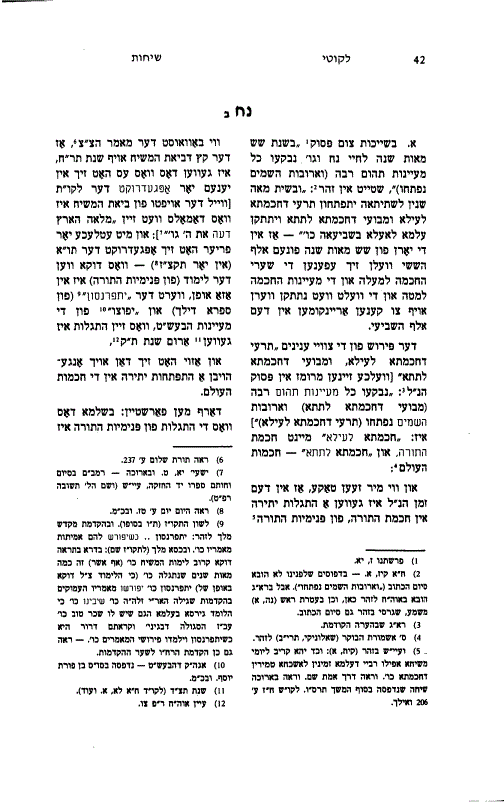
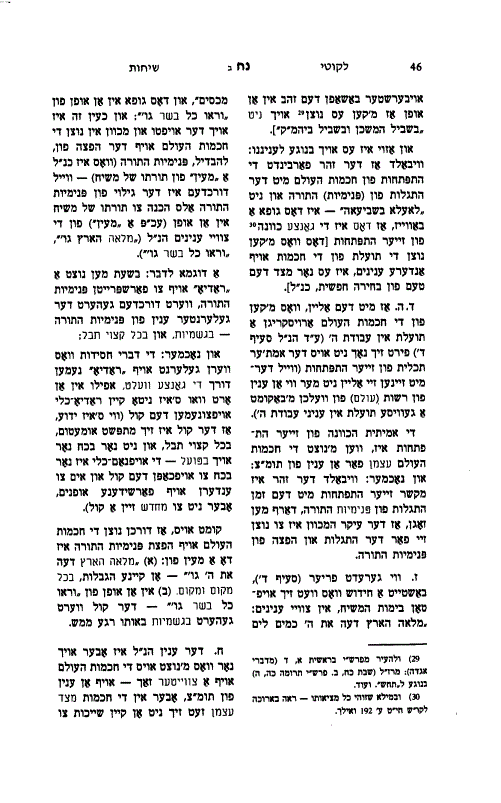
1. In connection with the verses[1] "In the six hundredth year of Noach's life... all the wellsprings of the great deep burst forth (and the windows of the heavens were opened)," it is stated in the Zohar[2]: "And in the six hundredth year of the sixth [millennium], the gates of wisdom above and the wellsprings of wisdom below will be opened, and the world will be prepared to enter the seventh, etc." — that is, in the six hundredth years of the sixth millennium the gates of wisdom above and the wellsprings of wisdom below will open, and the world will be readied so as to be able to enter the seventh millennium.
The meaning of the two matters, "the gates of wisdom above and the wellsprings of wisdom below" [which are alluded to in the above verse[3]: "all the wellsprings of the great deep burst forth (the wellsprings of wisdom below) and the windows of the heavens were opened (the gates of wisdom above)"], is: "wisdom above" means the wisdom of the Torah, and "wisdom below" — the wisdoms of the world[4].
And as we indeed see, in that period there was an additional revelation in the wisdom of the Torah, of pnimiyus haTorah, the inner dimension of the Torah[5] —
as is known, the statement of the Tzemach Tzedek[6] that the "end" set for the coming of Mashiach in the year 5608 was the fact that in that year Likkutei Torah was printed [for the innovation of the coming of Mashiach is that then "the earth will be filled with knowledge of G‑d, etc."[7]]; and several years earlier Torah Or was printed (in the year 5597[8]) — for specifically when the study (of pnimiyus haTorah) is in such a manner, there comes about the "they will be nourished"[9] (from "this book of yours") and the "spreading forth"[10] of the wellsprings of the Baal Shem Tov, whose revelation took place[11] around the year 5500[12] —
and so too there began at that time an additional development in the wisdoms of the world.
This requires understanding: granted that the revelation of pnimiyus haTorah is a preparation for "entering the seventh," this is understood. For since in the days of Mashiach there will come about the matter of "the earth will be filled with knowledge of G‑d as the waters cover the sea," it is fitting that before that time, as a preparation[13] for it, there should be the revelation of pnimiyus haTorah, which is a "foretaste" of the Torah of Mashiach. But what connection does the development and revelation of the wisdoms of the world have with "entering the seventh"?
Moreover: from the fact that the Zohar brings both matters in one breath, it is understood that they are connected with each other — that the very fact that a new revelation then began in the wisdom of the Torah (as a preparation for the days of Mashiach) "causes" the development of the wisdoms of the world. One must understand: in what does the connection between them consist, seeing that the wisdoms of the world are incomparably lower ("below") than the wisdom of the Torah[14] ("above"), and especially pnimiyus haTorah?
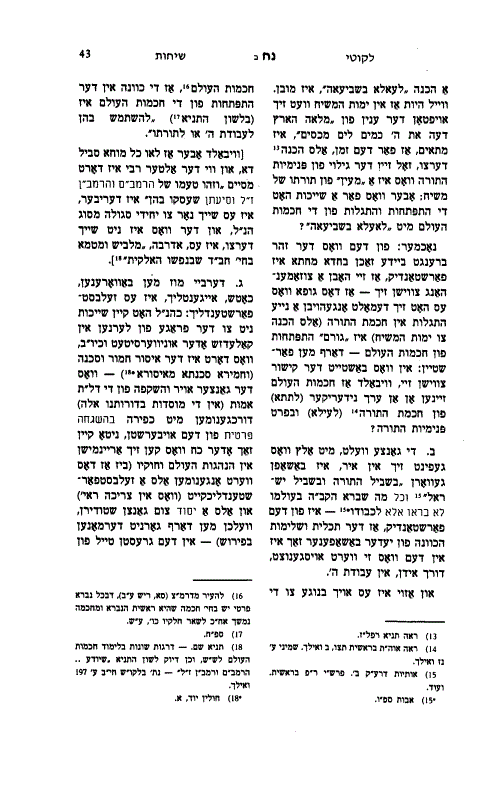
2. The whole world, with everything found in it, was created "for the sake of the Torah and for the sake of Israel"[15], and "everything that the Holy One, blessed be He, created in His world, He created only for His glory"[15*]. From this it is understood that the purpose and the fulfillment of the intent of every created thing lies in its being utilized, by Jews, in the service of G‑d.
And so it is also with regard to the wisdoms of the world[16]: the intent in the development of the wisdoms of the world is (in the language of the Tanya[17]) "to use them for the service of G‑d or for His Torah."
[Since, however, "not every mind can bear this," and as the Alter Rebbe concludes there, "and this is the reason of the Rambam and the Ramban, of blessed memory, and their colleagues, who occupied themselves with them," it therefore pertains only to rare individuals of the aforementioned type; and for one who is not of that caliber, it, on the contrary, "clothes and defiles the aspect of Chabad of his G‑dly soul"[18].]
3. In this connection one must caution — although, in truth, it is self-evident: the above has no connection whatsoever to the question of studying in college or university and the like, where there is a grave prohibition and danger ("and danger is more stringent than prohibition"[18*]). For the entire atmosphere and outlook of those four cubits (in the institutions of these generations of ours) is permeated with denial of the individual Divine Providence of G‑d — that there is no thing or force that can intervene in the conduct of the world and its laws (to the point that this is accepted as self-evident (requiring no proof) and as the foundation of all study, which need not even be mentioned explicitly). In the greater part of them heretical studies are taught, beliefs of idolatry[19], etc.
And in nearly all of them there are no bounds of modesty and decency, to the point that those who take these into account are mocked and ridiculed; and on the contrary, the more licentious — the more elevated, etc.
And well known is the appalling state of affairs in this regard on the campuses, in the dormitories, the places of recreation, etc. — and there is no need to elaborate on a matter that is appalling in general, and in the appalling degree described above in particular.
As for the well-known "argument" that it (or she) will not harm him and he will withstand the test, and so forth — the simple answer is equally well known: a perfect tzaddik, even on the last day of his 120 years of life on earth, at the beginning of the day and before his prayers, asks G‑d, "Do not bring us into a test"[19*]. There is much more to elaborate, but this is not the place.
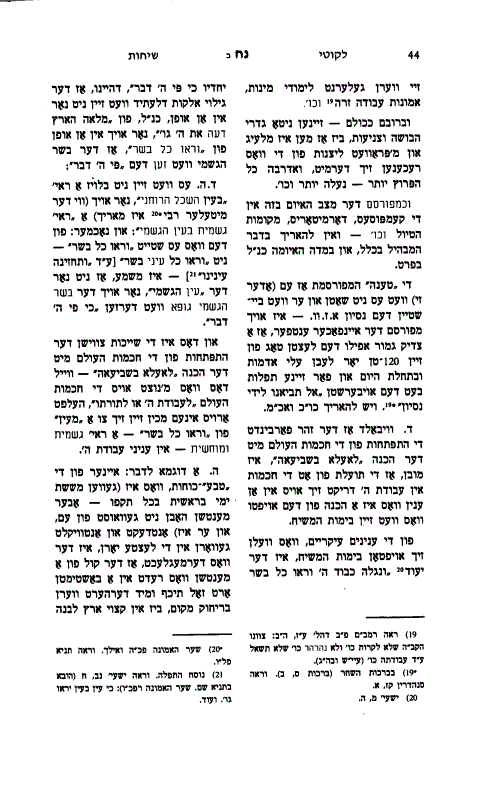
4. Since the Zohar connects the development of the wisdoms of the world with the preparation "to enter the seventh," it is understood that the benefit of these wisdoms in the service of G‑d expresses itself in a matter that is a preparation for the innovation that will come about in the days of Mashiach.
Among the principal matters that will come about in the days of Mashiach is the promise[20], "And the glory of G‑d will be revealed, and all flesh together will see that the mouth of G‑d has spoken" — that is, the revelation of G‑dliness in the Time to Come will be not only in the manner, mentioned above, of "the earth will be filled with knowledge of G‑d, etc.," but also in the manner of "and all flesh will see," that physical flesh will see that "the mouth of G‑d has spoken":
That is, there will be not merely a seeing "with the spiritual eye of the intellect," but also (as the Mitteler Rebbe[20*] elaborates) a "physical seeing with the physical eye." And moreover: from the fact that it says "and all flesh will see" — not "and all eyes of flesh will see" [in the manner of "and may our eyes behold"[21]] — it is implied that not only the "physical eye," but even the physical flesh itself will perceive "that the mouth of G‑d has spoken."
And this is the connection between the development of the wisdoms of the world and the preparation "to enter the seventh": utilizing the wisdoms of the world "for the service of G‑d or for His Torah" helps in preparing oneself for a "foretaste" of "and all flesh will see" — a physical and tangible seeing — in matters of the service of G‑d.
5. An illustration of this: one of the "natural" forces, which (existed from the six days of Creation in all its strength — but people did not know of it, and it) was discovered and developed in recent years, is that which makes it possible for the voice of a person speaking in a particular place to be heard instantly at a great distance, even at the ends of the earth, etc. [through a "telephone" or, even more so[22], through "radio"];
and so too, recently: to see him and all his movements, etc.
And this innovation in the world — the possibility of hearing every single utterance of a person at that very moment in all corners of the globe, and of seeing him, etc. — gives a tangible image of the matter of, lehavdil, "an eye that sees and an ear that hears"[23]. And on the contrary: if the "ear" below can immediately hear [and likewise the "eye" below — through the development of another natural force — can see] what is taking place at the ends of the earth, how much more so with regard, so to speak, to the "ear" [and the "eye"] Above ("He Who implants the ear, shall He not hear? He Who forms the eye, shall He not see?"[24]) — that in it there are no limitations, G‑d forbid; and everything a person does, even in the innermost chambers, is — at that very moment — "an eye that sees and an ear that hears, (and consequently) all your deeds are recorded in a book"[23].
And since he has a tangible example[25] of this, his contemplation of the matter of "Behold, G‑d stands over him, etc., and looks upon him, and examines his kidneys and heart, whether he serves Him as is fitting"[26] will be not only by way of the comprehension of a theoretical intellect [which does not always have a full effect upon a person], but in a manner that is closer to the physical senses of man, and consequently will have a greater effect[27] upon his emotions of the heart, and down to his thought, speech and action.
6. Although all matters of the world were created "for the sake of the Torah and for the sake of Israel," we nevertheless find that our Sages single out certain things by emphasizing that they were created solely for their use for a specific matter of Torah and mitzvos; for example: "The world was not worthy of using gold; why then was it created? For the sake of the Mishkan and for the sake of the Beis HaMikdash"[28].
The difference between the things singled out and all other created things is this: with the other matters of creation, although they too were created only "for the sake of the Torah and for the sake of Israel," the intent of their creation can nevertheless be carried out even when they are actually used for worldly matters (for permissible things, etc.), except that from this itself one derives (later) a benefit in the service of G‑d.
With "gold," by contrast, for example, it is said that "the world was not worthy of using gold" — that using "gold" for worldly needs is a descent for the gold — because the entire reason for its being created is only that it be used entirely for the needs of the Mishkan and the Mikdash [it is merely that, since there must be free choice for man, G‑d therefore created gold in such a manner that it can be used[29] also not "for the sake of the Mishkan and for the sake of the Beis HaMikdash"].
And so it is also with regard to our subject: since the Zohar connects the development of the wisdoms of the world with the revelation of (pnimiyus) haTorah, and not [only] with "entering the seventh" — this itself is proof that this is the entire intent[30] of their development [the fact that the benefit of these wisdoms can be used for other matters is only because of the reason of free choice, as mentioned above].
That is, through the mere fact that one can derive from the wisdoms of the world a benefit in the service of G‑d (in the manner explained above, section 4), the true purpose of their development is not yet fulfilled (for thereby they themselves are no more than a matter of the permissible (the world), from which one obtains a certain benefit in matters of the service of G‑d).
The true intent of their development is when the wisdoms of the world themselves are used for a matter of Torah and mitzvos. And moreover: since the Zohar links their development with the time of the revelation of pnimiyus haTorah, one must say that the principal intent is to use them for the revelation and dissemination of pnimiyus haTorah.
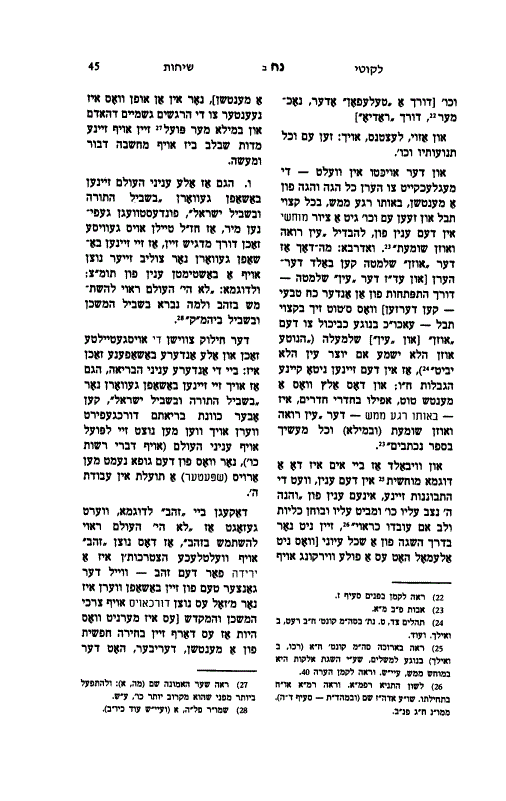
7. As discussed earlier (section 4), an innovation that will come about in the days of Mashiach consists of two matters: "the earth will be filled with knowledge of G‑d as the waters cover the sea," and this itself in a manner of "and all flesh will see, etc." And similarly, this is also the novelty and intent in using the wisdoms of the world for the dissemination of, lehavdil, pnimiyus haTorah (which is, as mentioned, a "foretaste" of the Torah of Mashiach) — because thereby the revelation of pnimiyus haTorah, as a preparation for the Torah of Mashiach, is in a manner (at least a "foretaste") of the two matters mentioned above ("the earth will be filled, etc.," "and all flesh will see, etc.").
An illustration of this: when a "radio" is used to disseminate pnimiyus haTorah, the subject of pnimiyus haTorah being studied is thereby heard — physically, and in all corners of the globe;
and moreover: the words of Chassidus that are studied over the "radio" pass through the entire world, even in a place where there is no radio set to receive the sound (for, as is known, the sound spreads everywhere, in all corners of the globe, and not only potentially but also actually — the receiving set merely has the ability to capture the sound and to transform it in various ways, but not to create a sound).
It follows that through using the wisdoms of the world for the dissemination of pnimiyus haTorah there is a foretaste of: (a) "the earth will be filled with knowledge of G‑d, etc." — without any limitations, in every single place; (b) in a manner of "and all flesh will see, etc." — the sound is heard physically, at that very moment.
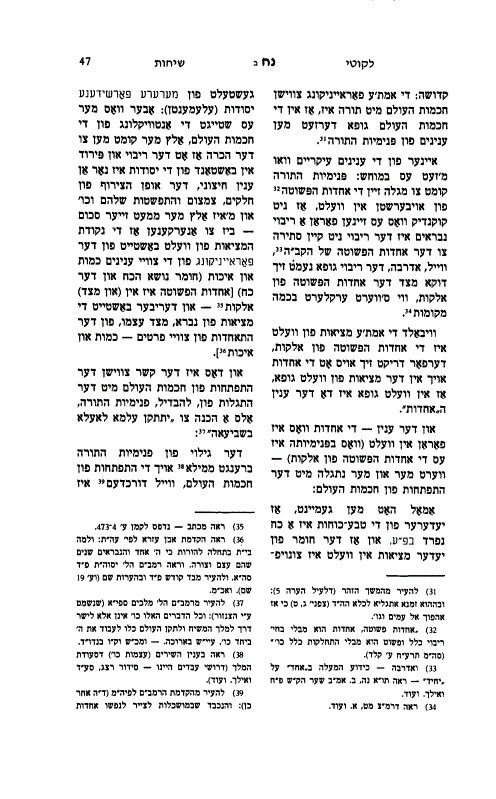
8. The above matter, however, is also only that one utilizes the wisdoms of the world for something else — for a matter of Torah and mitzvos; but in the wisdoms in themselves no connection to holiness is seen. The true union between the wisdoms of the world and Torah is when in the wisdoms of the world themselves one perceives matters of pnimiyus haTorah[31].
One of the principal matters in which this is seen tangibly: pnimiyus haTorah comes to reveal the simple unity[32] of G‑d in the world — that notwithstanding that there exists a multitude of created beings, this multiplicity is no contradiction to the simple unity of the Holy One, blessed be He[33], because, on the contrary, the multiplicity itself derives specifically from the simple unity of G‑dliness, as is explained in a number of places[34].
Since the true existence of the world is the simple unity of G‑dliness, this unity therefore expresses itself also in the existence of the world itself — that in the world itself there is the matter of "unity."
And this matter — the unity that exists in the world (which in its inner essence is the simple unity of G‑dliness) — is revealed more and more with the development of the wisdoms of the world:
At one time it was thought that each of the forces of nature is a separate force in its own right, and that the matter of every entity in the world is composed of many different elements. But the more the development of the wisdoms of the world advances, the more one comes to the recognition that this multiplicity and division in the composition of the elements is only an external matter — the manner in which the parts are combined, their contraction and expansion, etc. — and one reduces their number more and more, until one recognizes that the core of the world's existence consists of the union of two matters, quantity and quality (the matter that bears the force, and the force) [simple unity is found in (and derives from) G‑dliness[35] — and therefore the existence of a created being, from its own standpoint, consists of the union of two particulars — quantity and quality[36]].
And this is the connection between the development of the wisdoms of the world and the revelation of, lehavdil, pnimiyus haTorah, as a preparation for "the world will be readied to enter the seventh"[37]:
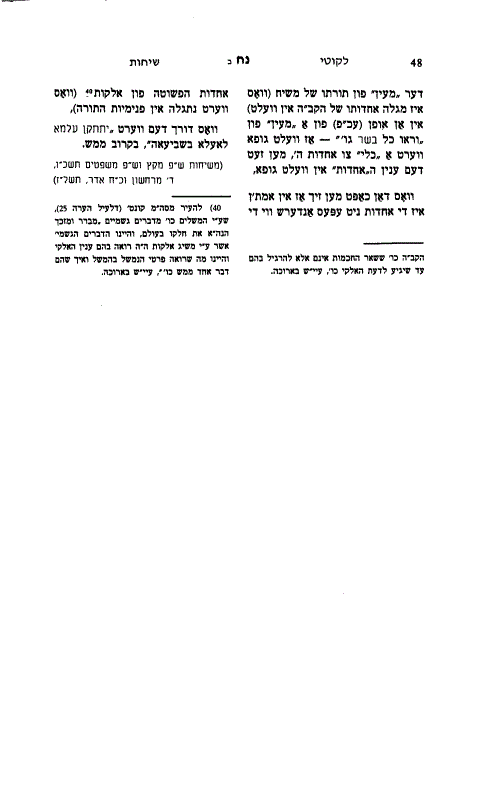
The revelation of pnimiyus haTorah brings with it, as a matter of course[38], also the development of the wisdoms of the world, because through this[39] the "foretaste" of the Torah of Mashiach (which reveals the unity of the Holy One, blessed be He, in the world) is in a manner of (at least) a "foretaste" of "and all flesh will see, etc." — that the world itself becomes a "vessel" for the unity of G‑d; one sees the matter of "unity" in the world itself,
whereupon one grasps that in truth this unity is nothing other than the simple unity of G‑dliness[40] (which is revealed in pnimiyus haTorah), through which "the world will be readied to enter the seventh," speedily, in the very near future.
(From talks of Shabbos Parshas Mikeitz and Shabbos Parshas Mishpatim, 5726; 4 MarCheshvan and 28 Adar, 5737)
Key Lesson
The Zohar foretold that the gates of Torah wisdom above and the wellsprings of worldly wisdom below would open together, because the explosion of human knowledge exists for the sake of the revelation of G‑dliness that will culminate with Mashiach. Technologies that let a voice be heard and a person seen across the globe in an instant make "an eye that sees and an ear that hears" tangible, and their truest use is to spread pnimiyus haTorah everywhere at once. Ultimately, science itself, by discovering ever deeper unity beneath nature's multiplicity, points to G‑d's simple unity, readying the world for the seventh millennium.