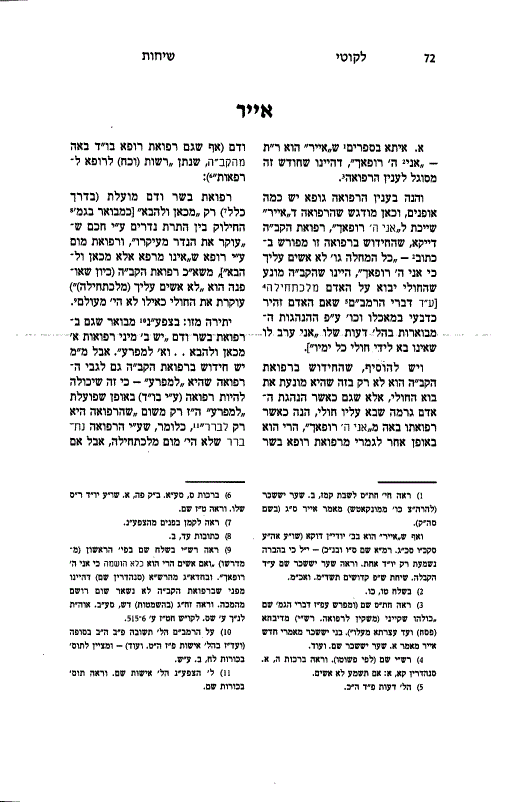
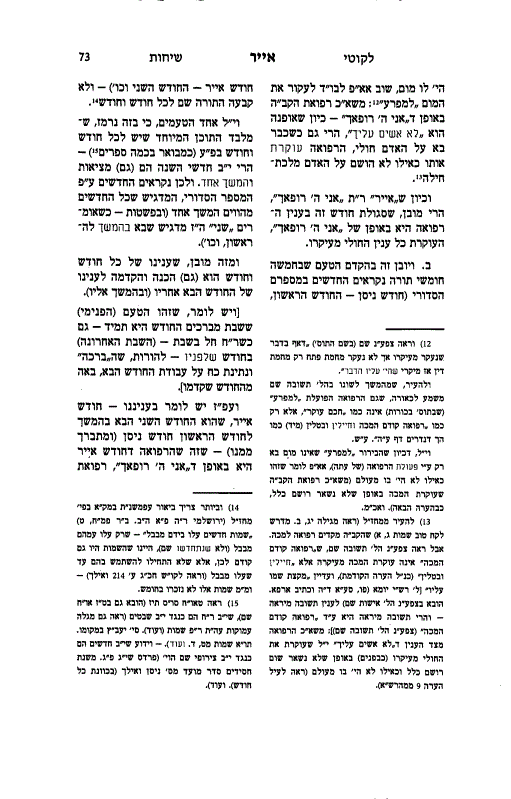
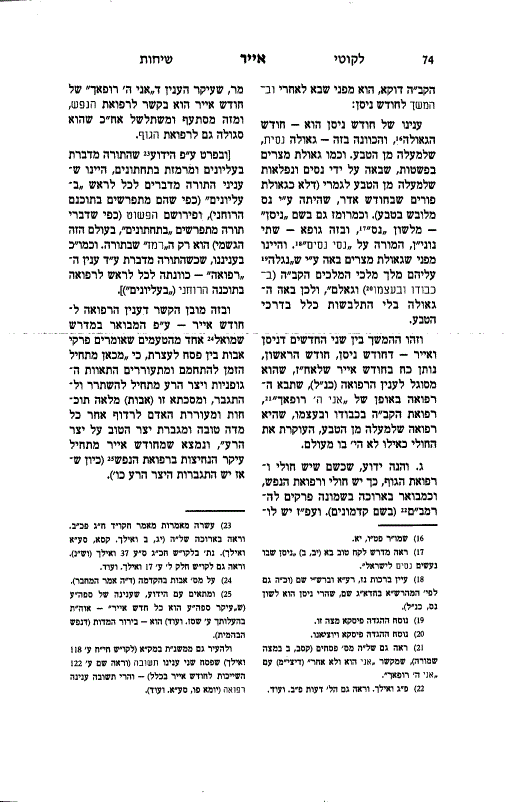
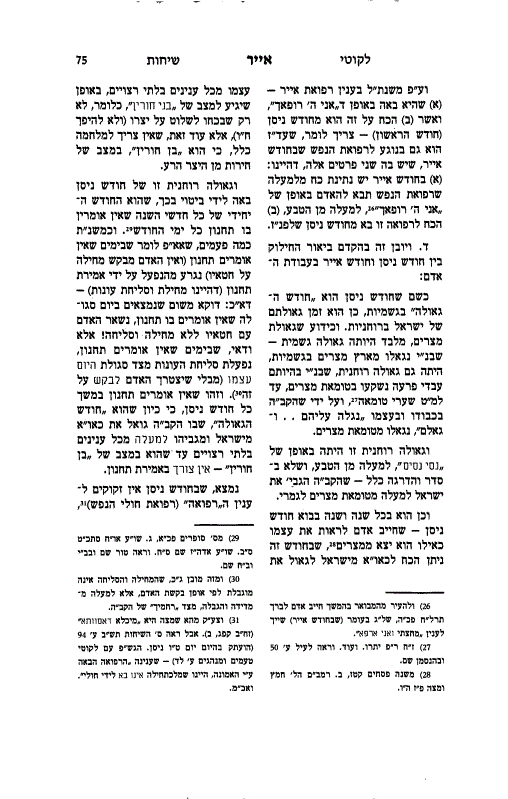
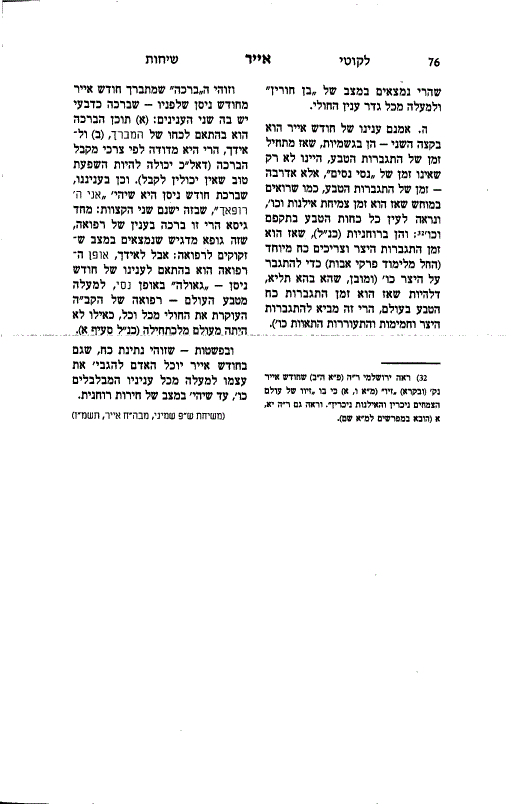
We’ll do a review in the Likkutei Sichos in Chelek Lamed Beis, Volume 32, the sicha for Iyar. It’s interesting that in this series in Likkutei Sichos, in Lamed Beis, there is a separate sicha for the month of Nissan and then a separate sicha for the month of Iyar.
The Rebbe talks about how in the month of Iyar, the name is an abbreviation of “Ani Hashem Rofecha” — I am Hashem, your healer. Even though Iyar is spelled with two yuds, as the Rebbe explains in the ha’arah, the footnote, it still stands for “Ani Hashem Rofecha.” Basically, the month of Iyar — as brought down from the seforim — is a month of healing. But the Rebbe says it is not just plain healing, but the healing of “Ani Hashem.” When Hashem heals, it is in a way that you don’t become sick in the first place, similar to what the Rambam writes, that if a person eats the right food and follows the proper conduct, he will not get sick.
But the Rebbe says more than that. Even if a person has already gotten sick because he ate the wrong things or did the wrong things, nevertheless, when Hashem heals him, He heals him in such a way as if he was never sick. The Rebbe will explain in detail the difference between a doctor — and the Rogatchover brings this down — the way a doctor heals and the way the Aibershter heals.
The Rebbe extends this also to the idea of spiritual healing. And the Rebbe connects that the healing that we get in the month of Iyar comes from the month of Nissan. The Rebbe says there is an interconnection between the months. We call them the first, second, and third months, because it’s not just a separate name for a month, but it’s a continuation. The blessings for the next month come from the power of the first month. That’s why on Shabbos Mevarchim, when we bless the next month, it is always in the previous month. And the power for this special kind of healing from the month of Iyar comes from Nissan, which is Nissei Nissim, great miracles, where Hashem Himself took us out on a very high level.
This is important not only for physical healing, but also for spiritual healing, because the counterpart to physical situations also exists in a spiritual sense. When it comes to the month of Iyar, in which the physical surroundings — the trees and everything growing — are in a state of expansion, there is a greater push for physicality and bodily pleasures, and sometimes a person may falter a little in his spiritual obligations. That is why we read Pirkei Avos during the summer months. We receive that “Hashem Rofecha” from the power of the previous month. The Rebbe will explain all of these points in detail, step by step. Iyar.
The Rebbe says that it is brought down in the seforim that the name Iyar is an abbreviation of “Ani Hashem Rofecha” — I am Hashem, your healer. That means to say that healing is associated with this month, and it is a good month to be healed. Dehainu shechodesh zeh mesugal le’inyan harefuah, that is to say that this month is especially suited for the matter of healing.
Now, the Rebbe says that we are not merely saying that Iyar is a month of healing, but that it is a healing that comes from Hashem — “Ani Hashem Rofecha.” Vehineh be’inyan harefuah gufah yesh kama ofanim, within the concept of healing itself there are several forms. But here it is emphasized that this healing belongs to “Ani Hashem Rofecha,” meaning that this is specifically a healing from Hashem, Refuas Hakadosh Baruch Hu daika, the healing of the Holy One, blessed be He.
What is the difference between the refuah of a doctor or a human being and the refuah of Hashem? This is articulated in the posuk. Shehachidush birefuah zu meforash bakosuv, the novelty in this healing is explicitly stated in the verse. The posuk says, “Kol hamachalah,” all the sicknesses that the Yidden experienced in Egypt, “Lo asim alecha,” I will not place them upon you. Meaning, you will not even have them in the first place. “Ki Ani Hashem Rofecha,” because I am Hashem your healer, and therefore you will not get sick to begin with. “Lo asim alecha” means sheHakadosh Baruch Hu mone’ah shehacholi yavo al ha’adam milchatchilah, that Hashem prevents the illness from coming upon a person from the outset. That is the uniqueness of the healing of Hashem — that you do not get sick at all.
As the Rebbe will explain, this applies even if a person does become sick. But the Rebbe first gives an example: what does it mean that Hashem heals in a way that prevents illness? This is similar to the words of the Rambam, that if a person conducts himself properly, al pi hahanhagos hamevoros beHilchos De’os, according to the guidelines explained in Hilchos De’os, the Rambam writes, “Ani arev lo,” I guarantee him, “she’eino ba lidei choli kol yamav,” that he will not become sick all his days. That is comparable to a doctor who instructs a person how to live so that he will not become sick in the first place. That is the novelty of Hashem’s healing — that one does not even reach a state of illness.
But the Rebbe adds that even if a person does become sick, there is still a unique advantage in Hashem’s healing. When Hashem heals, He heals in a way that it goes back to the beginning, as if there was never any illness at all. Even though all healing ultimately comes from Hashem, when a doctor heals, he is given permission and wisdom from Hashem to do so, but he can only heal from this point onward. While you were sick, you were sick, and from now on you are healed. But when Hashem heals, He heals in such a way that, from the outset, you were never sick.
One can add that the uniqueness of Hashem’s healing is not only that He prevents illness, as we saw from the Rambam, but also that even when illness has come upon a person due to his own conduct, when the healing comes from “Ani Hashem Rofecha,” it is entirely different from the healing of a human doctor. It is on a completely higher level. Although even a doctor is an agent of Hashem, nevertheless, when the healing comes directly from Hashem, it is of a different nature.
A human doctor heals only from this point onward. The illness existed, and now he treats it. But he does not remove the fact that the illness was there previously. As will be explained from the Tzafnas Paneach, even in cases where a doctor seems to remove something retroactively, it is still fundamentally different.
The Rebbe brings the example from the Gemara of the annulment of vows. When a sage annuls a vow, he uproots it from its root, me’ikorah, as if it never existed. But when a doctor heals a blemish, he only heals from now onward. That is the limitation of a human doctor.
Not so with the healing of Hashem. Since Hashem says, “I will not place it upon you,” even when illness has already come, the healing uproots it entirely, as if it was never there at all.
So in addition to Hashem being a healer who prevents illness, even when illness does occur, Hashem removes it completely, in a way that a human doctor cannot.
The Rebbe then brings from the Tzafnas Paneach that even among doctors there are cases where it appears that a doctor can uproot illness retroactively. However, that is only because the doctor reveals that the original diagnosis was mistaken. He is not changing reality; he is clarifying that there was no illness to begin with.
But with Hashem, the diagnosis was correct — the person was indeed sick — and nevertheless Hashem removes it entirely, as if it never existed.
The Tzafnas Paneach explains that even when a doctor heals in a way that appears retroactive, it is only a clarification. It becomes clear that there was no defect from the start. But if there was a real defect, a human being cannot uproot it retroactively.
However, with Hashem, in the manner of “Ani Hashem Rofecha,” even when the illness has already taken hold, the healing uproots it completely, as if it had never been placed upon the person at all.
So what do we see from all this? The power of the month of Iyar, which emphasizes “Ani Hashem Rofecha,” is that any illness is not just corrected, but uprooted from its very beginning. Since Iyar is an abbreviation of “Ani Hashem Rofecha,” it carries this special quality that the healing removes the illness entirely, as if it never existed. This is the special segulah of the month of Iyar.
And where does this power come from? Such a powerful healing, which changes reality even retroactively, comes because Iyar follows Nissan. The Rebbe will now explain that the months are connected. Since in Nissan there is the revelation of Hashem Himself, a time of great miracles, therefore the healing of Iyar, which follows it, draws from that power.
The Rebbe then begins to explain this idea further.
This can be understood by prefacing why, in the Five Books of the Torah, the months are referred to by number — first month, second month, third month — rather than by names. The Rebbe asks why the Torah does not assign specific names to each month, and instead refers to them numerically.
The explanation is that this emphasizes that the months are not separate entities, but part of one continuous sequence. The second month follows the first, and all the months are interconnected. By calling it “second,” it already implies that there is a “first,” and that it is a continuation of it.
Therefore, each month prepares the way for the next. The previous month serves as an introduction and preparation for the month that follows it.
The Exodus from Egypt was with Hashem Himself, through miracles that were completely beyond nature, and that is the essence of the month of Nissan. That power later manifests itself in the month of Iyar. What is the defining aspect of the month of Nissan? It is a month of redemption. But not just any redemption — it is a miraculous redemption that is higher than nature.
This is reflected specifically in the redemption from Mitzrayim, which came through miracles and wonders that were entirely beyond nature. That was the actual miracle that brought about the redemption in the month of Nissan.
This stands in contrast to Purim, which also involved redemption, but was clothed within nature. The miracle of Purim took place within natural events, whereas the redemption of Nissan was entirely above nature.
This concept is also hinted to in the very name “Nissan,” which is connected to the idea of miracles. As the Gemara explains, the word Nissan contains a “nun” at the beginning and a “nun” at the end, alluding to miracles upon miracles — an abundance of miraculous revelation.
Why were such great miracles necessary? Because Hashem Himself descended, so to speak, to redeem us. The redemption of Mitzrayim came through the revelation of the King of Kings, the Holy One, blessed be He. Hashem Himself revealed Himself, and that brought about this extraordinary redemption.
As we say in the Haggadah, it was He Himself who redeemed us. Therefore, the redemption of Mitzrayim came about without any concealment within nature at all.
This establishes the connection between the months of Nissan and Iyar. The month of Nissan, which is the first month, gives its power to the month of Iyar that follows it. That is what creates the special opportunity for healing in Iyar — not just healing, but “Ani Hashem Rofecha,” a healing that comes directly from Hashem.
Since the revelation in Nissan was from Hashem Himself, the healing in Iyar is also from Hashem Himself. It is a healing that is beyond nature, one that uproots the sickness entirely, as if it never existed in the first place. This is the power that Iyar receives from Nissan, the preceding month of miraculous redemption.
The Rebbe then continues and explains that until now we have been speaking about physical illness, but the same concept applies to spiritual illness as well. Just as there is sickness and healing for the body, there is also sickness and healing for the soul, as explained at length in the Rambam’s “Eight Chapters.”
Based on this, we can say that the main aspect of “Ani Hashem Rofecha” in the month of Iyar is connected primarily to the healing of the soul. From this spiritual healing, it then extends and develops into healing of the body as well. The root is spiritual, and from there it flows into the physical.
The Rebbe explains further that although the Torah often speaks in physical terms, it is actually referring primarily to spiritual realities. The physical dimension is only a reflection. The Torah speaks first in the higher realms, and what we see in the physical world is merely a hint to those deeper spiritual truths.
Therefore, when the Torah discusses healing, it is first and foremost speaking about the healing of the soul.
Based on this, we can understand why healing is especially necessary in the month of Iyar. As explained by the commentators, during this time when everything is growing and flourishing, there is an increase in physicality, which arouses physical desires. A person is more susceptible to temptation and therefore requires strengthening and healing.
This is why Pirkei Avos is studied between Pesach and Shavuos. As the Midrash Shmuel explains, during this time the warmth increases, and with it the awakening of bodily desires. The yetzer hara becomes stronger.
Pirkei Avos is filled with guidance and rebuke that encourage a person to pursue good character traits and strengthen the good inclination to overcome the evil inclination. It provides the necessary strength to battle and overcome these challenges.
From this we see that the main need for healing of the soul begins in the month of Iyar, when the yetzer hara becomes more active.
Now, just as we explained earlier regarding physical healing — that it has two aspects: first, that it is a special healing from Hashem, and second, that it draws its power from Nissan — the same applies to spiritual healing.
First, in the month of Iyar there is a special power from above that the healing of the soul should occur in a way that is beyond nature, not merely correcting from this point onward, but transforming the person completely.
Second, the power for this healing comes from the month of Nissan.
The Rebbe now explains this by comparing the service of Nissan and Iyar.
The month of Nissan is a month of redemption, not only physically but also spiritually. The redemption from Mitzrayim was not merely a physical liberation, but also a spiritual elevation. The Jewish people had descended into the depths of impurity, reaching the forty-nine gates of impurity.
Yet Hashem Himself revealed Himself and lifted them out completely, not through a gradual process, but instantaneously — from the lowest level to complete elevation.
This same concept applies every year. When the month of Nissan arrives, a person must view himself as if he personally left Egypt. The power is given to each individual to free himself from all negative influences and reach a state of true freedom.
This freedom is not merely controlling the yetzer hara, but being free from it altogether. It no longer dominates or even disturbs the person.
This is reflected in the fact that throughout the entire month of Nissan we do not say Tachanun. This does not indicate a lack of forgiveness, but rather that forgiveness is granted automatically due to the special nature of the month.
On days when Tachanun is not said, it is not that one loses out on forgiveness. On the contrary, the forgiveness comes automatically through the holiness of the day itself, without the need to request it.
Therefore, throughout the entire month of Nissan, we do not say Tachanun, because it is a month of redemption in which Hashem elevates a person beyond all negativity, placing him in a state of freedom.
In such a state, there is no need for healing.
However, the month of Iyar is the opposite. Both physically and spiritually, it is a time when nature begins to assert itself. The natural world becomes stronger and more dominant. This is visible in the growth of trees and vegetation.
Spiritually as well, the yetzer hara becomes stronger, and there is a renewed need for effort and struggle.
These two aspects are connected. The strengthening of physical nature leads to an increase in physical desires, which in turn intensifies the spiritual struggle.
This is why Pirkei Avos is studied during this time — to provide the necessary strength to overcome these challenges.
This also explains why Iyar requires the blessing of Nissan. A proper blessing must contain two elements: first, the ability of the one giving the blessing, and second, the suitability to the needs of the recipient.
Nissan has the power to give such a blessing, and Iyar has the need for it.
Therefore, the blessing given to Iyar from Nissan is “Ani Hashem Rofecha.” On one hand, it acknowledges that there is a need for healing, which corresponds to the condition of Iyar. On the other hand, the nature of the healing reflects the power of Nissan — a miraculous, Hashem-level healing that uproots the problem entirely.
Thus, the blessing combines both aspects: the need for healing and the highest form of healing.
In this way, a person receives the strength during the month of Iyar to rise above all distractions and reach a state of true spiritual freedom.
נעשה כעת חזרה על שיחה בליקוטי שיחות חלק ל״ב, השיחה על חודש אייר. מעניין שבסדרה זו בליקוטי שיחות יש שיחה נפרדת לחודש ניסן ושיחה נפרדת לחודש אייר.
הרבי מסביר ששמו של חודש אייר הוא ראשי תיבות של "אני ה׳ רופאך". אף על פי שהמילה אייר נכתבת בשני יודים, כפי שמבואר בהערה, מכל מקום היא מרמזת לביטוי זה. בספרים מובא שחודש אייר הוא חודש של רפואה, אך הרבי מדגיש שאין זו רפואה רגילה בלבד, אלא רפואה של "אני ה׳". כאשר הקב״ה מרפא, הוא מרפא באופן כזה שהאדם כלל אינו מגיע לידי חולי, בדומה למה שכותב הרמב״ם שאם האדם נוהג כראוי באכילתו ובהנהגתו, אינו חולה כלל.
אך הרבי מוסיף עוד, שגם אם האדם כבר חלה מפני שלא נהג כראוי, כאשר הקב״ה מרפא אותו, הרפואה היא באופן כזה כאילו מעולם לא היה חולה. הרבי מסביר באריכות את ההבדל בין רפואה של רופא בשר ודם לבין רפואה של הקב״ה, כפי שמובא גם בדברי הרוגוצ׳ובר. עניין זה שייך לא רק לרפואה גשמית אלא גם לרפואה רוחנית.
הרבי גם מקשר שרפואת חודש אייר נמשכת מחודש ניסן, ומבאר שיש קשר והמשכיות בין החודשים. הם נקראים ראשון, שני ושלישי לא רק כשמות, אלא כהמשך אחד. הברכות של כל חודש נמשכות מהחודש שלפניו, ולכן שבת מברכים נעשית תמיד בחודש הקודם. כוח הרפואה המיוחד של אייר נמשך מניסן, שהוא חודש של ניסי ניסים, שבו הקב״ה בעצמו הוציא אותנו ברמה נעלית ביותר.
עניין זה חשוב לא רק ברפואה גשמית אלא גם ברפואה רוחנית, משום שלכל מצב גשמי יש מקבילה רוחנית. בחודש אייר, כאשר העולם הגשמי — הצמיחה, העצים וכל מה שגדל — נמצא בהתפתחות, יש התגברות של הגשמיות ושל תענוגי הגוף, ולעיתים האדם נחלש מעט בעבודתו הרוחנית. לכן קוראים פרקי אבות בתקופה זו. אנו מקבלים את כוח ה"אני ה׳ רופאך" מכוח החודש הקודם. הרבי ימשיך לבאר את הדברים הללו בפרטיות, שלב אחר שלב.
הרבי מבאר שמובא בספרים שחודש אייר הוא ראשי תיבות של "אני ה׳ רופאך", ומשמעות הדבר היא שרפואה קשורה לחודש זה, והוא חודש המסוגל לרפואה. אך אין מדובר רק ברפואה כללית, אלא ברפואה של הקב״ה דווקא. בתוך עניין הרפואה יש כמה אופנים, אך כאן מדובר ברפואה של הקב״ה, רפואה אלוקית.
הפסוק אומר: "כל המחלה אשר שמתי במצרים לא אשים עליך כי אני ה׳ רופאך". כלומר, האדם אינו מגיע כלל לידי חולי. הקב״ה מונע את החולי מלבוא מלכתחילה. זהו פירוש "אני ה׳ רופאך".
הרבי מביא את דברי הרמב״ם, שאם אדם מתנהג לפי הנהגות נכונות, מובטח שלא יחלה. זה דומה לרפואה של מניעה. אך הרבי מוסיף שגם כאשר אדם חולה, רפואה של הקב״ה שונה לחלוטין מרפואה של רופא. רופא מרפא מכאן ולהבא — החולי היה קיים וכעת הוא מתוקן. אך הקב״ה מרפא באופן שעוקר את החולי לגמרי, כאילו לא היה מעולם.
הרבי מביא משל מהגמרא בהתרת נדרים, שהחכם עוקר את הנדר מעיקרו, כאילו לא היה. לעומת זאת, רופא אינו עוקר את החולי למפרע. הוא מטפל מכאן ולהבא בלבד.
הרבי מוסיף על פי דברי הצפנת פענח שגם כאשר נראה שרופא מרפא למפרע, אין זה אלא גילוי שהאבחנה הראשונית הייתה מוטעית. הרופא אינו משנה את המציאות, אלא מגלה שלא היה חולי מלכתחילה. אך הקב״ה משנה את המציאות עצמה — החולי היה קיים והוא נעקר לגמרי.
לכן יש שני חידושים ברפואת הקב״ה: הוא מונע את החולי מלכתחילה, וגם אם החולי קיים — הוא עוקר אותו לגמרי, כאילו לא היה.
זהו כוחו המיוחד של חודש אייר, שבו מתגלה "אני ה׳ רופאך", רפואה שעוקרת את החולי משורשו.
הרבי ממשיך ומבאר שמקור כוח זה הוא מחודש ניסן. התורה מונה את החודשים במספרים כדי להדגיש שהם המשך אחד, וכל חודש מכין את הבא אחריו. לכן שבת מברכים היא תמיד בחודש הקודם, כדי להראות שהכוח של החודש הבא נמשך מהחודש הקודם.
חודש אייר מקבל את כוחו מחודש ניסן, ולכן רפואתו נמשכת מהגילוי של ניסן.
חודש ניסן הוא חודש של גאולה ניסית, למעלה מן הטבע לגמרי. יציאת מצרים הייתה בגילוי אלוקי מוחלט, ללא לבוש בטבע, בניגוד לפורים שבו הנס היה בתוך הטבע. השם "ניסן" עצמו מרמז על ניסים, והכפילות של האות נון רומזת לניסים בתוך ניסים.
הסיבה לכך היא שהקב״ה בעצמו התגלה וגאל את ישראל. כפי שאומרים בהגדה — הוא בעצמו גאל אותנו. לכן הגאולה הייתה למעלה מן הטבע לחלוטין.
כוח זה נמשך לחודש אייר, ולכן הרפואה של אייר היא רפואה אלוקית למעלה מן הטבע, רפואה שעוקרת את החולי כאילו לא היה מעולם.
הרבי מוסיף שעניין זה שייך גם לרוחניות. כמו שיש חולי ורפואה לגוף, כך יש חולי ורפואה לנפש, כפי שמבואר בדברי הרמב״ם. למעשה, עיקר העניין של "אני ה׳ רופאך" הוא רפואה רוחנית, ומהרפואה הרוחנית נמשכת גם הרפואה הגשמית.
התורה, אף שהיא מדברת בלשון גשמית, עיקרה עוסק ברובד הרוחני, והגשמי הוא רק ביטוי לכך. לכן כאשר התורה מדברת על רפואה, עיקר הכוונה היא לרפואה רוחנית.
מכאן מובן מדוע יש צורך מיוחד ברפואה בחודש אייר. בתקופה זו, כאשר העולם מתפתח והגשמיות מתגברת, מתגברות גם התאוות, והאדם זקוק לחיזוק.
לכן לומדים פרקי אבות בין פסח לשבועות. כפי שמבואר במדרש שמואל, בתקופה זו החום עולה והתאוות מתעוררות, והיצר הרע מתחזק. פרקי אבות נותנים לאדם את הכוח לחזק את היצר הטוב ולהתגבר על היצר הרע.
מכאן יוצא שעיקר הצורך ברפואה רוחנית מתחיל בחודש אייר.
וכשם שבגשמיות לרפואה של אייר יש שני עניינים — שהיא באה מהקב״ה ושכוחה נמשך מניסן — כך גם ברוחניות.
ראשית, הרפואה היא למעלה מן הטבע, לא רק תיקון מכאן ולהבא אלא שינוי מוחלט. ושנית, הכוח לכך נמשך מניסן.
בניסן יש גאולה רוחנית. יציאת מצרים הייתה גם יציאה מטומאה עמוקה ביותר. בני ישראל היו שקועים במ״ט שערי טומאה, והקב״ה העלה אותם בבת אחת, ללא תהליך הדרגתי.
וכך בכל שנה — האדם צריך לראות את עצמו כאילו יצא ממצרים, ויש לו את הכוח להשתחרר מכל הדברים הבלתי רצויים ולהגיע לחירות אמיתית.
חירות זו אינה רק שליטה על היצר הרע, אלא מצב שבו היצר אינו שולט כלל ואינו מטריד.
דבר זה מתבטא בכך שבחודש ניסן אין אומרים תחנון כלל. אין זה חיסרון של בקשת סליחה, אלא להפך — הסליחה ניתנת מעצם קדושת החודש.
לכן אין צורך לומר תחנון, כי המחילה באה מאליה.
לעומת זאת, חודש אייר הוא זמן שבו הטבע מתגבר והיצר מתחזק, ויש צורך בעבודה ובהתגברות מחודשת.
התגברות הטבע מביאה להתגברות התאוות, וזה גורם למאבק רוחני, ולכן יש צורך בלימוד פרקי אבות.
לכן חודש אייר מקבל את ברכתו מניסן. ברכה אמיתית כוללת שני דברים: כוח מצד המשפיע והתאמה לצורך של המקבל.
ניסן נותן את הכוח, ואייר הוא הזמן שבו יש צורך ברפואה.
לכן הברכה היא "אני ה׳ רופאך" — מצד אחד יש צורך ברפואה, ומצד שני הרפואה היא ברמה העליונה ביותר, למעלה מן הטבע, שעוקרת את הבעיה מהשורש.
כך מקבל האדם את הכוח בחודש אייר להתרומם מעל כל ההפרעות ולהגיע לחירות רוחנית אמיתית.