The Wisdom of the Stakes
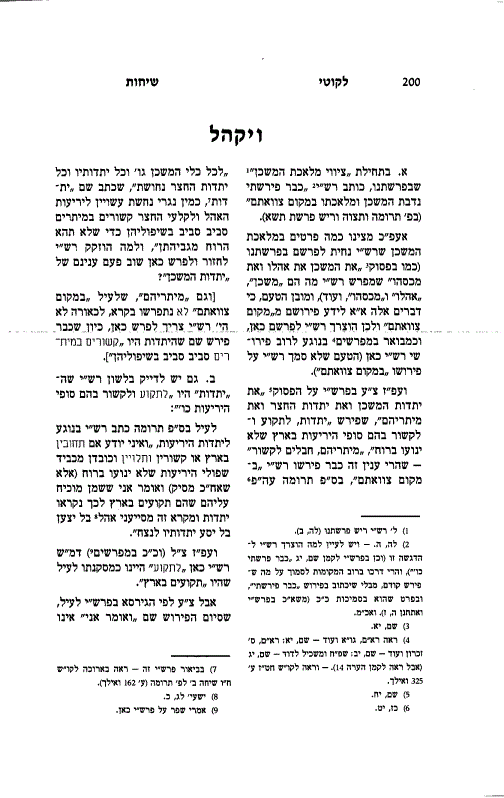
In the Torah portions of Vayakhel, we see a repetition of the construction of the Mishkan (Tabernacle). Rashi usually avoids repeating explanations, yet here he chooses to redefine the Yeseidos—the stakes or pegs used to hold down the curtains.
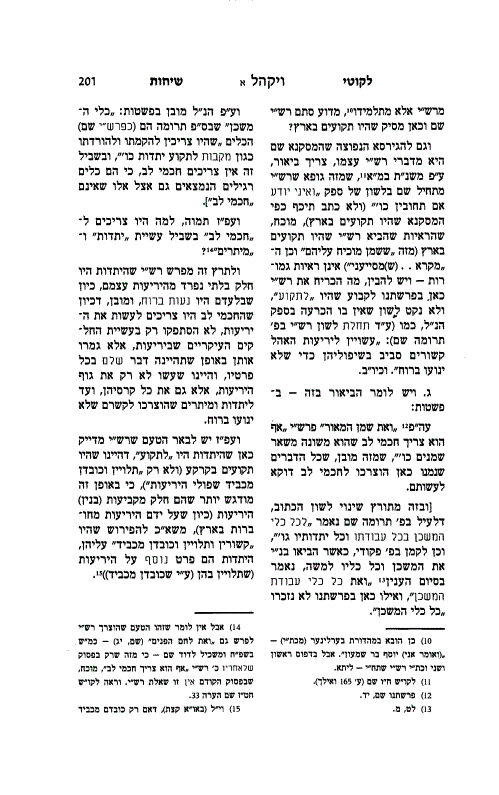
The Rashi Difficulty In Parshas Terumah, Rashi was uncertain if these stakes were hammered into the ground or simply heavy weights that hung off the edges. However, in our Parsha, Rashi is definitive: they were stakes driven into the earth to ensure the curtains would not move in the wind. Furthermore, the Torah specifies that these stakes were crafted by the Chachmei Lev—the "Wise of Heart."
Why would master craftsmen, capable of weaving intricate tapestries and forging golden vessels, be needed to make simple tent pegs?
The Anchor of Permanence The Rebbe explains that by hammering the stakes into the ground, the Chachmei Lev were making the curtains a "permanent" part of the structure. They didn’t just care about the beauty of the tapestry; they cared about its stability. They understood that the work is only complete when it is anchored so firmly that no wind in the world can move it.
The Educational Lesson
This provides a profound blueprint for every educator and parent:
-
Total Responsibility: A teacher’s job is not merely to transmit high-level wisdom. A true Chacham (sage) ensures that the teaching penetrates even the "external" and "ordinary" parts of the student's life.
-
The "Heel" of the Student: Just as the Alter Rebbe taught that Abraham’s "heel" listened to G‑d, a student’s education must reach their lowest, most functional level. If a student is only inspired in the classroom but moves with the "wind" of the street, the education is incomplete.
-
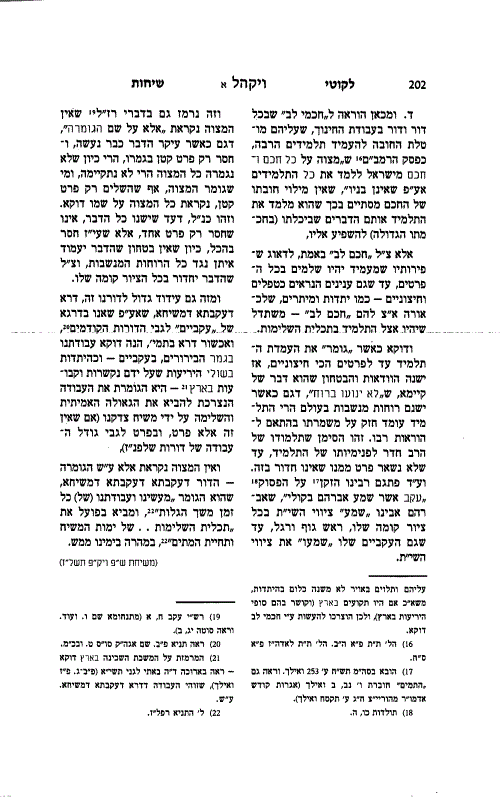
Completion is Everything: In Jewish law, a Mitzvah is credited to the one who finishes it. We live in the "Heels of Moshiach"—the final generation of exile. Our work might seem small or technical compared to the giants of previous generations, but because we are completing the task, the entire "Mitzvah" of history is called by our name.
Summary
The Rebbe explains that Rashi defines the Yeseidos (stakes) as being driven into the ground to highlight that they were an inseparable part of the Mishkan's integrity. This teaches us that true education requires the "Wise of Heart" to focus on the smallest, most external details of a student's behavior. Only when the wisdom is anchored into the "ground" of a student’s daily life can they remain steadfast against the challenges of the world, ultimately completing the work of exile and bringing the Redemption.