
How does the מגיד translate וישב יעקב בארץ מגורי אביו בארץ כנען?
How can this be compared to מסחר business?
What is the lesson from this?
Why does one do this?
How are the Jews compared to a bee?
How does one protect from פניות?
What did the Previous Rebbe say about אנשים פשוטים?
What is the advantage of קבלת עול?
Why are they called צבאות השם?
What does the Alter Rebbe learn from the way יעקב served לבן?
What do we learn from יעקב?
Even though he did it with קבלת עול he still was very?
We find by יעקב that despite all the difficulties מטתו שלימה what does this mean?
What is the meaning of כנען according to this?
Parshas Vayeishev
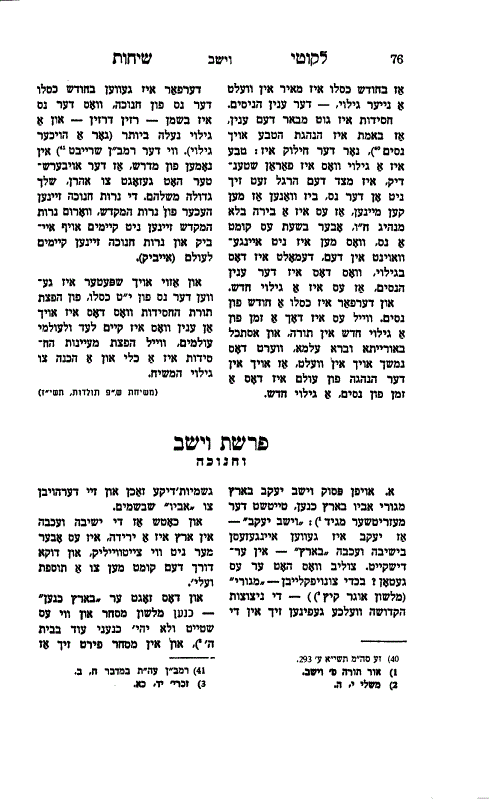
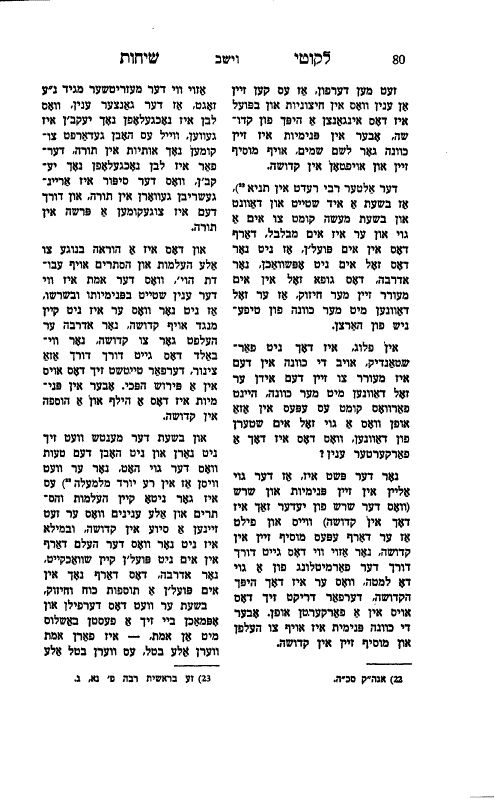
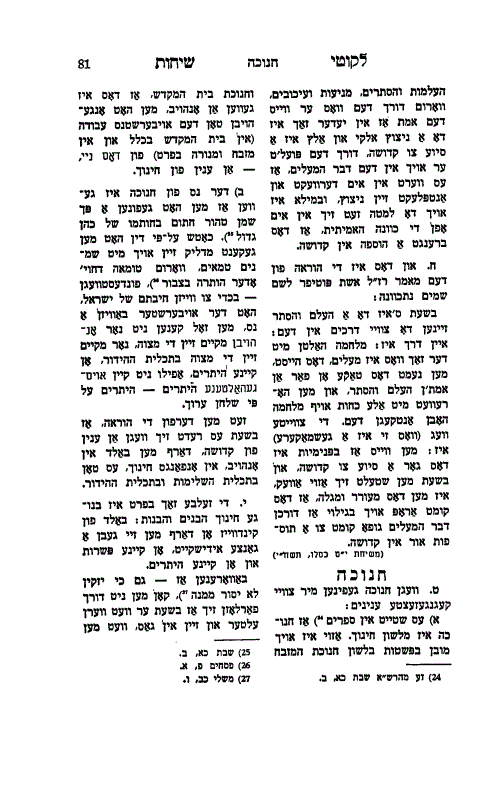
1. On the verse "וישב יעקב בארץ מגורי אביו בארץ כנען" ("And Yaakov dwelt in the land of his father's sojournings, in the land of Canaan"), the Maggid of Mezritch explains1: "וישב יעקב" ("And Yaakov dwelt") — Yaakov was settled, sitting and tarrying, "בארץ" ("in the land") — in earthliness. Why did he do so? In order to gather — "מגורי" (from the expression "אוגר בקיץ" ("gathers in summer")2) — the sparks of holiness that are found in physical things, and to elevate them to "אביו" ("his Father") in Heaven.
And although the sitting and tarrying in the land is a descent, it is no more than temporary, and it is specifically through it that one comes to an increase and an ascent.
This is what is meant by "בארץ כנען" ("in the land of Canaan") — "Canaan" in the sense of commerce, as it is written, "ולא יהי' כנעני עוד בבית ה'" ("There shall no longer be a merchant in the House of G‑d")3. And in commerce the way of things is that first one lays out money in order to earn later, as it is written4, "יש מפזר ונוסף עוד" ("There is one who scatters, and yet gains more").
2. The lesson from this is: A Jew need not necessarily seek great things; rather, his service should be to gather, refine and elevate the sparks of holiness that are found in worldly matters.
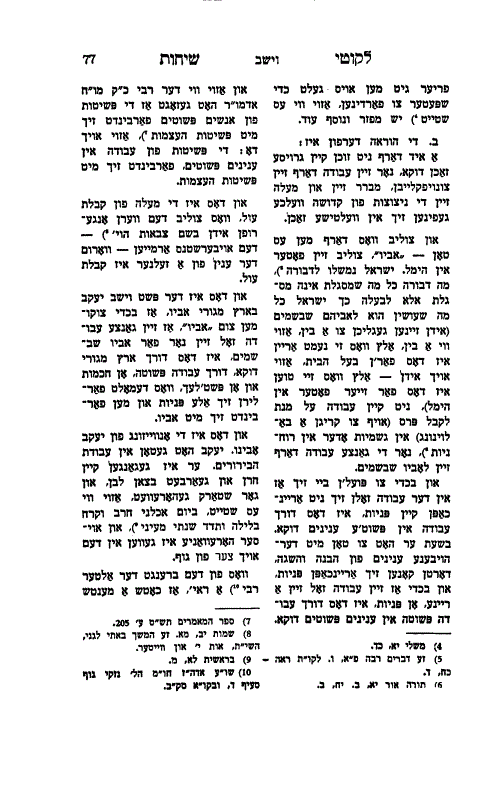
And why must one do this? — "אביו", for the sake of his Father in Heaven. "ישראל נמשלו לדבורה" ("The Jewish people are likened to a bee")5: "מה דבורה כל מה שמסגלת אינה מסגלת אלא לבעלה כך ישראל כל מה שעושין הוא לאביהם שבשמים" (Jews are compared to a bee: just as with a bee, everything it gathers in is for its owner, so too with Jews — everything they do is for their Father in Heaven). It is not a service "על מנת לקבל פרס" ("in order to receive a reward"), whether in material matters or in spiritual matters6; rather, the entire service must be "לאביו שבשמים" ("for his Father in Heaven").
And in order to bring about within oneself that no ulterior motives creep into one's service, this is achieved specifically through service in simple matters. When one is occupied with lofty matters of understanding and comprehension, ulterior motives can creep in there; and in order that one's service be pure, without ulterior motives, this is achieved specifically through simple service in simple matters.
Just as the Rebbe, my revered father-in-law, the Previous Rebbe, said that the simplicity of simple people is bound up with the simplicity of the Essence7, so too here: the simplicity of service in simple matters is bound up with the simplicity of the Essence.
And this is the virtue of kabbalas ol (accepting the yoke of Heaven), on account of which Jews are called by the name "צבאות הוי'" ("the hosts of G‑d")8 — the armies of the Al-mighty — for the essence of a soldier is kabbalas ol.
And this is the meaning of "וישב יעקב בארץ מגורי אביו": in order to come to "אביו" — so that one's entire service be solely for his Father in Heaven — this comes specifically through "ארץ מגורי", through simple service, without clever ideas and without fancy interpretations; for then all ulterior motives fall away and one becomes bound up with "אביו".
And this is the directive from Yaakov Avinu. Yaakov was engaged in the service of refinement (avodas habirurim). He went to Charan and worked with Lavan's flocks, and he toiled very hard, as it is written, "ביום אכלני חרב וקרח בלילה ותדד שנתי מעיני" ("By day the heat consumed me, and the frost by night, and my sleep departed from my eyes")9. And besides the hard labor, this also involved bodily suffering.
From this the Alter Rebbe10 brings a proof that although a person has no right whatsoever over his own body, to strike it and afflict it — since the body does not belong to him but to the Al-mighty — nevertheless, "לצורך" ("for a need") (i.e., for the sake of money, which in spiritual terms is the service of refinement), it is permitted.
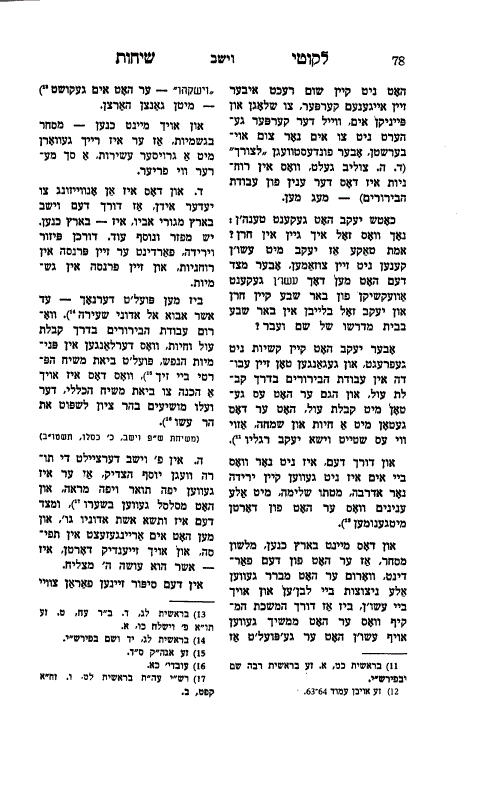
Yaakov could have argued: Why should I go to Charan? True, Yaakov and Esav cannot be together, but on that account Esav could have been sent away from Be'er Sheva to Charan, while Yaakov would remain in Be'er Sheva, in the study hall of Shem and Ever!
But Yaakov asked no questions, and went to do his service of refinement in the manner of kabbalas ol. And although he did it with kabbalas ol, he did it with vitality and joy, as it is written, "וישא יעקב רגליו" ("And Yaakov lifted up his feet")11.
And through this, not only was there no descent for him, but on the contrary — "מטתו שלימה" ("his offspring was complete"), together with all the things that he took with him from there12.
And this is what is meant by "בארץ כנען", in the sense of commerce: he profited from it, for he refined all the sparks in Lavan's possession and also in Esav's, to the point that through drawing down the encompassing light (hamshachas hamakif), which he drew down upon Esav, he brought about "וישקהו" ("and he kissed him")13 — Esav kissed him with his whole heart.
And "Canaan" also means commerce in the material sense: he became rich with great wealth, much more than before.
3. And this is a directive to every Jew: through "וישב בארץ מגורי אביו", in "ארץ כנען" — "There is one who scatters, and yet gains more" — through the scattering and the descent, one earns his livelihood in spirituality and his livelihood in materiality.
Until one subsequently brings about "עד אשר אבוא אל אדוני שעירה" ("until I come to my lord, to Seir")14. For the service of refinement in the manner of kabbalas ol and with vitality, which reaches into the innermost core of the soul, brings about the coming of the individual Moshiach within oneself15, which is also a preparation for the coming of the general Moshiach — "ועלו מושיעים בהר ציון לשפוט את הר עשו" ("And saviors shall ascend Mount Zion to judge the mount of Esav")16.
(From the sichos of Shabbos Parshas Vayeishev, 20 Kislev, 5712)
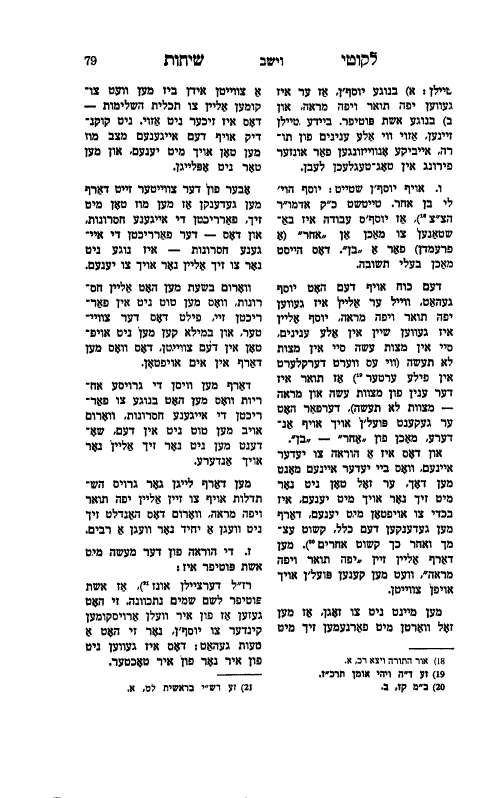
4. In Parshas Vayeishev the Torah tells about Yosef HaTzaddik, that he was "יפה תואר ויפה מראה" ("of beautiful form and beautiful appearance"), and that he would curl his hair17; and as a result, "ותשא אשת אדוניו גו'" ("his master's wife cast [her eyes upon Yosef]"); and he was put into prison, and even while there — "אשר הוא עושה ה' מצליח" ("whatever he did, G‑d made successful").
In this story there are two parts: a) regarding Yosef, that he was of beautiful form and beautiful appearance; and b) regarding Potiphar's wife. Both parts, like all matters of Torah, are eternal directives for our conduct in day-to-day life.
5. Regarding Yosef it is written, "יוסף ה' לי בן אחר" ("May G‑d add for me another son"). The Tzemach Tzedek explains18 that Yosef's service consisted of making an "אחר" ("other" — a stranger) into a "בן" ("son"); that is, making baalei teshuvah.
Yosef had the power for this because he himself was of beautiful form and beautiful appearance. Yosef himself was beautiful in all matters, both in the positive commandments and in the prohibitive commandments (as is explained in many places19 that "form" relates to the positive commandments and "appearance" to the prohibitive commandments). Therefore he was able to influence others as well, making from an "other" — a "son."
And this is a lesson for every person. Since every person is required to work not only on himself but also on others, then in order to accomplish something with another, one must remember the principle, "קשוט עצמך ואחר כך קשוט אחרים" ("Adorn yourself first, and afterwards adorn others")20. One must oneself be "of beautiful form and beautiful appearance," and then one will be able to influence the other as well.
This does not mean that one should wait before occupying oneself with another Jew until one personally reaches ultimate perfection — that is certainly not so. Regardless of one's own state, one must also work with the other, and one may not put it off.
On the other hand, however, one must remember that one must work on oneself, correcting one's own shortcomings; and this — correcting one's own shortcomings — concerns not only oneself but the other as well.
For when one has shortcomings oneself, which one does not work to correct, the other person senses it, and consequently one cannot accomplish in the other what needs to be accomplished in him.
One must therefore know the great responsibility one bears regarding correcting one's own shortcomings, for if one does not work on this, one harms not only oneself but others as well.
One must invest very great effort to be oneself of beautiful form and beautiful appearance, for this concerns not an individual but the many.
6. The lesson from the episode with Potiphar's wife is:
Our Sages tell us21 that "אשת פוטיפר לשם שמים נתכוונה" ("Potiphar's wife intended it for the sake of Heaven"). She saw that children of Yosef would come from her, but she made a mistake: they were to come not from her but from her daughter.
We see from this that it is possible for a matter that outwardly and in actual practice is the complete opposite of holiness to have, inwardly, an intention entirely for the sake of Heaven — to add to holiness and to accomplish in holiness.
The Alter Rebbe says in Tanya22 that when a Jew stands and prays, and at that very moment a gentile comes and confuses him, this should have the effect on him that not only should it not weaken him, but on the contrary, this very thing should arouse in him greater strength, so that he prays with greater intention, from the depths of his heart.
Seemingly, this is not understandable: if the intention in this is to arouse the Jew to pray with greater intention, why does it come about in such a manner, that a gentile disturbs him from praying, which is an opposite thing?
The explanation, however, is that the gentile himself, in his inner core and root (for the root of every thing is, after all, in holiness), knows and feels that he must add something to holiness. But since this passes through the medium of a gentile here below, who is the opposite of holiness, it therefore expresses itself in an inverted manner. The inner intention, however, is to help and to add to holiness.
As the Maggid of Mezritch, of blessed memory, says, the whole reason Lavan chased after Yaakov was because additional letters needed to be added to the Torah. Therefore Lavan chased after Yaakov, and that story was written into the Torah, and through this a parsha was added to the Torah.
And this is a lesson regarding all concealments and obstructions to the service of G‑d. The truth is that, as the matter stands in its inner core and root, not only is it not opposed to holiness, but on the contrary, it actually helps holiness; only because it passes through such a channel, it is therefore interpreted in an opposite sense. But inwardly it is a help and an addition to holiness.
And when a person will not be fooled and will not make the mistake that the gentile makes, but will know that "אין רע יורד מלמעלה" ("No evil descends from Above")23 — there are no concealments and obstructions at all, and all the things he sees are an aid to holiness; and consequently, not only must the concealment not cause him any weakness, but on the contrary, it must cause him additional strength and fortitude — when he will feel this and make a firm resolution within himself, with truth, then before the truth everything becomes nullified: all concealments and obstructions, hindrances and impediments become nullified. For through his knowing the truth, that in every thing there is a G‑dly spark and everything is an aid to holiness, he thereby also affects the concealing thing itself, so that its spark is aroused and revealed within it; and consequently, also here below the true intention is openly seen in it — that it brings an addition to holiness.
7. And this is the lesson of the statement of our Sages, "Potiphar's wife intended it for the sake of Heaven":
When there is a concealment and obstruction, there are two approaches to it. One approach is to wage war against the thing that conceals; that is, one takes it as a genuine concealment and obstruction, and toils with all one's strength to wage war against it. The second way (which is a more delightful one) is that one knows that inwardly it is actually an aid to holiness. And when one takes this stance, one arouses and reveals it, so that it comes down also in open revelation that through the concealing thing itself, additional light is added in holiness.
(From the sichos of 19 Kislev, 5714)
Notes
1) Or Torah, Parshas Vayeishev.
2) Mishlei 10:5.
3) Zechariah 14:21.
4) Mishlei 11:24.
5) See Devarim Rabbah 1:6; Likkutei Torah, Re'eh 28d.
6) Torah Or 11b; 18b.
7) Sefer HaMaamarim 5709, p. 205.
8) Shemos 12:41. And see the series of discourses Basi LeGani, 5710, section 10 and onward.
9) Bereishis 31:40.
10) Shulchan Aruch of the Alter Rebbe, Choshen Mishpat, Laws of Bodily Injury, par. 4, and in Kuntres Acharon, subpar. 2.
11) Bereishis 29:1. See Bereishis Rabbah there, and Rashi's commentary.
12) See above, pp. 63–64.
13) Bereishis 33:4. Bereishis Rabbah 78:9. See Torah Or, Parshas Vayishlach 26a.
14) Bereishis 33:14, and Rashi's commentary there.
15) See Iggeres HaKodesh, sec. 4.
16) Ovadiah 1:21.
17) Rashi on the Torah, Bereishis 39:6. Zohar I, 189b.
18) Or HaTorah, Vayeitzei 220a.
19) See the discourse beginning "ויהי אומן" ("And he was a nurturer"), 5627.
20) Bava Metzia 107b.
21) See Rashi, Bereishis 39:1.
22) Iggeres HaKodesh, sec. 25.
23) See Bereishis Rabbah, Parsha 51:3.
Key Lesson
A Jew's mission is to refine the G‑dly sparks hidden in ordinary, worldly matters through simple service with kabbalas ol, done solely for his Father in Heaven, and this descent ultimately brings great spiritual and material gain and hastens Moshiach. To influence others, one must also work on perfecting oneself, and every concealment one meets is, at its root, an aid to holiness; recognizing this truth turns the obstacle itself into added light.