
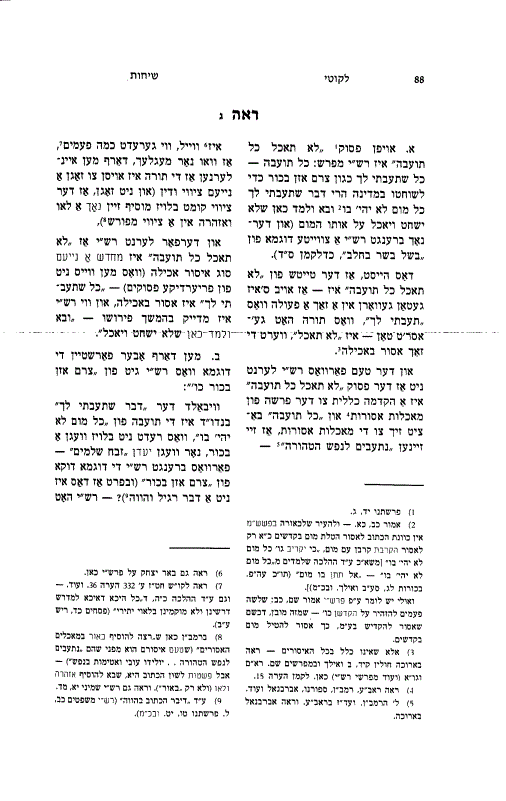
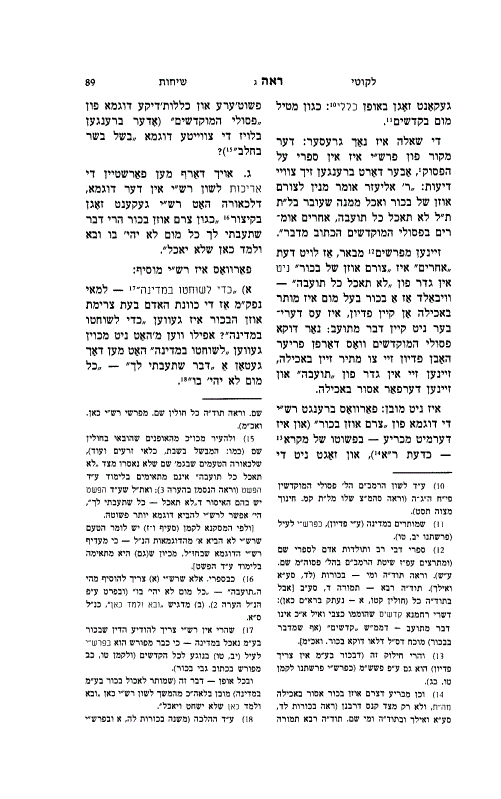
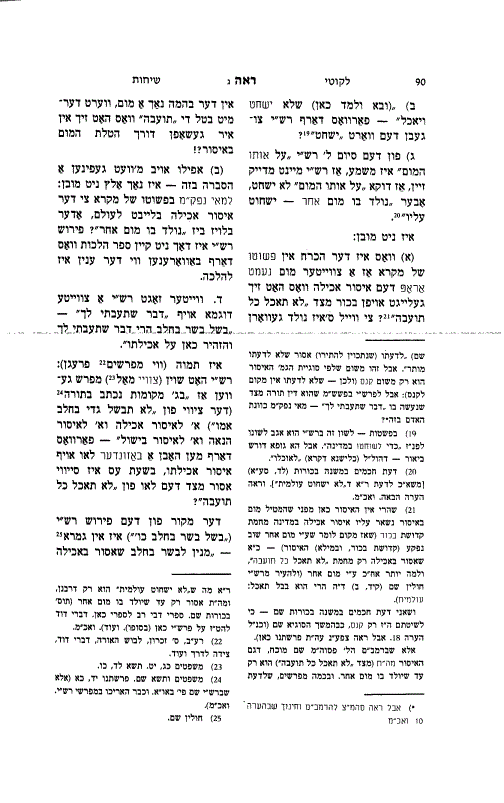
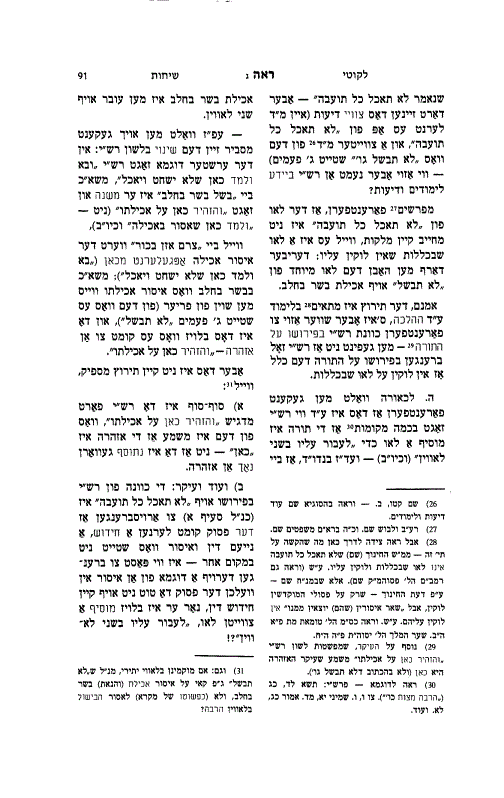
The phrase "Do not eat any abominable thing" refers to a case in which, were it not for the Torah's explicit command, one might have assumed that it was permissible to eat. Therefore, Rashi explains, "anything that I have made abominable for you"—meaning that the object is not inherently abominable; rather, the abomination exists only because of the person's conduct. Thus, Rashi cites the example of one who deliberately blemishes the ear of a firstborn animal, since a firstborn animal with a blemish is not intrinsically holy, and the "abomination" arises solely from the person's action.
On the verse (Deuteronomy 14:3), "Do not eat any abominable thing," Rashi comments:
"Any abominable thing—anything that I have declared abominable for you. For if someone slit the ear of a firstborn animal in order to slaughter it outside the Temple, this is something that I declared abominable to you, as it is written, 'No blemish shall be in it.' Therefore, this verse teaches that he may not slaughter and eat it on account of that blemish. Likewise, one who cooked meat in milk has done something I declared abominable, and this verse warns against eating it."
This requires explanation. Why does Rashi bring the example of one who blemishes the ear of a firstborn animal, rather than the more general case of inflicting a blemish on consecrated animals? Furthermore, regarding his second example, Rashi himself previously explained that the verse "You shall not cook a kid in its mother's milk" is stated three times: one prohibition against cooking, one against deriving benefit, and one against eating. If so, why does Rashi explain here that this verse provides a warning against eating it?
The explanation is as follows:
Rashi is troubled by the wording of the verse. If the food is already an "abomination," then it is obvious that it may not be eaten. Therefore, he explains that the verse refers to a case where, without this explicit command, one might have assumed that eating it was permitted.
Accordingly, Rashi begins by emphasizing "anything that I have made abominable for you." The object itself is not inherently abominable; rather, the abomination exists only in relation to the individual who acted improperly.
This is why Rashi gives the example of one who blemishes the ear of a firstborn animal, rather than blemished consecrated animals in general. Consecrated animals that become blemished retain their sanctity until they are redeemed; consequently, they remain intrinsically prohibited and are therefore genuinely "abominable." A firstborn animal with a blemish, however, is no longer holy. The only "abomination" lies in the person's action of deliberately inflicting the blemish. Thus, the object itself is not inherently objectionable; what is objectionable is the person's conduct.
This also explains the closing words of Rashi:
"...and this teaches that he may not slaughter and eat it on account of that blemish."
The firstborn animal itself is not forbidden for consumption. Rather, the prohibition applies to the individual: he may not slaughter and eat it on the basis of the blemish that he himself inflicted. If the animal later develops a different blemish naturally, he may slaughter and eat it, since a firstborn animal with a permissible blemish may indeed be eaten, provided that the blemish was not the one he deliberately caused.
This also clarifies Rashi's second example, where he writes "one who cooked meat in milk," differing from the Talmud's formulation, "From where do we know that meat cooked in milk is forbidden to eat?" Rashi's intention is that the prohibition derived from this verse is in addition to the intrinsic prohibition against eating meat cooked in milk, which is learned from the fact that "You shall not cook a kid in its mother's milk" appears three times. This verse adds another prohibition directed specifically at the person who performed the prohibited cooking: because he created something that God declared abominable, he incurs an additional prohibition under "Do not eat any abominable thing." By contrast, someone else who merely eats the food transgresses only the intrinsic prohibition arising from "You shall not cook."
This is why Rashi emphasizes:
"...and here Scripture warns against eating it."
The verse introduces an additional warning beyond the intrinsic prohibition of the food itself, because it concerns something that "I have made abominable for you"—that is, an object whose prohibition is linked to the individual's improper action.