
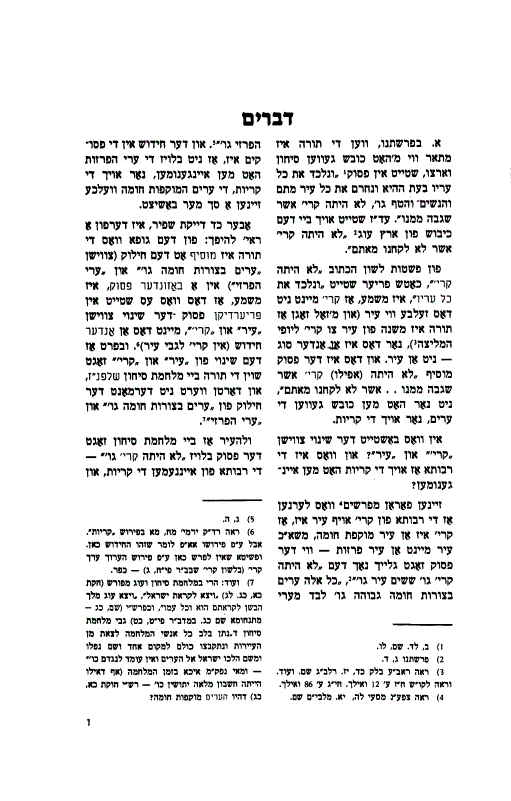
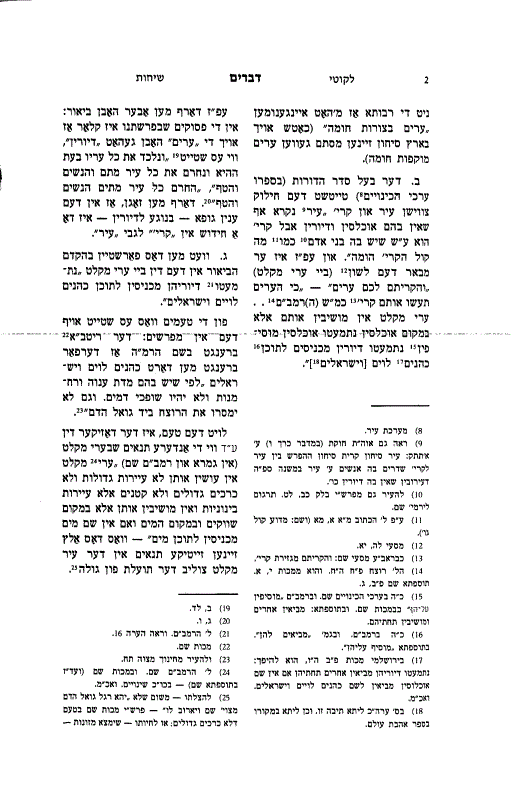
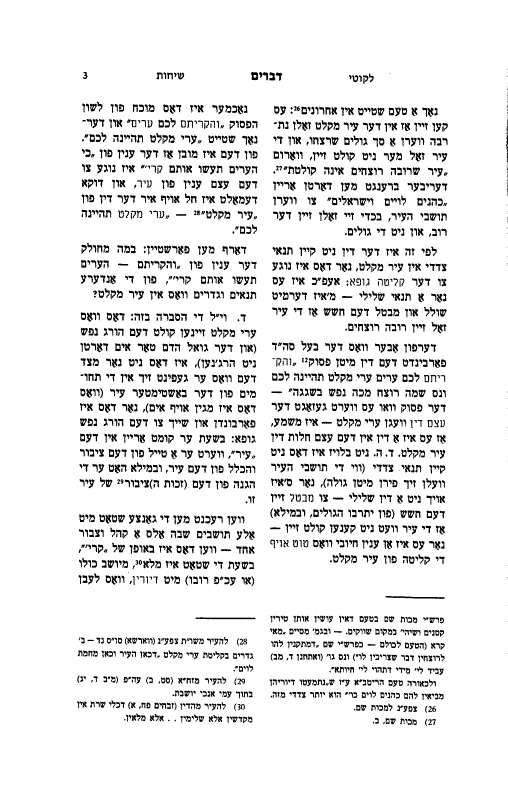
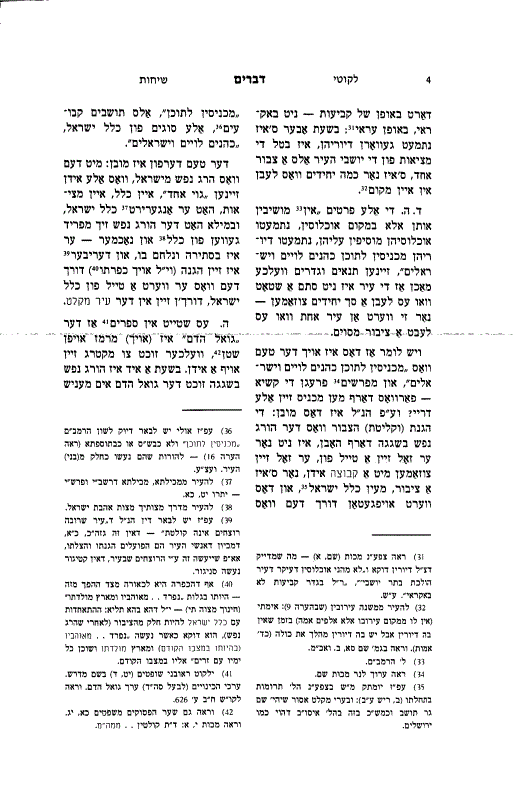
From the wording, “You shall designate cities for yourselves,” it is evident that the concept of a kiryah—a city inhabited by people—is essential to the very law of the cities of refuge. The protection of the inadvertent killer comes through his becoming part of the community. In the conquest of the lands of Sichon and Og, which prepared the Jewish people for their entry into Eretz Yisrael, the concept of kiryah was emphasized because Jewish unity was necessary to overcome the opposing form of unity.
In our parshah it states: “We captured all his cities…there was no kiryah that was too strong for us.” This indicates that the word kiryah does not simply mean a city.
The author of Seder HaDoros explains that a place is called a kiryah because it contains people, whereas it may be called an ir, a city, even when it does not have a population. Based on this, he explains the verse, “You shall designate cities for yourselves,” to mean: You must transform the cities into keriyos—inhabited communities. Therefore, if their population diminishes, Kohanim, Levi’im, and Yisraelim are brought into them to live.
The explanation is as follows: The wording, “You shall designate cities for yourselves,” implies that a city’s status as a kiryah is not merely a secondary condition. Rather, it is essential to the very law of the cities of refuge.
The reason is that the inadvertent killer is protected by becoming part of the community, so that the merit of the public protects him. This applies only when the city is a kiryah, where a community resides permanently. Otherwise, it is merely a collection of individuals and does not constitute a true communal entity.
It is explained in sefarim that the avenger of blood alludes to the Satan, who seeks to punish a person. Accordingly, it may be said that protection from the avenger of blood comes through unity, which is the inner meaning of the cities of refuge.
Based on this, we can also explain the word kiryah used concerning Sichon. The verse is teaching that the strength of Sichon and Og was not only physical. They also possessed a spiritual strength that came from unity. Nevertheless, “there was no kiryah that was too strong for us.”
The unity of the nations of the world is merely external. People may join together in a common activity, but they are not essentially united. The unity of the Jewish people, by contrast, is an essential and intrinsic unity. Through the essential unity of the Jewish people, they nullified the opposing form of unity.
The reason the Torah emphasizes the concept of kiryah regarding Sichon and Og is that the Jewish people became a fully established communal entity when they entered Eretz Yisrael. Therefore, during the conquest of the lands of Sichon and Og, which served as preparation for entering Eretz Yisrael, they required the power of unity to overcome the opposing form of unity.
This teaching is especially relevant during the Three Weeks. Even during the time of exile and destruction, the power of kiryah—Jewish unity—provides protection from the avenger of blood. Through this unity, we will proceed to Eretz Yisrael, ultimately reaching the fulfillment of the promise: “Hashem your G‑d will broaden your borders.”