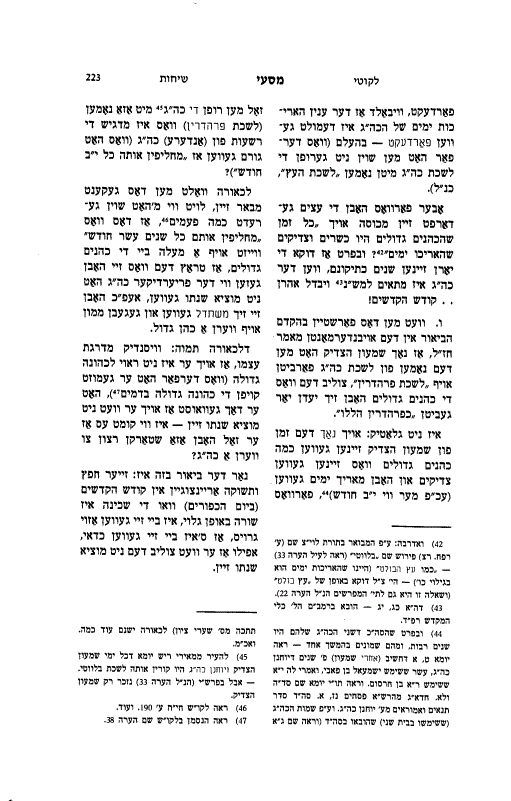
The Rambam writes in the Laws of the Beis HaBechirah (1:9):
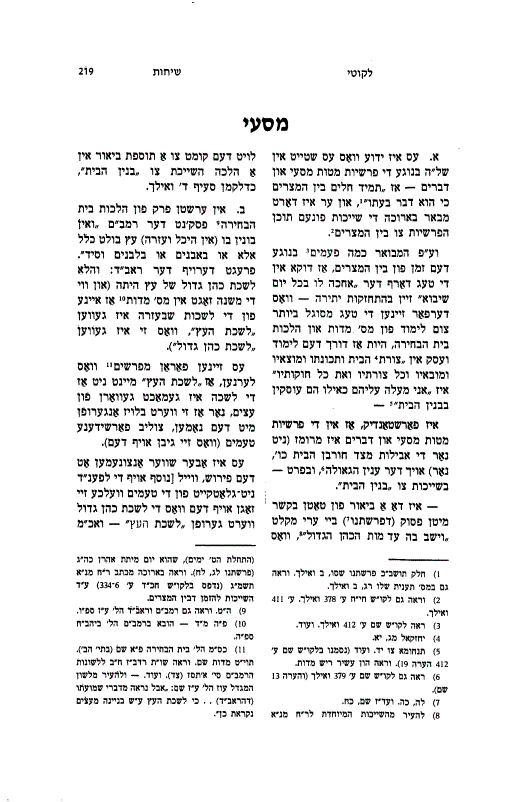
"No projecting wood may be built into the Temple."
The Ra'avad objects that the chamber of the Kohen Gadol was called the "Chamber of Wood" because it was constructed of wood.
It may be explained that the Rambam himself alludes to the answer by writing "projecting wood." This implies that the wood in the Chamber of Wood was covered with plaster or another coating. However, this only explains why it was technically permissible to construct it from wood. It still requires explanation: if the wood was completely covered, why build it from wood at all?
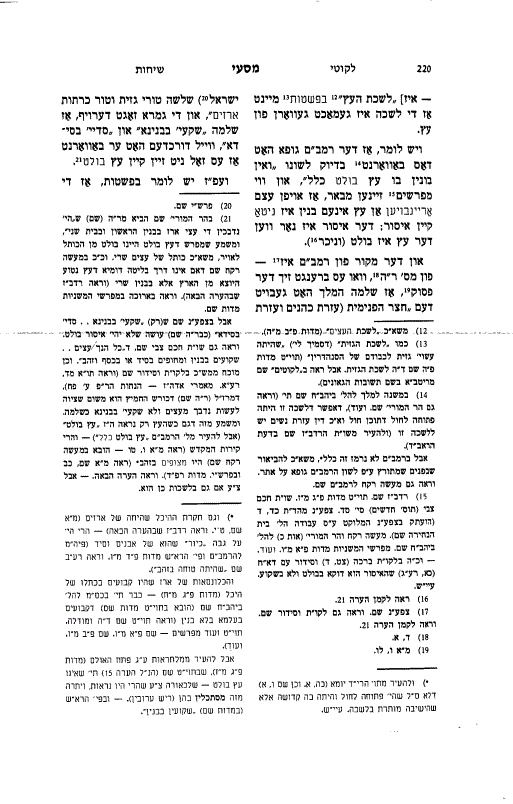
The Rebbe's father explains that as long as the Kohanim Gedolim were righteous and lived long lives, the chamber was called the "Chamber of Wood," because wood symbolizes longevity, as the prophet Yeshayahu says, "Like the days of a tree shall be the days of My people."
The Kohen Gadol is associated with long life because longevity is linked with the right side, as expressed in the verse, "Length of days is in its right hand," and the Kohen Gadol represents the attribute of kindness, the right side. This is also reflected in the Sages' teaching on the verse, "He shall remain there until the death of the Kohen Gadol." A murderer shortens human life, whereas the Kohen Gadol is associated with extending and preserving life.
After the time of Shimon HaTzaddik, however, the chamber became known as the Chamber of Parhedrin, because the office of Kohen Gadol was obtained through bribery, and the High Priests were replaced frequently, like royal officials (parhedrin) who changed every year.
Accordingly, the chamber was built from wood because wood—symbolizing longevity—expresses the ideal nature of the Kohen Gadol, even during periods when many High Priests did not, in fact, live long lives.
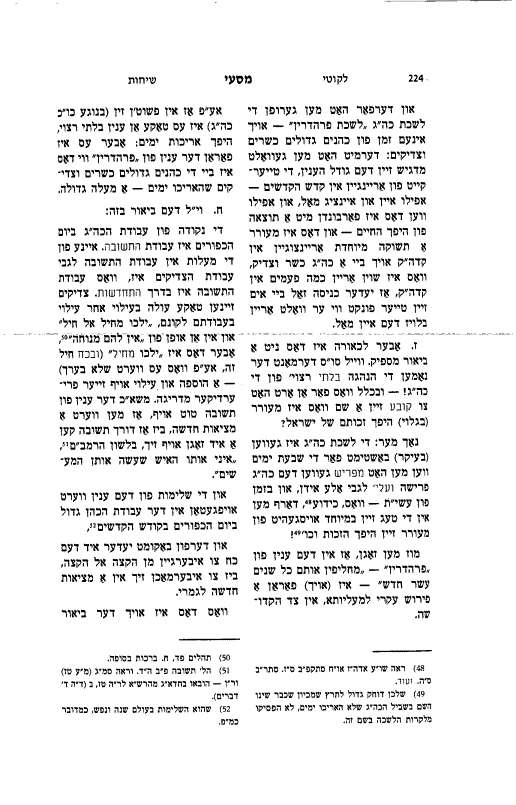
On a deeper level, however, it remains to be understood why the wood was concealed, even during the era when the Kohanim Gedolim were righteous and enjoyed long lives.
This can be explained by first noting that even after the time of Shimon HaTzaddik there were individual Kohanim Gedolim who lived long lives. If so, why did the chamber continue to be called the Chamber of Parhedrin even in their days?
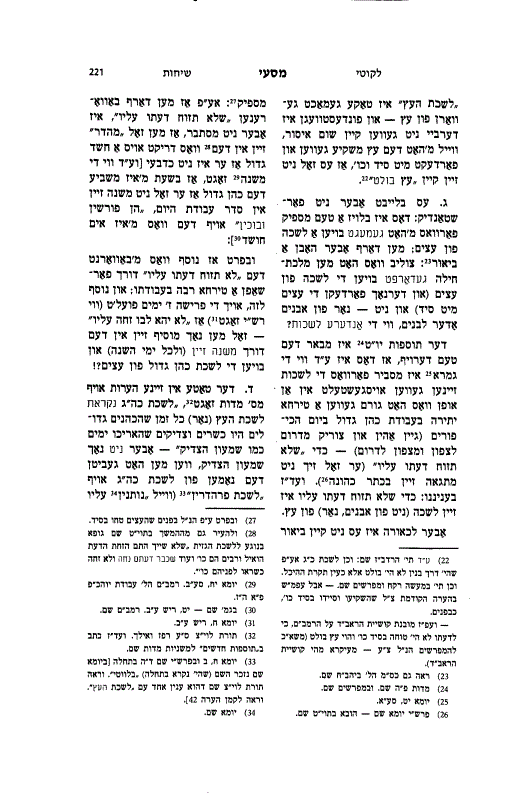
The explanation is that the name Parhedrin itself contains a positive spiritual message connected with the Kohen Gadol.
The central service of the Kohen Gadol on Yom Kippur—for which he was separated from his home during the seven days preceding Yom Kippur—is the service of teshuvah. The essence of teshuvah is that a person becomes a completely new being, as the Rambam writes: "I am not the same person who committed those deeds."
This is the deeper meaning of the name Parhedrin. Although physically it is the very same Kohen Gadol who entered the Holy of Holies the previous year, spiritually he is an entirely new Kohen Gadol through the renewal brought about by teshuvah.
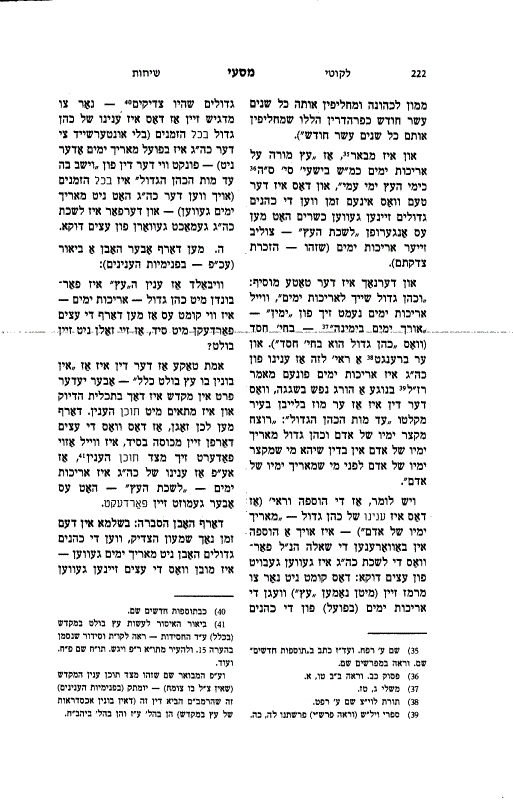
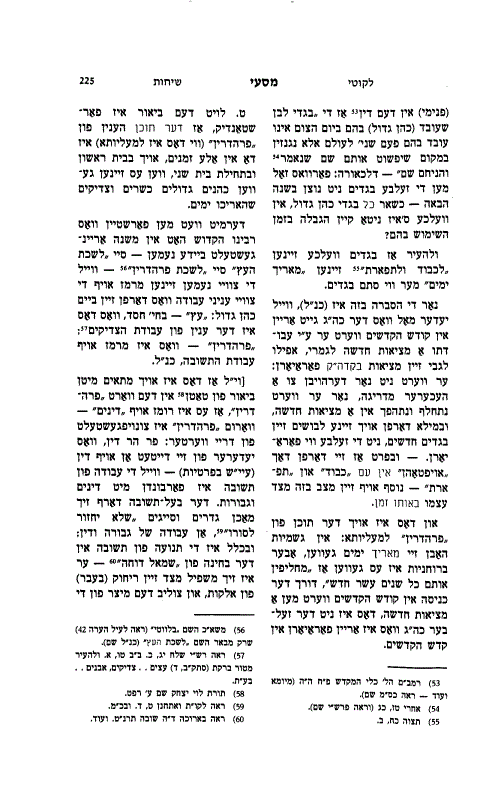
This also explains why specifically in Tractate Yoma, whose central theme is teshuvah, the chamber is called Parhedrin, whereas in Tractate Tamid it is referred to simply as the Chamber of the Kohen Gadol.
This is likewise why the wood was covered. Wood represents the steady service of the righteous, symbolized by longevity and stability. Yet the essential theme of the Kohen Gadol's Yom Kippur service is not merely the service of the righteous, but the transformative power of teshuvah.
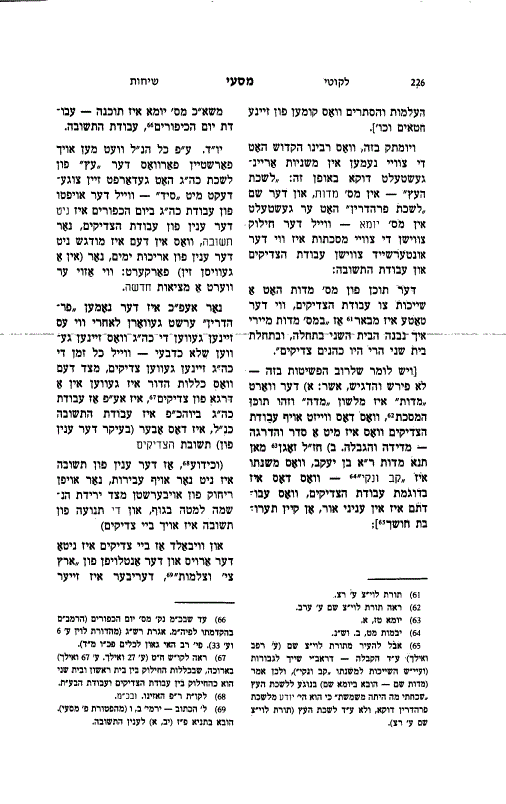
Nevertheless, the chamber acquired the name Parhedrin only during the period when the Kohanim Gedolim were spiritually unworthy. Until then, even their teshuvah was the teshuvah of the righteous, which does not involve escaping from the "parched and shadowy land" through a boundless leap beyond all limitations. Only when the Kohen Gadol's teshuvah became teshuvah in its ordinary sense—where a person completely leaves behind his former state and transcends all limitations—did the concept of becoming an entirely new reality become fully expressed, and this is the deeper significance of the name Parhedrin.