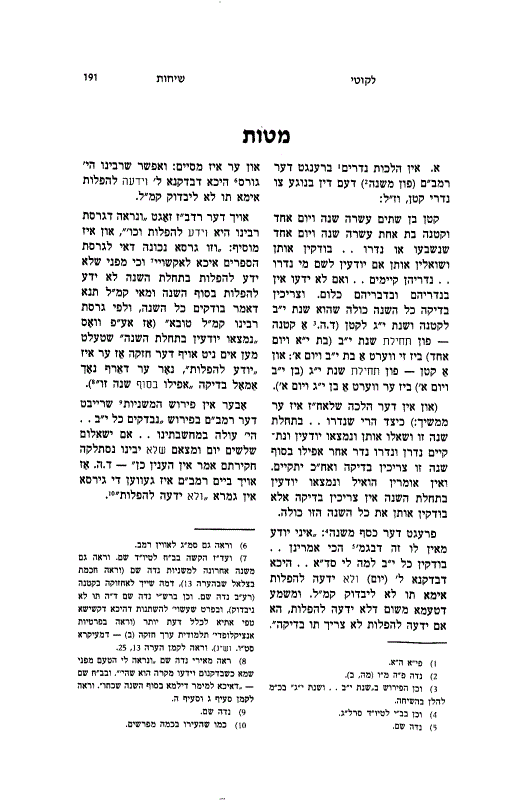
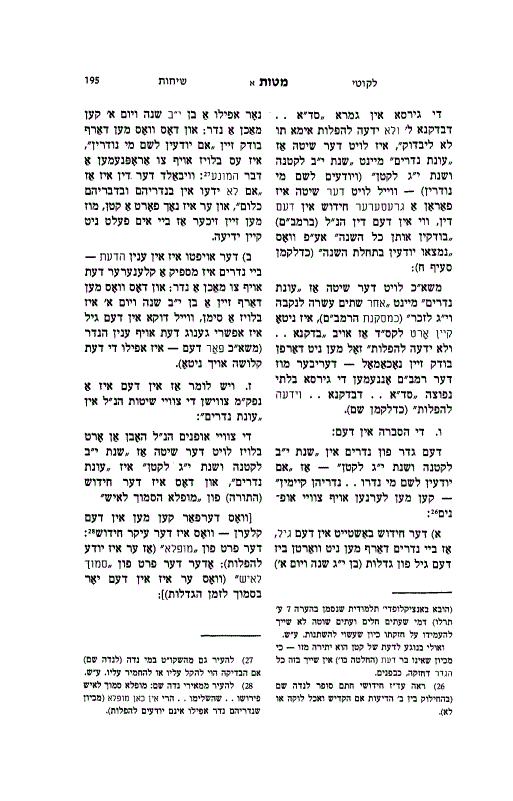
The Rambam writes in the Laws of Vows (11:1):
"A boy who is twelve years and one day old... is examined... If he made a vow... at the beginning of that year... and it was found that he understood... and then made another vow, even at the end of that same year, he must be examined again."
The Kesef Mishneh asks: What is the Rambam's source for ruling that even after the child has already been found to understand, he must be examined again? The Gemara only states that if the child did not know how to distinguish (i.e., understand the significance of his vow), one might have thought there is no need to examine him again, and therefore teaches otherwise. But where is the source for requiring another examination after he was found to understand?
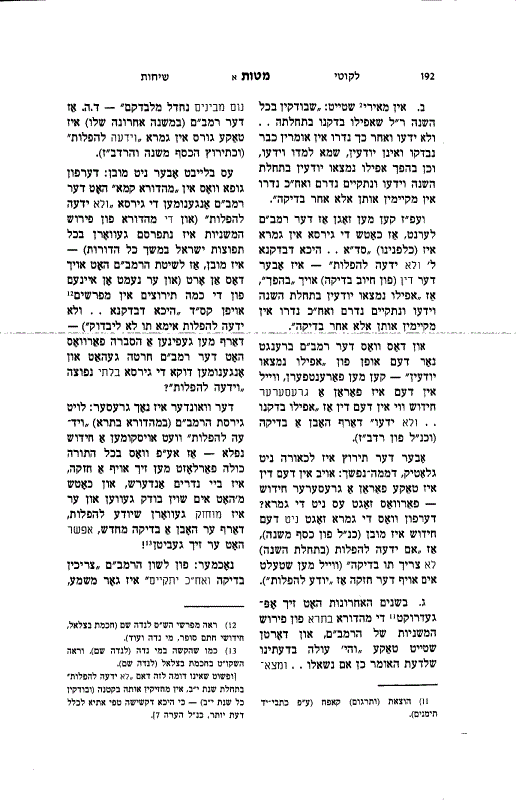
The Kesef Mishneh therefore suggests that perhaps the Rambam had a different text of the Gemara, reading: "If he knew how to distinguish, one might have thought that there is no need to examine him again."
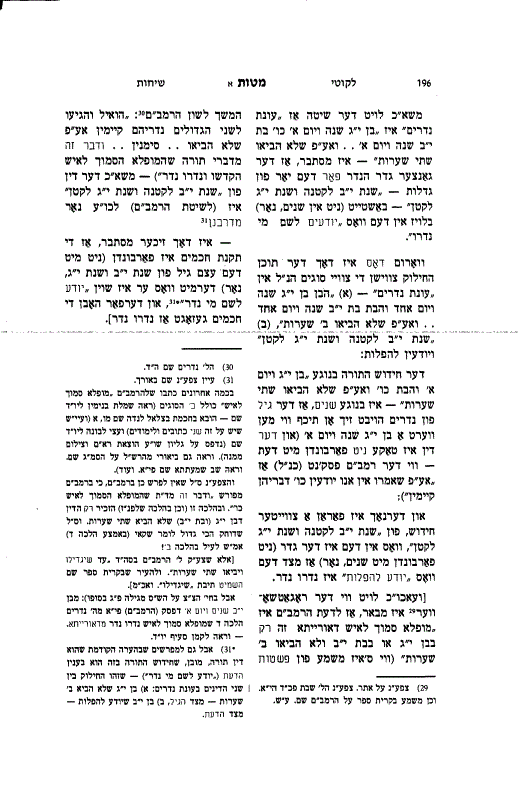
This suggestion is supported by the fact that the commonly printed first edition of the Rambam's Commentary on the Mishnah appears to follow the reading "did not know," whereas the later edition, published in recent years, appears to adopt the reading "did know." It would seem that the Rambam later changed his text and accepted the less common version.
This can be understood by noting another difference between the two editions. In the earlier edition, the Rambam explains that the period of vows refers to a boy during his thirteenth year and a girl during her twelfth year. In the later edition, however, he writes that the relevant period is after a boy reaches thirteen years and one day, and a girl twelve years and one day, even if they have not produced the physical signs of adulthood and even if they say, "We do not know to Whom we vowed."
These two changes are related.
According to the Rambam, it is impossible to assume that a minor—even after being tested and found knowledgeable—possesses an established presumption of mature understanding. A child does not yet have firmly developed judgment, since he can easily change his mind. Therefore, the Rambam rules, based on logical reasoning, that even after being examined successfully at the beginning of the year, he must be examined again throughout that year.
This distinction reflects two possible ways of understanding a minor's vows:
- The novelty lies in the age, meaning that the Torah allows vows before the normal age of thirteen. This merely removes the obstacle of age.
- The novelty lies in the understanding, teaching that for vows, the comprehension of a minor is sufficient.
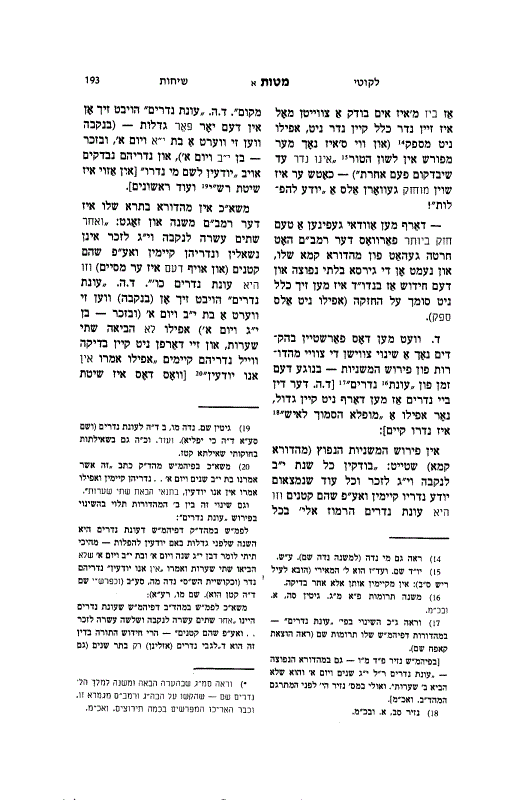
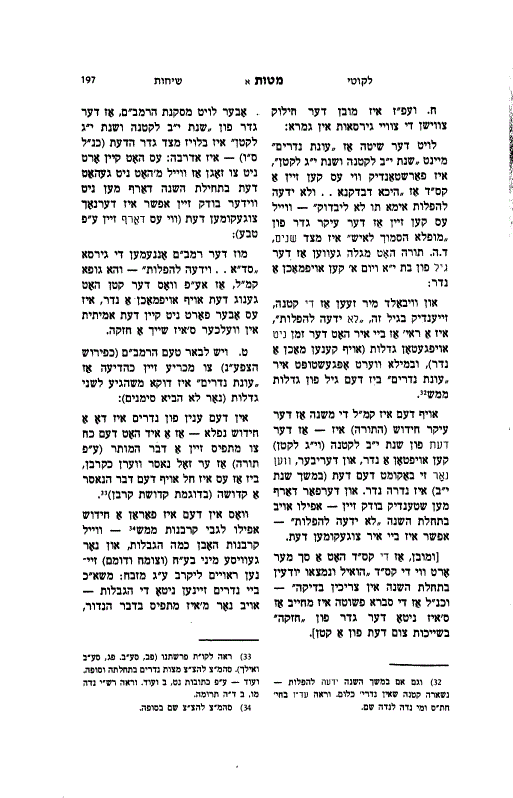
The Talmudic discussion applies only according to the opinion that a mufla hasamuch le'ish ("one close to adulthood") refers to the beginning of the boy's thirteenth year. According to the Rambam's conclusion, however, a mufla is only someone who is thirteen years and one day old. Therefore, before that age, the defining factor cannot be age but only the child's understanding, since the Torah itself established thirteen years and one day as the age at which vows fundamentally take effect, even without physical signs.
This also explains the different readings of the Gemara.
According to the view that the period of vows begins at the start of the thirteenth year for a boy and the twelfth year for a girl, one can understand the initial assumption that if the child was examined once, there is no need to examine him again. Since the status of mufla is determined by age, one might conclude that if at the beginning of the year he lacked sufficient understanding, this shows that he does not qualify during that entire year.
According to the Rambam's conclusion, however, since a mufla is defined as someone who is thirteen years and one day old, the determining factor is understanding rather than age. Therefore, it is unreasonable to assume that because the child lacked sufficient understanding at the beginning of the year, there is no need to test him later. Consequently, the Rambam interprets the Gemara's initial assumption as referring דווקא to a child who did understand. The Gemara's conclusion then teaches that even when he demonstrates understanding, it is not yet considered firmly established knowledge. Therefore, he must still be examined again later in the year.
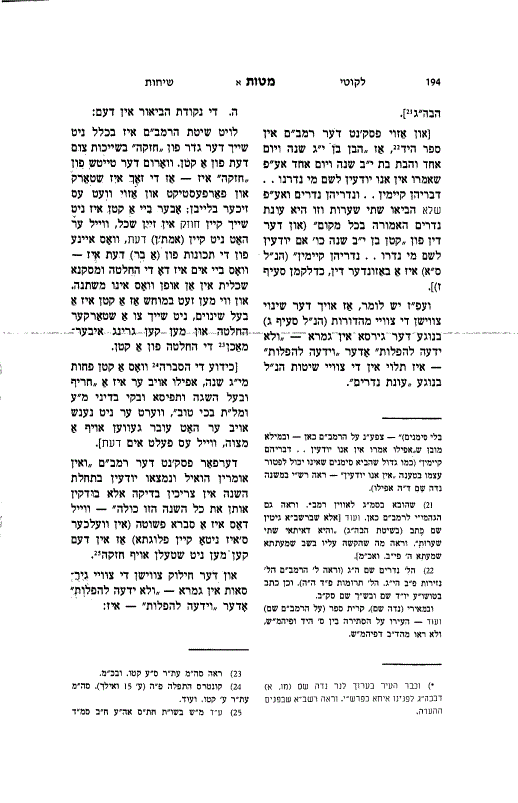
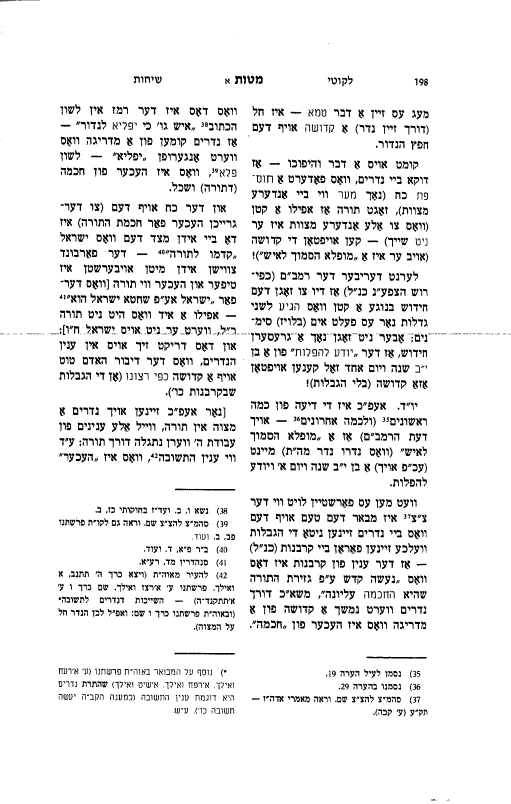
It may also be suggested that the Rambam was compelled to define a mufla as only someone who is thirteen years and one day old because the power of vows is greater than that of sacrifices. Sacrifices are restricted regarding what may be offered, whereas vows can confer sanctity upon virtually any object. Such a far-reaching power is appropriately granted only after the age of thirteen years and one day.
Nevertheless, some of the Rishonim—and according to several later authorities, perhaps even the Rambam himself—maintain that mufla hasamuch le'ish refers to the beginning of the thirteenth year.
This can be understood in light of the Tzemach Tzedek's explanation that vows draw from a level higher than Chochmah, the level of the Torah itself, alluded to by the verse, "When a person utters a vow" (ki yafli lindor). Because vows draw from this transcendent source, they can extend holiness to any object, unlike sacrifices, which are limited by the Torah's specific laws.
The Jewish people possess this power because Israel preceded the Torah in Hashem's thought. Therefore, even before a Jew becomes fully obligated in the commandments, he already possesses the capacity to make vows, since this power stems from the very essence of the Jewish soul, which precedes the Torah itself.