Rashi comments on the verse (Numbers 31:19), "Whoever has killed a person...":
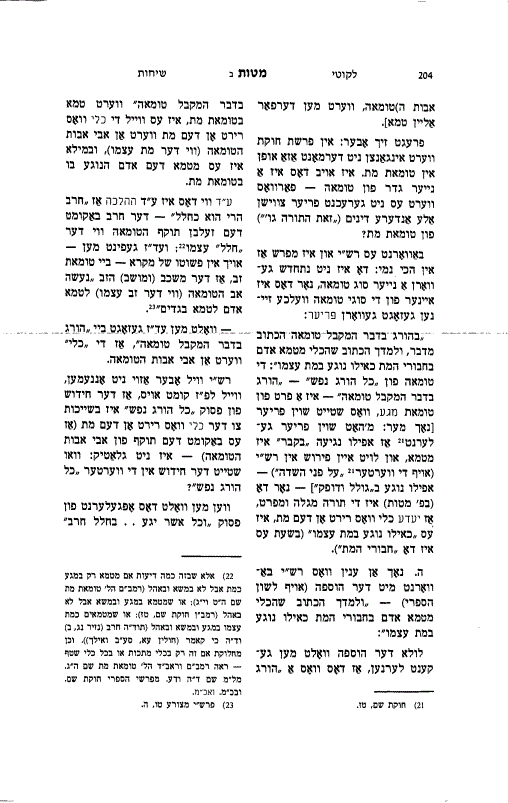
"Rabbi Meir says: The verse refers to one who killed by means of an object capable of becoming ritually impure. The Torah teaches that a vessel connected to a corpse conveys impurity to a person as though he had touched the corpse itself. One might think this applies even if he threw an arrow and killed him. Therefore the verse says, 'and whoever touches the slain.' The killer is compared to the one who touches: just as touching is through direct contact, so too killing is only when it is through direct connection."
This requires explanation. In the Sifrei, Rashi's source, this law—that one who touches a vessel attached to a corpse is regarded as though he touched the corpse itself—is derived from the phrase "a corpse slain by a sword." It would therefore seem that Rashi had a different textual reading. Why did he adopt this version rather than the more common one? Moreover, why does Rashi add the words, "The Torah teaches you," which do not appear in the Sifrei?
The explanation is that, according to the plain meaning of Scripture, the laws in this section were already given earlier in Parshas Chukas. They are repeated here only because, after the war with Midian, these laws became immediately relevant in practice.
Accordingly, a difficulty arises: why was the command concerning "whoever has killed a person" not stated in Parshas Chukas together with the other laws of ritual impurity that first appear there and are repeated here?
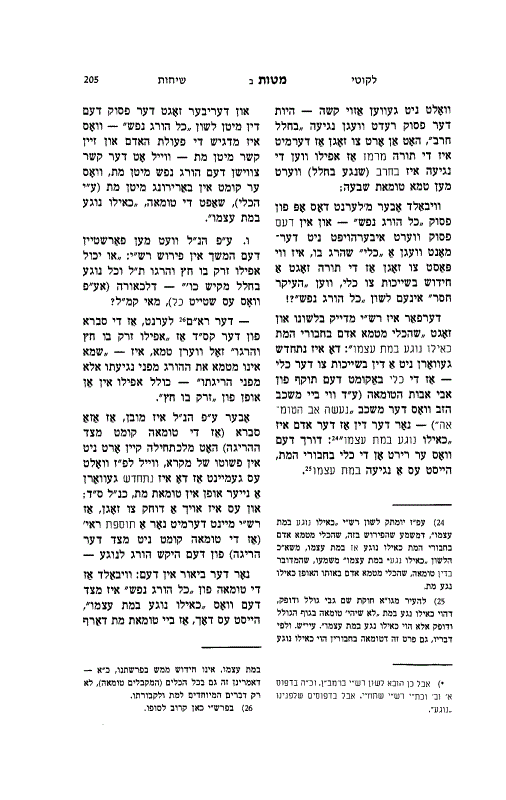
Rashi therefore explains that there is, in fact, no new law in our passage. The law concerning "whoever has killed" is simply part of the previously stated laws of contact with the dead. Here the Torah clarifies that the same principle applies to all vessels that are connected with a corpse.
Rashi adds, "The Torah teaches you," to emphasize that the novelty of this verse does not concern the vessel itself—as in the halachic principle that "the sword is considered like the corpse." If that were the point, the verse should have focused on the vessel. Instead, because the verse speaks about the person who killed, the Torah teaches that the individual is regarded as though he himself touched the corpse.
Rashi then continues:
"One might think this applies even if he threw an arrow and killed him..."
Since contact through a vessel is considered contact with the corpse, one might initially assume that killing with a thrown arrow—where the person's force reaches the victim through the arrow—should also be regarded as touching the corpse.
The Torah therefore states, "and whoever touches the slain," teaching that the law applies only where there is direct contact, not where the killing occurred through a projectile.
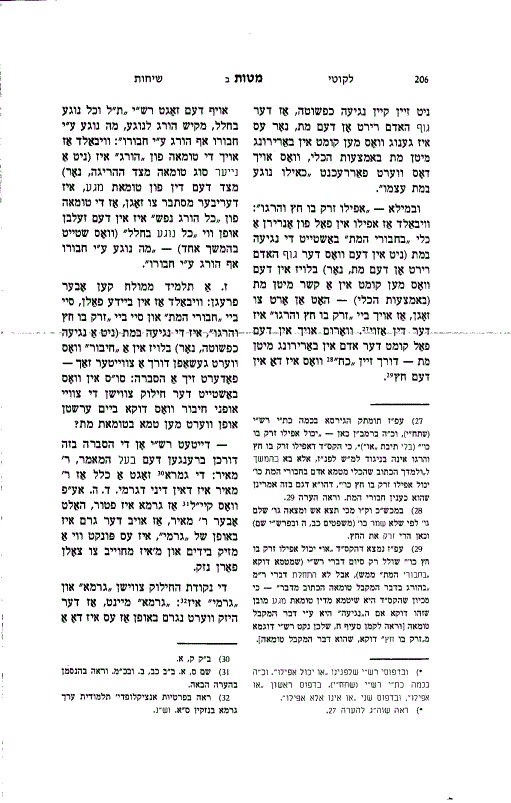
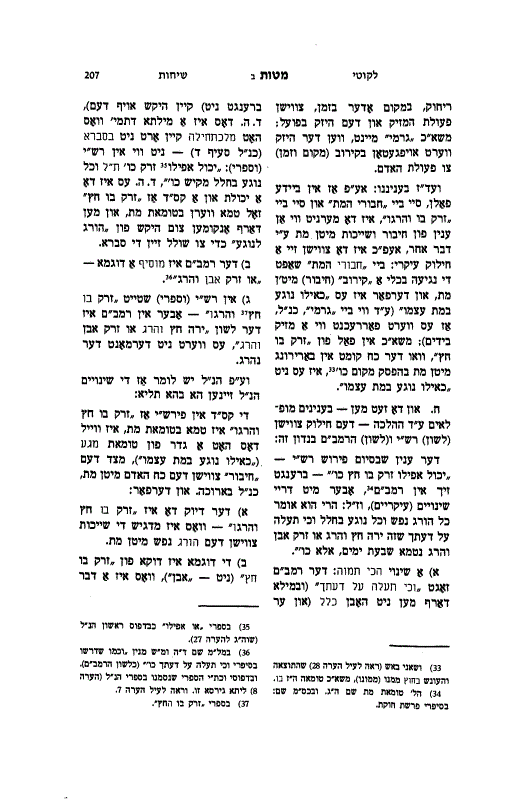
Rashi specifically attributes this interpretation to Rabbi Meir, because Rabbi Meir is associated with the principle distinguishing direct causation (garmi) from more indirect causation (grama). He differentiates between an effect that proceeds from a person's action without interruption and one that reaches its result only through an intervening separation of time or space.
This parallels the distinction here: touching a vessel that is itself touching the corpse constitutes an uninterrupted connection, whereas throwing an arrow introduces an intervening separation and therefore does not have the status of direct contact.
The Inner Dimension
Just as one who touches a vessel attached to a corpse is considered as though he touched the corpse itself, so too, on the positive side, one who attaches himself to Torah scholars is regarded by the Torah as though he has attached himself directly to the Divine Presence.
Moreover, since Hashem's measure of goodness exceeds His measure of punishment, the positive principle is even greater. In holiness, even a more indirect connection—any genuine attachment to Torah scholars—is considered by the Torah as true attachment to the Shechinah itself.