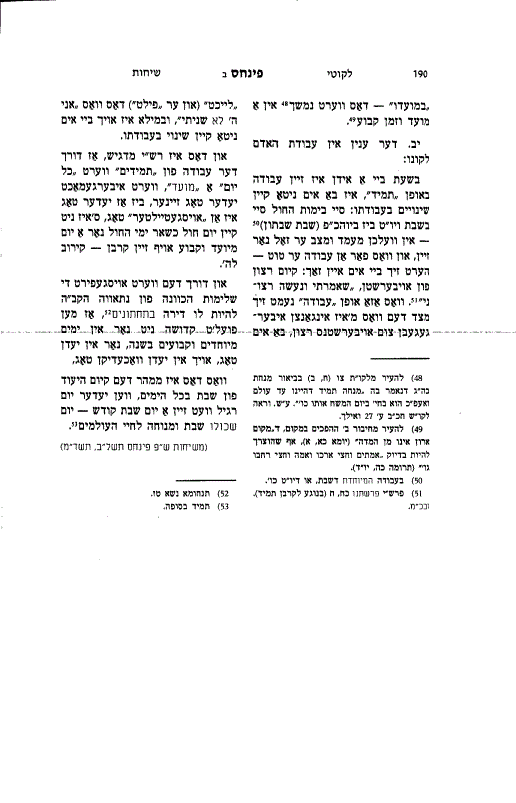
On the verse:
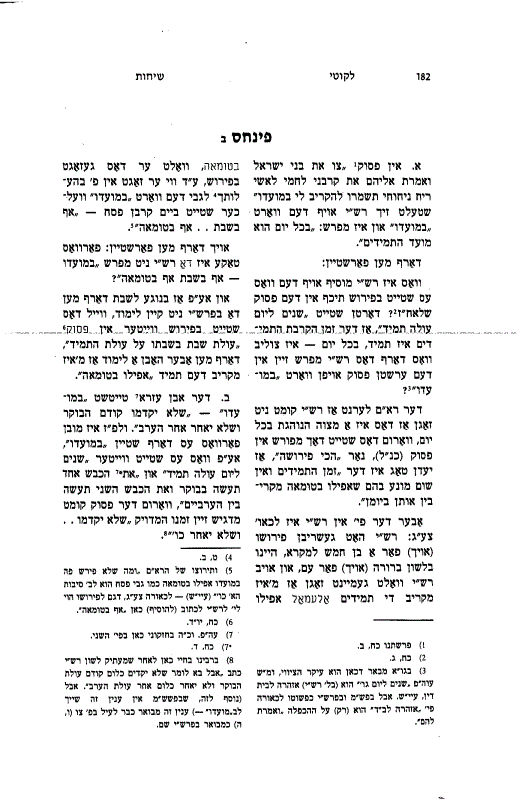
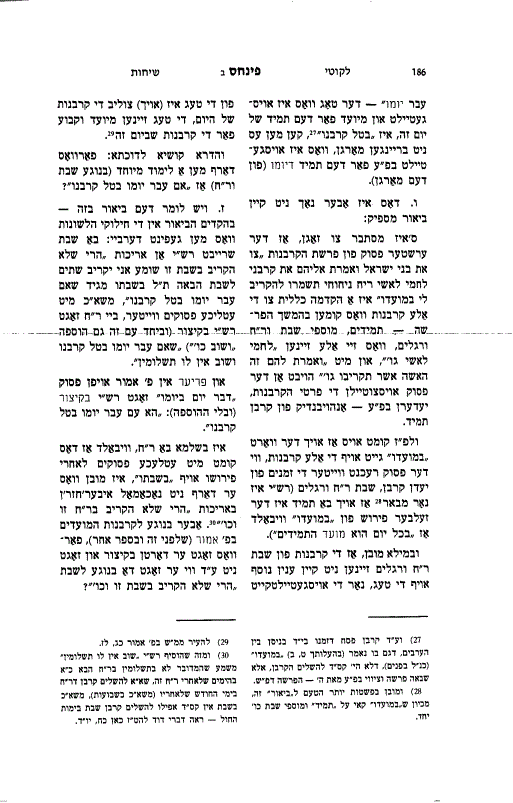
"Command the Children of Israel... You shall be careful to offer My offering... at its appointed time." (Numbers 28:2),
Rashi comments:
"Every day is the appointed time of the continual offerings."
One may suggest that Rashi's intent here differs from his explanation of the word "at its appointed time" in Parshas Beha'alosecha, where he explains that it means "even in a state of ritual impurity."
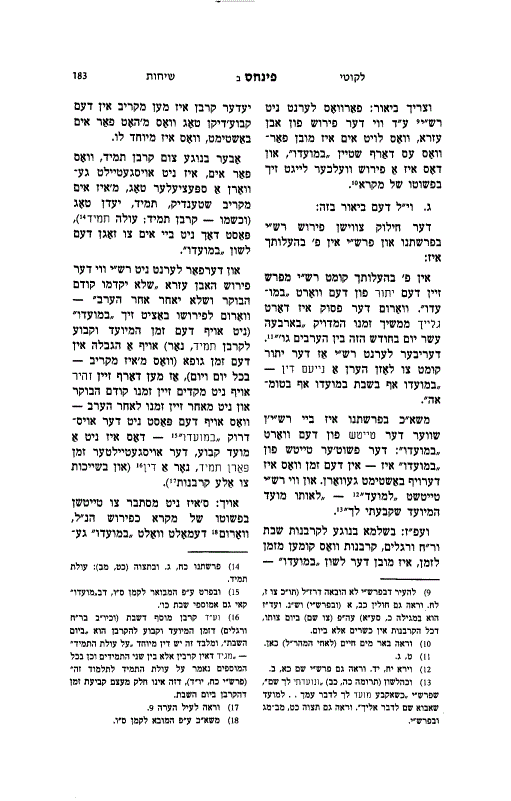
Here, Rashi wishes to clarify a different point.
Although the Tamid is offered every day, it nevertheless has a distinct appointed time.
Each individual day is the unique appointed time for that day's continual offering.
The practical implication is that if the Tamid was not offered on its designated day, we apply the principle:
"Once its day has passed, its offering is no longer brought."
Since that offering's appointed time has already passed, it is not offered on the following day.
Nevertheless, no special verse is needed to teach this regarding the Tamid.
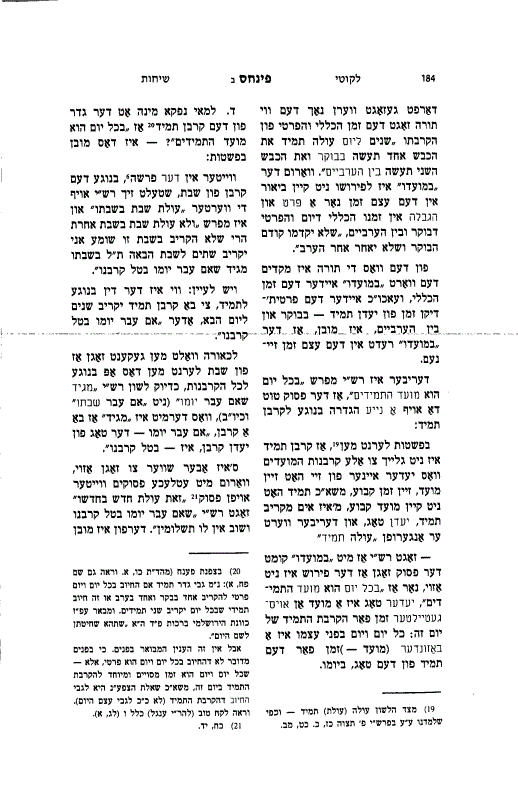
By contrast, Rashi does require a special teaching regarding the additional offerings of Shabbos.
There he explains:
"'The burnt offering of each Shabbos on its Shabbos'—not the burnt offering of one Shabbos on another Shabbos. One might have thought that if it was not offered on one Shabbos, it should be offered together with the next week's offerings. Therefore the Torah says, 'on its Shabbos.'"
Why is a special verse needed there but not here?
The reason is that Shabbos and Yom Tov possess a unique holiness independent of their sacrifices.
One might therefore think that if the sacrifices were missed, they should later be completed.
The Tamid, however, is different.
Each day has no unique sacrificial identity apart from its own daily offering.
Therefore, it is self-evident that one day's Tamid cannot be offered on another day, because every day constitutes its own distinct reality.
Yet another question remains.
The phrase "at its appointed time" introduces the entire section of offerings that follows.
If so, this principle—that every offering belongs exclusively to its own appointed time—should seemingly apply to all the sacrifices.
Why, then, is an additional verse needed regarding Shabbos and Yom Tov?
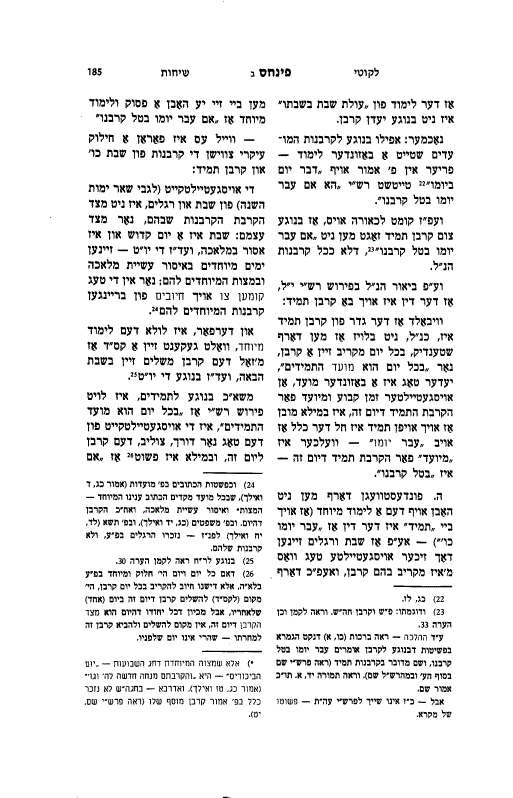
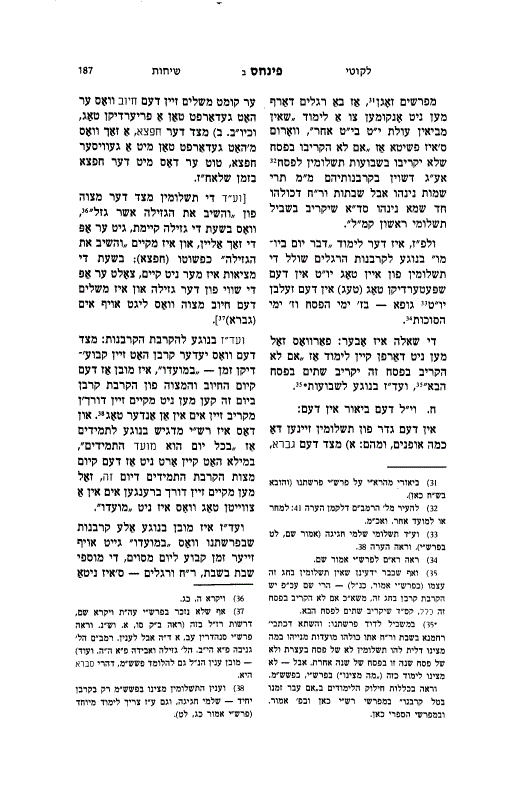
With regard to Yom Tov, Rashi briefly comments:
"If its day has passed, its offering has been nullified."
Unlike Shabbos, he does not elaborate.
The commentators explain that all Shabbosos share the same sanctity, whereas it would never occur to anyone to offer the Pesach sacrifices on Shavuos.
Still, why is there no need to clarify that a missed Pesach offering cannot be brought the following year?
The explanation is as follows.
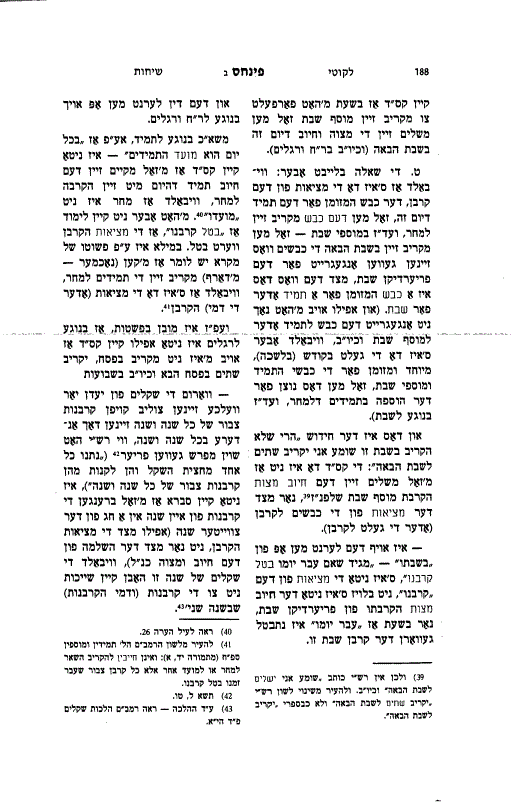
There are two aspects to making up a missed obligation.
One concerns the person (the gavra).
In that respect, it is obvious that fulfilling tomorrow's obligation cannot retroactively fulfill yesterday's command.
However, one could still argue from the perspective of the sacrifice itself (the cheftza).
Perhaps the funds designated for yesterday's offering should still be used to bring that missed sacrifice on another day.
For this reason, the Torah gives a special teaching regarding Shabbos, Rosh Chodesh, and Yom Tov:
"If its day has passed, its offering has been nullified."
This teaches that not only has the person's obligation expired, but the sacrifice itself no longer exists as an offering to be completed.
There is no need to explain that a missed festival offering cannot be brought the following year, because each year's communal offerings are purchased from that year's half-shekel contributions.
Therefore, one year's offerings have no connection to another year's funds.
With regard to the continual offering, however, since no special verse states that "its offering has been nullified," one could suggest that from the perspective of the sacrifice itself there remains an obligation to bring the missed Tamid.
Wine of Torah
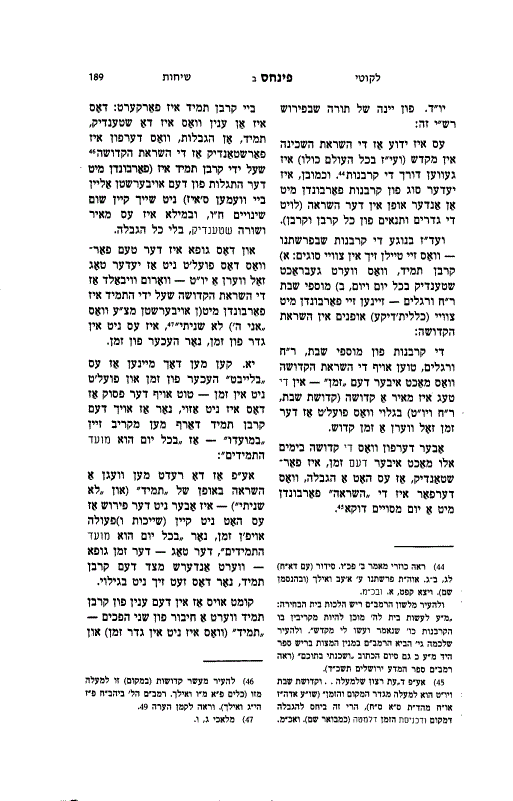
The continual offering possesses a unique quality beyond that of the special offerings of Shabbos and the festivals.
The Divine Presence brought about by the Tamid is constant and unchanging.
Precisely because it is continuous, it reflects a level of G‑dliness that transcends the limitations of time.
Yet this timeless holiness is drawn into time itself, as Rashi emphasizes:
"Every day is the appointed time of the continual offerings."
The Lesson
When a Jew lives with the awareness of:
"I, Hashem, do not change,"
his service of Hashem remains steady and unwavering.
Every day he feels that his purpose is simply to fulfill Hashem's will.
Then every day becomes an appointed time.
An ordinary weekday is transformed into a special day of korban—drawing close to Hashem.
Through this constant daily service, we fulfill the ultimate purpose of creation:
To make this physical world a dwelling place for Hashem, bringing holiness not only into special occasions but into every single day.