In the final positive commandment listed at the beginning of the Rambam's Sefer HaMitzvos, the Rambam writes:
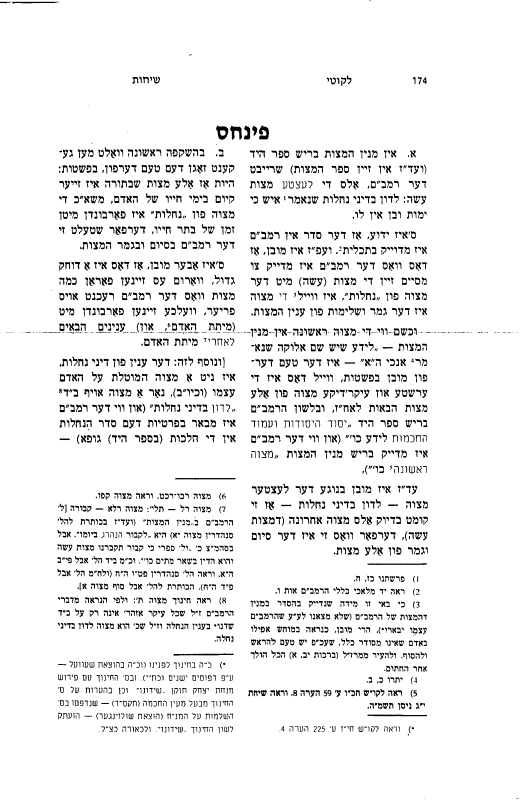
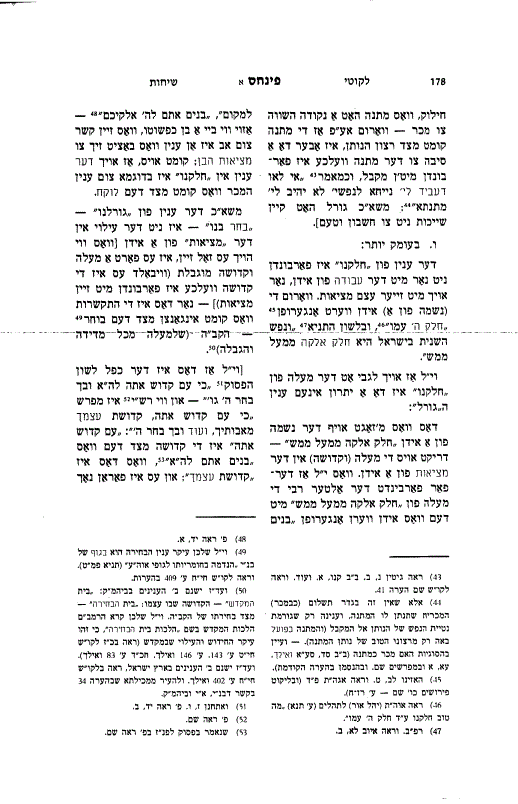
"It is a positive commandment to judge according to the laws of inheritance, as it says: 'If a man dies and has no son...'"
One may suggest that the Rambam concludes his enumeration of the mitzvos with the laws of inheritance for the same reason that the Mishnah concludes with the statement:
"In the future, the Holy One, blessed be He, will grant every righteous person an inheritance of 310 worlds."
The completion and perfection of the entire Torah is connected with the concept of inheritance.
The explanation is as follows.
The laws of inheritance in the Torah are presented in connection with the inheritance of the Land of Israel.
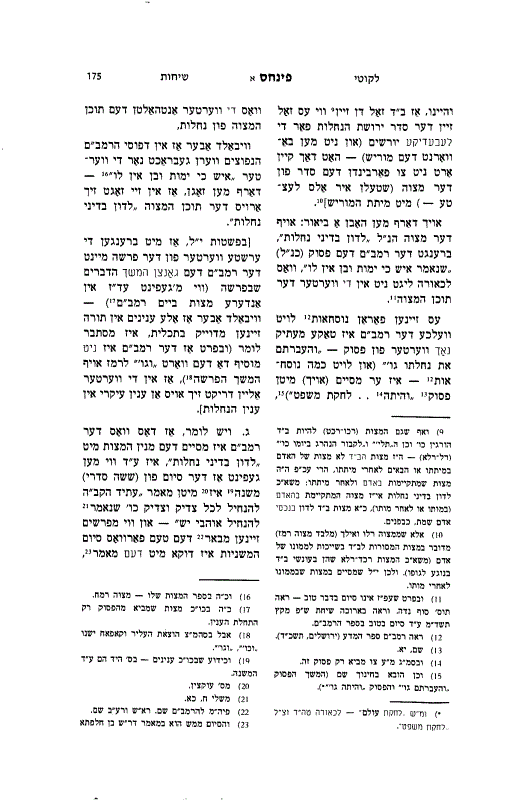
That inheritance consisted of three elements:
- Distribution according to reason and proportion — "To the larger tribe you shall give a larger inheritance."
- Distribution by lot — "Nevertheless, the land shall be divided by lot."
- Inheritance itself.
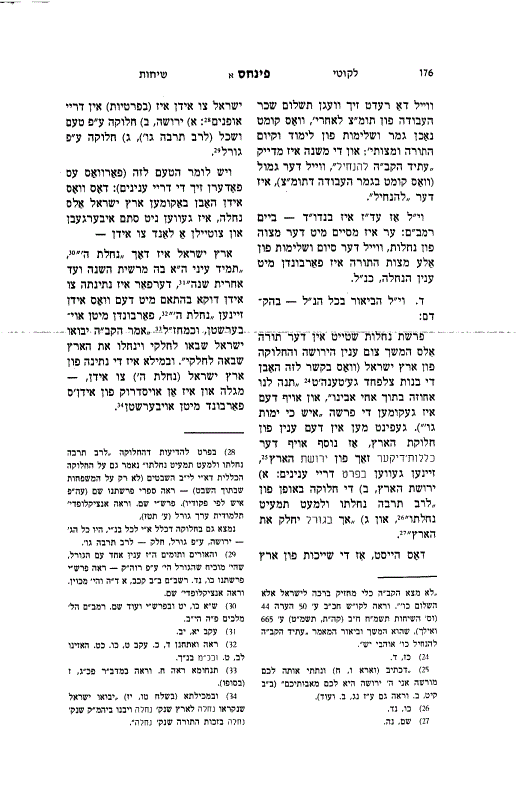
These three correspond to the three expressions describing the relationship between the Jewish people and Hashem:
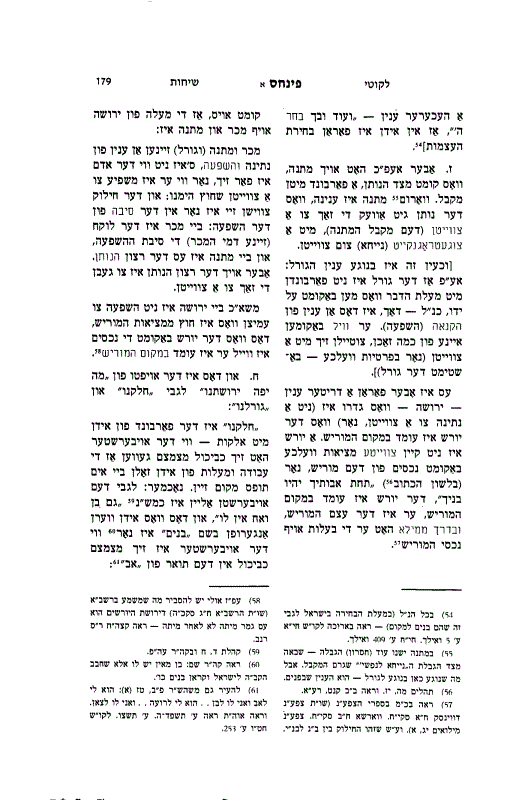
"Our portion... our lot... our inheritance."
1. "Our Portion"
A portion (chelek) resembles a purchase.
A person receives according to his effort and accomplishment.
Likewise, this aspect of our relationship with Hashem corresponds to what is earned through our Divine service.
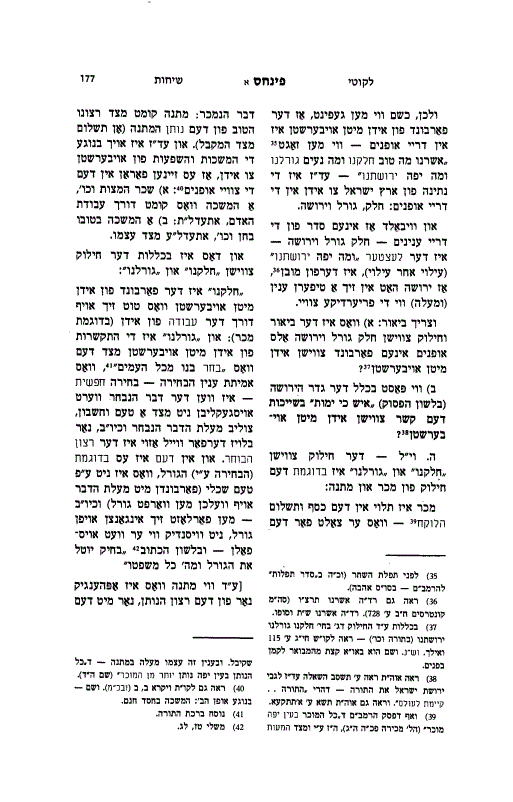
2. "Our Lot"
A lot (goral) resembles a gift.
It is not earned through one's own efforts but bestowed from Above.
This represents the Divine relationship that transcends human achievement.
3. "Our Inheritance"
An inheritance (yerushah) is altogether different.
An heir does not merely receive a gift.
He stands in the very place of the one who bequeaths the inheritance.
Inheritance expresses an essential identity between parent and child.
This corresponds to the deepest level of the relationship between Hashem and the Jewish people—the bond rooted in the Divine Essence itself.
This also explains why the Rambam cites specifically the verse:
"If a man dies and has no son."
At first glance, this verse does not seem to teach the laws of inheritance themselves.
Yet its emphasis is precisely on the words:
"He has no son."
The son is the primary heir because he is regarded as one entity with his father.
Inheritance is based not merely on legal entitlement but on essential identity.
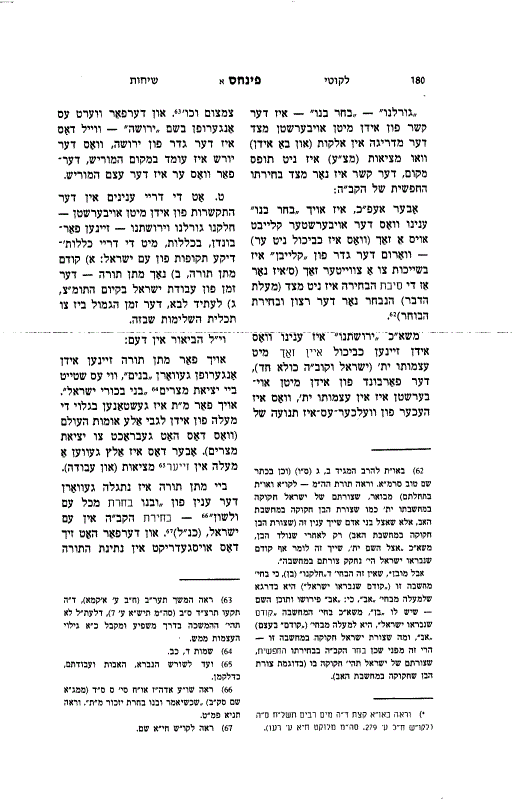
These three levels also correspond to three stages in history.
Before the Giving of the Torah
Before Matan Torah, the bond between Hashem and the Jewish people reflected the spiritual qualities and greatness of the Jewish people themselves.
This corresponds to "our portion."
At the Giving of the Torah
At Matan Torah, Hashem chose the Jewish people through His own free choice.
This choice came entirely from Above and corresponds to "our lot."
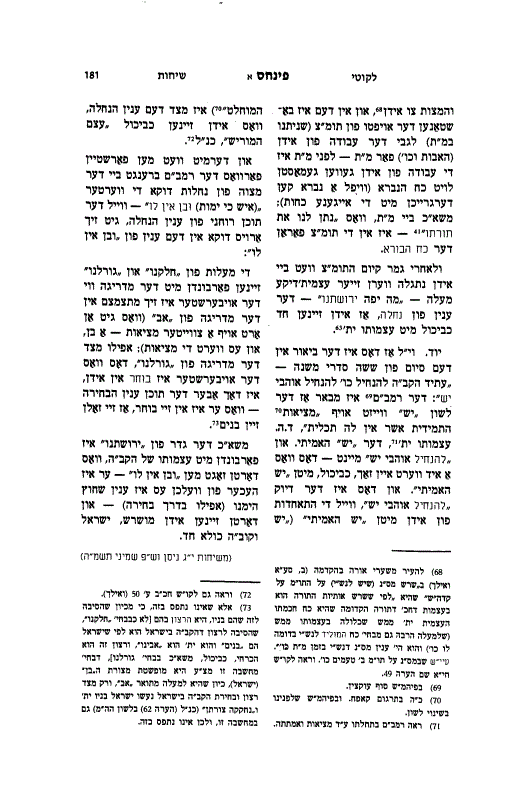
In the Future Redemption
In the Era of Redemption, the deepest level will be revealed:
Inheritance.
Then it will become openly apparent that the Jewish people are one with Hashem's very Essence.
Just as an heir stands in the place of the one from whom he inherits, so too the essential unity between Hashem and the Jewish people will be fully revealed.