An explanation of the differences in wording between the Siddur, the Shulchan Aruch, and the Rambam regarding Birkas Hamazon:
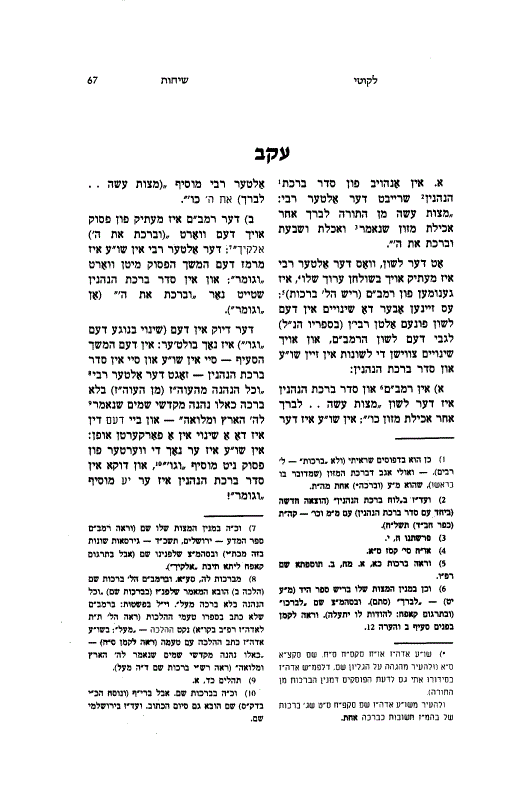
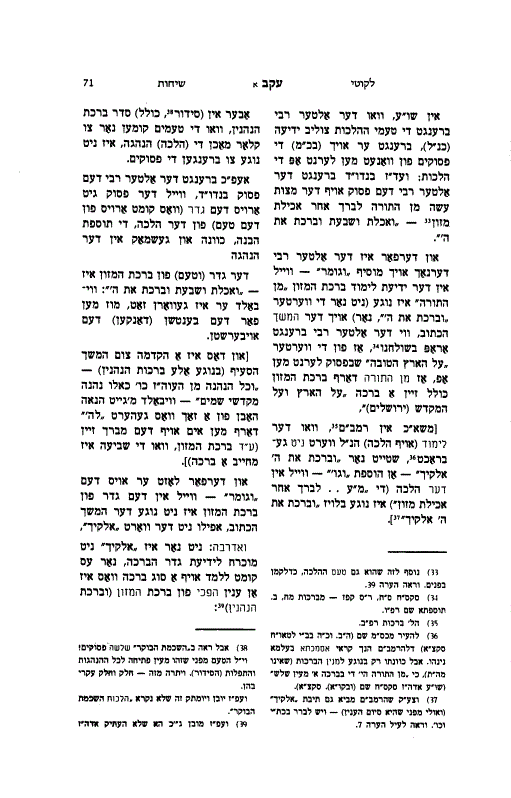
In the Shulchan Aruch, the Alter Rebbe adds the words “Hashem”—“to bless Hashem.” There is a general principle that the word es comes to include something additional. In this context, the word es teaches that one must also bless the host. Therefore, the Alter Rebbe must emphasize that the positive Torah commandment is specifically “to bless Hashem,” and not to bless the host.
At the beginning of Seder Birchos Hanehenin, the Alter Rebbe writes:
“It is a positive Torah commandment to recite a blessing after eating food, as it is stated: ‘You shall eat, be satisfied, and bless Hashem.’”
We must understand the differences between the wording in Seder Birchos Hanehenin, the wording in the Alter Rebbe’s Shulchan Aruch, and the wording of the Rambam.
In the Shulchan Aruch, the Alter Rebbe adds the words “Hashem”—“to bless Hashem.”
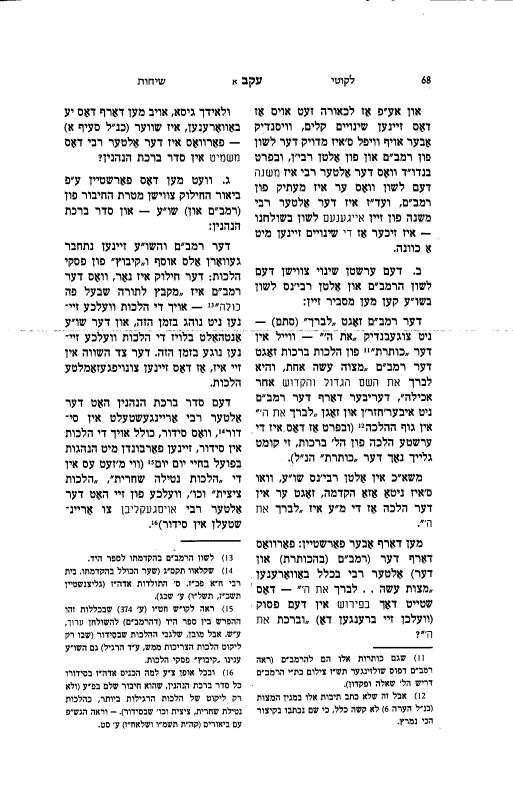
The Rambam writes: “It is a positive commandment… to bless after eating food, as it is stated: ‘You shall bless Hashem your G‑d.’” At first, he writes only “to bless,” without writing “Hashem,” while afterward he quotes the continuation of the verse as well: “your G‑d.”
The explanation can be understood from the difference between the purpose of the Shulchan Aruch and the purpose of Seder Birchos Hanehenin.
Seder Birchos Hanehenin is part of the Siddur, whose purpose is to guide a person’s practical conduct. Therefore, its primary purpose is to clarify immediately how a person should act.
The Shulchan Aruch, by contrast—and similarly the Rambam—is a comprehensive collection of all the halachos. Therefore, it must also clarify matters so that a person will not mistakenly understand another law elsewhere in the Shulchan Aruch.
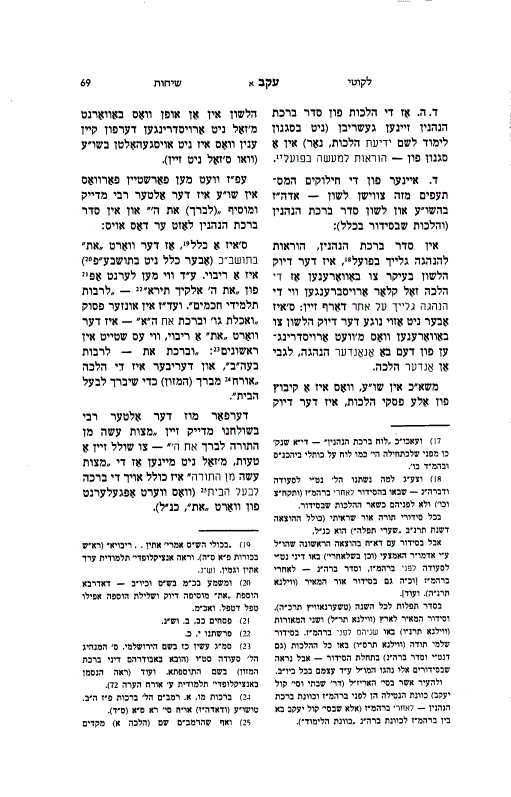
For this reason, in the Shulchan Aruch the Alter Rebbe adds the words “Hashem”—“to bless Hashem.”
There is a general principle that the word es comes to include something additional. In our context, the word es teaches that one must bless the host. Therefore, the Alter Rebbe must emphasize that the positive Torah commandment is specifically “to bless Hashem,” and not to bless the host.
In the Shulchan Aruch, the Alter Rebbe presents the halachos together with their reasons. Therefore, after quoting the words “You shall bless Hashem,” he adds “and so forth,” alluding to the continuation of the verse, “for the good Land.”
This continuation is the source for the Torah obligation to mention the Land in Birkas Hamazon. The Rambam, who does not cite this derivation, therefore omits the words “and so forth.”
In Seder Birchos Hanehenin, although the Alter Rebbe does not generally present the reasons for the halachos, he quotes the fuller phrase, “You shall eat, be satisfied, and bless Hashem,” because this adds to a person’s understanding and consequently to the pleasure and appreciation with which he fulfills this mitzvah.
He omits the word “your G‑d,” however, because it is not relevant to the essential definition of Birkas Hamazon.
On the contrary, the Tosefta derives from the word “your G‑d”—understood as “your Judge”—that just as a person recites a blessing for good, he must also recite a blessing for misfortune. This is the opposite of the particular definition of Birkas Hamazon, whose subject is giving thanks for physical satisfaction and enjoyment.
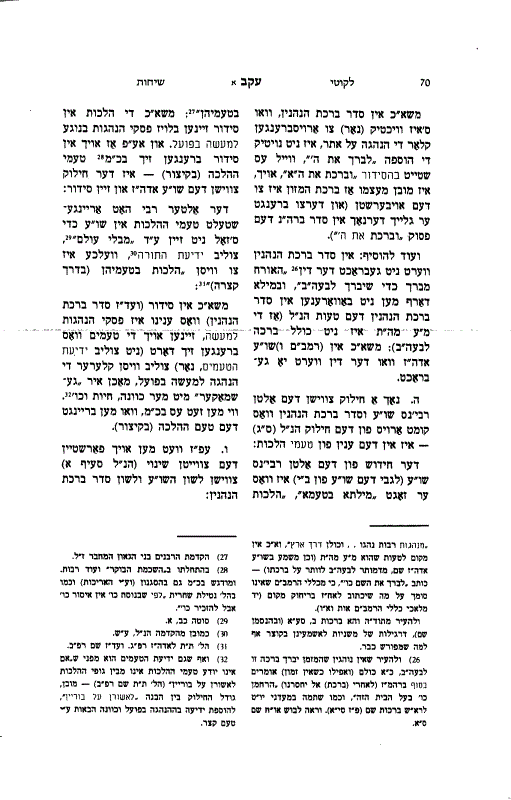
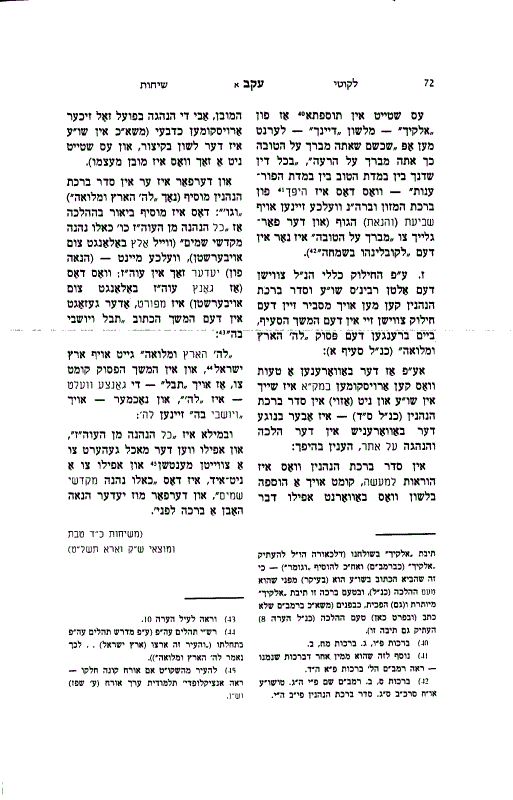
Based on the above explanation of the general difference between the Shulchan Aruch and Seder Birchos Hanehenin, we can also understand the wording later in the same section of Seder Birchos Hanehenin:
“Anyone who benefits from this world without reciting a blessing is considered as though he benefited from property consecrated to Heaven, as it is stated: ‘The earth and all it contains belong to Hashem,’ and so forth.”
In the Shulchan Aruch, the Alter Rebbe omits the words “and so forth.”
Seder Birchos Hanehenin, however, is intended to provide practical guidance. Therefore, it adds wording that clarifies even what might appear self-evident.
It adds “and so forth,” alluding to the continuation of the verse, “the world and those who dwell in it.” This clarifies that the principle applies not only to Eretz Yisrael—for the term “the earth” may refer specifically to Eretz Yisrael—but also to the entire world and all its inhabitants.
Thus, even when the object belongs to another person or to a non-Jew, benefiting from it without reciting a blessing is nevertheless considered as though one benefited from property consecrated to Heaven.