א) "לא ישא פנים" פירש"י: אם תפרקו עולו - הרי זה פשוט? ולאידך כותב רש"י בברכת כהנים: "ישא ה' פניו אליך" – יכבוש כעסו.
ב) "לא יקח שוחד" פירש"י: לפייסו בממון. לפייסו מובן, מה הפרוש בממון? למה מעתיק "ולא יקח״?
ג) תירוצים על הנ"ל: קרבנות, לצרכי המשכן, צדקה. אבל הכל אינו מתורץ.
ד) "תפרקו עולו" בהמשך למה ה"א שול מעמך כי אם ליראה. וכשהוא פורק עול אז "לא ישא״.
ה) במה שייך לומר כשהוא פורק עול: "לא יקח שוחד"? הוא רק בממון שהוא גם פדיון נפש.
ו) ההפרש בין הפסוק למה שמובא בפרקי אבות: "שאין לפניו לא משוא פנים ולא מקח שוחד". חשבון המצוות והעבירות הם בנפרד. משוא פנים – שמעלת האדם אינה חסרה; שוחד – מעשה האדם נמחק. תשובה הוא שוחד.
A) "He does not show favoritism": Rashi explains: If you cast off His yoke, this is straightforward? And according to another Rashi: "May Hashem lift His countenance towards you" – He suppresses His anger?
B) "He does not accept bribes": Rashi explains: To appease Him with money. Appeasing is understood, but what does it mean with money? Why does it say and Rashi quotes "and He will not take"?
C) Explanations on the above: Sacrifices, for the needs of the Mishkan, charity. But everything is not fully explained.
D) "If you cast off His yoke": In continuation of "What does Hashem ask of you but to fear Him?" And when one casts off the yoke, "He will not favor you."
E) Where does it apply to say "He does not accept bribes" after taking off his yoke? Only with money, which is also a ransom for the soul.
F) The difference between the verse and what is brought in Pirkei Avot: "There is no favoritism before Him, nor accepting bribes." The account of mitzvot and sins are separate. Favoritism – the person's status is not diminished; Bribery – the person's actions are erased. Repentance is bribery.
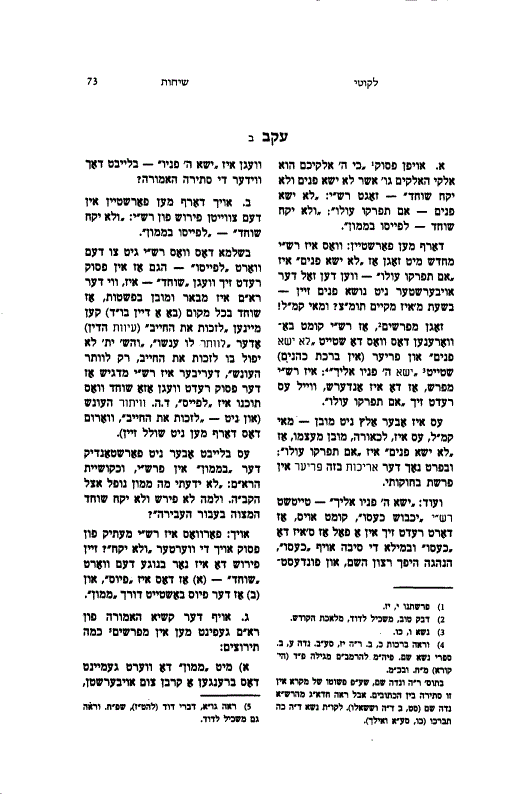
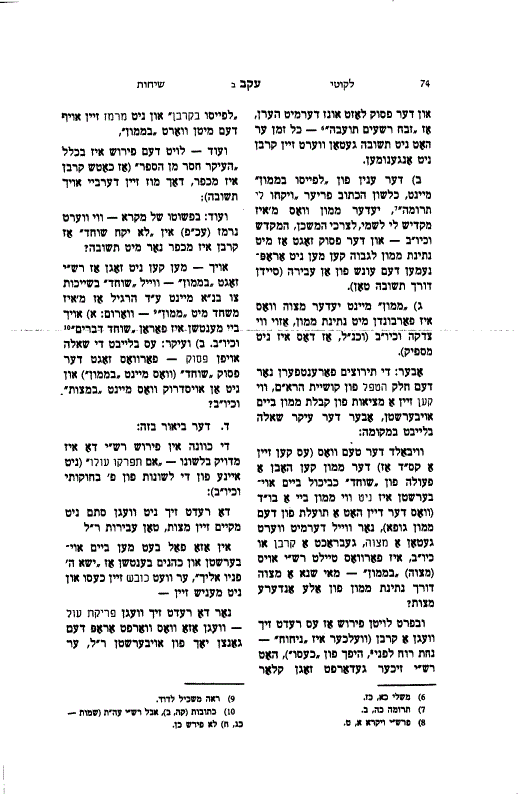
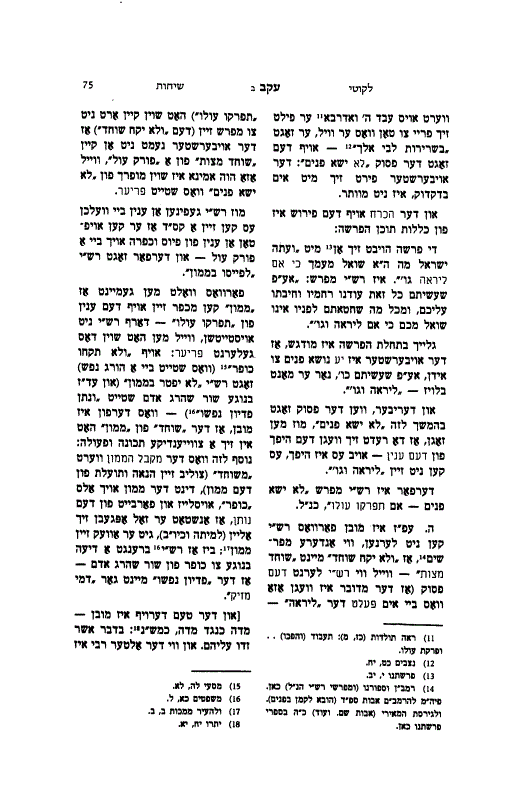
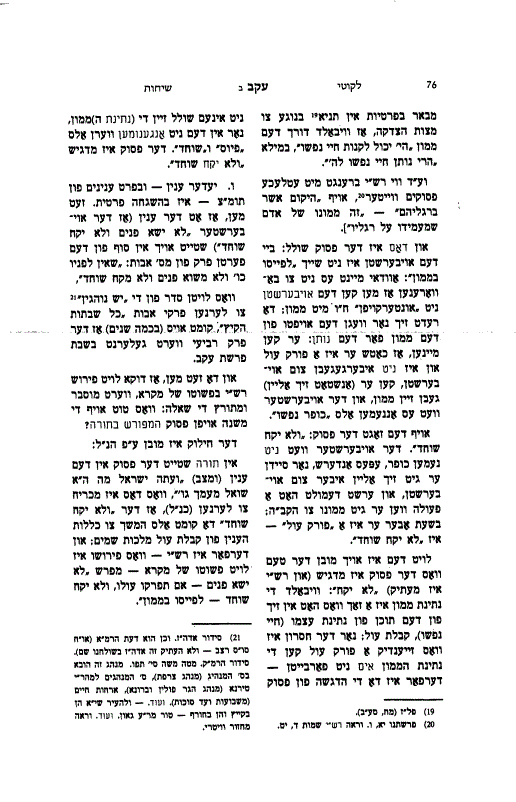
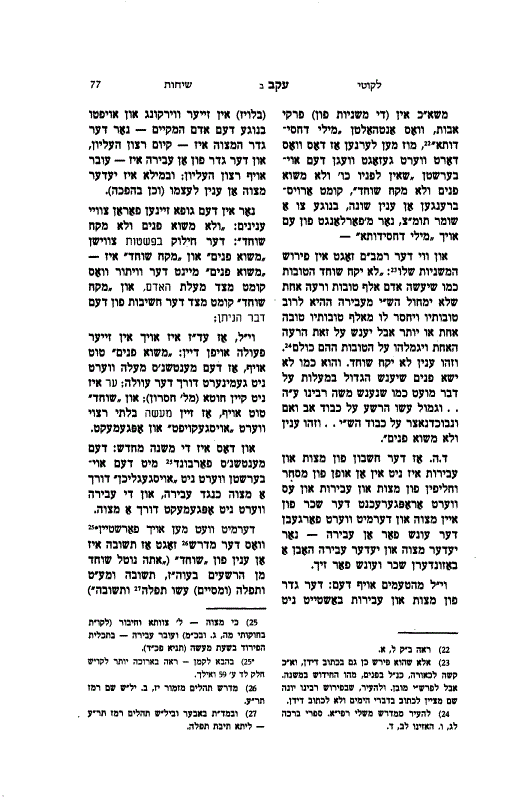
“If you cast off His yoke” does not mean that the Jewish people merely commit a sin, for regarding ordinary sins it is stated, “Hashem will show favor.” Rather, it refers to a person who casts off the entire yoke of the Holy One, blessed be He. Regarding such a person, “He will not show favor.”
Rashi also quotes the words “and He will not accept,” because money, in its own right, can sometimes serve as atonement. It is only because the person has completely cast off the yoke that Hashem “will not accept” it.
Rashi comments on the verse:
“He will not show favor”—if you cast off His yoke.
“And He will not accept a bribe”—to appease Him with money.
We must understand: It seems self-evident that “He will not show favor” applies “if you cast off His yoke.”
Some commentators explain that Rashi’s difficulty arises from the verse, “May Hashem show favor toward you.” Therefore, Rashi explains that “He will not show favor” applies specifically “if you cast off His yoke.”
This explanation, however, is difficult. On the verse “May Hashem show favor toward you,” Rashi explains that Hashem will “suppress His anger.” Thus, that verse also concerns a situation in which people have acted contrary to Hashem’s will.
Furthermore, why does Rashi explain the bribe as an attempt “to appease Him with money,” rather than, as other commentators explain, to appease Him with mitzvos or similar merits? And why does Rashi include the words “and He will not accept” in the heading of his commentary?
The explanation is as follows:
Rashi is precise in writing, “If you cast off His yoke.” The verse does not refer to a situation in which the Jewish people merely sin, for regarding ordinary sins it is stated, “Hashem will show favor.”
Rather, it refers to a person who casts off the entire yoke of the Holy One, blessed be He. Regarding such a person, “He will not show favor.”
Rashi is compelled to interpret the verse in this manner because of the general context of the passage.
The passage begins: “And now, Israel, what does Hashem your G‑d ask of you except to fear Him?”
Rashi explains:
“Although you have done all this, His mercy and affection are still directed toward you. After everything you have sinned before Him, He asks of you only to fear Him.”
We see from this that Hashem does show favor toward the Jewish people. Rashi must therefore explain that the words “He will not show favor” apply only when they completely cast off His yoke.
Accordingly, we can understand why Rashi cannot explain that the bribe refers to mitzvos.
From the words “He will not show favor,” we learn that Hashem does not show favor when a person casts off His entire yoke. Rashi therefore explains that the bribe means an attempt “to appease Him with money.”
Rashi had already explained earlier, regarding the verse “You shall not accept atonement money,” that a person “cannot exempt himself through money.” This demonstrates that the payment of money can serve not only as a bribe to the recipient, but also as atonement in place of the one who gives it: instead of forfeiting his life, he gives money.
Indeed, regarding an ox that killed a person, Rashi cites an opinion that the atonement payment is assessed according to the value of the person who caused the damage.
The reason is, as the Alter Rebbe explains, that a person’s money represents the vitality of his soul, since he invested his life and energy in earning it.
This is why Rashi includes the words “and He will not accept.” Money, in its own right, can sometimes serve as atonement. It is only because the person has completely cast off the yoke that Hashem “will not accept” it.
Based on this, we can understand the Mishnah in the fourth chapter of Pirkei Avos, which in many years is studied on the Shabbos of Parshas Eikev:
“Before Him there is neither favoritism nor the acceptance of a bribe.”
Seemingly, what does the Mishnah add to the verse?
The verse in the Torah, as explained above, speaks about a person who casts off Hashem’s yoke entirely.
The Mishnah, however, is part of the teachings of pious conduct. It refers to a person who fulfills mitzvos, yet Hashem does not overlook his transgression because of those mitzvos.
Accordingly, we can also understand the Midrash which states that Hashem does accept a form of “bribe” from the wicked:
“You accept a bribe from the wicked in this world—repentance and good deeds.”
Repentance is incomparably higher than ordinary Torah and mitzvos, because repentance transforms intentional sins into merits.