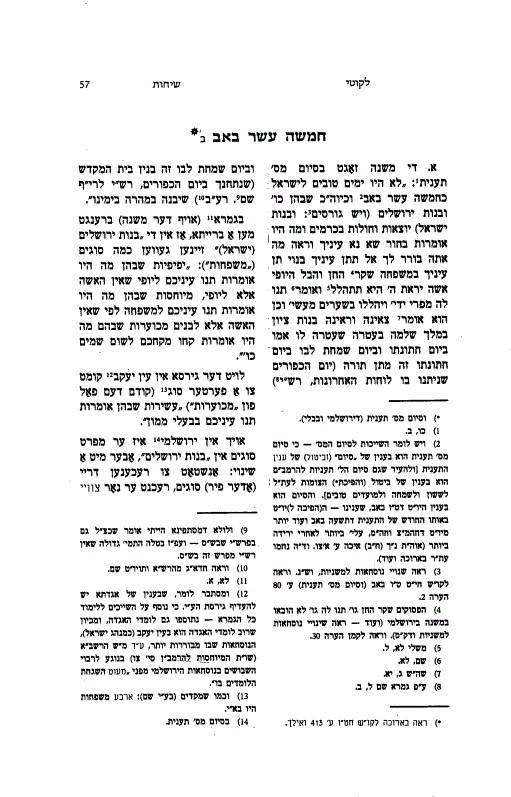
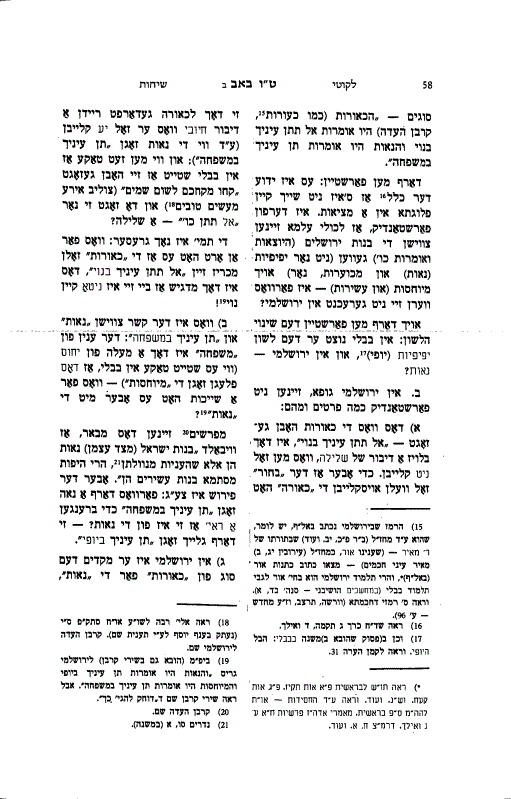
The Jerusalem Talmud divides the daughters of Jerusalem into two general categories: “the attractive” and “the unattractive.” The Babylonian Talmud characteristically explains matters in greater detail and therefore distinguishes several categories within “the attractive”: the beautiful, those of distinguished lineage, and the wealthy.
According to the Jerusalem Talmud, the daughters emphasized that they had received their qualities from their families. Therefore, they all said, “Set your eyes upon the family.”
At the conclusion of Tractate Taanis, the Mishnah states:
“There were no days as festive for the Jewish people as the Fifteenth of Av and Yom Kippur, when… the daughters of Jerusalem would go out and dance in the vineyards. What would they say? ‘Young man, please raise your eyes and see what you are choosing for yourself. Do not set your eyes upon beauty; set your eyes upon the family…’”
The Gemara cites a Baraisa:
“What would the beautiful ones among them say? ‘Set your eyes upon beauty…’ What would those of distinguished lineage say? ‘Set your eyes upon the family…’ What would the unattractive ones say? ‘Make your selection for the sake of Heaven…’”
In the Ein Yaakov an additional category appears:
“The wealthy ones among them would say, ‘Set your eyes upon those who possess wealth.’”
The Jerusalem Talmud, however, presents the matter differently and mentions only two categories:
“The unattractive ones would say, ‘Do not set your eyes upon beauty,’ while the attractive ones would say, ‘Set your eyes upon the family.’”
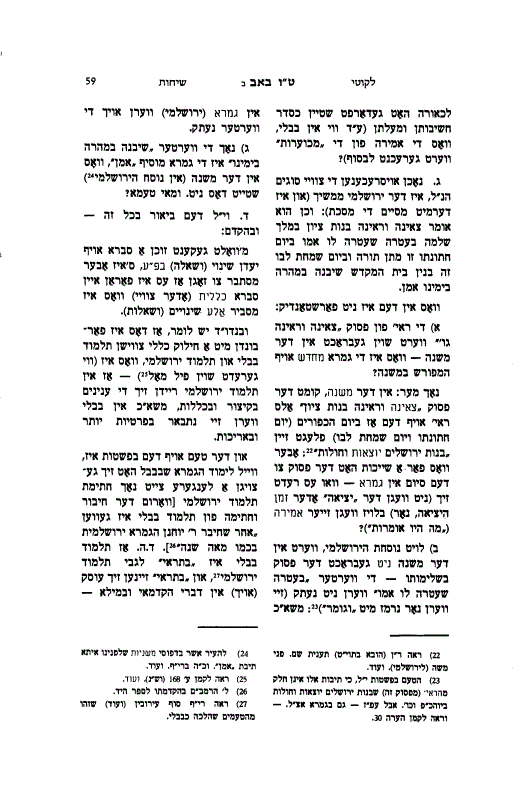
This can be understood through the introduction that the Babylonian Talmud generally elaborates and provides more details than the Jerusalem Talmud.
The Mishnah therefore presents the general statement made by the daughters of Jerusalem, while the Gemara explains the matter in greater detail.
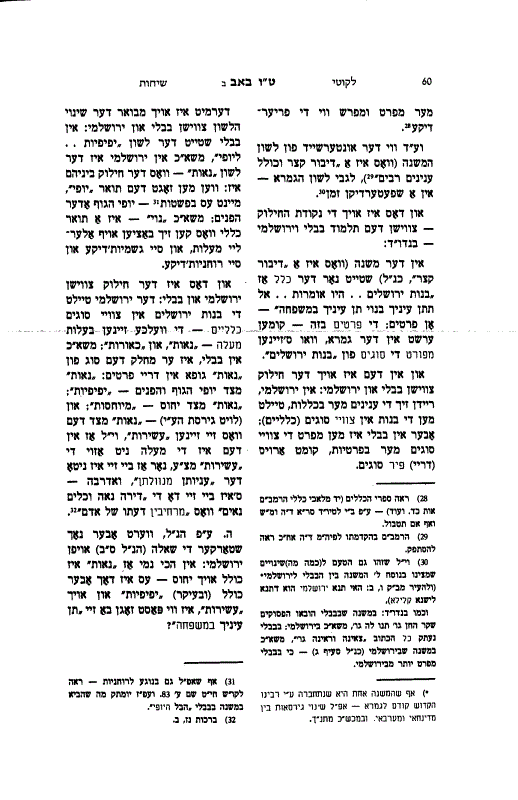
The Jerusalem Talmud divides the daughters of Jerusalem into two broad categories: “the attractive” and “the unattractive.” The term “attractive” includes spiritual qualities as well as physical beauty.
The approach of the Babylonian Talmud is to explain the matter in still greater detail. It therefore identifies the different categories included within “the attractive”: the beautiful, those of distinguished lineage, and the wealthy.
Accordingly, however, the view of the Jerusalem Talmud requires explanation. Why did the attractive ones say, “Set your eyes upon the family,” when the category of “the attractive” also included the beautiful and the wealthy?
The explanation is that, according to the Babylonian Talmud, the daughters of Jerusalem emphasized their personal qualities. According to the Jerusalem Talmud, however, they emphasized that they had received their qualities from their families.
The Jerusalem Talmud does not add anything to the teaching of the Mishnah. It merely explains that the two statements recorded in the Mishnah—“Do not set your eyes upon beauty” and “Set your eyes upon the family”—were spoken by two different groups. The first was said by the unattractive ones, and the second by the attractive ones.
The words of the attractive ones therefore follow the Mishnah’s expression, “Please raise your eyes.”
This means that the young man should raise his eyes and look toward the root and source of the qualities before him. He should understand that the match will succeed because it is Hashem’s will that “the daughter of a particular individual is destined for a particular individual.”
The daughters therefore emphasized that their qualities were not achievements belonging independently to themselves. Rather, they had received them from their families.
This also explains why the unattractive ones said, “Do not set your eyes upon beauty,” which at first glance appears to introduce a third idea.
Their statement also follows the words, “Young man, please raise your eyes,” which were said by all the daughters of Jerusalem.
Regarding the unattractive ones, it was felt that their spiritual quality—their fear of Hashem—did not arise from a personal quality of their own. True, they received it from their families, and since they were themselves members of those families, the quality was associated with them. Nevertheless, they felt that their fear of Hashem had come entirely from Above.
They resembled the moon, concerning which it is said that “it possesses nothing of its own.”
Therefore, they said, “Do not set your eyes upon beauty”—do not focus upon the quality as it appears below. Rather, “raise your eyes” and look toward the source from which that quality comes.
This also explains the continuation in the Jerusalem Talmud:
“With the crown with which his mother crowned him…”
A “crown” emphasizes the distinction and greatness of the king, corresponding to the attractive ones, whose qualities are openly apparent.
The passage then continues:
“On the day of the rejoicing of his heart—this refers to the building of the Beis HaMikdash.”
Although the Beis HaMikdash was built by Shlomo, its plan and wisdom came from Above, as expressed by the verse, “Everything was put into writing from the hand of Hashem, Who granted me understanding.” It is therefore called the House of Hashem.
This corresponds to the unattractive ones, who felt that they possessed nothing of their own.
For this reason, after the words, “This refers to the building of the Beis HaMikdash,” the Jerusalem Talmud adds, “Amen.”
“Amen” means that the matter should be verified and firmly established. This emphasizes that the Third Beis HaMikdash will be an eternal House, because it will be built by the Holy One, blessed be He.