
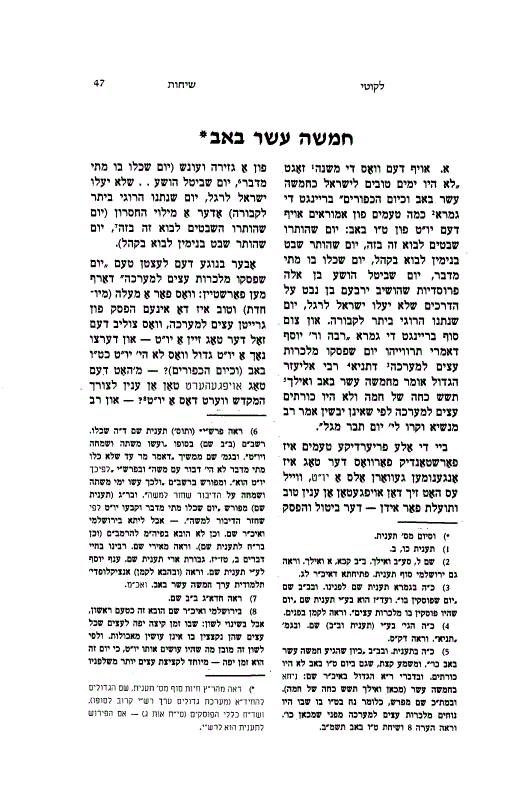
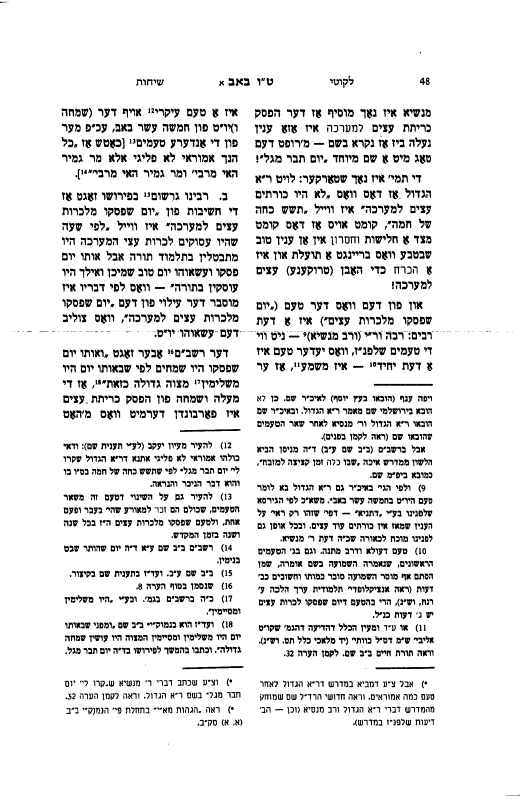
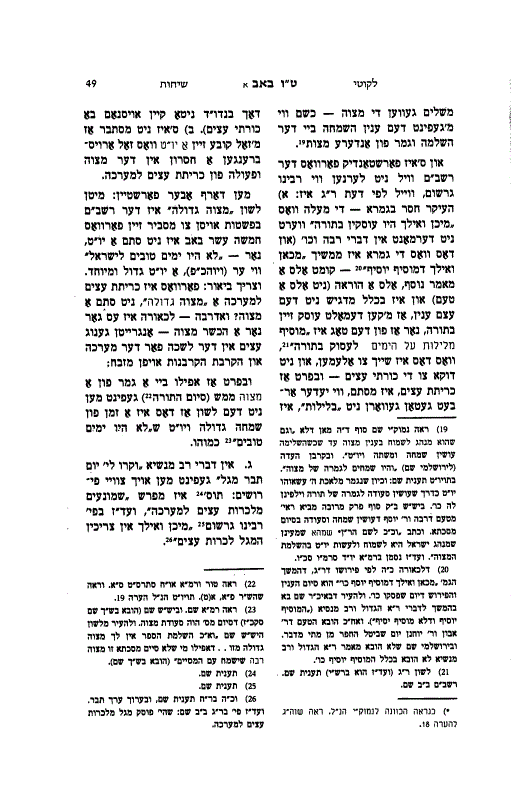
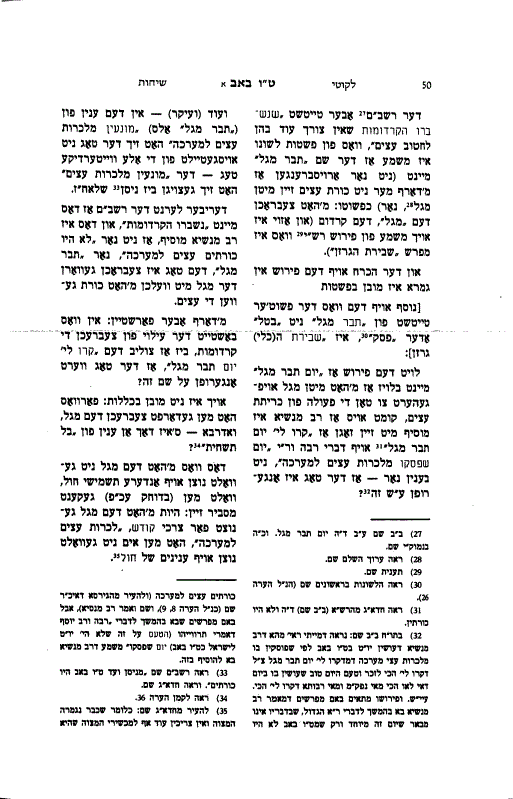
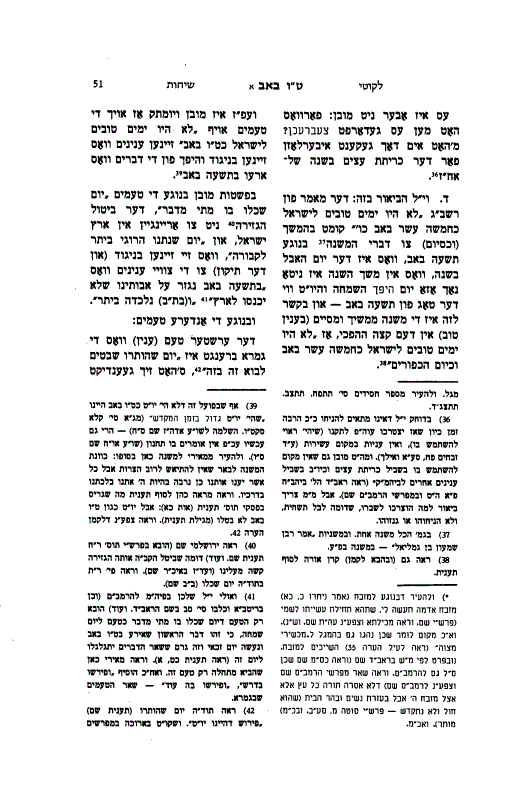
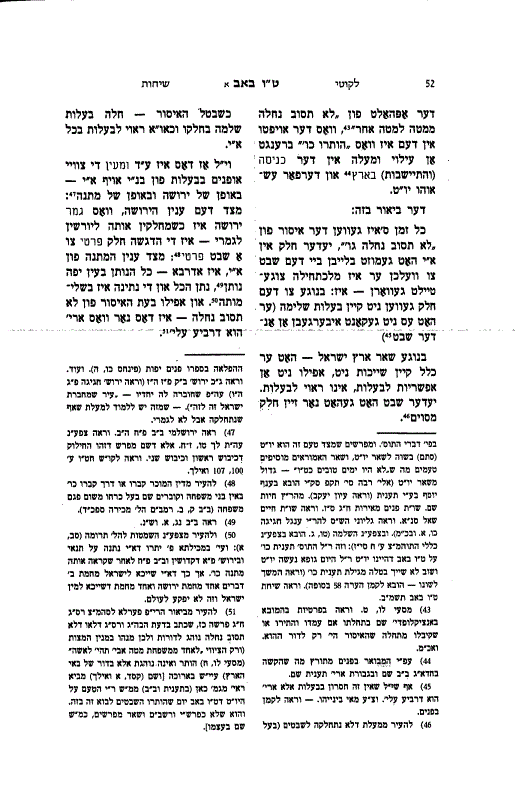
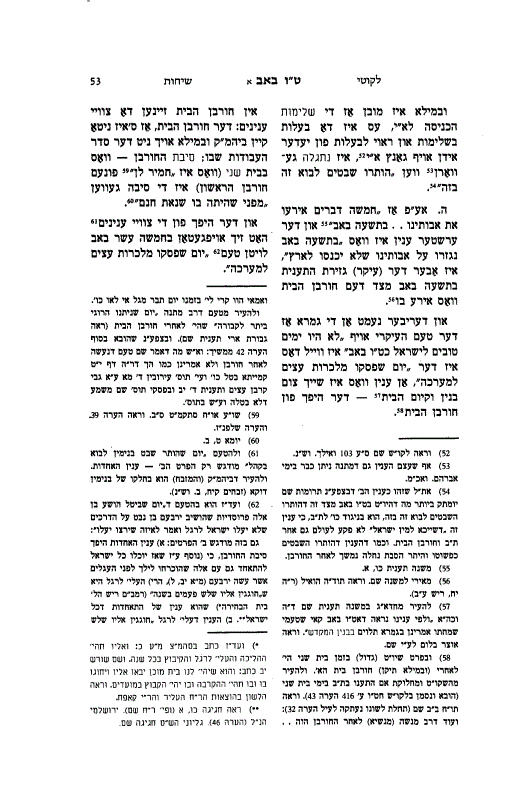
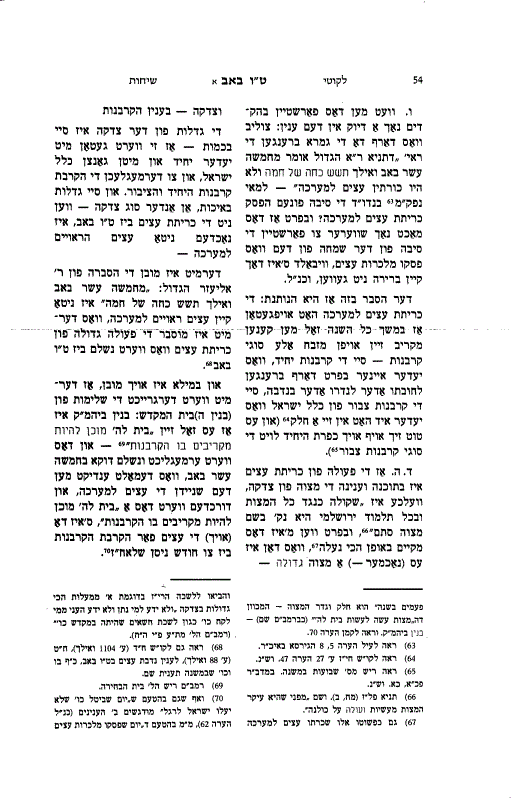
The statement, “There were no days as festive for the Jewish people,” follows the earlier teaching, “Five calamities befell our ancestors on Tishah B’Av.” This indicates that the events of the Fifteenth of Av stand in direct contrast to, and at the opposite extreme from, the events of Tishah B’Av.
At the conclusion of Tractate Taanis, the Mishnah states:
“There were no days as festive for the Jewish people as the Fifteenth of Av…”
The Gemara presents several reasons for the festive nature of the Fifteenth of Av:
“The day on which the tribes were permitted to marry one another”;
“The day on which the deaths of the generation of the wilderness ceased”;
“The day on which permission was granted to bury those killed at Beitar.”
Finally, the Gemara states:
“Rabbah and Rav Yosef both said: It was the day on which they ceased cutting wood for the altar’s arrangement. As it was taught, Rabbi Eliezer the Great says: From the Fifteenth of Av onward, the strength of the sun weakens, and they would no longer cut wood for the altar’s arrangement because the wood would not dry properly. Rav Menashya said: They called it ‘the day of the breaking of the axe.’”
Regarding the explanation that it was the day on which they stopped cutting wood for the altar—apparently the primary explanation, since it is the view jointly expressed by several Sages—it must be understood: What was the cause for such great rejoicing?
Furthermore, what does Rav Menashya add by stating that they called it “the day of the breaking of the axe”? According to the Rashbam and Rashi, this means that they actually broke the axes. Seemingly, this would involve the prohibition against needless destruction. Why was it necessary to break the axes?
The explanation is as follows:
The Mishnah’s statement, “There were no days as festive for the Jewish people,” follows the teaching, “Five calamities befell our ancestors on Tishah B’Av.” We can therefore understand that the events commemorated on the Fifteenth of Av represent the direct opposite of Tishah B’Av.
Regarding “the day on which the deaths of the generation of the wilderness ceased” and “the day on which permission was granted to bury those killed at Beitar,” it is readily apparent that these events are the direct opposite of Tishah B’Av.
“The day on which the tribes were permitted to marry one another” meant that an inheritance could possibly be transferred from one tribe to another. This expressed the complete ownership of the Jewish people over Eretz Yisrael, the direct opposite of destruction and exile.
“The day of the breaking of the axe” likewise expresses the opposite of Tishah B’Av. The Second Beis HaMikdash was destroyed because of baseless hatred. The “day of the breaking of the axe,” by contrast, expresses the unity of the Jewish people.
They had brought wood for the altar, thereby enabling all Jews to offer both their private sacrifices and the communal offerings. Their contribution served the entire Jewish people and expressed their shared participation in the service of the Beis HaMikdash.
Rav Menashya adds that it was called “the day of the breaking of the axe.”
Iron, which “shortens a person’s life,” represents the opposite of the altar and the Beis HaMikdash, whose purpose is to lengthen life and bring peace between the Jewish people and their Father in Heaven.
As long as the axes were being used to cut wood for the altar, the iron served a positive and holy purpose. Once they ceased cutting wood for the altar, however, that positive function of the iron came to an end, and only its undesirable quality remained. They therefore broke the axes.
This also explains why the rejoicing of the Fifteenth of Av is associated with unity:
“The daughters of Israel would go out and dance in the vineyards… wearing borrowed white garments, so as not to embarrass one who did not possess her own.”
This is also reflected in the conclusion of the Gemara:
“In the future, the Holy One, blessed be He, will make a circle dance for the righteous.”
At that time, there will be the ultimate “day of the breaking of the axe,” with the fulfillment of the prophecy:
“They shall beat their swords into plowshares.”