רש"י מציע שהמילה "הראת" מדברת על ההבנה או התפיסה של האדם, ולא על הניסים עצמם. הוא מדגיש שההדגשה היא על מה שהאדם רואה, ולכן הפירוש שלו מתמקד במעשה ההסרה שהקב"ה עשה כדי לאפשר לאנשים לראות ולהבין את הניסים ואת מתן התורה.
Rashi suggests that the word "הראת" (you have shown) refers to the understanding or perception of the person, rather than the miracles themselves. He emphasizes that the focus is on what the person sees, and therefore his interpretation centers on the act of removing barriers that God performed to allow people to see and understand the miracles and the giving of the Torah.
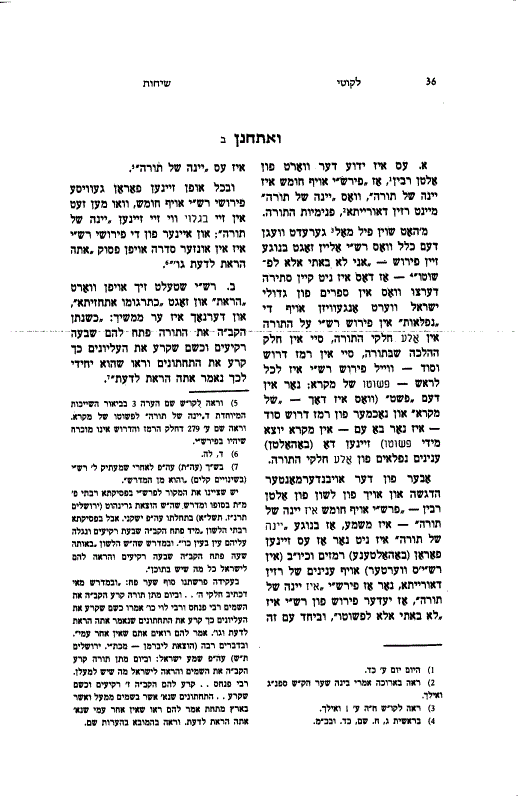
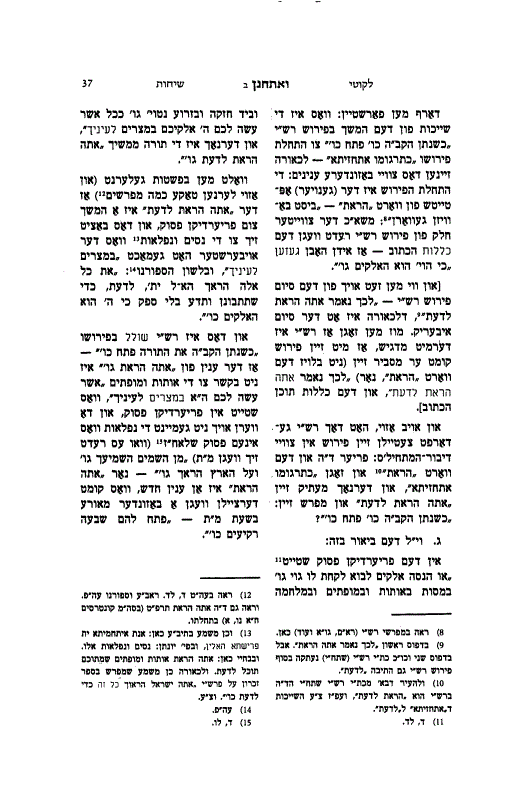
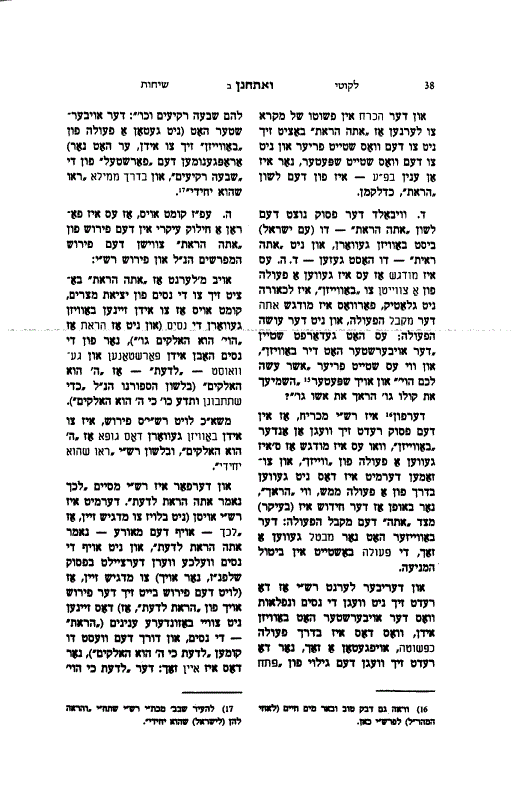
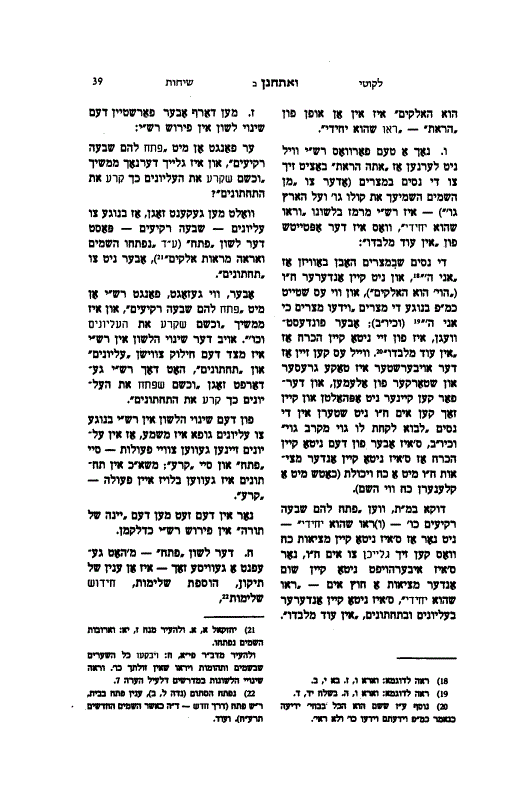
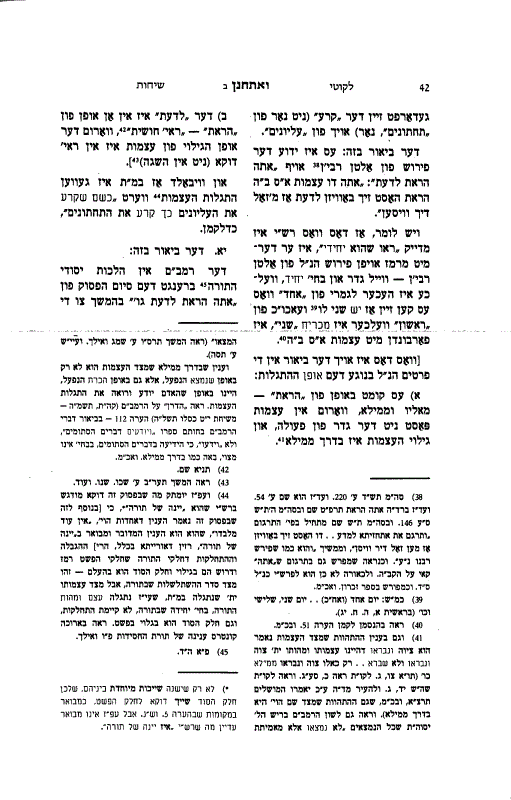
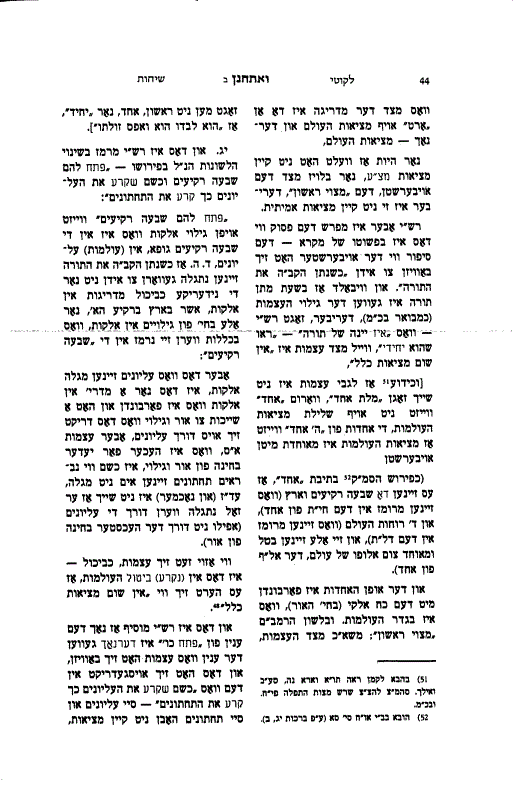
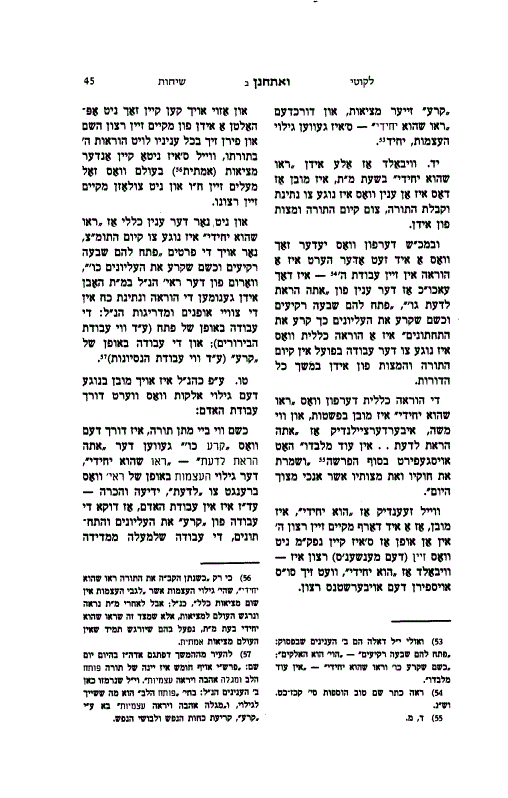
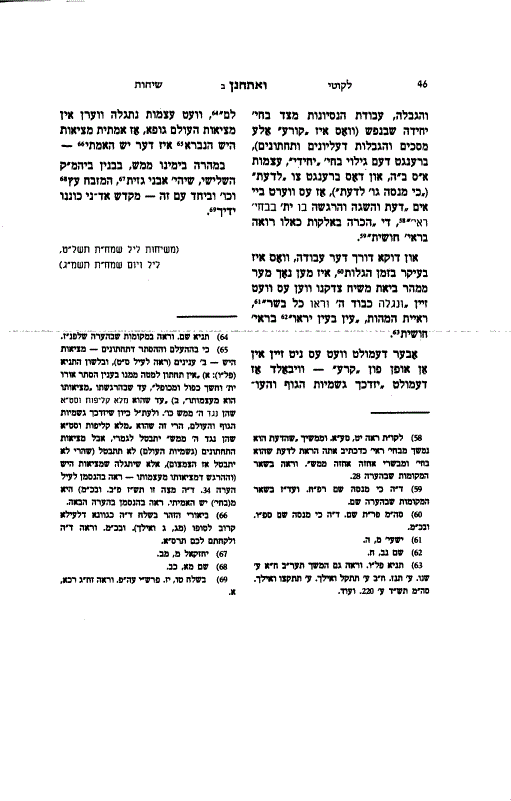
Rashi rejects the interpretation that “You were shown” refers to the miracles in Egypt. The wording “you were shown” emphasizes the person who sees, indicating an action whose primary purpose is to remove an obstruction on the part of the observer. Rashi therefore explains: “When the Holy One, blessed be He, gave the Torah, He opened… and just as He tore open the upper realms, so did He tear open the lower realms.”
Rashi comments on the verse:
“You were shown: As the Targum renders it, ‘You were made to see.’ When the Holy One, blessed be He, gave the Torah, He opened for them the seven heavens. Just as He tore open the upper realms, so did He tear open the lower realms, and they saw that He is the only One. Therefore, it is stated: ‘You were shown in order to know.’”
It must be understood why Rashi does not divide the two ideas in his commentary. First, he explains the word “You were shown,” and then he explains the verse as a whole. Why does he present them as one continuous explanation?
The explanation is as follows:
The preceding verse states:
“Has any god ever attempted… with trials, signs, and wonders… before your eyes?”
One might therefore think, as other commentators explain, that “You were shown” refers to the miracles in Egypt. Through witnessing those miracles, the Jewish people came to recognize that Hashem is the only One.
Rashi rejects this interpretation. He explains that “You were shown” refers neither to the miracles of the Exodus nor to the miracles of Matan Torah mentioned in the following verse. Rather, it refers to a unique event that occurred at Matan Torah: “He opened for them the seven heavens…”
The word “You were shown” does not emphasize the One performing the miracles and displaying them, but the person who was enabled to see. This indicates that the primary purpose of the action was to remove the obstruction on the part of the observer. Rashi therefore explains that when the Holy One, blessed be He, gave the Torah, He opened the heavens and tore through the upper and lower realms, removing everything that could conceal the truth from them.
There is another reason Rashi explains that the verse refers to Matan Torah rather than the miracles in Egypt. The miracles reveal only that Hashem is greater than all other powers. They do not demonstrate that He is absolutely the only One.
From the “Wine of Torah”
At the beginning of his commentary, Rashi says, “He opened for them the seven heavens.” He then says, “Just as He tore open the upper realms…”
The difference between “opening” and “tearing” is as follows:
“Opening” relates to revealing perfection. It uncovers the completeness already present within something. “Tearing,” by contrast, signifies the nullification of the thing itself.
In a person’s Divine service, this corresponds to the difference between the service of refinement and the service of confronting trials.
In the service of refinement, a person uses his own abilities to reveal the perfection and G‑dly purpose within created things.
The service of trials, however, is an act of “tearing.” A person acts contrary to his habits and breaks through the barriers created by both his higher and lower faculties.
The higher worlds reveal the existence of Hashem. Therefore, the expression “opened” is used regarding them, because their G‑dly perfection is being disclosed.
The lower worlds, by contrast, are characterized by a sense of independent existence and selfhood. Therefore, regarding them, the expression “tore open” is used.
Nevertheless, Rashi also uses the expression “tore open” in relation to the higher worlds. At Matan Torah, Hashem’s very Essence was revealed. In relation to His Essence, no existence has any independent reality whatsoever.
Therefore, in addition to the word “opened,” which indicates that the higher worlds reveal Divine light as it relates to the framework of the worlds, Rashi says “tore open.” Through the revelation of the Divine Essence, the worlds themselves became completely nullified.
This differs from the approach of the Rambam, whose focus is halachah. Halachah gives validity to the existence of the world, since its laws concern the affairs of the world. The Rambam therefore writes that “there is no other true existence like Him.” The worlds do possess existence, but their existence is not true and absolute as His existence is.
The recognition that “He is the only One” leads directly to the continuation of the verse: “You shall observe His statutes…” When a person realizes that Hashem alone truly exists, he understands that no other reality can conceal or obstruct His will.
This revelation is reached specifically through service that transcends all measurement and limitation—“He tore open the upper realms and the lower realms.” Through the yechidah of the soul, the level of Yachid, the absolute oneness of Hashem’s Essence, is revealed.