לפי המדרש, "מתנת חינם" מתארת רק את אופן הבקשה, אך בעצם מגיע לו. ואילו לפי הספרי, "מתנת חינם" אינה מתייחסת רק לאופן הבקשה אלא גם להרגשתו.
According to the Midrash, "Matnat Chinam" (free gift) describes only the manner of the request, but in reality, it is deserved. However, according to the Sifrei, "Matnat Chinam" refers not only to the manner of the request but also to the feeling.
א) בספרי שתי דעות 1. ואתחנן מתנת חנם 2. לשון תפלה. במדרש רבה כולל שני הענינים ביחד תפלה למתנת חנם.
a) In the Sifrei, there are two opinions: 1. "Ve'etchanan" means a free gift. 2. It is a language of prayer. In the Midrash Rabbah, both aspects are included together: prayer for a free gift.
ב) פי' הראשון בסיפרי כאילו כתוב ואתחנם. ובפירוש השני ואתחנן לשון תחנונים. לבאר זה.
b) The first interpretation in the Sifrei reads "Ve'etchanan" as if it were written "Ve'etchanem"). In the second interpretation, "Ve'etchanan" is a language of supplication. This needs to be explained.
ג) שני ענינים בבקשת צרכיו, איך מבקשים תחנונים או תביעה. סיבה שנותנים לו בגלל שמגיע לו או משום מתנת חנם.
c) There are two aspects in requesting one's needs: how to ask—through supplication or demand. The reason for granting—because it is deserved or as a free gift.
ד) לפי המדרש ואתחנן מתאר אופן הבקשה, תחננים,להספרי אינו מגיע לו כלל.
d) According to the Midrash, "Ve'etchanan" describes the manner of the request, supplication. According to the Sifrei, it implies that he does not deserve it at all.
ה) מבאר שני התשובות של הקב"ה "רב לך" לפי ב' האפנים.
e) Explaining the two responses of God, "Rav lach" (It is enough for you), according to the two perspectives.
ו) הי' גזירה שמשה לא יכנס לארץ אם אפשר להתפלל על זה.
f) There was a decree that Moses would not enter the Land; whether it is possible to pray about this.
ז) מחלוקת בבלי ירושלמי אם אפשר להתפלל על עובר שיהי' זכר לאחרי ארבעים יום.
g) A dispute between the Babylonian Talmud and the Jerusalem Talmud about whether it is possible to pray for a fetus to become male after forty days.
ח) ע"פ חסידות משה ביקש שיומשך אדעדל"ע, כדעת הספרי מתנת חנם ממש.
h) According to Chassidut, Moses asked for a drawing down on it’s own aligning with the Sifrei's interpretation of a true free gift.
ט) המדרש סבור שרצה חיבור של תורה עם המטה.
i) The Midrash believes that he desired a connection between the Torah and the world below.
י) התכלית היא עבודה, למעשה ידך תכסוף, יתגלה בב"א.
j) The ultimate goal is to work for what we get. This will be revealed speedily in our days.
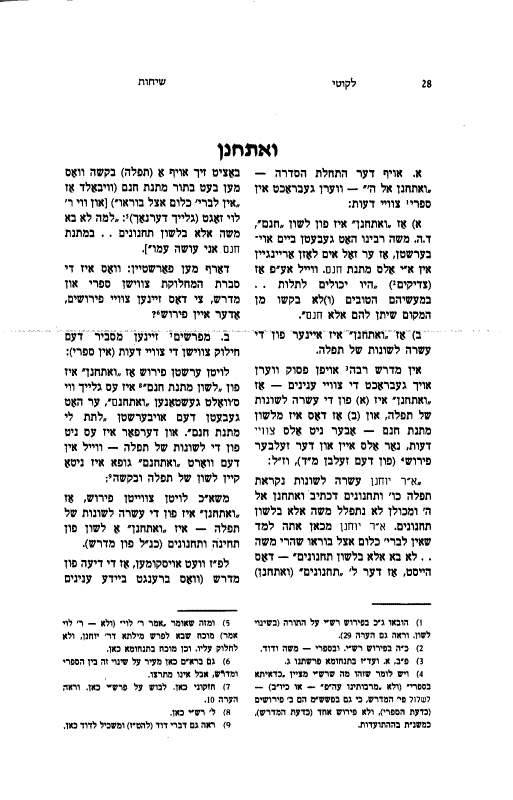
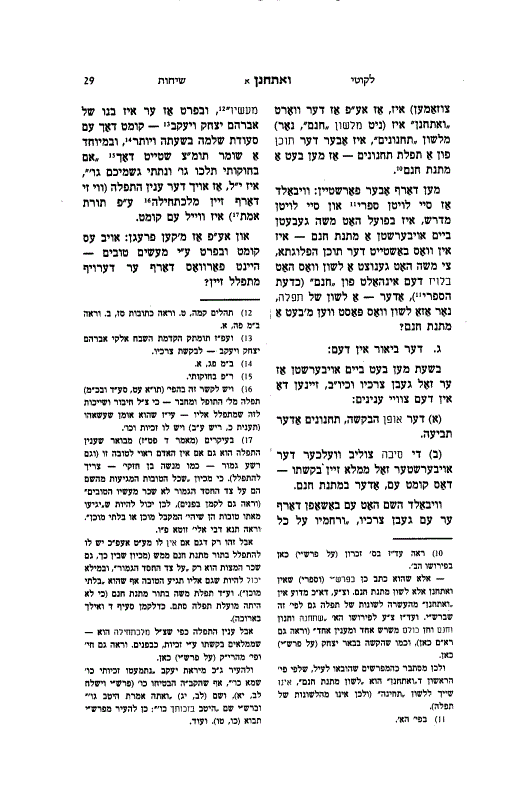
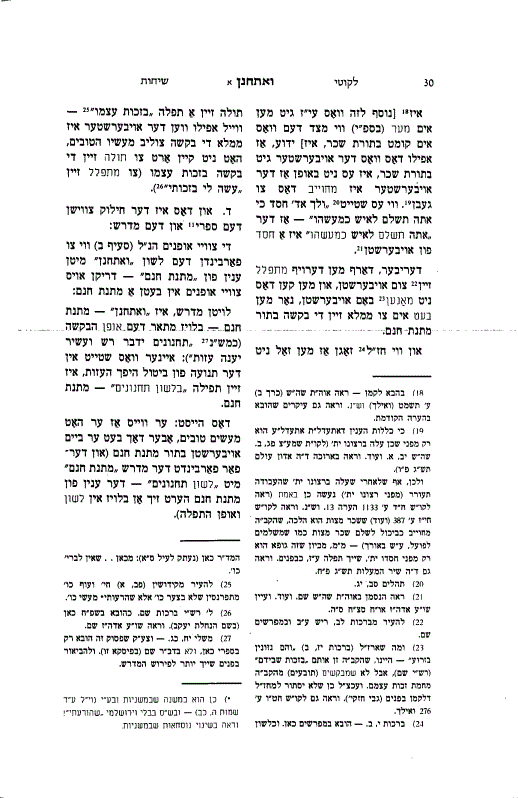
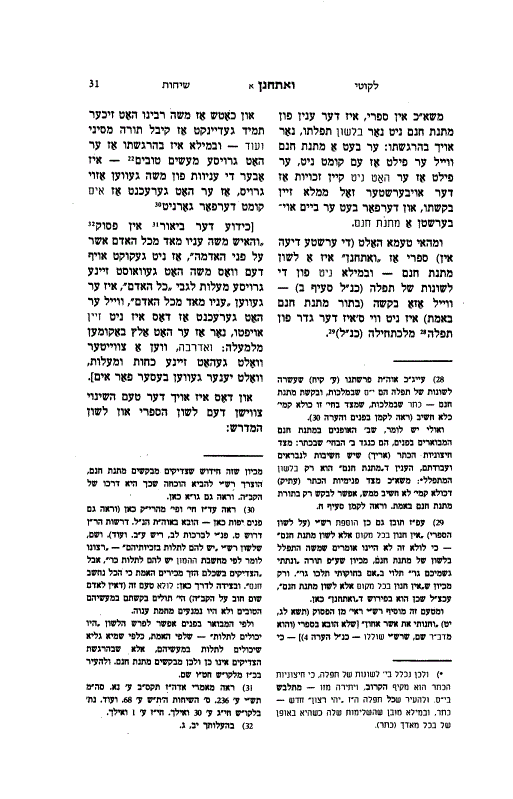
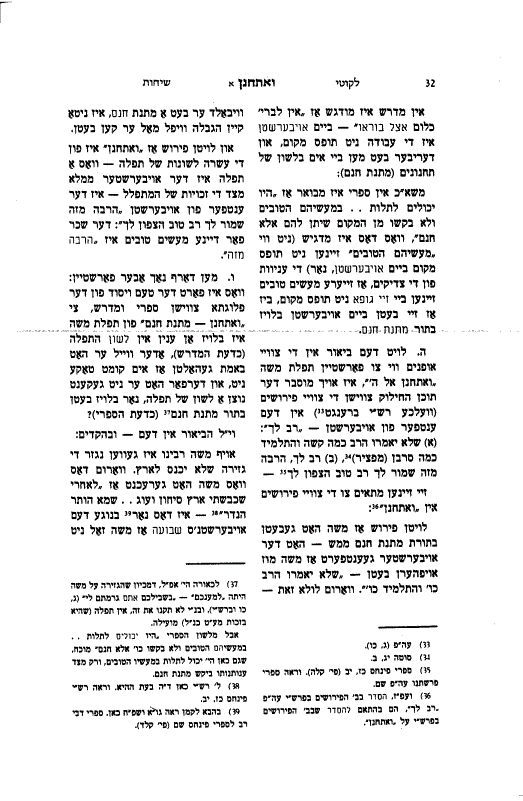
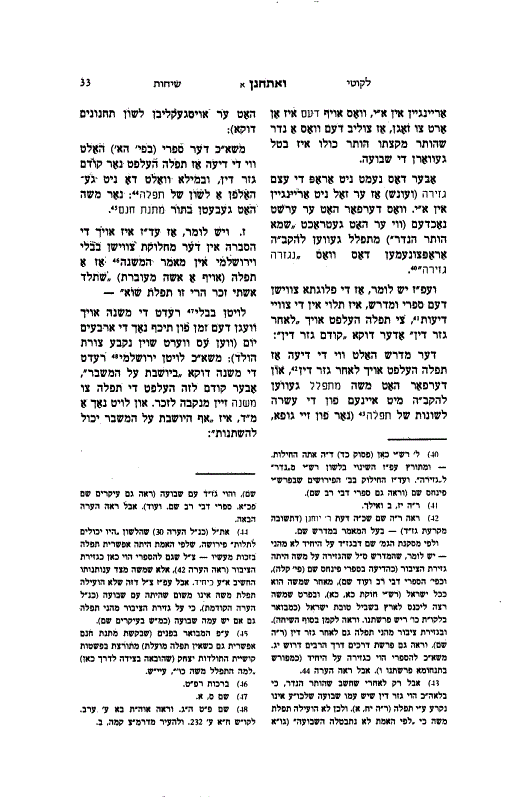
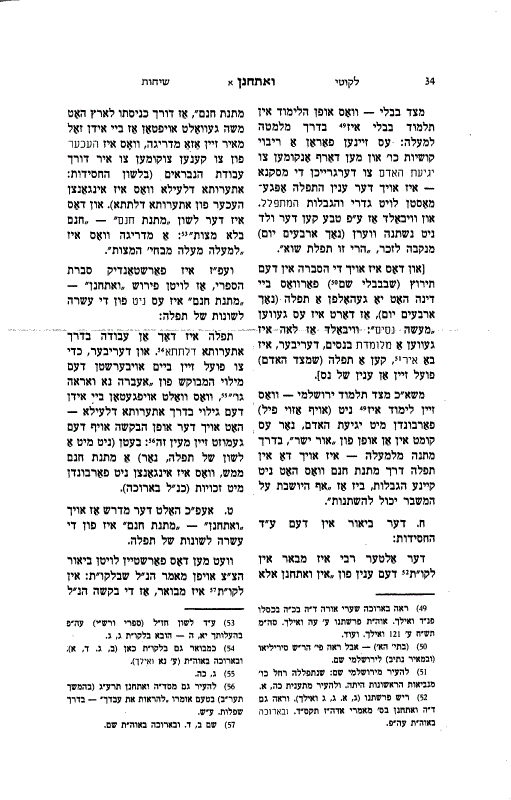
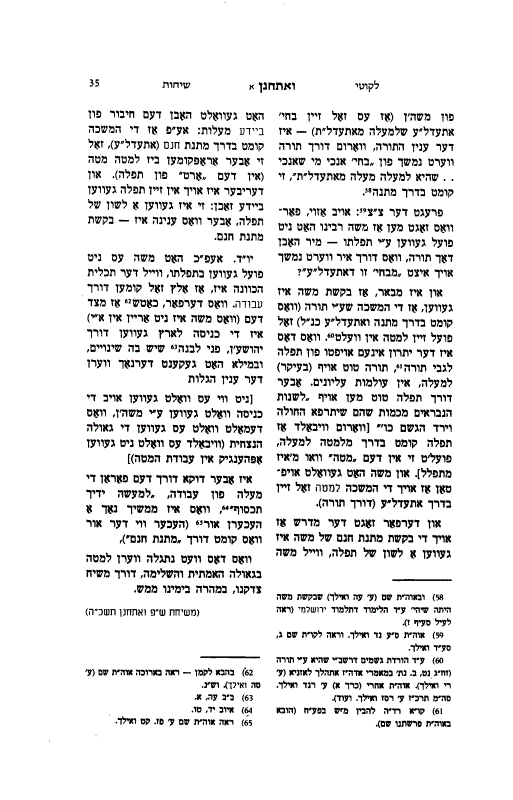
According to the Midrash, the expression “a free gift” describes only the manner in which Moshe presented his request, while in essence he was deserving. According to the Sifrei, however, “a free gift” describes not only the manner of his request but also his inner feeling: he regarded himself as undeserving, and this itself was the reason Hashem should fulfill his prayer.
Regarding the verse, “I pleaded with Hashem,” the Sifrei presents two opinions:
- The word וָאֶתְחַנַּן means that Moshe requested a free gift.
- It is an expression of supplication, one of the ten terms used for prayer.
The Midrash, however, combines both ideas—a free gift and prayer—into a single interpretation.
The commentators explain the two opinions in the Sifrei as follows: According to the interpretation that וָאֶתְחַנַּן means a free gift, the word is understood as though it said, “I asked Him to grant me a gift.” According to the second interpretation, וָאֶתְחַנַּן means supplication.
Accordingly, the Midrash, which combines both ideas into one interpretation, must understand וָאֶתְחַנַּן as an expression of supplication, while maintaining that the content of Moshe’s prayer was a request for a free gift.
This, however, requires explanation. According to all opinions, Moshe asked for a free gift. What, then, is the difference between the two views?
The explanation is that prayer contains two elements:
- The manner in which the request is presented.
- The reason Hashem should fulfill the request—either because the person deserves it or as a free gift.
Prayer, as it is initially defined by Torah, is made by a person who is deserving, for he fulfills Torah and mitzvos. Nevertheless, he must still ask, because Hashem is not obligated to grant him what he requests.
It may therefore be said that this is the difference between the Midrash and the Sifrei.
According to the Midrash, “a free gift” describes only the manner of Moshe’s request. He spoke as one asking for an undeserved gift, although in truth he was deserving.
According to the Sifrei, “a free gift” describes not only the manner of the request but also Moshe’s own inner feeling. He felt that he had no claim at all and that the only reason Hashem should fulfill his request was as a free gift.
This can be further understood through the following introduction.
Hashem had sworn that Moshe would not enter Eretz Yisrael. Moshe nevertheless said that perhaps the vow had been annulled. Even if the vow was annulled, however, the decree and punishment still remained.
It may be said that the Midrash and the Sifrei differ regarding the dispute as to whether prayer can be effective after a final decree has been issued.
The Midrash follows the opinion that prayer can help even after the decree has been issued. Moshe therefore prayed using one of the ten expressions of prayer.
The first opinion in the Sifrei, however, follows the view that prayer is effective only before the decree has been issued. In Moshe’s situation, therefore, the appropriate expression was only that of a free gift, rather than ordinary prayer.
This distinction is also reflected in the difference between the Babylonian and Jerusalem Talmuds.
The Babylonian Talmud, whose approach emphasizes human effort, states that after forty days of pregnancy, the prayer, “May my wife give birth to a son,” is a prayer in vain. Prayer is limited by the natural parameters of the person who prays.
The Jerusalem Talmud, whose approach is associated with a direct revelation from Above in the manner of a gift, maintains that such a prayer is considered a prayer in vain only once the woman is already sitting on the birthing stool.
According to Chassidus, the Alter Rebbe explains in Likutei Torah that a “free gift” refers to a level above the service of created beings. Moshe wished to draw down this level of a free gift—“free,” without mitzvos.
Accordingly, the view of the Sifrei can be understood. A free gift is not an expression of prayer, because prayer proceeds from below to Above and is part of the service of created beings.
Nevertheless, the Midrash says that a free gift is one of the expressions of prayer.
This can be understood through the explanation of the Tzemach Tzedek. Although Moshe drew down this transcendent level through Torah, he nevertheless prayed because he wanted the revelation brought about through Torah—which is above the service of created beings—to affect not only the higher spiritual worlds but also the world below.
Accordingly, it may be said that, according to the Midrash, both qualities were necessary: the revelation from Above had to be drawn all the way down into the lowest level.
Moshe’s request, however, was not fulfilled, because the ultimate purpose is that all revelations and achievements should come specifically through man’s own Divine service.