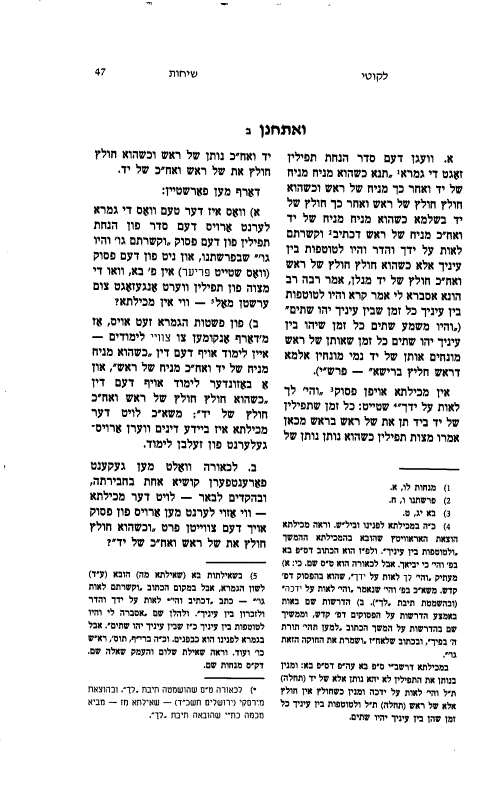
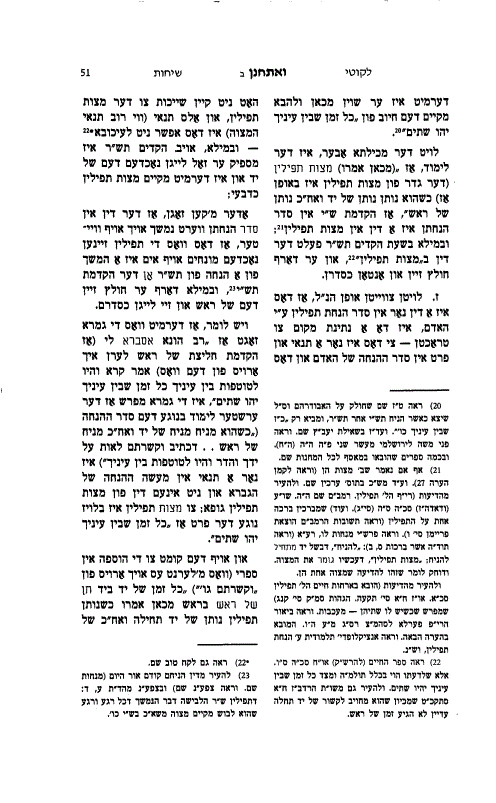
There are three approaches to explaining the law that the tefillin shel yad must be placed before the tefillin shel rosh:
- It is a law concerning the tefillin shel rosh: “Whenever they are between your eyes, there must be two.”
- It is an obligation upon the person: he must place the shel yad before the shel rosh.
- It is a law concerning the mitzvah of tefillin itself.
The Gemara states that the source for placing the tefillin shel yad before the tefillin shel rosh is the verse in our parshah: “You shall bind them as a sign upon your arm,” and afterward, “They shall be as totafos between your eyes.”
The source for the law that, when removing the tefillin, one removes the shel rosh first is the verse, “They shall be as totafos between your eyes.” This teaches: “Whenever they are between your eyes, there must be two tefillin.”
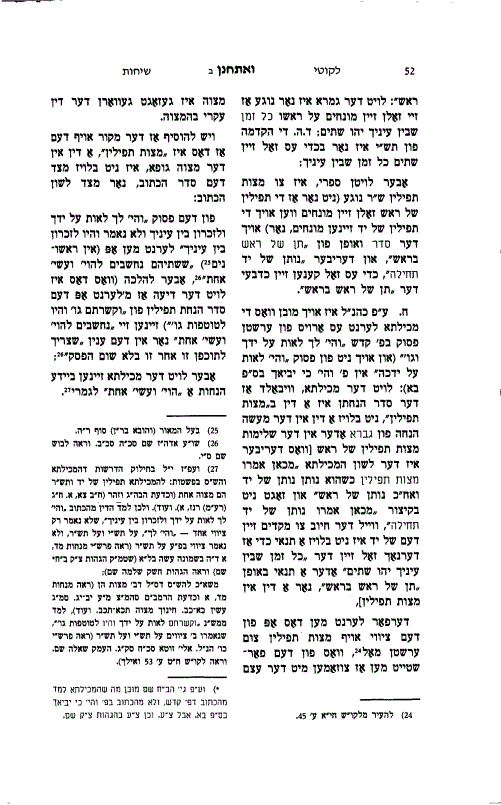
In the Mechilta, both laws are derived from the verse, “It shall be for you as a sign upon your arm”:
“Whenever the tefillin shel yad is on your arm, place the shel rosh upon your head. From here the Sages stated the order of the mitzvah of tefillin…”
The Sifrei records the same wording as the Mechilta, but derives it from the verse, “You shall bind them as a sign upon your arm.”
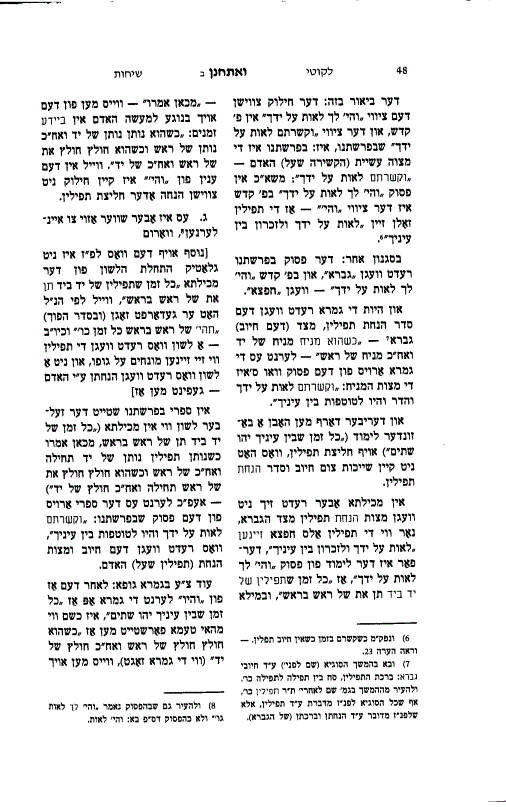
The explanation is that the requirement to place the tefillin shel yad first can be understood in several ways.
The first approach is that this is a law concerning the tefillin shel rosh. Therefore, even when a person mistakenly placed the shel rosh first, he does not need to remove it. After he subsequently places the shel yad, the shel rosh is upon his head while the shel yad is in its proper place.
This is the approach of the Gemara: “Whenever they are between your eyes, there must be two.” The requirement is defined as an aspect of “between your eyes”—the mitzvah of the tefillin shel rosh.
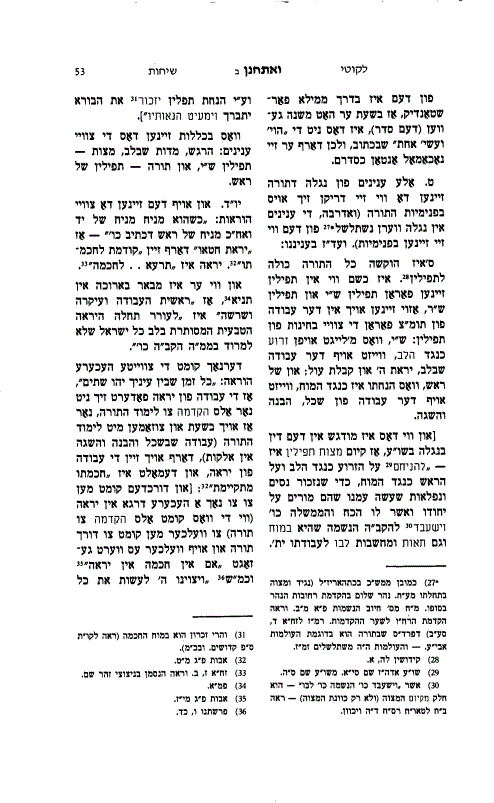
The second approach is that this is an obligation upon the person: he must place the shel yad before the shel rosh.
Within this approach itself, it can be said that, according to the Sifrei, the obligation upon the person remains relevant even if he placed the tefillin in the wrong order. He must remove them and place them again in the proper order, because he has a personal obligation to give precedence to the shel yad.
For this reason, the Sifrei derives the law from the word “You shall bind.” The requirement that the tefillin shel rosh come after the shel yad concerns the person’s action as well. He must therefore repeat the act and place them in the correct order.
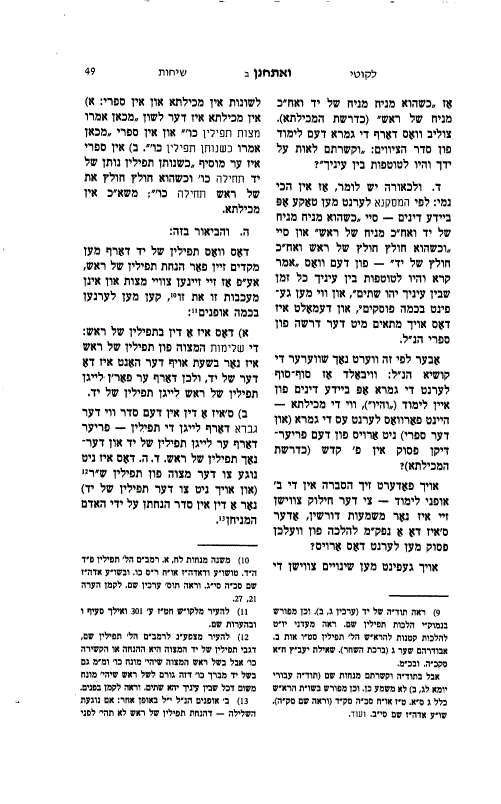
The third approach is that this is a law concerning the mitzvah of tefillin itself. Therefore, when a person placed the shel rosh before the shel yad, he must remove them and place them again in the proper order.
This is the view of the Mechilta, which states: “From here the Sages stated the order of the mitzvah of tefillin…”
For this reason, the Mechilta derives the law from the first verse in the Torah in which this matter is mentioned. Since it is a law concerning the mitzvah of tefillin itself—not merely an obligation upon the person or an element in the completeness of the mitzvah of the shel rosh—it is taught at the first mention of the mitzvah.
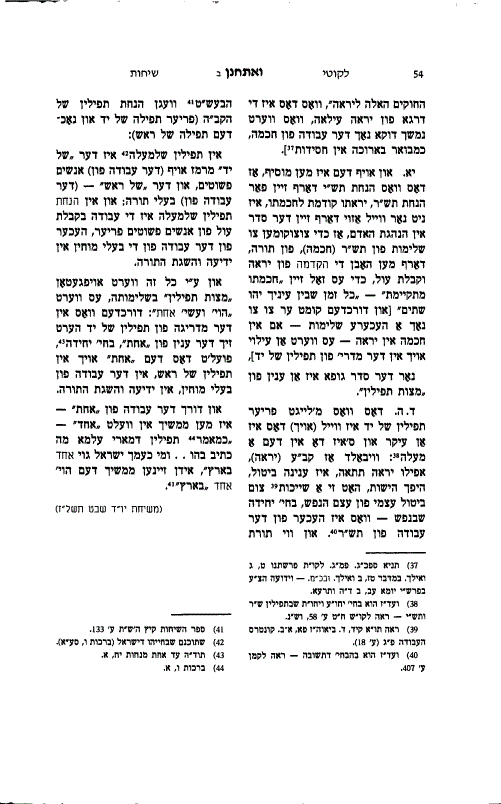
On the inner dimension of Torah, the tefillin shel yad, which are placed opposite the heart, represent fear of Hashem and the acceptance of His yoke. The tefillin shel rosh represent the service of intellectual understanding and comprehension.
This contains two lessons.
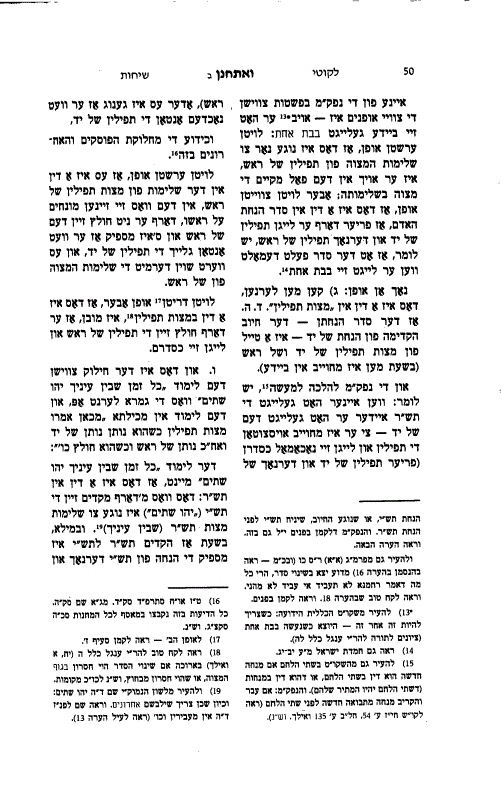
First, from the perspective of the person, the shel yad must be placed first, because a person’s fear of sin must precede his wisdom.
Second, even after the tefillin shel rosh have been placed, fear of sin must remain present for the wisdom to endure. This is the meaning of the teaching, “Whenever they are between your eyes, there must be two.” Through this, one ultimately reaches the higher level of fear, yirah ila’ah.
There is an additional point: the shel yad precedes the shel rosh because of the essential nature of the mitzvah of tefillin itself. The bittul of the lower level of fear, yirah tata’ah, is connected with the bittul of the yechidah of the soul, which transcends the intellectual service represented by the tefillin shel rosh.
This is similar to the Baal Shem Tov’s interpretation that the tefillin shel yad represent simple Jews, who take precedence over the tefillin shel rosh.