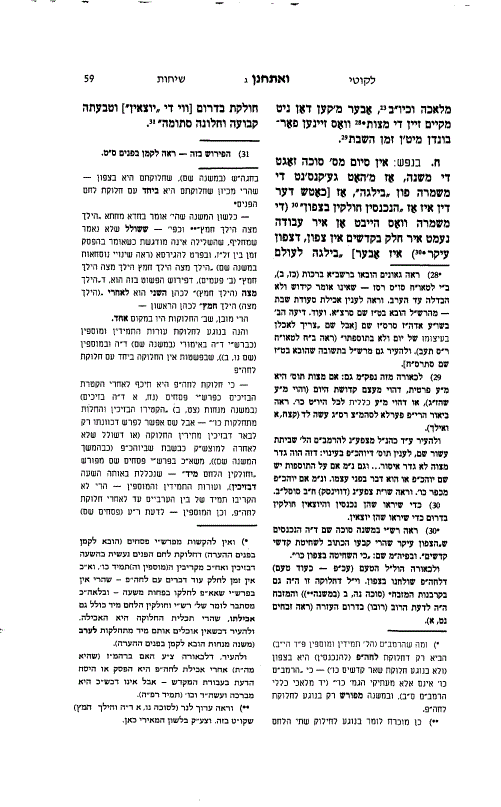
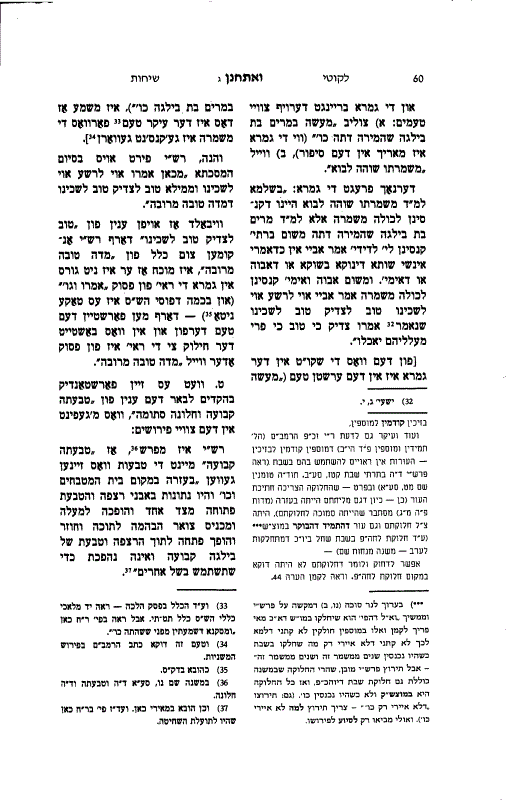
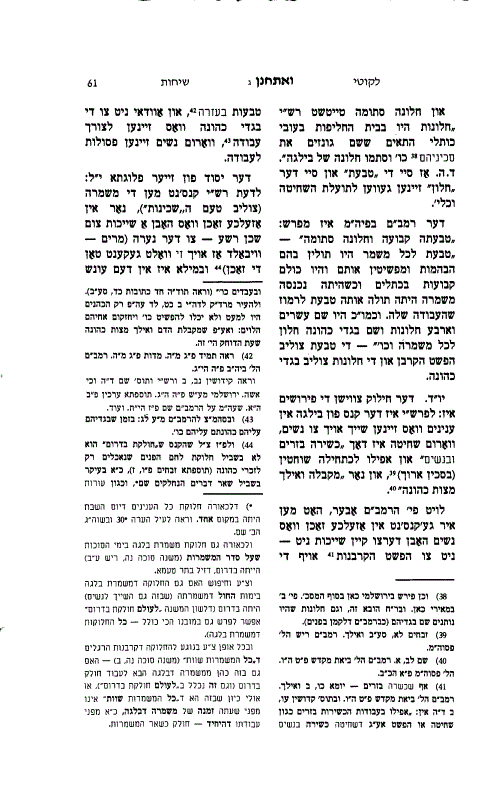
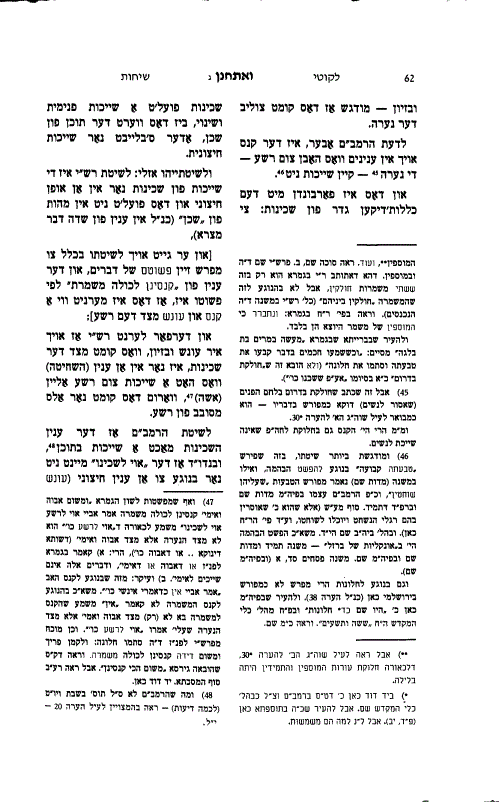
Regarding the nature of the law of bar metzra—the right of an adjoining landowner—there are two possible approaches:
- The purchaser’s acquisition is fully valid, but he is obligated to sell the field to the adjoining landowner.
- The purchaser’s acquisition is not complete, because the adjoining landowner already possesses a certain share or connection in his neighbor’s field.
This concept of proximity is expressed in the three dimensions of world, time, and soul: the law of bar metzra, the addition to Shabbos, and the principle, “When it is good for the righteous person, it is good for his neighbor.”
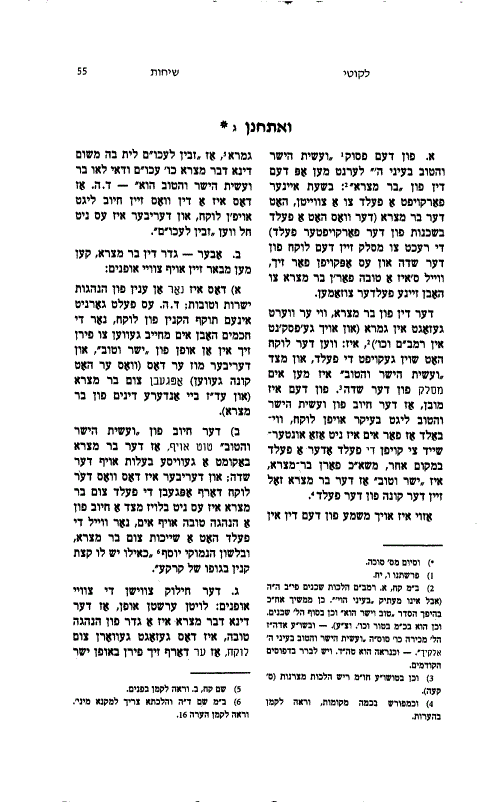
From the verse in our parshah, “You shall do what is upright and good,” the Sages derive the law of bar metzra.
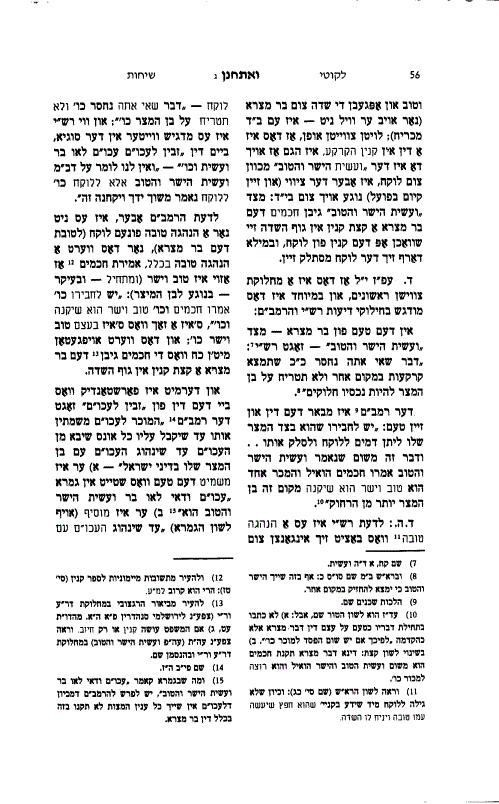
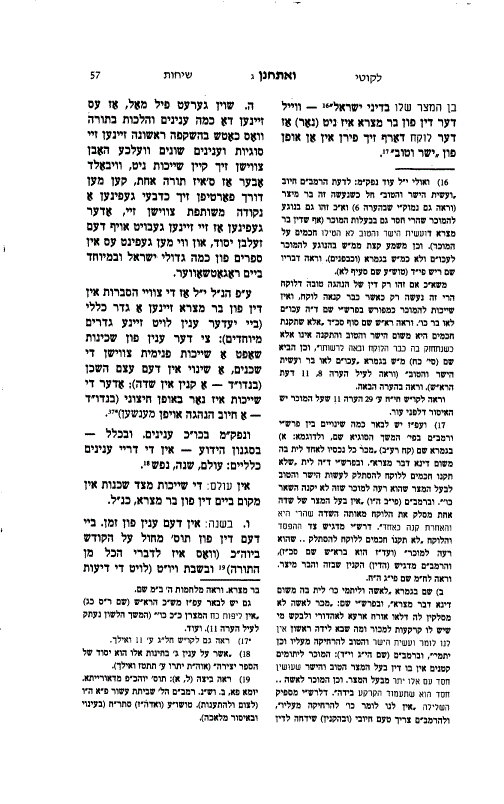
The nature of this law can be understood in two ways. According to the first approach, the purchaser acquires the field completely, but he is subsequently obligated to sell it to the adjoining landowner. According to the second approach, the purchaser’s acquisition is inherently incomplete, because the adjoining landowner already possesses a certain share or connection in his neighbor’s field.
It may be said that Rashi follows the first approach, while the Rambam follows the second.
These two approaches in the present discussion can also be found in other areas of Torah, corresponding to the three dimensions of world, time, and soul.
World
In the dimension of world, this is expressed in the law of bar metzra, as explained above.
Time
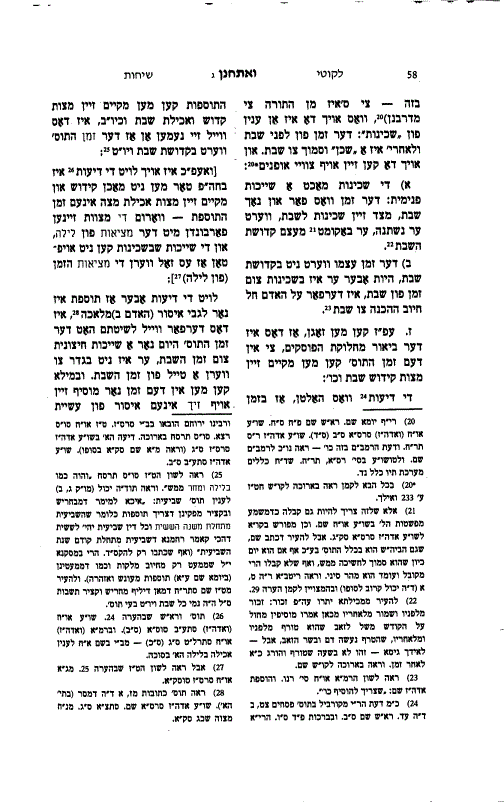
In the dimension of time, it is expressed in the addition to Shabbos.
According to the first approach, there is no intrinsic connection between one neighbor and the other. It would therefore not be possible to recite Kiddush during the additional time of Shabbos, because that time is merely an addition and not Shabbos itself.
According to the second approach, however, there is an intrinsic connection between adjoining entities. The additional time is therefore connected with Shabbos itself, and one may recite Kiddush during that period.
Soul
In the dimension of soul, this distinction is expressed at the conclusion of Tractate Sukkah, concerning the priestly watch of Bilgah, whose “ring was fixed in place and whose window was sealed.”
According to Rashi, who follows the first approach, the punishment imposed upon the entire priestly family applied only to matters that had some connection to women—specifically, aspects of slaughter, which may be performed by a non-Kohen.
Rashi therefore explains that “its ring” refers to the ring used to hold the neck of the animal during slaughter, and that “its window” refers to the place in which the slaughtering knives were stored.
This is because the connection between neighbors is only external. It therefore applies only to particular matters in which there is an apparent connection between one person and another.
According to the Rambam, however, the connection is intrinsic. It therefore extends to all matters, and the punishment imposed upon the priestly family of Bilgah also affected matters that had no particular connection to women.
The Rambam therefore explains that “its ring” refers to the ring used during the skinning of the sacrifices, while “its window” refers to the place in which the priestly garments were stored.
This also explains why, in the concluding discussion of the principle, “When it is good for the righteous person, it is good for his neighbor,” Rashi does not include the reading, “Say of the righteous that he is good, for they shall eat the fruits of their deeds.”
Rashi does not maintain that the righteous person causes his own good deeds to be regarded as “the fruits of the deeds” of his neighbors, in the plural. Such an interpretation would reflect the Rambam’s approach, that the connection between neighbors is intrinsic and extends to all matters.
Rashi therefore derives the principle instead from the fact that the measure of Divine reward is greater than the measure of punishment.