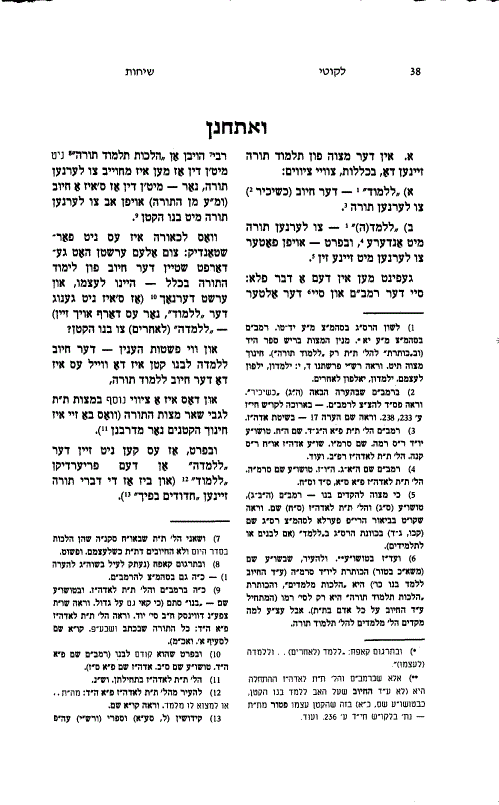
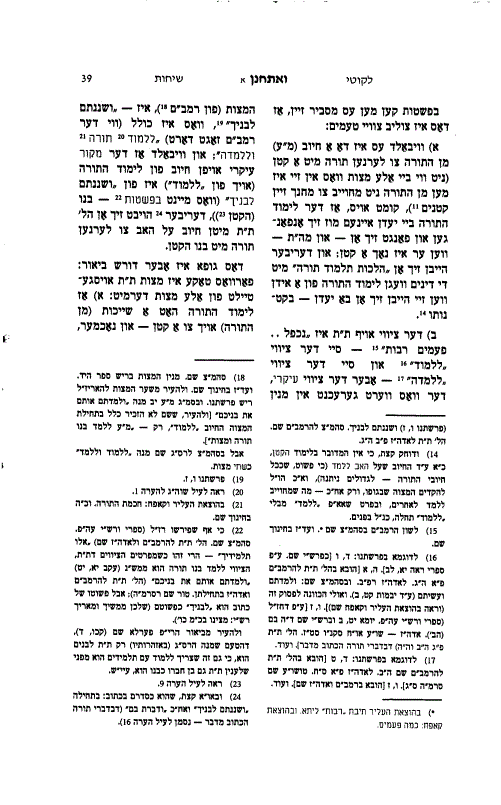
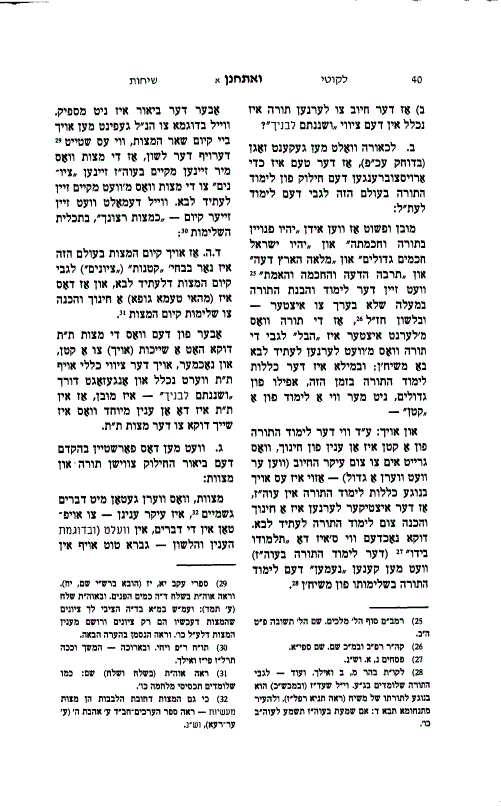
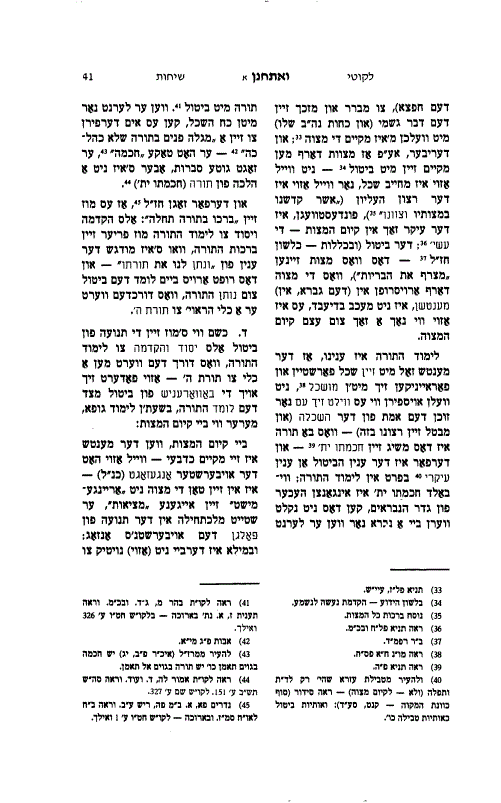

The source of the mitzvah is the verse, “You shall teach them diligently to your children.” This teaches that even when an adult studies Torah with understanding and comprehension, he must recognize that he is small in relation to His blessed wisdom and must approach it with bittul. This explains the teaching, “One who studies Torah as a child…”
Regarding the mitzvah of Torah study, both the Rambam and the Alter Rebbe begin with the obligation to teach one’s young son, and only afterward discuss the mitzvah of studying Torah oneself. It may be said that the reason is that the source of the mitzvah is the verse, “You shall teach them diligently to your children.” This itself, however, requires explanation.
The explanation is as follows: Although the purpose of the mitzvos is to fulfill the Supernal Will, which involves bittul, the primary element of the mitzvos is nevertheless the actual deed. The refinement of created beings brought about through the mitzvos is an additional effect.
Torah study is different. The study itself must be carried out with bittul. A person’s intellect must comprehend the word of Hashem, and he must change his way of thinking from what it was previously. Bittul is therefore part of the mitzvah itself.
There is an additional point: bittul is even more essential in the mitzvah of Torah study because a person must study Torah with his own intellect. To ensure that his reasoning is not distorted by his sense of self, and that his study reflects the genuine truth of Torah, he must possess bittul.
This is the significance of the verse, “You shall teach them diligently to your children.” Even when an adult studies Torah with understanding and comprehension, he must recognize that he is small in relation to His blessed wisdom and must approach it with bittul.
Accordingly, we can understand the Mishnah in Pirkei Avos:
“One who studies Torah as a child—what is he comparable to? To ink written on fresh paper. One who studies Torah as an elderly person—what is he comparable to? To ink written on erased paper.”
At first glance, this is difficult to understand. When a person finally begins studying Torah in his old age, why would the Mishnah discourage him and weaken his resolve?
The explanation is that “one who studies Torah as an elderly person” refers to a person who studies Torah without the bittul of a child.
This also explains the preceding Mishnah:
“Shmuel HaKatan says: ‘When your enemy falls, do not rejoice…’”
The commentators explain that this refers to the battle of Torah study, when scholars disagree and debate one another. Therefore, one should not rejoice when the other person’s position is refuted. Such happiness does not arise merely from having arrived at the correct understanding, but from one’s own sense of self.
The proof is that he views the situation as “when he falls”—that his colleague has fallen—even though “these and those are the words of the living G‑d.” Moreover, he regards his colleague as “your enemy,” instead of reaching the state described by the Sages: “Although they begin as enemies in their Torah debate, they ultimately become beloved friends.”