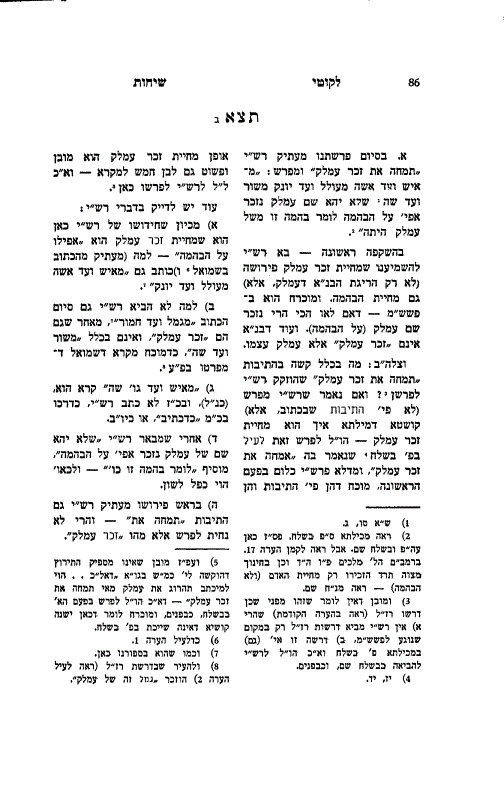
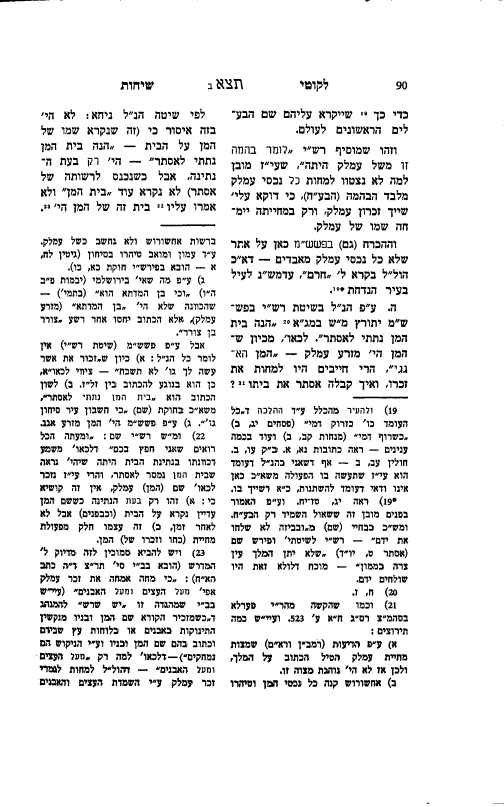
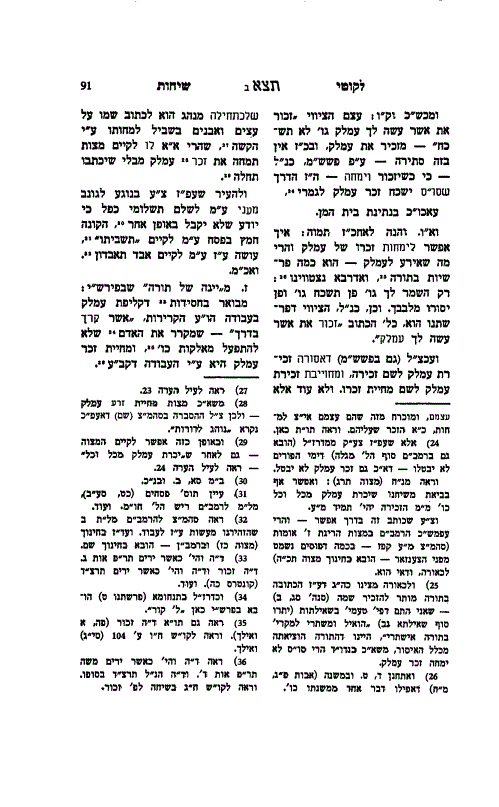
Rashi comments on the verse, “You shall erase the memory of Amalek”:
“From man to woman, from child to infant, from ox to sheep — so that the name of Amalek should not be mentioned even in connection with an animal, saying: ‘This animal belonged to Amalek.’”
It must be understood: Seemingly, the meaning of “You shall erase the memory of Amalek” is simple. Why, then, does Rashi need to explain it? And if Rashi is explaining not the meaning of the words themselves, but how the eradication of Amalek is to be carried out, why did he not explain this in Parshas Beshalach, where the command was first stated?
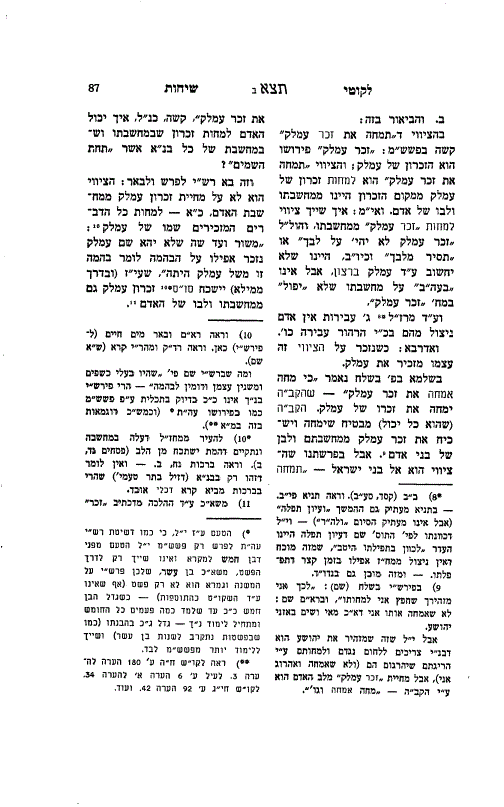
The explanation is that the wording “You shall erase the memory of Amalek” presents a difficulty. How is it possible to command a person that the memory of Amalek should not enter his mind? Seemingly, the command should have been that it should not arise in his heart — that he should not deliberately think about it.
In Parshas Beshalach, however, this difficulty does not arise, because there it says, “For I will surely erase,” meaning that the Holy One, blessed be He, will cause it not to enter one’s memory. But how can such a command be given to a person?
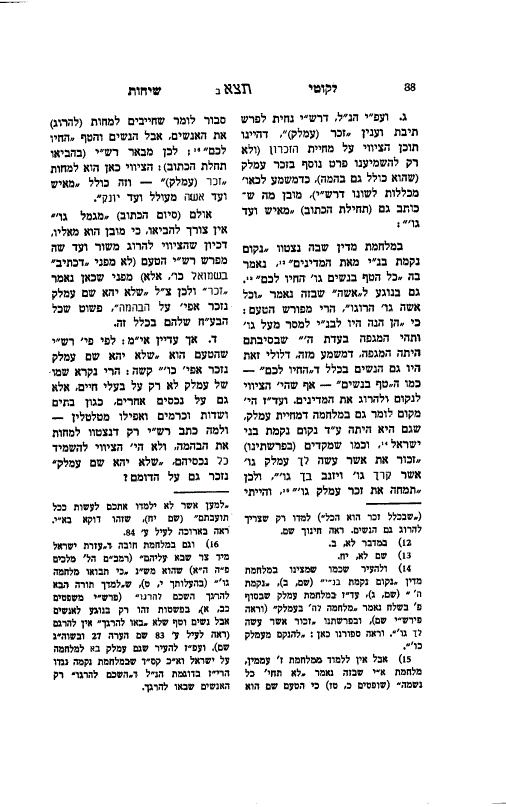
Therefore, Rashi explains that “memory” means erasing all those things that cause Amalek’s name to be remembered — namely, animals upon which the name of their owners continues to be associated.
Rashi adds, “to say, ‘This animal belonged to Amalek,’” in order to explain why they were not commanded to destroy the rest of Amalek’s property as well.
For it is not possible to make an irreversible change in an animal without causing tzaar baalei chayim. Therefore, there is no true change in the animal, and even when ownership changes, the name of the original owners still remains associated with it.
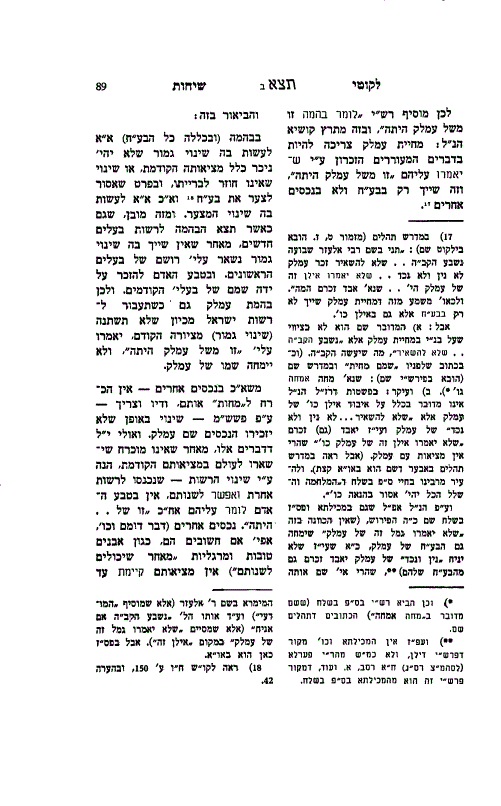
By contrast, an inanimate object can be changed. Therefore, the inanimate property should be altered, and through this the name of the original owners is no longer associated with it.
Alternatively, it may be said that because an inanimate object is capable of being changed, even if it was not actually changed, once there is a transfer of ownership the name of the original owners is no longer associated with it.
This also explains the statement, “I have given the house of Haman to Esther.” Since a house is inanimate property, once ownership changes, the name of its original owner is no longer associated with it.
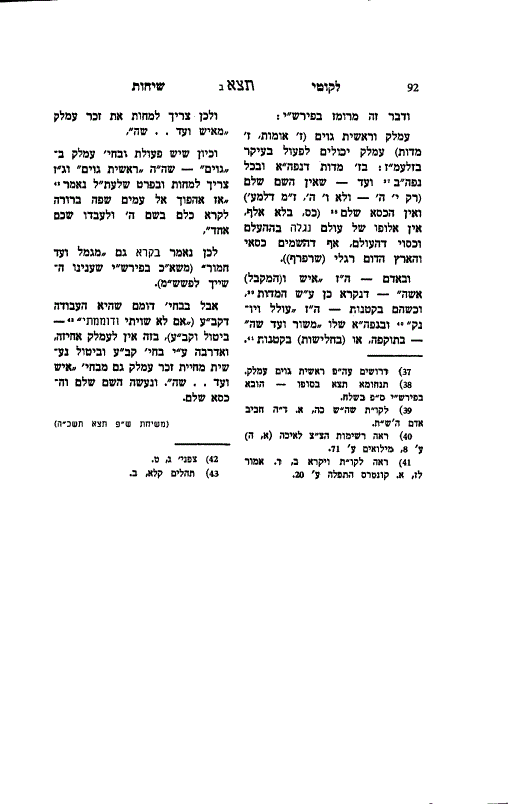
From the Wine of Torah:
The kelipah of Amalek is the concept of coldness, and the remedy for the kelipah of Amalek is kabbalas ol.
Therefore, regarding the inanimate — whose spiritual concept is kabbalas ol — Amalek has no control. Consequently, there is no need to erase Amalek’s name from inanimate property.