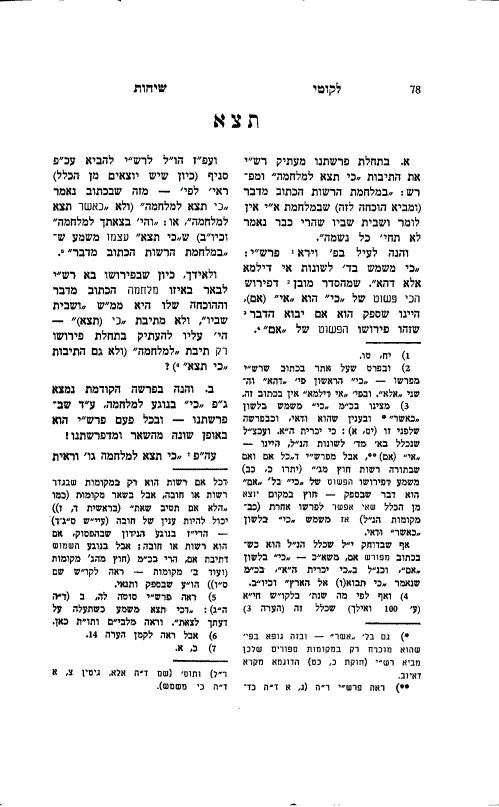
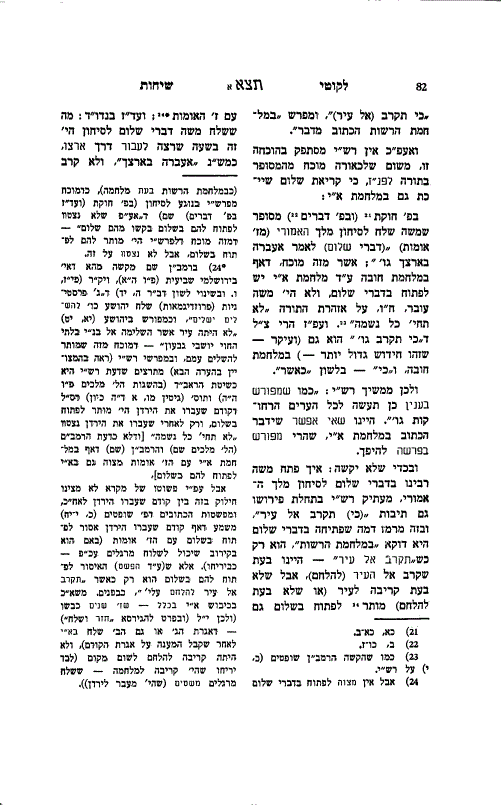
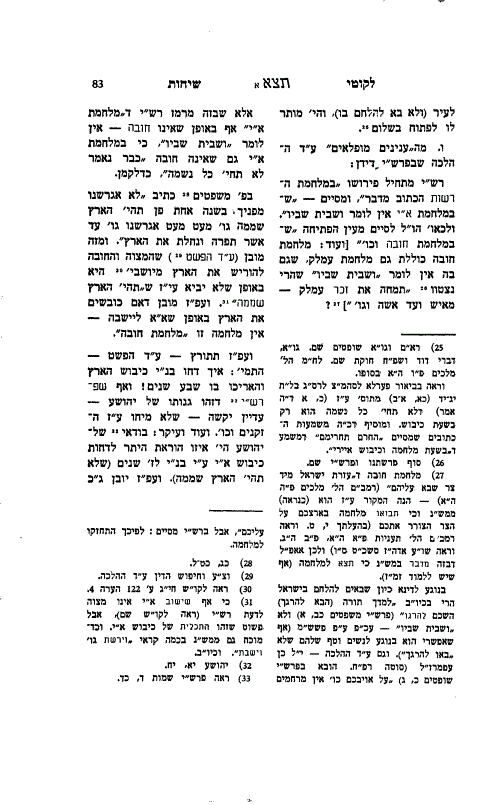
Rashi comments on the verse, “When you go out to war”:
“Scripture is speaking of an optional war, for regarding the war for Eretz Yisrael it cannot say, ‘and you shall take its captives,’ since it has already stated, ‘You shall not allow any soul to live.’”
It must be understood: The first of the four meanings of the word “ki” is “if.” If so, from the word “ki” itself we would know that the verse refers to an optional war, since a mitzvah-war is not a matter of “if” — something uncertain — but an obligation. Why, then, does Rashi need to bring proof from elsewhere?
And why, in other places where “ki” is used regarding war — such as “When you approach…” — does Rashi explain it differently, as discussed below?
The explanation is as follows:
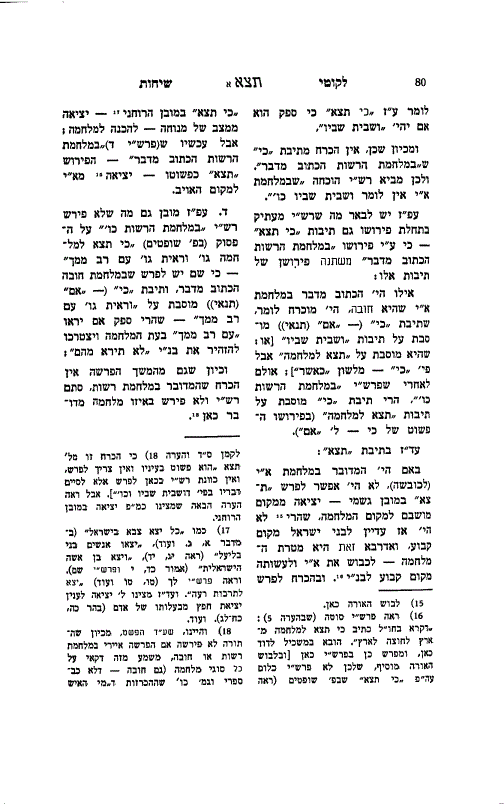
Following “When you go out” the verse states, “and you shall take its captives.” Therefore, even if the verse were speaking about a mitzvah-war, it would still need to use the word “ki,” because “and you shall take its captives” is not a certainty.
Thus, the word “ki” itself is no proof that this is an optional war.
Based on this, we can understand why Rashi makes no comment on the verse in Shoftim, “When you go out [to war]… you shall not fear them.” There it is possible to explain that the verse is speaking of a mitzvah-war, and the word “ki” is used because the fear of them is not certain.
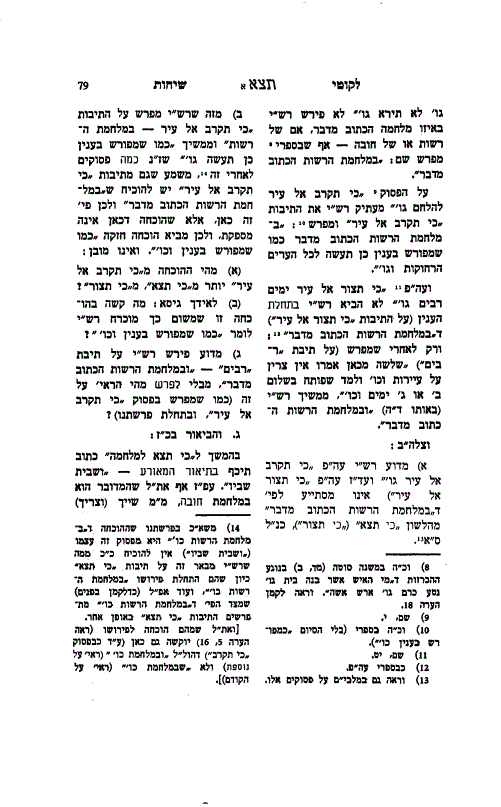
However, on the verse, “When you approach a city to wage war against it, you shall call out to it [for peace],” Rashi explains: “Scripture is speaking of an optional war, as is explicitly stated in the passage: ‘So shall you do to all the cities that are very distant.’”
There, no other detail is mentioned to which the word “ki” could refer. Therefore, it must be said that “ki” refers to the optional nature of the war.
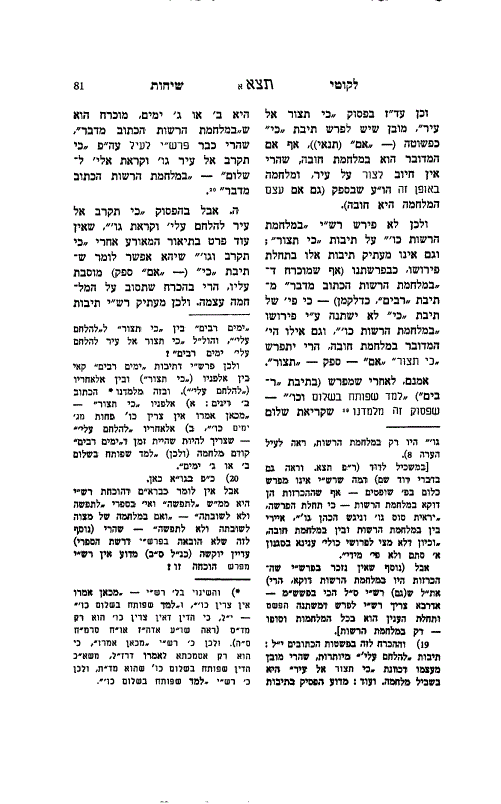
Nevertheless, Rashi does not suffice with the proof from the word “ki,” because seemingly the Torah’s earlier account demonstrates that an offer of peace applies even in the war for Eretz Yisrael, since Moshe Rabbeinu sent messengers to open with words of peace to Sichon, king of the Emori.
Therefore, Rashi brings an additional proof from what is explicitly stated in the passage, “So shall you do to all the cities that are very distant” — specifically — whereas this does not apply to the war for Eretz Yisrael.
And in order that there should be no difficulty from Moshe’s conduct in the war with Sichon, Rashi quotes the words, “When you approach a city.” With this he indicates that the rule that one opens with words of peace only in an optional war applies specifically “when you approach a city” in order to wage war against it, but not when one merely wishes to pass through.
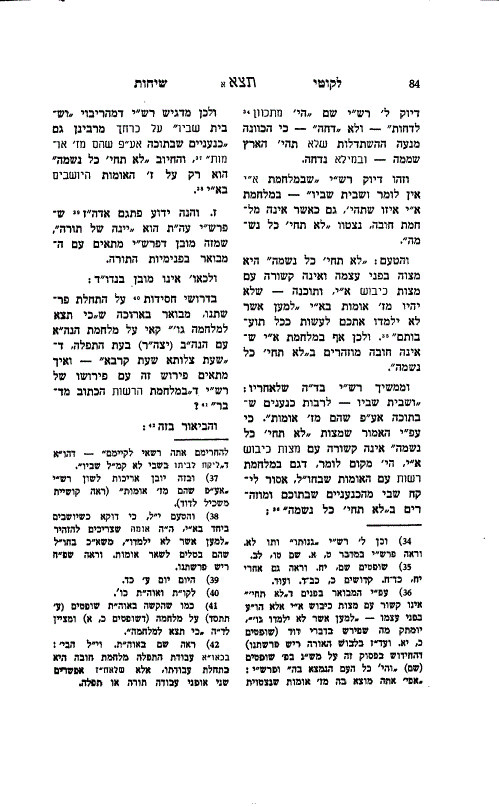
From the Wine of Torah:
It is explained in Chassidus that “When you go out [to war]” refers to the battle of the G‑dly soul with the animal soul.
If so, how can this battle be described as an optional war rather than a mitzvah-war?
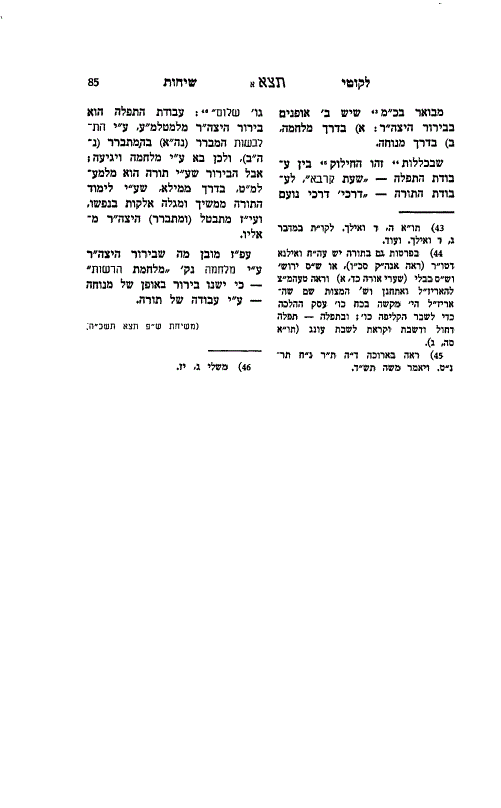
The explanation is that there are two forms of birur. The avodah of prayer, which proceeds from below upward, is carried out through battle. Torah study, which proceeds from above downward, is in a manner of rest and tranquility.
Therefore, the refinement specifically through battle is optional, since the refinement can also be accomplished in a peaceful manner through Torah.