ענין הנסכים.
כתיב בפ' צו: (ז', י"ח) "ואם האכל יאכל מבשר זבח שלמיו כו'". וארז"ל: (פ"ק דזבחים י"ג, ב'. כ"ח, ב'. ושאר דוכתי) בשתי אכילות הכתוב מדבר כו' ואחת אכילת מזבח.
וצריך להבין ענין הקרבנות שהיו מקריבין ע"ג המזבח מן הבקר כו'. ולמה נק' בשם אכילה כנ"ל. וכמ"ש: (ויקרא ג', י"א) לחם אשה לה'. וכתיב: לחמי לאשי כו'.
ולהבין ענין הנסכים שהיו מנסכין היין ע"ג המזבח ויורד לשיתין (סוכה מ"ט, א') שמחוללין ויורדין עד התהום. אשר הוא לכאורה פלא, היפך הקרבן שהוא בחי' העלאה. שהיה שוחט הפר או הכבש בחי' חי, ונוטל חיותו ממנו, שהחיות עולה למעלה. וגם עתר[1] ענן הקרבן עולה למעלה. אבל הנסכים הן מצומח ומורידין למטה לתהום. ולמה הנסכים דוקא יין. וגם שהקרבן אינו לריח ניחוח אלא עם הנסכים. כמארז"ל: (בפ"ב דברכות י"ד, סע"ב) כל הקורא קריאת שמע בלא תפילין כו' כזבח בלא נסכים. ועמ"ש עוד מזה סד"ה ויקהל משה.
והענין הוא, ע"פ מ"ש: "ויין ישמח לבב כו' החדלתי את תירושי המשמח אלקים כו'". כי שמחה הוא בחי' גילוי ההעלם, שע"י היין או ביום חתונתו ושמחת לבבו, יוצא העלם ומצפוני לבבו מן ההעלם לגילוי.
כי הנה בכל דבר הנמצא במציאות יש בחי' פנימית ובחי' חיצוניות. פנימית הוא בחי' קבלת שפעו וחיותו ודביקותו בעילתו. וחיצוניות הוא בחי' השפעה לזולתו. כי: אין לך עשב כו' שאין לו מזל כו'.
והנה בכל פרי או עשב או תבואה יש ב' בחי': טעם הפרי שהוא בחי' רוחני. ועצם ממשות הפרי. והרי בבחי' הטעם יש ב' כחות: כח לקבל שפעו מן כוכבי מרום שהן המצמיחים. כמ"ש: ממגד תבואת שמש וממגד גרש ירחים. וכן כל כוכב פרטי מצמיח עשב פרטי. וכח ההשפעה להשפיע שפעו וטעמו בגוף חומר הפרי. וכן גבוה מעל גבוה.
וכן בבחי' החי, חיותו שהוא בחי' פנימית ורוחנית הוא דבוק בעילתו, שהוא בחי' פני אריה פני שור שבמרכבה. וכנודע שפני אריה הוא מקור נפש החיות, ופני שור הוא מקור נפש הבהמות כו'. והחיות שמחיה את גוף ובשר הבהמה הוא בחי' חיצוניות.
ועד"ז בבחי' נפש האדם. שרש ופנימי' הנפש דבוק בעילתו, בחי' פני אדם לקבל חיותו. וחיצוניות הנפש הוא ההשפעה שמחיה את הגוף.
וכן במלאכים כתיב: "ומקבלין דין מן דין", שהכח שיש במלאך לומר: קדוש הוא מקבל מלמעלה. כמ"ש: כי גבוה מעל גבוה שומר וגבוהים עליהם. ונותנים גם כן רשות זה לזה, שהוא בחי' השפעתו למלאך אחר זולתו המקבל שפעו ממנו. ועד"ז בכללות השתלשלות העולמות.
וז"ש בע"ח: שכל ההשתלשלות עילה ועלול הוא מבחינת חיצונית כו'.
(ר"ל, שסדר ההשתלשלות הוא שחיצונית העליון נעשה פנימית לתחתון, משא"כ פנימית העליון אינו יורד למטה לתחתון. וכמ"ש מזה ג"כ באגה"ק בסופו וז"ל: "ועוד זאת כמ"ש: ופני לא יראו, שפנימית העליון אינו יכול לירד למטה רק חיצוניותו ובחי' אחוריים שהוא נובלות חכמה עילאה". וע' מזה ג"כ בד"ה ששים המה מלכות כו')
הרי שבכל הנמצאים יש בחינת פנימית שהוא מלשון פנים. (וע' בזהר אמור צ"ג ב' ע"פ בקשו פני) שפירושו לשון פונה: כי פנו אלי כו', אל תפן כו', שהוא בחי' כל עילה שפונה ודבוק בעילתו. וחיצונית הוא בחינת השפעת שפעו לחוץ. ויש בחינה ממוצעת, שהוא בבחי' עצמי' שמחבר ב' הכחות הנ"ל.
(י"ל ששלשה בחינות אלו - הן: חב"ד חג"ת נה"י. וע' בע"ח שכ"ו פ"א. ואפשר שזהו ג"כ ענין שבכל כלי יש ג' בחי': פנימי אמצעי חיצון שסימנם סת"ר, סוף תוך ראש. וכמ"ש במ"א)
וג' כחות אלו, הן בחי' אברהם יצחק ויעקב. כי אברהם בחינת חסד ומים שיורדים מלמעלה, הוא בחי' כח ההשפעה. ויצחק בחינת אש שטבעו לעלות. ויעקב הוא בחינת בריח התיכון שמבריח ומחבר ב' הכחות כאחד.
וזהו ענין: "ויין ישמח לבב אנוש", פי' שהיין הוא מעורר גילוי פנימית הנפש מן ההעלם לגילוי. והיינו לפי שהיין טמון ונעלם בענביו ויוצא מן ההעלם, ע"כ טבעו לעורר גילוי ההעלם. וכל השותה יין פניו מאדימות, שהוא גילוי ההעלם. והיינו כי הנפש החיונית מלובשת היא בדם, והיין מעורר התגלות פנימית הדם, וממילא מתגלה ג"כ פנימית הנפש החיונית המלובשת בפנימית הדם. אך אם שותה יותר מדאי - גובר עליו השינה, שהוא מחמת ריבוי גילוי ההעלם אין הכלי יכול לקבל רוב אור גילוי פנימית:
ב ומעתה נבא לבאר הטעם שהקרבנות נק' לחם ומאכל. כי הנה פעולת המאכל לחבר חיות הנפש עם הגוף. והגם שבכח הנפש עצמו יש כח ההתפשטות להחיות הגוף - אך אעפ"כ אינו פועל פעולתו אלא ע"י הלחם. וכמ"ש: ולחם לבב אנוש יסעד. וכתיב: וסעדו לבכם. עיין בפרש"י. פי', שהלחם סועד ומעלה את הלב לקבל החיות מן המוח.
(כי סעד הוא ענין סמך שלא יפול. כמו להכין אותה ולסעדה. (בישעיה סי' ט') דהיינו שלא תמוט)
והיינו' אחר שיתברר המאכל באצטומכא, שהפסולת וחיצונית שבמאכל נדחה לחוץ והולך דרך הקרביים לחוץ' והמובחר שבו עולה ללב ולמוח, ואז יורד חיות מן המוח ללב ולכל האברים.
כך עד"מ זה יובן למעלה. דהנה כתיב: ואתה מחיה את כולם, שחיות כל העולמות הוא ע"ד דוגמא חיות הנפש בגוף. שיש בו בחינת פנימית וחיצונית כנ"ל, והחיבור הוא ע"י בחי' לחם. (וע' בסמוך) והוא ענין הקרבנות.
והמאכל צריך להתברר תחלה. והוא ענין מ"ש: "וכל קרבי את שם קדשו", "המו מעי לו כו'". שיש מלאכים שהם בחי' עינים - "עיני ה'". ויש בבחי' אזנים, ויש בבחי' קרביים - שהם המבררים כו'.
שהפסולת נדחה לחוץ, שהוא בחי' השפעה חיצונית, שיורד בריבוי השתלשלות עד שמצמיח כל חציר ותבואה. וכמ"ש: וממגד תבואת שמש כו'.
והמובחר עולה ללב, שהוא בחי' כסה"כ, שהוא רבוא רבבות. מחנה מיכאל באהבה, ומחנה גבריאל ביראה, אשר בכללם נק': "לב". שע"י הקרבנות מן הבקר מן הצאן סועד הלב העליון, להיות עולה לקבל חיות מן המוח: ריח ניחוח להויה.
והיינו, שבחי' הבהמה עולה בבחי' פני שור. וכתיב: והחיות נושאות את הכסא כו'.
(וזהו:* "וביום שמחת לבו - זה בנין בית המקדש". כי על בהמ"ק ארז"ל: מכון לשבתך - מכוון נגד שבתך, זה בהמ"ק שלמעלה, והוא בחינת כסא הכבוד. כמ"ש בע"ח שער כסה"כ. ועיין בזח"ג שלח קס"א ב': דאקרי קדש הקדשים כו' ותמן הוא לבא שריא כו'. וע"י הקרבן נעשה ההעלאה לקבל מבחי' חכמה עילאה ומלמעלה מעלה. ועמ"ש בד"ה לבבתני אחותי)
וזהו ענין מעשה הקרבנות, בחי' העלאה ובחי' מאכל, לחבר התפשטות החיות להחיות כל העולמות בבחי': ואתה מחיה כו'. ובחי' הנסכים הוא בחי' המשכות וגילוי בחי' פנימית. כמ"ש: "יאר ה' פניו אליך כו'", "נסך שכר להוי"ה", בחינת סובב כל עלמין. וזהו: יין המשמח אלקים כו', בחי' המשכה מלמעלה למטה.
(הנה החילוק בין הזבח לנסכים לכאורה הוא ב' דברים. הא', כי הזבח הוא העלאה, והלחם שסועד הלב היינו ג"כ שמגביהו שיקבל החיות מהמוח. הב', כי ע"י הלחם הוא כללות התחברות הנשמה בגוף, שלולי הלחם היה הנשמה מסתלקת מן הגוף עד"מ, ולא היה נמשך ומתגלה אפי' חיצוניות החיות מהנפש בגוף, וע"י הלחם הוא התחברות והתפשטות החיות מהנשמה בגוף.
אך עכ"ז פנימית החיות הוא עדיין בבחי' העלם בתוך הגוף, וההתגלות היא רק בחי' חיצוני'. והיין משמח וממשיך גילוי הפנימית כו'.
וכך הנמשל למעלה, עם היות שע"י הקרבן נעשה: והחיות נושאות את הכסא, העלאת בחי' ליבא הנ"ל לקבל מבחי' מוחא, ומזה נמשך להיות ואתה מחיה את כולם, שמהלב יוצא החיות לכל האברים - עכ"ז פנימית החיות הוא עדיין בבחי' העלם, והגילוי הוא רק בחינת חיצוניות. ולהיות גילוי הפנימית ממש - זהו ע"י הנסכים, שהן בחי' המשכה וגם גילוי הפנימית כו'.
אך אפשר לומר עוד, עפמ"ש בע"ח של"ט דרוש ה', ולפעמים התחתון עולה ג"כ ב' בחי', כי לוקח גם פנימית של העליון, ואז הוא ממש כמוהו כו' ע"ש.
ומה שנת' למעלה בשם הע"ח שפנימית העליון אינו יורד למטה לתחתון - אינו יורד דווקא, אבל בבחי' עליי' -התחתון לפעמים עולה כ"כ עד שלוקח גם פנימי' העליון כו'. ועמ"ש סד"ה שובה ישראל.
וא"כ לפ"ז אפשר לומר, שגם ע"י הזבח וההעלאה, שהוא ענין והחיות נושאות את הכסא, יוכל להיות ג"כ העליה כ"כ לפעמים עד שלוקח גם פנימית העליון.
אך עכ"ז הוא רק דרך עלייה מלמטה למעלה, אבל להיות גילוי פנימית העליון למטה ממש - זהו ע"י הנסכים.
וזהו ענין: יין המשמח אלקים, שמשמח את ההעלם וההסתר הנמשך משם אלקים, שלא יעלים ויסתיר שיהי' גילוי הפנימית למטה.
(וע' בזח"א פ' נח דף ע' תחלת ע"ב. וע' בזח"ג ויקרא דף ד' ע"א ע"פ שתו ושכרו דודים וד"ז ב'. ויחי דף רמ"ח א')).
ולכן לכל קרבן היה נסכים - כי עיקר ההעלאה הוא בשביל ההמשכה שאחר כך:
וזהו שאמרו רז"ל: כל הקורא ק"ש בלא תפילין כאלו הקריב עולה בלא מנחה וזבח בלא נסכים - שאין קרבנו כלום, שלא המשיך כלום בלא מנחה ונסכים.
(ולכאורה מגמרא זו יש קצת קושיא על הרמב"ם והרע"ב שכ' בפי' המשניות פ"ד דמנחות מ"ב: דאין הלכה כר"ש דאמר: אם היה להם פרים מרובים ולא הי' להם נסכים - יביאו פר אחד ונסכיו, ואל יקריבו כולן בלא נסכים. מיהו לפמ"ש בספר ושב הכהן במנחות שם יתיישב זה. וע"ש שדחה דברי התוי"ט).
וענין מנחה ונסכים - הוא בחי' המשכת חב"ד למטה כו'. כי שמן הוא בחי' חכמה שמן שצף ע"ג יין. וגם שהרי מכל דבר מוציאין שמן ואפי' מאבנים (והוא הנקרא אָלים) והיינו לפי שכולם בחכמה עשית כו'. ע"כ נמצא בכל דבר בחי' שמן שהוא בחי' חכמה. והסולת שבמנחות הוא בחי' דעת. כמארז"ל אין התינוק יודע לקרות כו'. וכן אמרו: עץ הדעת חטה היתה. והנסכים שהם יין הוא בחי' בינה.
הרי שמנחות ונסכים הוא בחי' המשכת חב"ד למטה ובלעדן לא המשיך כלום למטה.
(ומבואר למעלה, דחב"ד היינו בחי' פנימית, וא"כ המשכת חב"ד למטה זהו ענין גלוי הפנימית למטה*).
וכך ענין ק"ש בלא תפילין. כי ק"ש הוא התבוננות בהוי' אחד, כלות הנפש בבחי' העלאה. ותפילין המשכת אחד על הקלף גשמי. ובלא תפילין שלא המשיך כלום כ"א ההעלאה - כאלו הקריב עולה בלא מנחה כו'. וד"ל.
וענין הניסוך שהיו מנסכין בשיתין ויורד לתהום. הוא ע"פ מ"ש: יהי רקיע בתוך המים ויהי מבדיל בין מים למים כו' - בין מים עליונים למים תחתונים כו'. שתחלה היו מים במים, שהיו בחי' מים רוחניים ולא גשמיים. (ועיין באלשיך פ' בראשית ע"פ: והארץ היתה תהו כו') שהרי כתיב: ורוח אלהים מרחפת על פני המים. ועיין ברבות בבראשית ס"פ ב' ור"פ תזריע. אלא בחי' מים רוחניים שהוא בחי' חכמה. וכנודע בענין: אור מים רקיע. וכן המים אין להם גוון כלל כו'. ומקוה מטהר את הטמאים כו'.
וביום שני שהבדיל בין מים למים אז מים עליונים נעשו רוחניים יותר משהיו קודם ההבדלה, ומים תחתונים נתגשמו להיות מים גשמיים. כמשל חבית של יין כשהיא מעורבת עם השמרים אין היין צלול והשמרים אינם גסים כ"כ. אבל כשהשמרים נופלים למטה אז היין נעשה צלול והשמרים נעשים גסים מאד. כך קודם ההבדלה היו מים במים, ואחר ההבדלה מים העליונים נתעלו ברוחני' ומים התחתונים נתגשמו.
וביום הג' נאמר: "יקוו המים מתחת השמים אל מקום אחד", הוא התהום, שנתרחקו עוד יותר. כמאמר: "גער בהן הקב"ה"' שהוא בחי' גבורות ודינים יותר, וצריכים בירור.
והוא ע"י נביעתן מתחת לארץ מלמטה למעלה, מתמתקין. (עמ"ש בפ' תולדות ע"פ ויחפרו עבדי יצחק. ובפ' חקת ע"פ עלי באר כו') וכן לנדה וזבה טהרתן במים חיים דוקא[2]. וכן אמרו רז"ל: מעין מטהר בכל שהוא.
(ועיין ע"פ ויקחו אליך פרה).
וזהו ענין הנסכים שהיו מנסכים יין ויורד לתהום. פי', שע"י גילוי בחי' פנימית, יורד ההמשכה גם למטה מטה ונותן בהם כח להיות יכולים גם הם לעלות בקדש. וזהו: בקדש הסך נסך כו'. והניסוך הוא ביין דוקא, לפי שאין הגבורות נמתקות אלא בשרשן, שהוא בחינת בינה, דמינה דינין מתערין כו'.
והטעם שיש חילוק בנסכים בין פר לאיל כו'. כמ"ש: חצי ההין יהיה לפר, ושלישית ההין לאיל כו'. היינו לפי שההמשכה הוא לפי ערך ההעלאה. שהעלאת הפר הוא עליית עצמיות פני שור, יורד ההמשכה מלמעלה ג"כ ביותר ריבוי חצי ההין, ויוכל להעלות יותר מדרגות התחתונים ודינים הקשים. משא"כ האיל והכבש שאינן עצם פני שור, גם המשכתו אינו כ"א שלישית ההין או רביעית כו'.
(ועיין מענין רביעית ההין, בזח"ג פ' שלח קס"ב ב'. בלק דף ר"ד א', ע"פ ומספר את רובע ישראל. ומענין חצי ההין, ברע"מ ר"פ תשא דקפ"ז ע"ב. ועיין בפע"ח שער כ"א פ"ו, בענין פי' דודי).
וזהו שאמרו רז"ל: והשתיה כדת של תורה - אכילה מרובה משתיה. פי', שההעלאה הוא ברבוי יותר מן ההמשכה. וכמארז"ל: אין טפה יורד מלמעלה אלא א"כ טפיים עולים כנגדו כו'. וד"ל. ובגמרא (ספ"ד דסוכה דמ"ט ע"א) ע"פ: "וגם יקב חצב בו - אלו השיתין". ובמא"א אות יו"ד סעיף כ"ג, דפי' יקב יחוד שמות הוי' אלקים, שהוא גימטריא יקב. והיינו, כי הרקיע המבדיל בין מים למים הוא שם אלקים. ע"ד: כי שמש ומגן כו'. ובנסכים כתיב: הסך נסך שכר לה'. שממשיכים גילוי שם הוי', שהוא הפנימית, להיות משמח שם אלקים כנ"ל. וזהו ע"י יחוד השמות. דהיינו המשכת שם הוי' בשם אלקים. והמשכה זו נמשך גם בבחינת מים תחתונים שמתחת לרקיע כו'. וזהו וגם יקב חצב בו.
ועיין עוד מענין יקב בזח"א ס"פ לך לך דצ"ו ע"ב. וברע"מ פ' משפטים דקט"ז סע"א פי' יקב יחוד קדושה ברכה. וע"ש דקי"ט ע"א. ובפ' פקודי דרס"ב ע"א. ועמ"ש מזה סד"ה ואתה מרבבות קדש:

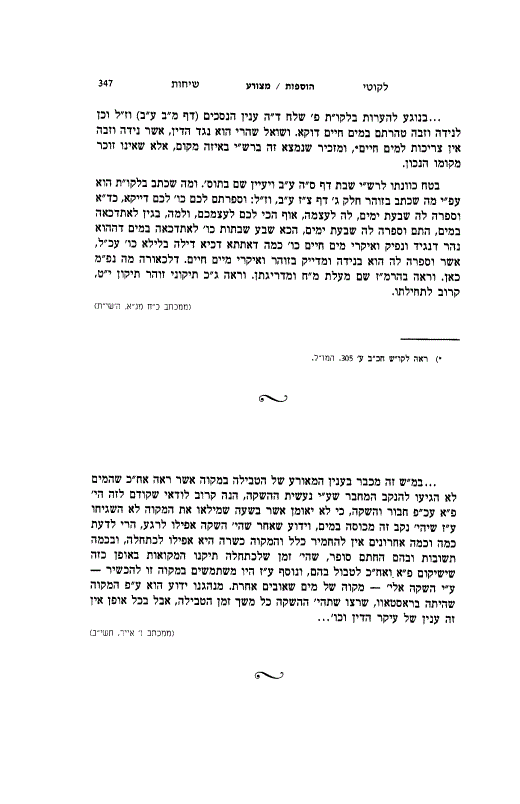
(בהוספת לצציונים מביא מציונים על לקו"ת דפוס תרפ"ח שנכתבו בצידי ובשולי העמוד, הספר הובא מרוסיא ואמרו שנמצאו בביהכנ"ס שם - עד עכשיו לא נתברר למי הוא): צע"ג ליישב דה"ק [דבריו הקדושים], וערש"י שבת (ס"ה, ב) ובתו' שם חומר בזב מבזבה. וע' פ"ה דמקואות מ"ה והרמב"ם שם נדחק בזה, וכבר עמד בזה בת' יעב"ץ ח"א (פ"ח). וע' רש"י סנהדרין (פז, א) ד"ה הלכתא משמע דמחלק בין זבה קטנה לזבה גדולה דבזבה גדולה בעי מים חיים. וגם י"ל דהתוספתא אתיא כר"ש. וע' בס' יראים סי' קצב [ובהשלם סי' כ"ו] דר"ש נפקא לי' טבילה לזבה מקרא דאחר תטהר א"כ לר"ש אינו מוכח דבעי מ"ח אבל רבנן דקי"ל כוותייהו דואחר תטהר אתיא לדרשא אחריתא וטבילה נפק"ל (מצוותן כו'?) לזב י"ל באמת דבעי' מים חיים.
- 1 =קיטור, smoke ע"פ יחזקאל ח, יא
- 2 בציונים ומ"מ מכ"ק אדמו"ר : נדה וזבה טהרתן במים חיים דוקא: ע"פ זח"ג צז, ב. תקו"ז בסופו סוף ת"ה. ר' נטרונאי גאון. ר' נחשון גאון, ר' פלטוי גאון. רבותיו של רש"י. ס' הפרדס לרש"י. וראה ירוש' ברכות פ"ג ה"ד. שאילתות דר"א צו. הל' גדולות הל' נדה. שאילת יעבץ ח"א ספ"ח.
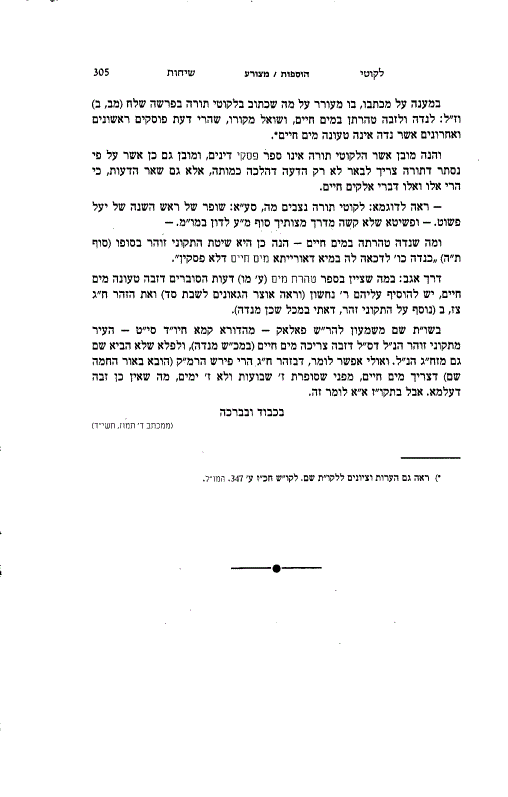 ועי' לקו"ש ח' כב ע' 305 וחלק כ"ז ע 347
Inyan HaNesachim.
The verse states in Parshas Tzav (Vayikra 7:18): "Ve'im ha'achel ye'achel mibesar zevach shelamav..." (And if any of the flesh of his peace offering is eaten...). Our Sages say (Zevachim 13b, 28b, and elsewhere) that the verse refers to two types of eating, one of which is the eating of the altar.
We need to understand the concept of the korbanos (sacrifices) that were offered on the altar from cattle, etc. Why is this called 'eating' as above? As it is written (Vayikra 3:11): "Lechem isheh laHashem" (a fire-offering bread to Hashem), and also: "Lachmi le'ishai..." (My bread for My fire-offering).
To understand the concept of the nesachim (wine libations) that were poured on the altar and descended into the shisin (channels) (Sukkah 49a), which are hollowed out and descend to the depths. This seems wondrous, as it is the opposite of the korban, which is an act of elevation: the ox or sheep is slaughtered, its life is taken, and its vitality ascends upward. Also, the smoke of the korban rises upward.[1] But the nesachim are from produce and descend downward to the depths. Why are the nesachim specifically wine? Also, the korban is not considered a pleasing aroma except with the nesachim. As our Sages say (Berachos 14b): Whoever recites Shema without tefillin is like one who brings a korban without nesachim. See also the discourse beginning Vayakhel Moshe for more on this.
The idea is based on the verse: "V'yayin yesamach levav... chadalti es tiroshi hamesameach Elokim..." (Wine gladdens the heart... I have withheld my wine that gladdens G‑d). Joy is the revelation of the hidden; through wine, or on the day of one's wedding and heart's joy, the hidden and innermost feelings of the heart emerge from concealment to revelation.
In everything that exists, there is an inner aspect and an outer aspect. The inner aspect is its receiving of vitality and its attachment to its source. The outer aspect is its influence on others. As it is said: There is no blade of grass, etc., that does not have a mazal, etc.
In every fruit, grass, or grain, there are two aspects: the taste of the fruit, which is spiritual, and the actual substance of the fruit. In the aspect of taste, there are two powers: the power to receive its vitality from the stars above, which cause growth, as it is written: "Mimaged tevuos shemesh u'mimaged geresh yarechim" (from the precious crops of the sun and the precious yield of the moons). Each individual star causes a specific plant to grow. The other power is to impart its vitality and taste into the physical substance of the fruit. And so it is, higher and higher.
Similarly, in living beings, their vitality, which is inner and spiritual, is attached to its source, which is the face of the lion and the face of the ox in the Merkavah (Divine Chariot). It is known that the face of the lion is the source of the soul of wild animals, and the face of the ox is the source of the soul of domestic animals. The vitality that enlivens the body and flesh of the animal is the outer aspect.
So too with the soul of man: the root and inner aspect of the soul is attached to its source, the face of man, to receive its vitality. The outer aspect of the soul is its influence that enlivens the body.
Similarly, regarding angels, it is written: "Umekablin din min din" (they receive from one another); the power that an angel has to say "Kadosh" is received from above, as it is written: "Ki gavohah me'al gavohah shomer u'gevohim aleihem" (for one higher than another watches, and there are higher ones above them). They also grant permission to one another, which is the aspect of influence from one angel to another who receives from him. And so it is in the general chain of worlds.
And so it is written in Etz Chaim: the entire chain of cause and effect is from the outer aspect, etc.
(That is, the order of the chain is that the outer aspect of the higher becomes the inner aspect of the lower, whereas the inner aspect of the higher does not descend to the lower. As is also written at the end of Iggeres HaKodesh: "And furthermore, as it is written: 'Ufanai lo yeirau' (My face shall not be seen), the inner aspect of the higher cannot descend below, only its outer aspect and its 'back,' which is the 'novlot chochmah ila'ah' (the leftovers of supernal wisdom). See also the discourse beginning Shishim heima malchot, etc.)
Thus, in all beings there is an inner aspect, which is called "panim" (face). (See Zohar Emor 93b on the verse "Bakshu panai"—seek My face.) The meaning is "to turn": "Ki panu elai" (for they have turned to Me), "Al teifen" (do not turn), which refers to every cause turning and attaching to its source. The outer aspect is the influence outward. There is also an intermediate aspect, which is the essence that connects the two aforementioned powers.
(It can be said that these three aspects are Chabad, Chagat, and Nehi. See Etz Chaim, Shaar 26, chapter 1. Perhaps this is also the idea that every vessel has three aspects: inner, intermediate, and outer, whose acronym is Satar—end, middle, head. As explained elsewhere.)
These three powers correspond to Avraham, Yitzchak, and Yaakov. Avraham is chesed and water, which descends from above, representing the power of influence. Yitzchak is fire, whose nature is to ascend. Yaakov is the middle bar that connects and unites both powers.
This is the meaning of "V'yayin yesamach levav enosh" (wine gladdens the heart of man): wine arouses the revelation of the soul's inner aspect from concealment to revelation. This is because wine is hidden and concealed within the grape and emerges from concealment; therefore, its nature is to arouse revelation of the hidden. Anyone who drinks wine, his face reddens, which is the revelation of the hidden. This is because the vital soul is clothed in the blood, and wine arouses the revelation of the inner blood, and thus the inner aspect of the vital soul clothed in the blood is also revealed. However, if one drinks excessively, sleep overcomes him, which is due to the overwhelming revelation of the hidden—the vessel cannot contain the abundance of the revelation of the inner aspect.
2) Now we can explain why korbanos are called bread and food. The function of food is to connect the vitality of the soul with the body. Although the soul itself has the power to extend vitality to the body, nevertheless, it does not act except through bread. As it is written: "Lechem levav enosh yisad" (bread supports the heart of man), and "Vesa'adu levavchem" (and support your hearts)—see Rashi. The bread supports and elevates the heart to receive vitality from the brain.
(The word "sa'ad" means to support so that it does not fall, as in "lehachin otah u'lesa'adah" (Yeshayahu 9), meaning it should not falter.)
This is after the food is digested in the stomach, the waste and outer part of the food is expelled and goes out through the intestines, and the choicest part rises to the heart and brain. Then, vitality descends from the brain to the heart and all the limbs.
Similarly, this can be understood above. As it is written: "Ve'ata mechaye es kulam" (You give life to them all), the vitality of all the worlds is analogous to the soul's vitality in the body, which has inner and outer aspects as above, and the connection is through bread. (See further.) This is the concept of korbanos.
The food must first be refined. This is the meaning of "V'chol kirbai es shem kodsho" (and all my innards bless His holy name), "Hamu mei'ai lo..." (my innards yearn for him). There are angels that are like eyes—"Einei Hashem" (the eyes of Hashem). Some are like ears, and some are like intestines—they are the ones who refine, etc.
The waste is expelled outward, which is the aspect of outer influence, descending through many levels until it causes all grass and grain to grow. As it is written: "U'mimaged tevuos shemesh..." (from the precious crops of the sun, etc.).
The choicest part rises to the heart, which is the aspect of the Kisei HaKavod (Divine Throne), which is myriads upon myriads. The camp of Michael is with love, and the camp of Gavriel is with awe, both of which are called "heart." Through the korbanos from cattle and sheep, the supernal heart is supported, rising to receive vitality from the brain: "Reiach nichoach laHashem" (a pleasing aroma to Hashem).
This means that the aspect of the animal rises in the aspect of the face of the ox. As it is written: "Ve'hachayos nos'os es hakisei..." (and the living creatures carry the throne).
(This is the meaning of "U'v'yom simchas libo—this is the building of the Beis HaMikdash." Regarding the Beis HaMikdash, our Sages say: "Mechon leshivtecha—corresponds to Your dwelling place," this is the supernal Beis HaMikdash, which is the Kisei HaKavod. As it is written in Etz Chaim, Shaar Kisei HaKavod. See Zohar III, Shelach 161b: it is called Kodesh HaKodashim, and there the heart dwells, etc. Through the korban, the elevation is made to receive from supernal wisdom and even higher. See the discourse beginning Levavtani Achosi.)
This is the concept of the act of korbanos: elevation and food, connecting the extension of vitality to enliven all the worlds in the aspect of "Ve'ata mechaye..." The aspect of nesachim is the drawing down and revelation of the inner aspect. As it is written: "Ya'er Hashem panav eilecha..." (May Hashem shine His face upon you), "Nesech sheichar laHashem" (pour a libation of strong drink to Hashem), which is the aspect of Sovev Kol Almin (the encompassing Divine light). This is "yayin hamesameach Elokim..." (wine that gladdens G‑d), the drawing down from above to below.
(The difference between the zevach (sacrifice) and the nesachim seems to be twofold. First, the zevach is elevation, and the bread that supports the heart also elevates it to receive vitality from the brain. Second, through bread, the soul is connected to the body; without bread, the soul would depart from the body, and not even the outer vitality would be drawn and revealed in the body. Through bread, the vitality of the soul is extended and spread throughout the body.)
However, the inner vitality remains concealed within the body, and only the outer aspect is revealed. Wine brings joy and draws down the revelation of the inner aspect, etc.
Similarly above: although through the korban, "the living creatures carry the throne," the elevation of the heart above to receive from the brain, and from this comes "Ve'ata mechaye es kulam" (from the heart, vitality flows to all the limbs)—still, the inner vitality remains concealed, and only the outer aspect is revealed. For the revelation of the inner aspect itself, this is through the nesachim, which are the drawing down and revelation of the inner aspect, etc.
However, it can also be said, as explained in Etz Chaim, Shaar 39, Drush 5, that sometimes the lower also ascends in both aspects, taking even the inner aspect of the higher, and then it becomes truly like it. See there.
Thus, what was said above in the name of Etz Chaim, that the inner aspect of the higher does not descend to the lower, means it does not descend on its own, but through elevation, the lower can sometimes ascend so much that it takes even the inner aspect of the higher. See the discourse beginning Shuvah Yisrael.
According to this, it is possible to say that even through the zevach and the elevation, which is the concept of "the living creatures carry the throne," sometimes the elevation can be so great that it takes even the inner aspect of the higher.
Nevertheless, this is only through ascent from below to above, but for the revelation of the inner aspect of the higher below itself, this is through the nesachim.
This is the concept of "yayin hamesameach Elokim" (wine that gladdens G‑d), which gladdens the concealment and hiddenness that comes from the name Elokim, so that it will not conceal and hide, and the inner aspect will be revealed below.
(See Zohar I, Parshas Noach 70a-b; Zohar III, Vayikra 4a on the verse "Shesu v'shachru dodim"; and Vayechi 248a.)
Therefore, every korban had nesachim, because the main elevation is for the sake of the subsequent drawing down.
And this is what our Sages say: Whoever recites Shema without tefillin is like one who brings an olah without a minchah and a zevach without nesachim—his korban is nothing, for he has not drawn anything down without the minchah and nesachim.
(Seemingly, this Gemara is a difficulty for the Rambam and Ra'avad, who write in their commentary to the Mishnah, Menachos 4:42, that the halacha does not follow Rabbi Shimon, who says: If they had many bulls but no nesachim, they should bring one bull with its nesachim, and not offer all without nesachim. However, as explained in the Sefer V'shav HaKohen in Menachos, this is resolved. See there, where he also refutes the Tosefos Yom Tov.)
The concept of minchah and nesachim is the drawing down of Chabad (Chochmah, Binah, Daas) below. Oil is the aspect of Chochmah, as oil floats on wine. Also, oil is extracted from everything, even from stones (called alim), because everything was made with wisdom. Therefore, in everything there is an aspect of oil, which is Chochmah. The fine flour of the minchah is Daas, as our Sages say: a child does not know how to call, etc. They also say: the tree of knowledge was wheat. The nesachim, which are wine, are Binah.
Thus, minachos and nesachim are the drawing down of Chabad below, and without them, nothing is drawn down below.
(It was explained above that Chabad is the inner aspect, so drawing down Chabad below is the revelation of the inner aspect below.)
This is also the idea of Shema without tefillin. Shema is contemplation on Hashem's unity, the soul's yearning in elevation. Tefillin is the drawing down of unity onto physical parchment. Without tefillin, there is only elevation, like an olah without a minchah, etc. And this is sufficient for the understanding.
The concept of the pouring, that they would pour the nesachim into the shisin and it would descend to the depths, is based on the verse: "Yehi rakia b'soch hamayim v'yehi mavdil bein mayim l'mayim..." (Let there be a firmament in the midst of the waters, and let it separate between water and water)—between upper waters and lower waters. Initially, there was water within water, which was spiritual and not physical water. (See Alshich on Bereishis: "Vehaaretz hayesah tohu...") It is written: "V'ruach Elokim merachefes al p'nei hamayim" (the spirit of G‑d hovered over the waters). See Bereishis Rabbah, end of chapter 2 and beginning of Tazria. These were spiritual waters, which are Chochmah. It is known regarding "Or, Mayim, Rakia" (light, water, firmament). Water has no color, etc. A mikvah purifies the impure, etc.
On the second day, when the waters were separated, the upper waters became more spiritual than before the separation, and the lower waters became more physical. Like a barrel of wine mixed with sediment: when mixed, the wine is not clear and the sediment is not so coarse, but when the sediment settles, the wine becomes clear and the sediment becomes very coarse. So too, before the separation, there was water within water; after the separation, the upper waters were elevated in spirituality, and the lower waters became more physical.
On the third day, it is written: "Yikavu hamayim mitachas hashamayim el makom echad" (let the waters under the heavens be gathered to one place), which is the depths, and they became even more distant. As it says: "Gaar bahen haKadosh Baruch Hu" (He rebuked them), which is an aspect of gevurah and judgment, and they require refinement.
This is accomplished by their springing forth from beneath the earth, from below to above, which sweetens them. (See Parshas Toldos on "Vayachperu avdei Yitzchak" and Parshas Chukas on "Ali be'er...") Similarly, for a niddah and zavah, their purification is specifically with living water.[2] Our Sages say: a spring purifies with any amount.
(See the discourse on "Vayikchu eilecha parah.")
This is the concept of the nesachim, that they would pour wine and it would descend to the depths. That is, through the revelation of the inner aspect, the drawing down reaches even the lowest levels and gives them the power to ascend in holiness. This is "bakodesh hasech nesech..." (in holiness, pour a libation, etc.). The pouring is specifically with wine, because judgments are only sweetened at their source, which is Binah, from which judgments are aroused.
The reason there is a difference in the nesachim between a bull and a ram, etc., as it is written: half a hin for a bull, a third of a hin for a ram, etc., is because the drawing down is according to the elevation. The elevation of the bull is the elevation of the essence of the face of the ox, so the drawing down from above is also in greater measure—half a hin—and it can elevate more levels of the lower and harsher judgments. Whereas the ram and sheep, which are not the essence of the face of the ox, their drawing down is only a third or a quarter of a hin, etc.
(See about a quarter of a hin in Zohar III, Shelach 162b; Balak 204a on "Umispar es rova Yisrael." About half a hin, see Raaya Mehemna, beginning of Parshas Tisa 187b. See also Pri Etz Chaim, Shaar 21, chapter 6, on the meaning of "dodi.")
This is what our Sages say: "Vehashteyah k'das shel Torah—achilah merubah mishtiyah" (drinking according to the law of Torah—eating is more than drinking). The elevation is greater than the drawing down. As our Sages say: not a drop descends from above unless two drops ascend to meet it, etc. See also the Gemara (Sukkah 49a) on the verse: "V'gam yekev chatzav bo—elu hashisin" (and he hewed out a wine vat—these are the channels). In Ma'amar HaOlam, letter Yud, section 23, "yekev" is explained as the unification of the names Havayah and Elokim, which is the gematria of "yekev." The firmament that separates between the waters is the name Elokim, as in: "Ki shemesh umagen..." (for a sun and a shield...). Regarding the nesachim, it is written: "Hasech nesech sheichar laHashem" (pour a libation of strong drink to Hashem), which draws down the revelation of the name Havayah, the inner aspect, to gladden the name Elokim as above. This is through the unification of the names, i.e., drawing down Havayah into Elokim. This drawing down also reaches the lower waters beneath the firmament, etc. This is "V'gam yekev chatzav bo."
See more about "yekev" in Zohar I, end of Lech Lecha 96b; Raaya Mehemna, Parshas Mishpatim 116a, where "yekev" is explained as the unification of holiness and blessing. See also 119a and Parshas Pekudei 262a. See also the discourse beginning "Ve'ata merivavos kodesh."
Summary
This maamar explains the difference between sacrifices and wine libations in the Beis HaMikdash. Sacrifices elevate the lower to the higher, while nesachim (wine libations) draw down the innermost Divine light into the world, revealing G‑dliness even in the lowest realms. Both are needed for true spiritual connection.