Likkutei Sichos Vol. 34 – Vayeilech 1
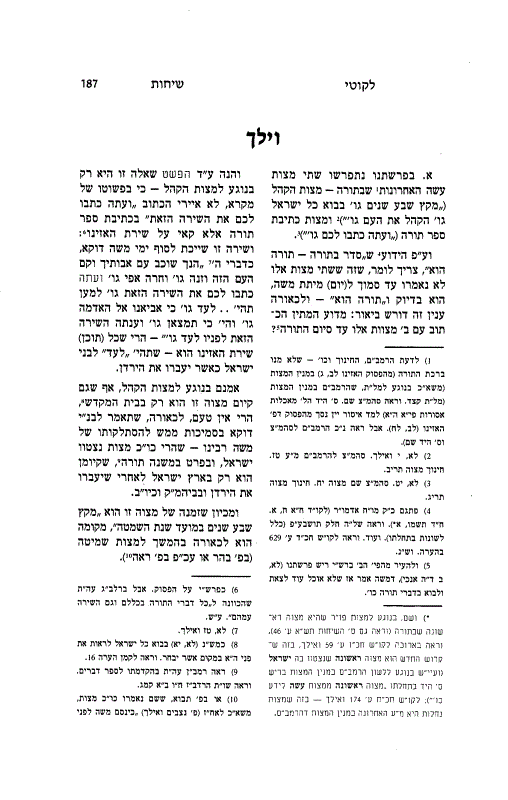
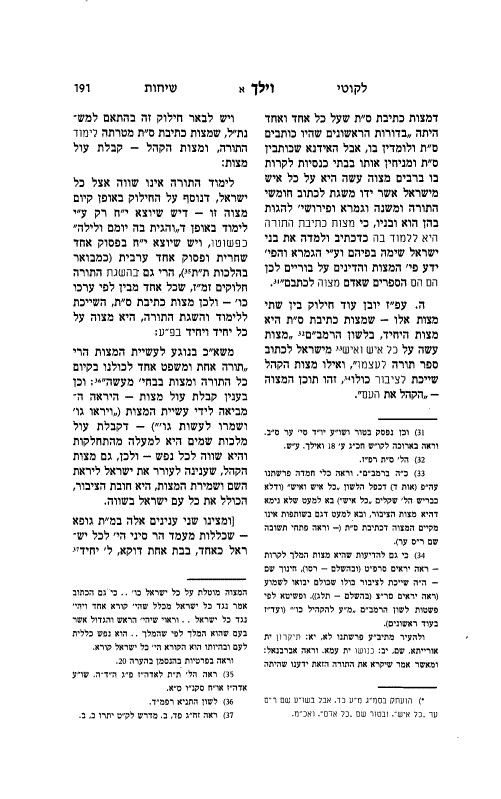
1. In our parsha, the last two positive commandments of the Torah are explained — the mitzvah of Hakhel ("At the end of seven years... when all Israel comes... gather the people...") and the mitzvah of writing a Sefer Torah ("And now, write for yourselves...").
It is known that "the order in the Torah is itself Torah," so we must say that the fact these two mitzvos were not mentioned until close to the (day of) Moses' death is precise and "Torah." However, this matter seemingly requires explanation: Why did the scripture wait with these two mitzvos until the end of the Torah?
Regarding the peshat, this question is only relevant to the mitzvah of Hakhel — because in the simple meaning of the text, the verse "And now, write for yourselves this song" does not refer to writing a Sefer Torah but pertains to the Song of Ha'azinu; and this song is specifically related to the end of Moses' days, as G‑d said, "Behold, you will lie with your fathers, and this people will rise and stray... and My anger will flare... and now, write for yourselves this song... so that it will be... as a witness... because I will bring them to the land... and it will be when many evils and troubles befall them... then this song will testify before them as a witness" — thus, the entire content of the Song of Ha'azinu is to be a "witness" for the Children of Israel when they cross the Jordan.
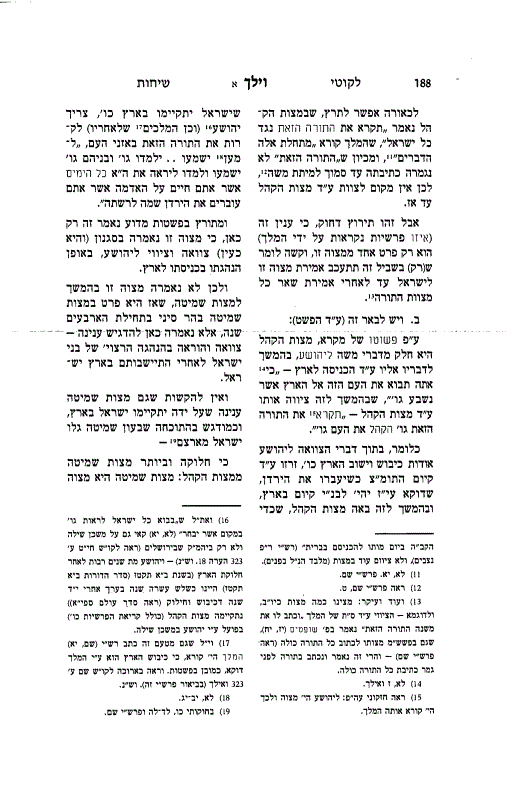
However, regarding the mitzvah of Hakhel, even though the fulfillment of this mitzvah is only in the Temple, there is seemingly no reason for it to be said to the Children of Israel specifically right before Moses' passing — for there are many mitzvos, especially in Deuteronomy, whose fulfillment is only in the Land of Israel after crossing the Jordan and in the Temple, etc.
Since the time for this mitzvah is "at the end of seven years, at the time of the Shemittah year," its place is seemingly in continuation with the mitzvah of Shemittah (in Parshas Behar or at least in Parshas Re'eh).
One might seemingly answer that in the mitzvah of Hakhel it is stated, "You shall read this Torah before all Israel," where the king reads "from the beginning of these words," and since "this Torah" was not completed until close to Moses' death, there was no place to command about the mitzvah of Hakhel until then.
But this is a forced answer, because this matter (which sections are read by the king) is only one detail of this mitzvah, and it is difficult to say that (only) because of this, the commandment of this mitzvah to Israel was delayed until after the statement of all the other mitzvos of the Torah.
2. This can be explained (according to the peshat):
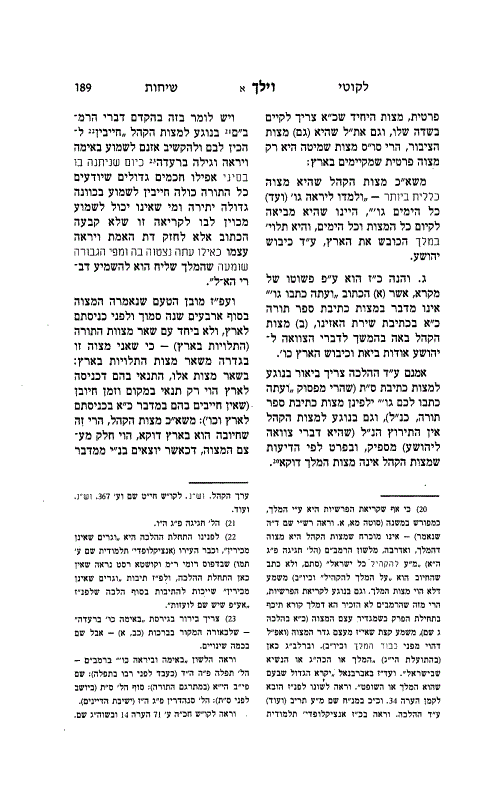
According to the simple meaning of the text, the mitzvah of Hakhel is part of Moses' words to Joshua, following his words to him about entering the land — "For you shall bring this people to the land which I swore..." Following this, he commanded him regarding the mitzvah of Hakhel — "You shall read this Torah... gather the people..."
In other words, within the words of the command to Joshua about conquering and settling the land, etc., he encouraged him regarding the observance of the Torah and mitzvos when they cross the Jordan, for only through this will the Children of Israel have permanence in the land. In continuation of this comes the mitzvah of Hakhel, that in order for Israel to endure in the land, etc., Joshua (and the kings after him) must read this Torah in the ears of the people, "so that they may hear... learn... and their children... will hear and learn to fear the L‑rd your G‑d all the days that you live on the land which you are crossing the Jordan to possess."
This simply explains why it was stated only here, because this mitzvah was said in the style (and is akin to) a command and instruction to Joshua, regarding his conduct upon entering the land.
Therefore, this mitzvah was not stated in continuation with the mitzvah of Shemittah, which would then be a detail in the mitzvah of Shemittah at Mount Sinai at the beginning of the forty years, but was stated here to emphasize its essence — a command and instruction in the desired conduct of the Children of Israel after their settlement in the Land of Israel.
And one should not question that the mitzvah of Shemittah also involves the idea that through it Israel will endure in the land, as emphasized in the rebuke that due to the sin of Shemittah, Israel was exiled from their land —
For the mitzvah of Shemittah is distinct and even more so from the mitzvah of Hakhel: the mitzvah of Shemittah is a mitzvah...
3. The mitzvah of Shemittah is a personal mitzvah that each individual must fulfill in their own field. Even if we say that it is also a communal mitzvah, it remains fundamentally a personal mitzvah observed in the land. In contrast, the mitzvah of Hakhel is a most general mitzvah — "that they may learn to fear... (and) all the days..." — meaning it leads to the fulfillment of all the mitzvos and throughout all days, and it is dependent on the king who conquers the land, similar to Joshua's conquest.
All this is according to the simple meaning of the verse, where (a) the verse "And now write..." does not refer to the mitzvah of writing a Torah scroll but rather to the writing of the Song of Haazinu, and (b) the mitzvah of Hakhel follows the words of instruction to Joshua regarding the entry and conquest of the land, etc.
However, according to halacha, clarification is needed regarding the mitzvah of writing a Torah scroll (since from the verse "And now write for yourselves..." we derive the mitzvah of writing a Torah scroll, as mentioned above), and also regarding the mitzvah of Hakhel, the above explanation is insufficient, especially according to the opinions that the mitzvah of Hakhel is not exclusively a mitzvah of the king.
We can explain this by prefacing with the words of the Rambam regarding the mitzvah of Hakhel: "They are obligated to prepare their hearts and listen with their ears to hear with awe and reverence, joy and trembling, as on the day it was given at Sinai. Even great sages who know the entire Torah are obligated to listen with great intent, and one who cannot hear should direct his heart to this reading, for it was only established to strengthen the true religion, and he should see himself as if he is now commanded in it and hears it from the mouth of the Almighty, for the king is an emissary to convey the words of G‑d."
Based on this, we understand the reason the mitzvah was stated at the end of the forty years, close to and before their entry into the land, and not together with the other mitzvos of the Torah (that are dependent on the land) — because this mitzvah is different in its essence from other mitzvos dependent on the land: In these other mitzvos, the condition of entering the land is merely a condition of place and time for their obligation (that they are not obligated in the desert, only upon entering the land, etc.); whereas the mitzvah of Hakhel, the fact that its obligation is specifically in the land, is part of the essence of the mitzvah. When the Children of Israel leave the desert of Sinai — the place where they received the Torah from the mouth of the Almighty — to a completely different place; and similarly, they transition from the leadership of Moses (who received the Torah from the mouth of the Almighty) to the leadership of Joshua — they need, from time to time, an experience similar to the giving of the Torah at Sinai, "assemble the people, the men, the women, and the children, and your stranger," to strengthen and encourage them in the mitzvos of the Torah.
Based on this, we can say (similarly) regarding the mitzvah of writing a Torah scroll, which is explicitly stated as "write — the verse considers it as if they received it from Mount Sinai," and this is brought as halacha in the Rambam regarding the mitzvah of writing a Torah scroll. For this is the (content) of the mitzvah of writing a Torah scroll in its completeness, that even those who were not physically present at Mount Sinai during the giving of the Torah, should have an experience akin to receiving the Torah. Therefore, this mitzvah was stated in proximity to their departure from the desert and the leadership of Moses.
4. We can explain the reason there are two mitzvos to always have an experience akin to the giving of the Torah at Sinai:
At the giving of the Torah at Mount Sinai, there were (in general) two aspects: a) the acceptance of the Torah in its essence (its study), and b) the acceptance of the mitzvos.
We can say that these two aforementioned mitzvos correspond to these two aspects: The mitzvah of Hakhel pertains to the acceptance of the mitzvos of the Torah, and the mitzvah of writing a Torah scroll is (primarily) for the study of the Torah.
As explicitly stated in the verse, the content of the mitzvah of Hakhel is "so that they may hear and so that they may learn and fear the L‑rd your G‑d and observe to do all the words of this Torah, and their children who do not know will hear and learn to fear the L‑rd your G‑d all the days..." — meaning the primary emphasis is on the fear of G‑d that leads to the fulfillment of the mitzvos; whereas the mitzvah of writing a Torah scroll, its content is "And now write... and teach it to the Children of Israel, place it in their mouths," the purpose of the writing is — the study.
This distinction between these two mitzvos is also found in halacha, and there is even a practical difference that arises from it:
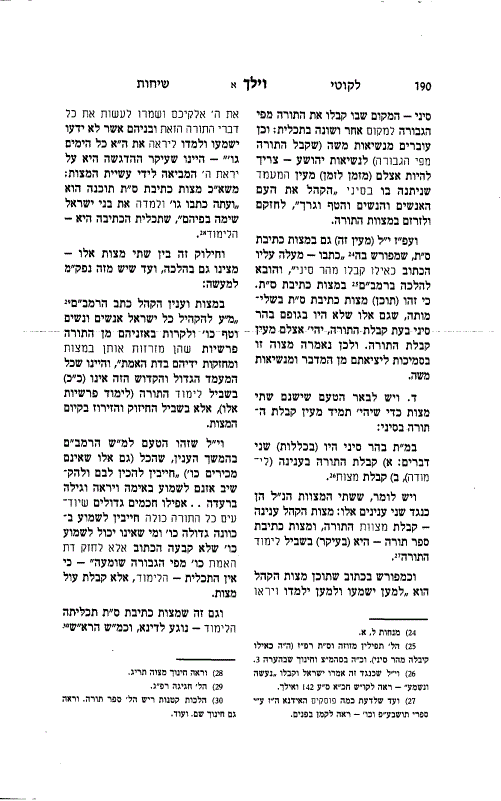
3. Regarding the mitzvah and concept of Hakhel, the Rambam writes: "It is a positive commandment to gather all of Israel—men, women, and children, etc.—and to read in their ears from the Torah sections that encourage them in the mitzvos and strengthen their commitment to the true religion." This means that the entire great and holy assembly is not primarily for the study of the Torah (the study of these sections), but rather for strengthening and encouraging the observance of the mitzvos.
It can be said that this is the reason for what the Rambam writes further in the matter, that everyone (even those who do not understand, etc.) "must prepare their hearts and listen with their ears to hear with awe, fear, joy, and trembling... even great sages who know the entire Torah are obligated to listen with great intent, etc. And whoever cannot hear, etc., for the Torah was only established to strengthen the true religion, etc., as if heard from the mouth of the Almighty" — because the purpose is not the study, but the acceptance of the yoke of the mitzvos.
And also, the fact that the mitzvah of writing a Torah scroll is for the purpose of study is relevant to the law, as the Rosh writes:
The mitzvah of writing a Torah scroll, which was incumbent upon each individual "in earlier generations when they would write a Torah scroll and study from it, but nowadays when they write a Torah scroll and leave it in synagogues to be read publicly, the positive commandment is upon every Jewish man who can afford it to write the Chumashim, Mishnah, Gemara, and their commentaries to study them himself and with his children, because the mitzvah of writing the Torah is to study it, as it is written, 'And teach it to the Children of Israel, place it in their mouths,' and through the Gemara and the commentaries, one will know the explanation of the mitzvos and the laws thoroughly, therefore these are the books that a person is commanded to write."
5. Based on this, we can understand another distinction between these two mitzvos: the mitzvah of writing a Torah scroll is an individual mitzvah. In the words of the Rambam, "It is a positive commandment upon every individual Jew to write a Torah scroll for himself," whereas the mitzvah of Hakhel pertains to the entire community, as the content of the mitzvah is "gather the people."
This distinction can be explained according to what was mentioned earlier, that the mitzvah of writing a Torah scroll aims at Torah study, while the mitzvah of Hakhel is about the acceptance of the yoke of mitzvos:
Torah study is not the same for all Jews. Besides the difference in how this mitzvah is fulfilled—some fulfill their obligation only by studying in the manner of "you shall meditate on it day and night" literally, while others fulfill it with one verse in the morning and one verse in the evening (as explained in the laws of Torah study)—there is also a difference in the comprehension of the Torah, as each person understands according to their level, etc. Therefore, the mitzvah of writing a Torah scroll, which is related to the study and comprehension of the Torah, is a mitzvah for each individual separately.
In contrast, regarding the performance of the mitzvos, there is "one Torah and one law for all of us in the fulfillment of the entire Torah and mitzvos in the aspect of action"; and similarly, in the matter of accepting the yoke of mitzvos—the fear that leads to the performance of the mitzvos ("and they shall fear... and observe to do...")—the acceptance of the yoke of the kingdom of Heaven is beyond division and is equal for every soul. Therefore, the mitzvah of Hakhel, which aims to awaken Israel to the fear of G‑d and the observance of the mitzvos, is a communal obligation, including all of Israel equally.
[We find these two aspects in the giving of the Torah itself—that the general event of Mount Sinai was for all of Israel as one, at once, in the singular form (and our sages said that "if even one Jew was missing," they would not have merited the giving of the Torah), and on the other hand, our sages said that one of the reasons the Ten Commandments were said in the singular form is because they were addressed to each individual separately.
It can be said that these two aspects in the manner of the giving of the Torah correspond to the two aspects given at Sinai: the giving of the Torah and mitzvos to Israel in a manner that is equal for all—and from this perspective, the giving of the Torah includes the particulars of the entire Jewish people as one entity; whereas the study of the Torah given at Sinai is for each individual according to their level.]
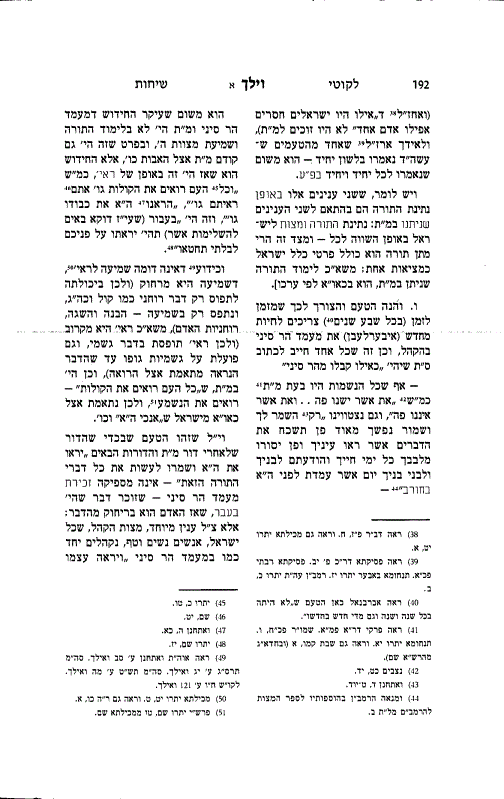
6. Now, the reason and necessity for the fact that from time to time (every seven years) there is a need to relive the experience of Mount Sinai through Hakhel, and similarly, that each individual is obligated to write a Torah scroll so that it is "as if they received it from Mount Sinai"...
6. Although all the souls were present at the time of the giving of the Torah, as it is written, "those who are here... and those who are not here," and we were also commanded, "Only take heed and guard your soul diligently, lest you forget the things your eyes have seen, and lest they depart from your heart all the days of your life, and you shall make them known to your children and your children's children, the day you stood before the L‑rd your G‑d at Horeb"—
This is because the primary novelty of the event at Mount Sinai and the giving of the Torah was not in the study of the Torah and the hearing of G‑d's commandments, especially since this existed even before the giving of the Torah among the Patriarchs, etc. Rather, the novelty was that it occurred in a manner of seeing, as it is written, "And all the people saw the voices," "You have seen," "The L‑rd our G‑d showed us His glory," and this was "so that His fear may be upon your faces, so that you do not sin."
As it is known, hearing is not comparable to seeing. Hearing is from a distance, whereas seeing is from up close (and therefore seeing grasps something physical, and also affects the physicality of the body until the seen matter becomes verified for the seer). This was the case at the giving of the Torah, where "all the people saw the voices"—they saw what was heard, and thus it became verified for each individual Jew that "I am the L‑rd your G‑d," etc.
It can be said that this is the reason why, for the generation following the generation of the giving of the Torah and the subsequent generations to "see the L‑rd and keep all the words of this Torah," the remembrance of the event at Mount Sinai is not sufficient—since remembering something that happened in the past places a person at a distance from it. Rather, there must be a special matter, the mitzvah of Hakhel, where all of Israel, men, women, and children, gather together as at Mount Sinai, "and see themselves as if they are now commanded in it and hear it from the mouth of the Almighty, with the king as the emissary to proclaim the words of G‑d."
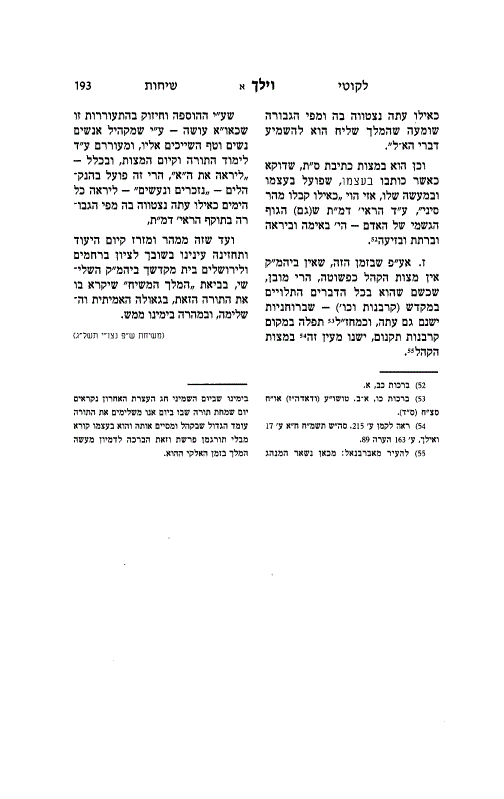
Similarly, with the mitzvah of writing a Torah scroll, it is only when one writes it themselves, affecting themselves and their actions, that it is "as if they received it from Mount Sinai," akin to the seeing at the giving of the Torah, where (also) the physical body of the person was in awe and fear, trembling and quaking.
7. Even though in our time, when there is no Temple, the mitzvah of Hakhel is not in its literal sense, it is understood that just as with all matters dependent on the Temple (sacrifices, etc.)—which exist spiritually even now, as our sages said, prayer was established in place of sacrifices—there is a semblance of this in the mitzvah of Hakhel.
Through the increase and strengthening of this awakening that each individual does—by gathering men, women, and children related to them, and inspiring them regarding the study of Torah and the observance of mitzvos, and in general, "to fear the L‑rd your G‑d," this affects those gathered—"they are remembered and fulfilled"—to fear all the days as if they were now commanded in it from the mouth of the Almighty with the intensity of the seeing at the giving of the Torah,
until this hastens and accelerates the fulfillment of the promise, "Our eyes shall behold Your return to Zion in mercy and to Jerusalem, Your Temple, the Third Temple," with the coming of "the King Messiah" who will read this Torah, in the true and complete redemption, and speedily in our days, amen.