There are two types of nevonim, people of understanding. The first type merely expands and develops the matter that was taught to them. This was the type of understanding required for the construction of the Mishkan. Judges, however, require a second type of understanding: the ability to add to what they have received—like a merchant moneychanger who “goes out and brings coins of his own”—so that they can rule on matters that are not explicitly addressed in the Torah.
Based on this, we can understand how Hashem could agree that the judges were required to be nevonim, even though Moshe said, “I did not find people of understanding.” The explanation is that there are two types of nevonim, as will be explained.
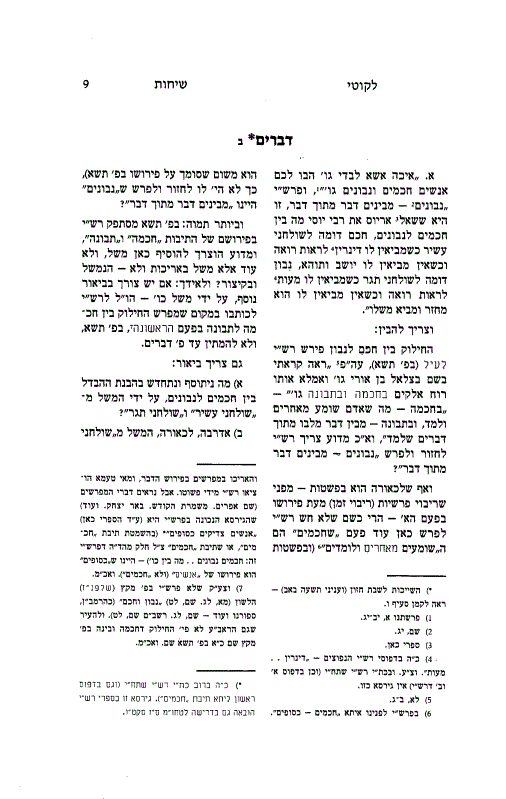
Rashi comments on the verse, “Choose for yourselves wise and understanding men”:
“Understanding men: Those who understand one matter from another. This is what Arius asked Rabbi Yosi: What is the difference between wise men and understanding men? A wise man resembles a wealthy moneychanger. When people bring him coins to examine, he examines them; when they do not bring him any, he sits idle. An understanding man resembles a merchant moneychanger. When people bring him money to examine, he examines it; when they do not bring him any, he goes out and brings money of his own.”
This requires explanation. Earlier, in Parshas Sisa, concerning the verse, “Betzalel son of Uri…and I have filled him with wisdom and understanding,” Rashi explains:
“Wisdom: That which a person hears from others and learns. Understanding: He comprehends something on his own from the matters he has learned.”
Why, then, must Rashi explain the concept again here, adding a parable?
Moreover, the parable does not appear entirely precise. The subject being explained is one who “understands one matter from another”—specifically, deriving it from the original matter. In the parable, however, the merchant moneychanger “goes out and brings money of his own,” rather than deriving it from the coins that were brought to him.
We must also understand why it is relevant that Rabbi Yosi gave this explanation in response to a question asked by Arius.
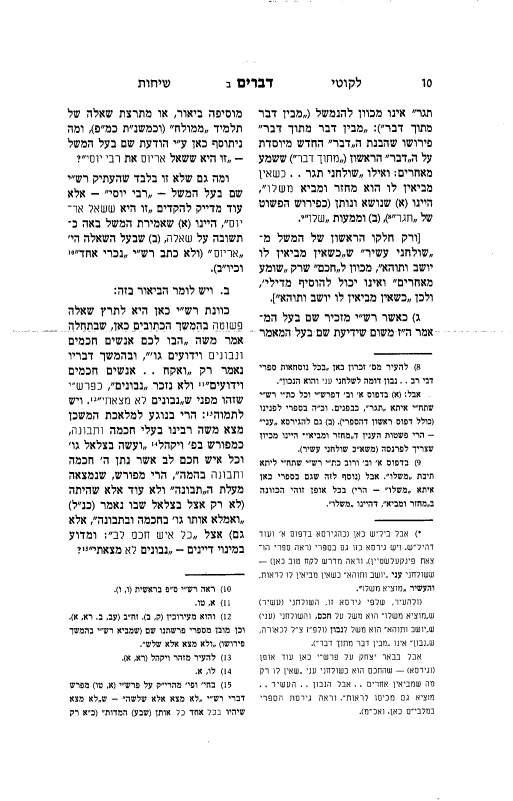
The explanation is that Rashi intends to answer a straightforward question. Regarding the building of the Mishkan, Moshe found people who possessed understanding—not only Betzalel, but also “every wise-hearted man in whom Hashem had placed wisdom and understanding.” Yet concerning the appointment of judges, Moshe declared, “I did not find people of understanding.” How can these two statements be reconciled?
The answer is that there are two types of nevonim.
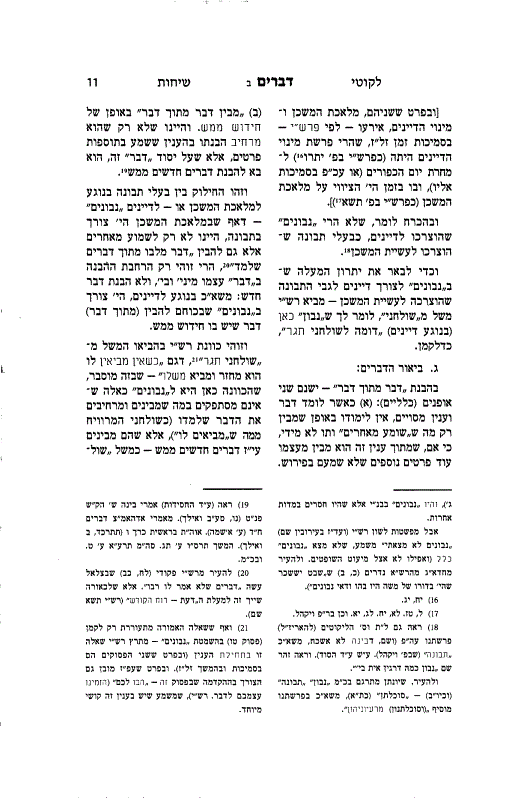
The first type consists of people who expand and develop the information they have received. This was the type of understanding needed to construct the Mishkan, for all the details of the Mishkan and its vessels followed “the form that you were shown on the mountain.” The task was to understand and elaborate upon instructions that had already been given.
Judges, however, require a different and higher type of understanding. They must not only expand upon the information they have received, but also add new applications of their own. They must resemble “a merchant moneychanger who goes out and brings money of his own,” because they are required to judge matters that are not explicitly stated in the Torah, as well as the various arguments presented by the litigants, particularly since the Jewish people were sometimes troublesome and contentious in their legal claims.
We can therefore understand how Hashem could agree that the judges should be nevonim, even though Moshe said, “I did not find people of understanding.” Hashem was referring to the first type of understanding, while it was the second, more advanced type that Moshe was unable to find.
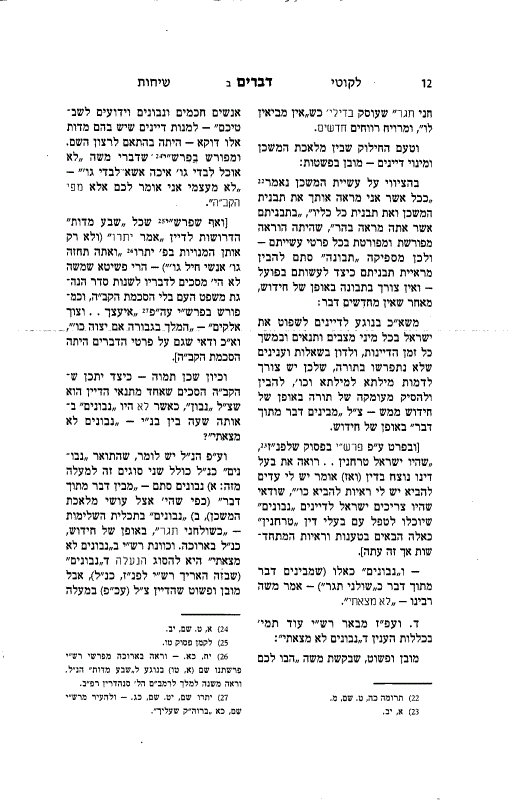
An astute student, however, may still ask: The words “I did not find people of understanding” appear to indicate that the second type of understanding was also included in Moshe’s requirement. The original question therefore returns: How could Hashem agree to establish a qualification that ultimately could not be found?
We must conclude that this quality is indeed an essential requirement for a judge. Therefore, every possible effort must be made to find a person who possesses it.
For this reason, Rashi identifies Rabbi Yosi as the author of this teaching. Our Sages say that “when Rabbi Yosi passed away, understanding ceased.” Rabbi Yosi therefore specifically emphasized the complete and highest form of understanding required of a judge.
At the same time, Rashi notes that “this is what Arius asked.” Arius was a non-Jewish priest. By mentioning him, Rashi cautions the astute student that a question of this nature is undesirable. It is not merely a question seeking to understand the words of the Torah; it challenges Hashem’s conduct and may therefore lead to a weakening of faith.
On the level of allusion and the mystical dimension of Torah, the name Arius is related to the word or, light, representing the faculty of wisdom as it exists in the realm of unholiness. Arius therefore questions the advantage of nevonim, associated with the faculty of understanding.
Rabbi Yosi, who represents the attribute of understanding, answers that true completeness is found specifically in understanding, which resembles “a merchant moneychanger who goes out and brings money of his own.”
The instruction, “Choose for yourselves…understanding men,” comes to correct Moshe’s lament, “How can I bear alone,” which is connected to the lament, “How does she sit alone,” describing the exile and destruction. The appointment of judges therefore contributes to the nullification of exile.
In the future, the Jewish people will inherit the lands of the Keini, Kenizi, and Kadmoni, which correspond to the intellectual faculties. Through the holy faculties of Chochmah, Binah, and Daas, the question of Arius will be nullified, and wisdom as it exists in the realm of unholiness will be transformed into holy wisdom.