
Likkutei Sichos Vol. 29 – Chag HaSukkos
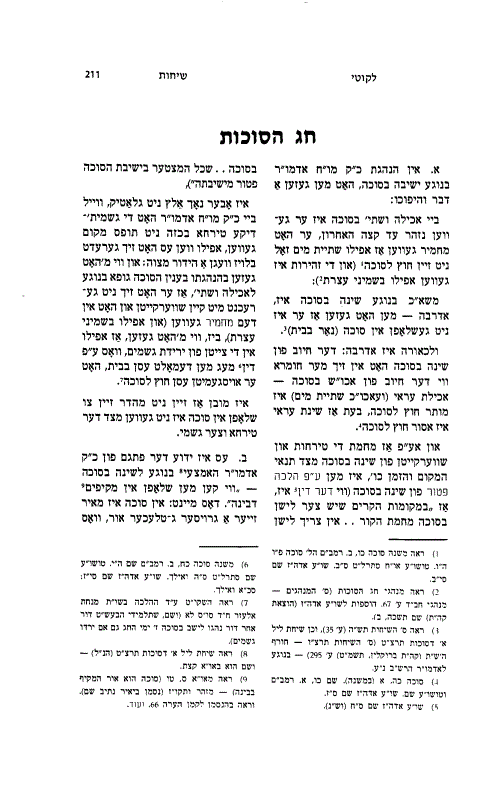
1. In the conduct of my father-in-law, the Rebbe, regarding sitting in the sukkah, we observed a paradox:
When it came to eating and drinking in the sukkah, he was extremely meticulous. He was stringent that even drinking water should not be done outside the sukkah (and this care was observed even on Shemini Atzeres).
However, regarding sleeping in the sukkah, on the contrary, it was observed that he did not sleep in the sukkah (but rather in the house).
Seemingly, this is surprising: the obligation to sleep in the sukkah is more stringent than the obligation to eat and drink in the sukkah. Casual eating (and certainly drinking water) is permitted outside the sukkah, whereas casual sleeping is forbidden outside the sukkah.
And even though, due to the difficulties and hardships of sleeping in the sukkah because of the conditions of the place and time, one is halachically exempt from sleeping in the sukkah (as the law states, "In cold places where it is distressing to sleep in the sukkah due to the cold... one does not need to sleep in the sukkah... for anyone who is distressed by sitting in the sukkah is exempt from sitting in it").
Nevertheless, this is still not straightforward, because for my father-in-law, the Rebbe, physical discomfort of this kind did not hold significance, even when it was merely a matter of enhancing a mitzvah. As we have seen in his conduct regarding the sukkah itself concerning eating and drinking, he did not consider any difficulties and was stringent in this matter (even on Shemini Atzeres), to the extent that, as observed, even during times of rain, when according to the law one may eat in the house, he avoided eating outside the sukkah.
It is understood that his lack of stringency in sleeping in the sukkah was not due to physical discomfort or distress.
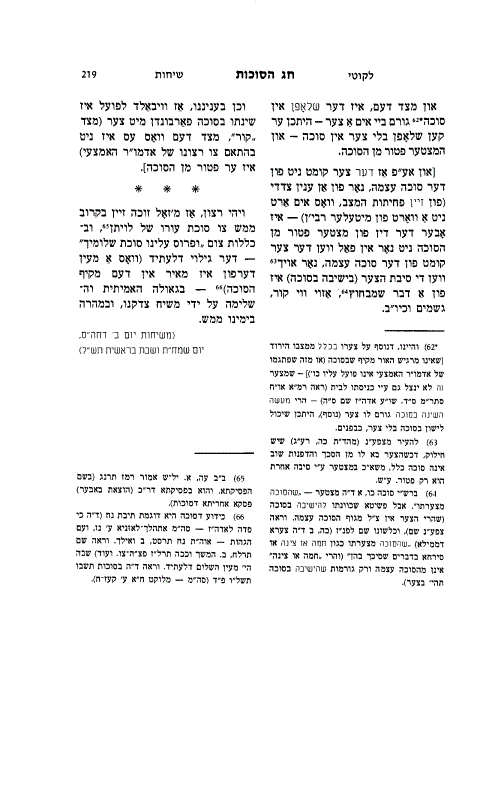
2. It is known the saying of the Mitteler Rebbe regarding sleeping in the sukkah — "How can one sleep in the encompassing light of Binah?" This means: in the sukkah, a very great divine light shines, which...
3. is too lofty to descend and be enclosed within the person (inwardly), rather the light surrounds him in a manner of makif (just like a sukkah in the literal sense, which "encompasses" the person, and not only the person himself (at least his head and most of his body), but also his table — in such a way that all his matters must be conducted within the makif of the sukkah — "you shall dwell as you reside"). And since such a high divine light shines there — how can one sleep there?! As the verse states — "Indeed, G‑d is in this place, and I did not know it (for if I had known, I would not have slept in such a holy place)."
It is obvious that this is according to halacha and simply: if one lies down in the sukkah and cannot fall asleep in any way, then according to the Shulchan Aruch, it is straightforward that he should go to sleep in his house. And if he is certain with absolute certainty that he will not be able to fall asleep in the sukkah, he should not attempt it from the outset.
This is also simply the reason why my father-in-law, the Rebbe, did not sleep in the sukkah: sitting in the sukkah, the encompassing light of the sukkah shone upon him in a revealed manner, and this did not allow him to fall asleep in the sukkah.
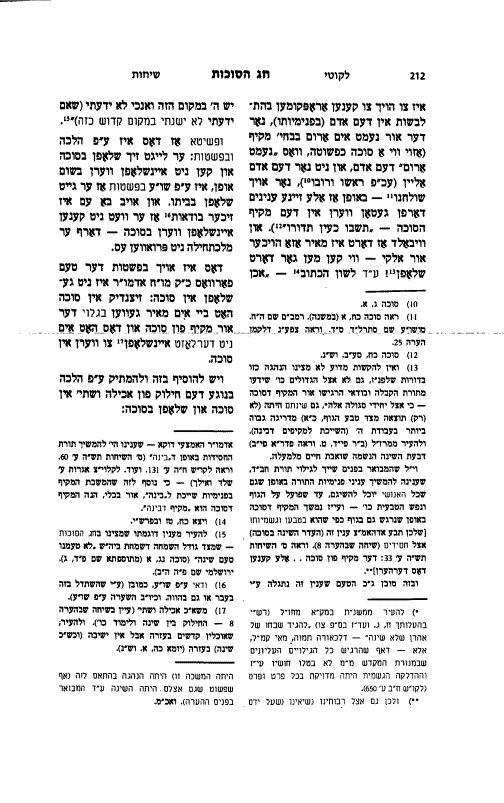
We can add to this and sweeten it according to halacha regarding the difference between eating and drinking in the sukkah and sleeping in the sukkah:
8. The distinction between sleeping and learning, etc. It is noteworthy that one may eat sacrificial offerings in the Temple courtyard, but sitting (and certainly sleeping) is not permitted in the courtyard (Yoma 25a and elsewhere).
This drawing down was conducted accordingly (even though it is obvious that for them, sleep was in the manner explained in the main text of the note). And this is not the place to elaborate further.
9. Regarding the concept of "you shall dwell as you live" (תשבו כעין תדורו), the Alter Rebbe explains that "any excessive effort that a person would not endure to live permanently in his home, he is not obligated to endure to dwell permanently in his sukkah." Similarly, concerning sleeping, if it is in such a manner that "if he had such an effort to sleep in his house, he would not sleep there, he is not required to sleep in the sukkah, for anyone who is distressed by dwelling in the sukkah is exempt from dwelling in it." As he further explains, the exemption of distress in the sukkah comes from the principle of "you shall dwell as you live," for "throughout the year, a person does not live in a place where he is distressed." Therefore, in any matter that is not included in "you shall live" in the house, the obligation of "you shall dwell" (in the sukkah) does not apply.
Similarly, in our case: in the situation discussed by the Mitteler Rebbe or the conduct of my father-in-law, the Rebbe, where the great revelation in the sukkah is a hindrance and obstruction to sleep, one is therefore exempt from sleeping in the sukkah, since even in the house, one would not be able to sleep under such conditions.
10. However, an explanation is needed for this:
As has been discussed many times, our holy Torah is one Torah — the inner dimension of the Torah (and its customs) and the halachic aspect of the Torah are "all one" — meaning that all parts of the Torah are consistent with each other and align as one. It is therefore understood that the customs of the great Jewish leaders (and those who follow in their footsteps), which are fundamentally based on the inner dimension of the Torah, must be in accordance with their matter according to halacha.
This is not understood in our case: since according to halacha, the mitzvah of sukkah obligates one to sleep in it, how can it be that the inner content of the sukkah (the "encompassing light" that shines in the sukkah) would contradict this (and not allow sleeping in the sukkah)?!
Or — in addition to this: the above explanation (section 9) is merely a permission not to sleep in the sukkah (since "you shall dwell as you live," as mentioned above); but ultimately, it seems there is a lack in the fulfillment of the mitzvah of sukkah. How can it be said that the inner content of the sukkah would cause a deficiency, G‑d forbid, in the fulfillment of the mitzvah of sukkah (simply according to halacha) as it should be and in its completeness? On the contrary, seemingly: the inner content of a mitzvah (in our case — the revelation of the encompassing light of the
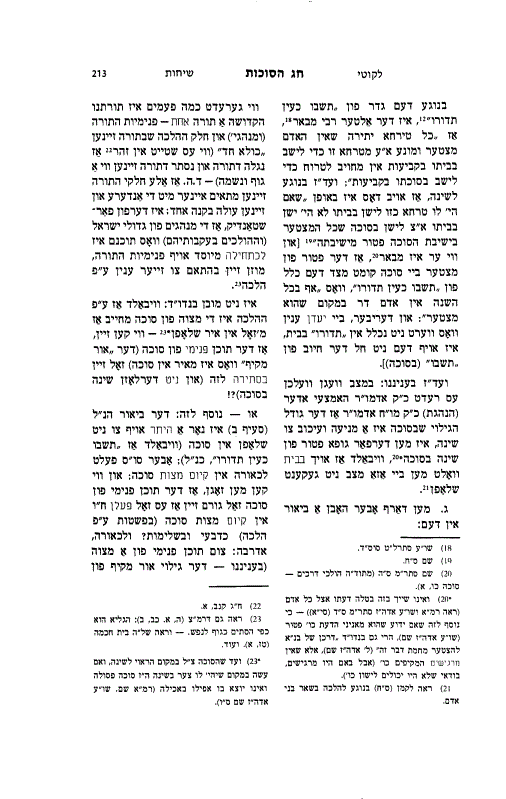
10. The encompassing light of the sukkah can only be accessed after and through the simple and physical fulfillment of the mitzvah!
11. At first glance, one might say, based on the explanation in Tzafnas Paneach, that there is a fundamental difference between eating and drinking in the sukkah and sleeping in the sukkah: eating and drinking are the fulfillment of the mitzvah of sukkah, whereas sleeping in the sukkah "is not the fulfillment of a mitzvah, but rather it is forbidden to sleep outside the sukkah." Based on this, he explains why in the Gemara and Rambam, when describing the mitzvah of dwelling in the sukkah, the detail of sleeping is not mentioned, only eating and drinking — "one eats, drinks, and spends time in the sukkah" (and not sleeping).
[This also simply answers the question of why we do not make a blessing on sleeping in the sukkah — because sleeping in the sukkah does not fulfill the mitzvah of sukkah, but merely avoids the prohibition of sleeping outside the sukkah.]
From this, it is understood that even when someone sleeps outside the sukkah with permission, as long as they eat and drink in the sukkah, there is nothing lacking in their fulfillment of the mitzvah of dwelling in the sukkah.
Accordingly, it is understood that there is no contradiction in the fact that according to its inner content, the sukkah "disturbs" the matter of sleeping, while according to halacha, one must sleep in a sukkah — because sleeping in the sukkah is not part of the essence of the mitzvah of (dwelling in) the sukkah; the obligation to sleep in the sukkah is merely a (result of the) prohibition against sleeping outside the sukkah, as mentioned above. In our case, since it causes discomfort, the prohibition does not exist from the outset.
[And one should not ask: after all, it is still not straightforward — how is it possible that according to halacha, the mitzvah of sukkah should cause a prohibition to sleep outside the sukkah, when according to the inner content of the mitzvah, on the contrary — sleeping outside the sukkah is permissible (and even in a fitting manner)?
— Because the Torah speaks in the majority of cases — the details of the mitzvos are arranged according to the content of the matter as it is for most people, and since most people do not feel the encompassing light of the sukkah, there is, on the contrary, an obligation to sleep in the sukkah (because it must be "you shall dwell as you live"); and therefore, there is no contradiction that for a minority — the unique individuals who do feel the encompassing light of the sukkah — the inner content of the sukkah causes them to be exempt (according to halacha, as mentioned above in section 2) from sleeping in the sukkah.]
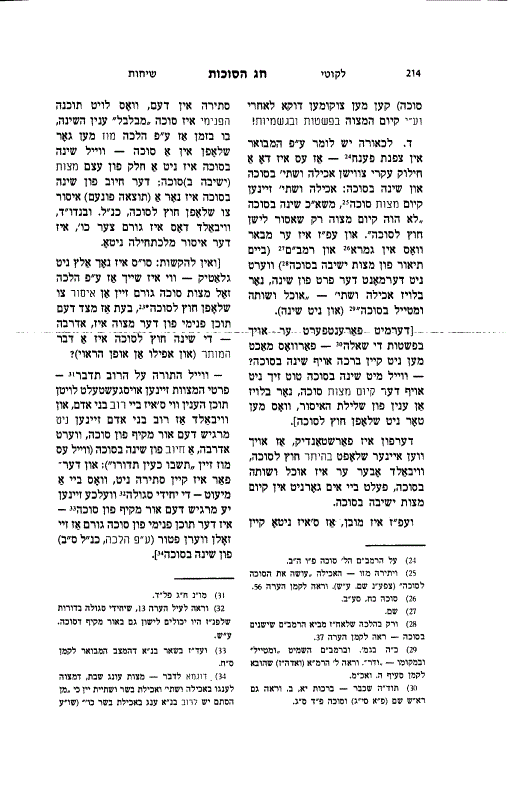
5. However, in truth, one cannot justify the custom of our Rebbeim, the leaders of Chabad, in this manner. This is because, according to the ruling of the Alter Rebbe in his Shulchan Aruch, sleeping is also a part of the mitzvah of dwelling in the sukkah. As he explicitly states: "How is the mitzvah of dwelling in the sukkah fulfilled? By eating, drinking, sleeping, strolling, and living in the sukkah."
[The source of this is from the Rema: On the language of the Mechaber "How is the mitzvah of dwelling in the sukkah fulfilled? By eating, drinking, and living in the sukkah," the Rema adds the words "(eating and drinking) and sleeping and strolling." This means that the Rema holds that the mitzvah of dwelling in the sukkah also includes sleeping (and strolling) in the sukkah.
It seems that this is also the opinion of the Tur, who adds "eating, drinking, and sleeping." And it is brought down in Tzafnat Paneach there that "the main dwelling in the sukkah is eating, drinking, and sleeping").
Similarly, we find that the Alter Rebbe rules that the blessing on the mitzvah of sukkah also applies to sleeping in the sukkah (only there is no separate blessing for sleeping, because one fulfills it with the blessing on eating in the sukkah).
Thus, the question returns to its place: Since according to the view of the Alter Rebbe, the "mitzvah of dwelling in the sukkah" also includes sleeping in the sukkah, how can one say that the inner content of the mitzvah contradicts the concept of sleeping?
6. This will be understood by first prefacing with what our Sages tell us regarding the rejoicing of the Simchas Beis HaSho'eivah: "When we were rejoicing in the Simchas Beis HaSho'eivah... we did not taste the taste of sleep, for we would doze on each other's shoulders."
From this, it is understood that during those days...
7. "They would doze on each other's shoulders" indicates that this dozing occurred (not in the sukkah, but) in the place (the Temple courtyard) where the Simchas Beis HaSho'eivah was celebrated together.
This seems problematic: Although this dozing outside the sukkah was certainly permitted according to Torah law, it still raises a question. It is clear that the Tannaim endeavored to fulfill the mitzvah of dwelling in the sukkah all seven days with the greatest hiddur (beautification of the mitzvah), as the Mishnah states, "All seven days a person makes his sukkah his permanent dwelling."
And since "the main dwelling in the sukkah is eating, drinking, and sleeping" (as mentioned above), how is it that they would initially establish the order of celebrating the festival of Sukkos in such a way (by dozing outside the sukkah, and consequently) that it would...
8. lacking in the completeness of "his sukkah as a permanent dwelling" (because he did not fulfill "the main dwelling in the sukkah, which includes eating, drinking, and sleeping")?!
From this itself, it is derived that even when one sleeps (according to the Torah's allowance) outside the sukkah, it is possible, according to all opinions [including the ruling of the Alter Rebbe mentioned above, that the mitzvah of dwelling in the sukkah includes sleeping in the sukkah], to fulfill the mitzvah of "You shall dwell in sukkahs" in its entirety (with the same beautification as the Tannaim who fulfilled a mitzvah).
9. And it can be said that the explanation for this is:
The fact that the mitzvah of dwelling in the sukkah includes the aspect of sleeping does not mean that the mitzvah of sukkah imposes a separate obligation to sleep in the sukkah. If that were the case, then if someone did not sleep in the sukkah (for whatever reason, even if the Torah exempts him from sleeping in the sukkah), he would be lacking in the fulfillment of the mitzvah of dwelling in the sukkah properly.
Rather, it is merely a detail of the general obligation of "You shall dwell as you reside": the Torah's obligation is "You shall dwell in sukkahs for seven days," meaning there must be dwelling (and staying) in the sukkah — "his sukkah as a permanent dwelling." Since the permanence of a person's dwelling is connected with the place where he conducts his primary activities — eating, drinking, and sleeping — therefore, the obligation of "You shall dwell in sukkahs" primarily includes these three matters.
And since the main permanence of a person's dwelling is determined (not in the "place of sleeping," but) specifically in the place of eating (as the Tzafnas Paneach brings proof from the laws of Eruvin) — therefore, among these three matters (eating, drinking, and sleeping) themselves, the main aspect of dwelling in the sukkah is specifically connected with eating. As the Alter Rebbe explicitly states, "Eating is the main mitzvah of dwelling in the sukkah" (even though the mitzvah also includes sleeping in the sukkah, as mentioned above), and for this reason, the blessing is made specifically on eating in the sukkah, and the blessing over eating exempts drinking, sleeping, and strolling, because they are "drawn and secondary to eating."
9. It is certain that "eating and drinking" took place in the sukkah, since eating establishes the primary "dwelling" (staying) and permanence in the sukkah, such that they did not lack in fulfilling the mitzvah of "You shall dwell in sukkahs."
Based on this, it is also understood in our context that although the inner content of the festival of Sukkos prevents the matter of sleeping in the sukkah, this does not detract at all from the fulfillment of the mitzvah of dwelling in the sukkah according to halacha.
[And the fact that according to halacha, sleeping in the sukkah is a detail of the mitzvah of dwelling in the sukkah — this is because the Torah speaks in general terms, and most people do not feel the encompassing light of the sukkah, as mentioned above at the end of section 4.]
8. However, this explanation only addresses the saying of the Mitteler Rebbe and the conduct of the Previous Rebbe and select individuals who feel the encompassing light of the sukkah.
Yet, we see in the conduct of many, that even those who are not yet at the level of being able to feel the "encompassing light" of the sukkah do not make an effort to be meticulous about sleeping in the sukkah (even though they are meticulous about other matters even where there is no obligation).
The simple explanation for this is:
Chassidim, being connected to our Rebbes, learn their teachings (with the intent to fulfill them) and follow their ways — the customs of their Rebbes are in their hands.
Additionally, in our case: not conducting themselves in practice according to the conduct of their Rebbes in every possible way causes them distress (and one who is distressed is exempt from the sukkah).
Moreover, in this case, since the Mitteler Rebbe demanded this matter from Chassidim (as the Previous Rebbe recounts in the sichah), he (who is connected to our Rebbes) cannot sleep peacefully in the sukkah. For although the "light" of the sukkah does not disturb his sleep, he is nevertheless distressed by the very fact that he is not at the level where the light of the sukkah shines so openly for him that he cannot sleep in the sukkah.
And even someone who is not bothered by the fact that he does not feel the light of the sukkah is still distressed by the fact that the word of the Mitteler Rebbe does not affect him.
6. And because of this, sleeping in the sukkah causes him distress — how can he sleep without distress in the sukkah? And one who is distressed is exempt from the sukkah.
[And even though the distress does not come from the sukkah itself, but from an external matter (from his lower spiritual state, where he is not bothered by the word of the Mitteler Rebbe) — the law of one who is distressed being exempt from the sukkah is not only in a case where the distress comes from the sukkah itself, but also when the cause of the distress (while sitting in the sukkah) is from an external factor, such as cold, rain, and the like.
Similarly, in our case, since practically his sleep in the sukkah is associated with distress (due to "cold," or because it is not in accordance with the will of the Mitteler Rebbe), he is exempt from the sukkah.]
May it be G‑d's will that we merit soon to the sukkah made of the skin of the Leviathan, and in general to "spread over us the sukkah of Your peace" — the future revelation (a reflection of which shines in the encompassing light of the sukkah) — with the true and complete redemption through our righteous Moshiach, and may it be speedily in our days.