The Rambam states at the end of Hilchos Nedarim:
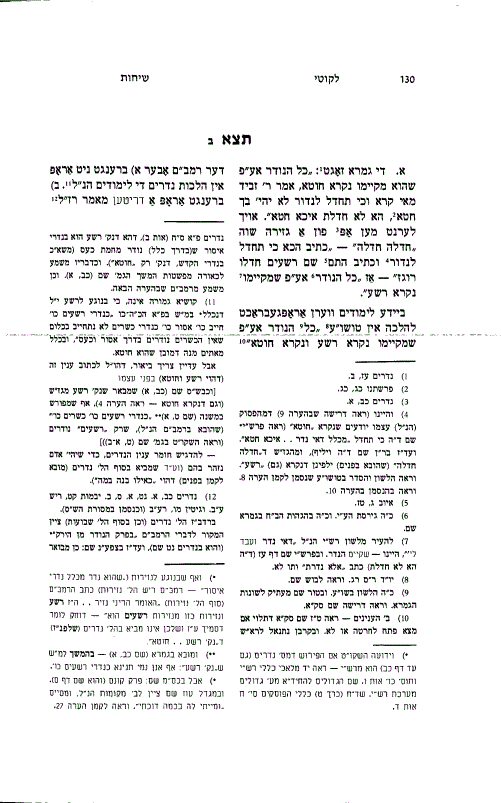
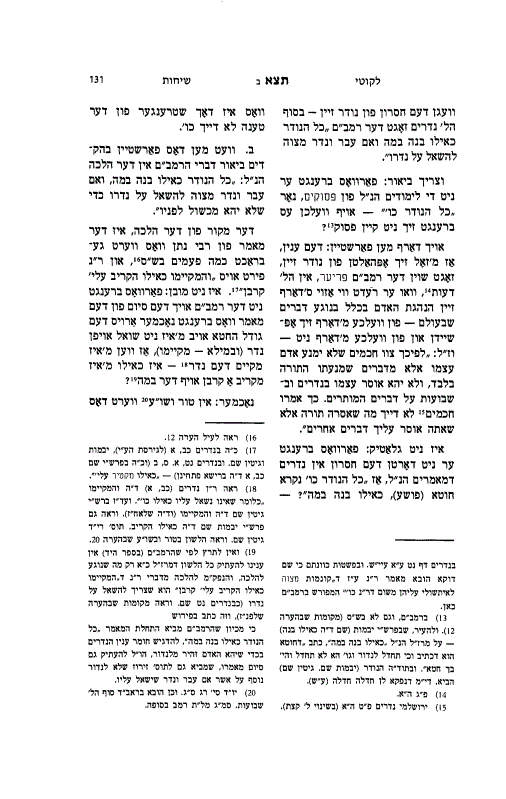
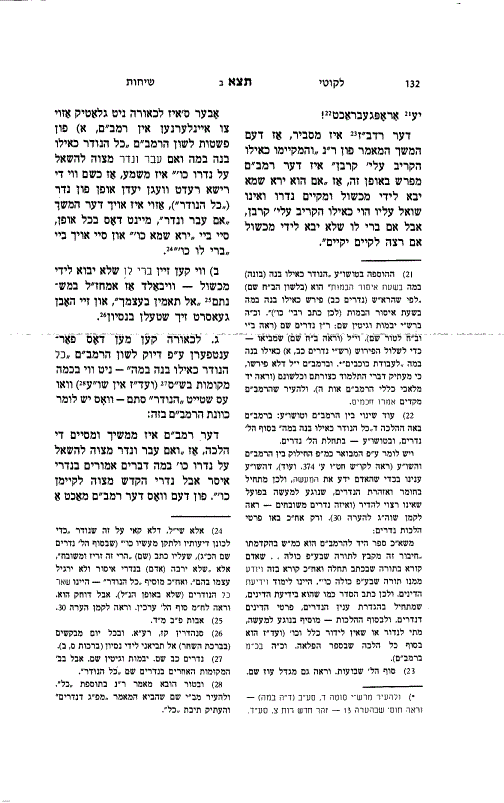
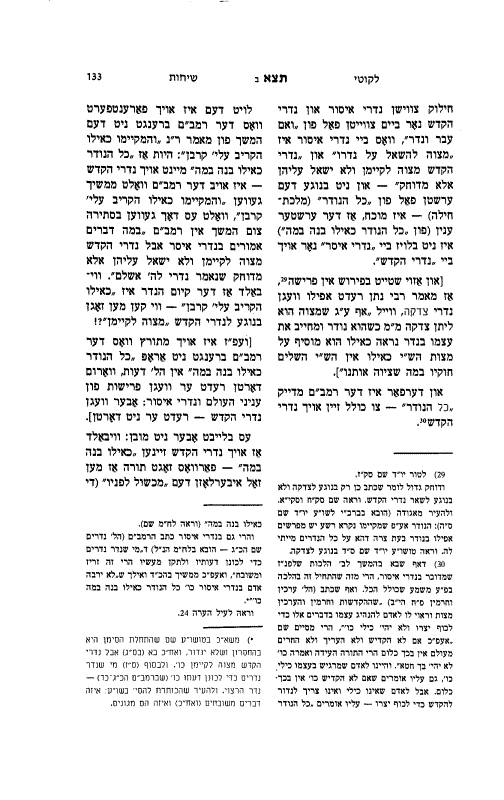
“Anyone who makes a vow is as though he built a private altar. If he transgressed and made a vow, it is a mitzvah to seek release from his vow, so that there should not be a stumbling block before him.”
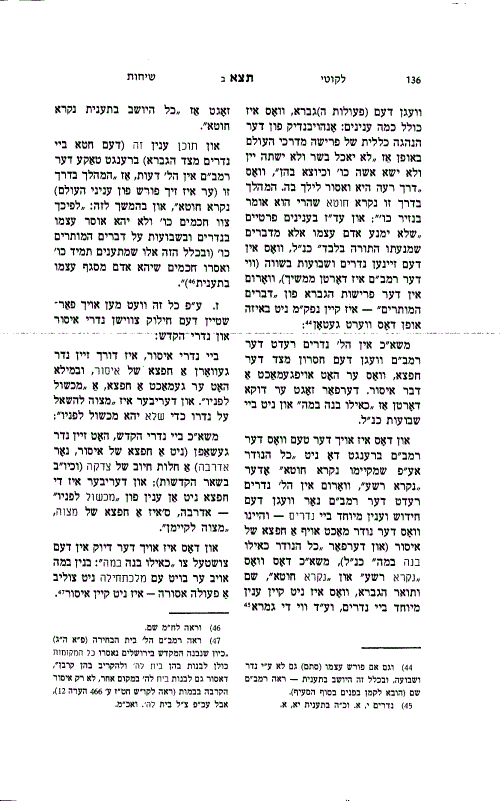
It must be understood why the Rambam changes the wording of his source — the statement of Rabbi Nosson in the Gemara — where the conclusion is, “and one who fulfills it is as though he offered a sacrifice upon it.”
Also, why does the Rambam not cite the other teachings brought in the Gemara: “If you refrain from making vows, there will be no sin in you,” and that one who vows “is called wicked and is called a sinner”?
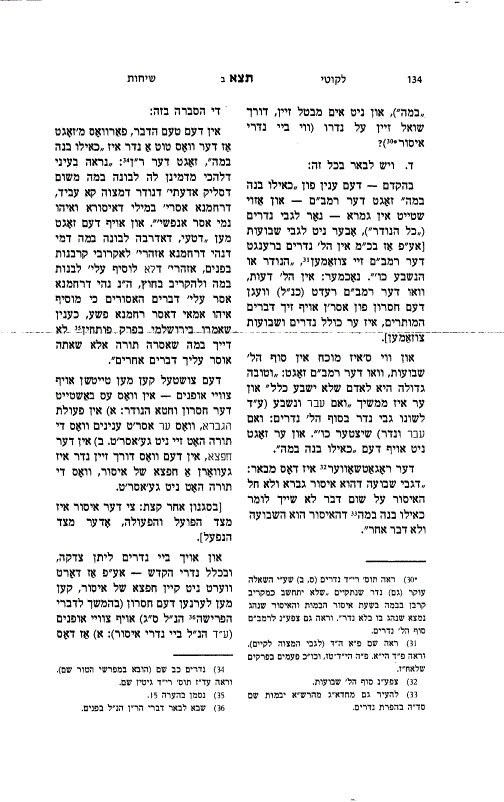
The explanation can be understood by first noting that the Rambam brings this teaching specifically in connection with vows, and not regarding oaths. By doing so, he emphasizes that the subject here is the cheftza, the object itself: through a neder, a prohibition takes effect upon the object. This is unlike a shevuah, which, as the Rogatchover explains, is an issur gavra, a prohibition upon the person, and therefore the expression “as though he built a private altar” is not applicable to it.
This is also why the Rambam says, “so that there should not be a stumbling block before him,” rather than, “so that he should not come to stumble,” or a similar expression. The emphasis is that the object itself is a stumbling block. By contrast, the wording “so that he should not come…” would refer to the gavra, the person.
For this reason, the Rambam does not quote the Gemara’s expression, “he is called a sinner,” because in the Gemara the emphasis is on the person, whereas the Rambam is emphasizing the object, as explained above.
Accordingly, the conclusion of the halachah can also be understood:
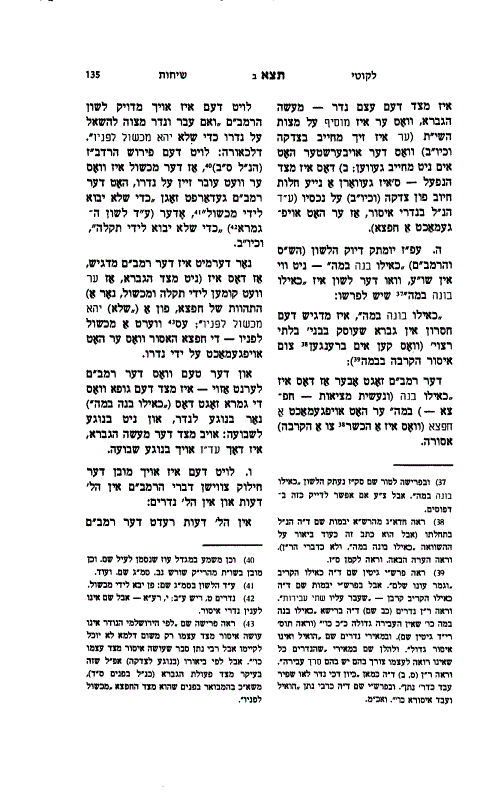
“When does this apply? To vows of prohibition. But vows of hekdesh are a mitzvah to fulfill, and one should not seek release from them except under pressing circumstances, as it is stated, ‘My vows to Hashem I will fulfill.’”
At first glance, fulfilling vows of hekdesh is also comparable to offering a sacrifice on a private altar — which would seemingly be undesirable. Why, then, should one “not seek release from them”?
The explanation is that with vows of prohibition, an object of prohibition is created — comparable to a private altar. With vows of hekdesh, by contrast, the opposite is true: the object becomes an object of mitzvah.
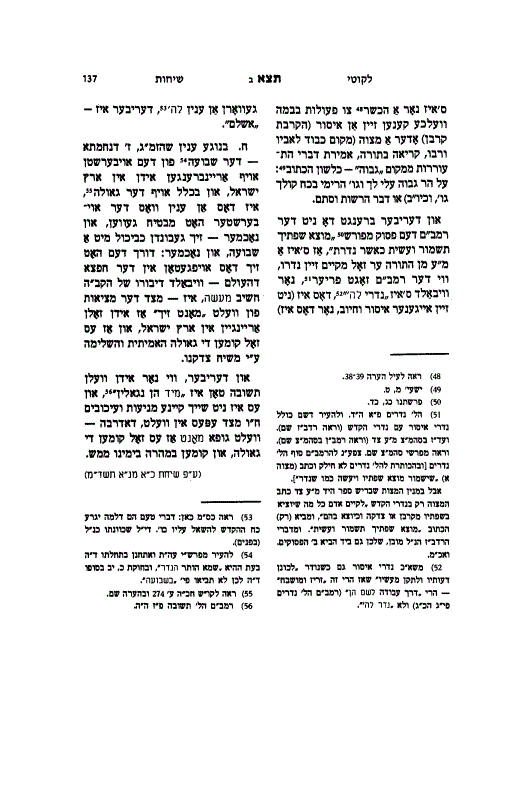
Accordingly, we can also understand the Rambam’s wording in Hilchos De’os. There he is discussing the conduct of the person — the gavra — and therefore he says, “He should not prohibit things to himself through vows and oaths,” including oaths as well. For in Hilchos De’os the emphasis is on the person’s conduct.