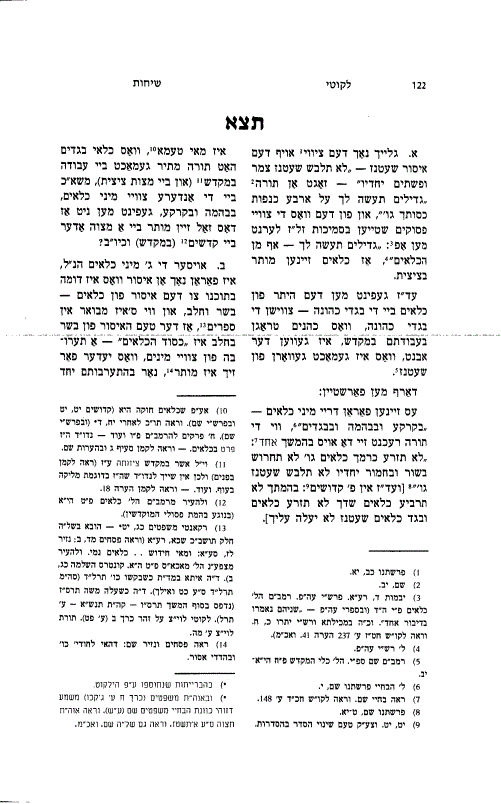
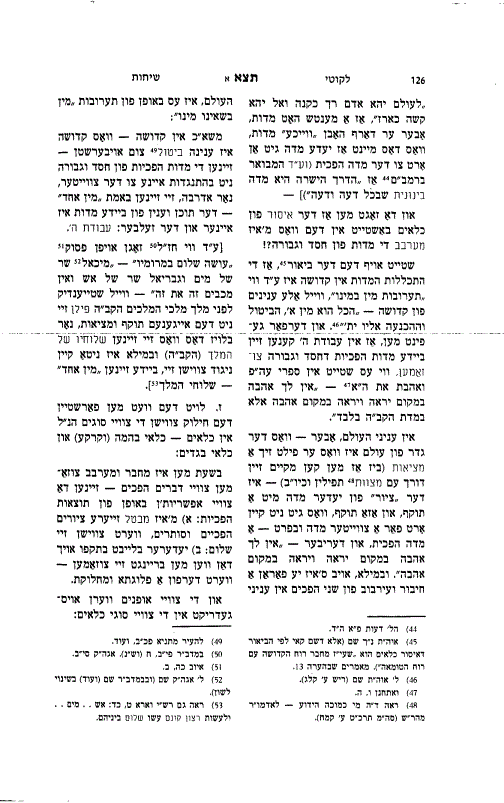
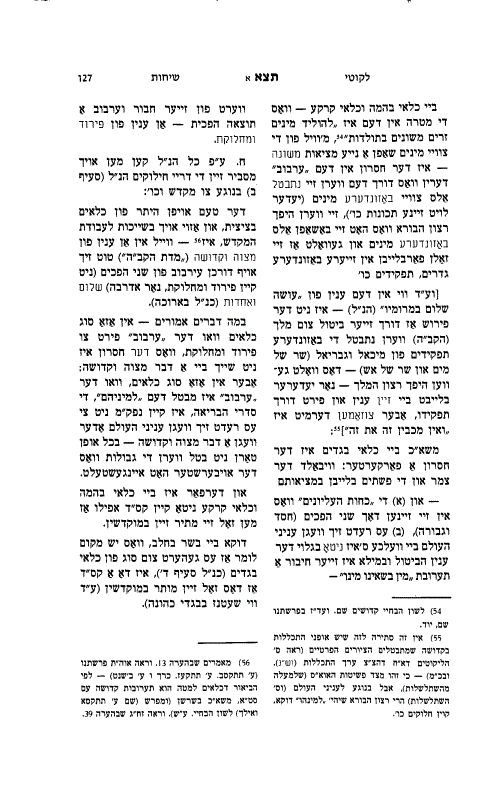
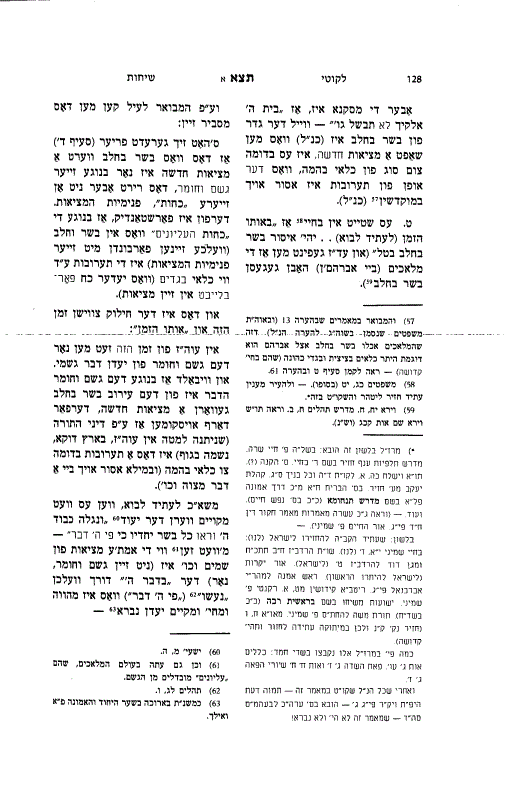

The Gemara states in Yevamos that from the fact that the Torah says, “You shall not wear shaatnez…” and immediately afterward says, “You shall make fringes for yourself…,” we learn that tzitzis may be made from kilayim. The garments of the Kohanim were likewise made with kilayim.
It must be understood: Why do we not find that kilayim involving animals or kilayim involving plants is permitted for the sake of a mitzvah? And why, regarding meat and milk, does the Mechilta entertain the possibility that meat and milk might be permitted for the sake of a mitzvah, and only from the juxtaposition of “The first… you shall bring to the House of Hashem your G‑d” with “You shall not cook a kid in its mother’s milk” do we learn that meat and milk is forbidden even in connection with a mitzvah?
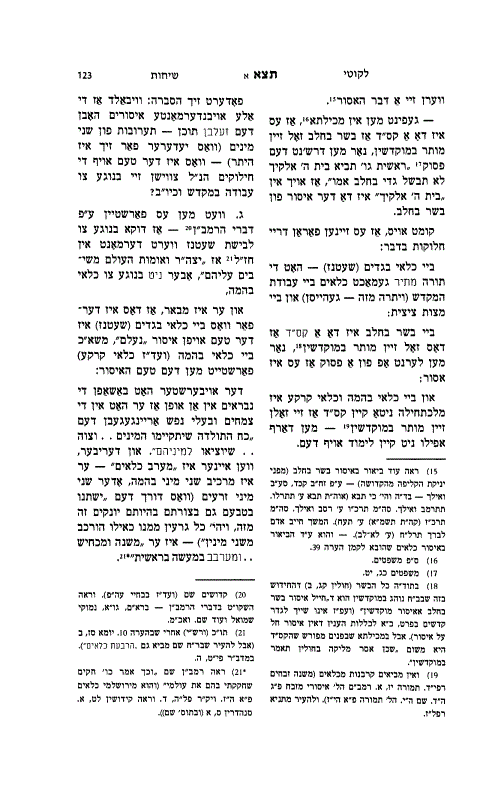
This can be understood by first considering the Ramban’s explanation of the difference between kilayim in clothing — regarding which the nations challenge us because the reason for its prohibition is hidden — and kilayim involving animals and plants, whose prohibition can be understood intellectually.
Kilayim involving animals and plants contradicts the order of creation established by Hashem, in which every species reproduces “according to its kind.” Therefore, the reason for their prohibition is apparent.
Kilayim in clothing, by contrast, involves only a joining together of two things; it does not alter reproduction.
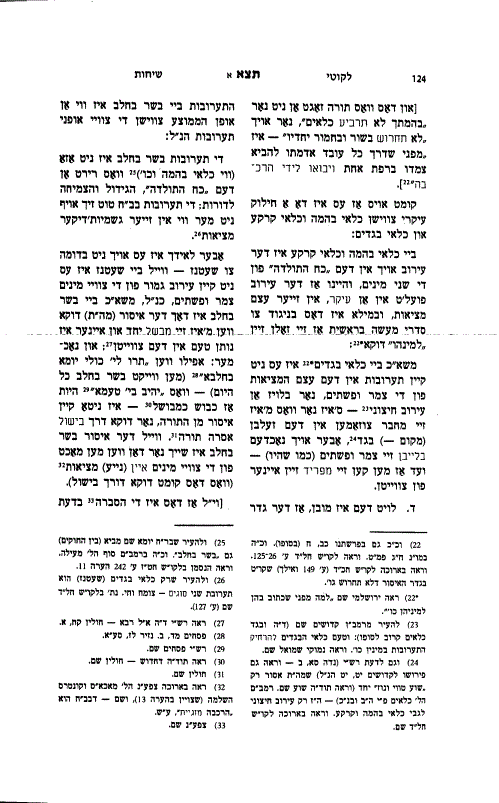
This explains why meat and milk is an intermediate category between kilayim in clothing and kilayim involving animals and plants. On the one hand, meat and milk does not change the reproductive nature of the species. On the other hand, it is not merely a joining of two separate species, as with kilayim in clothing, because through cooking the previous state is changed and a new entity is created.
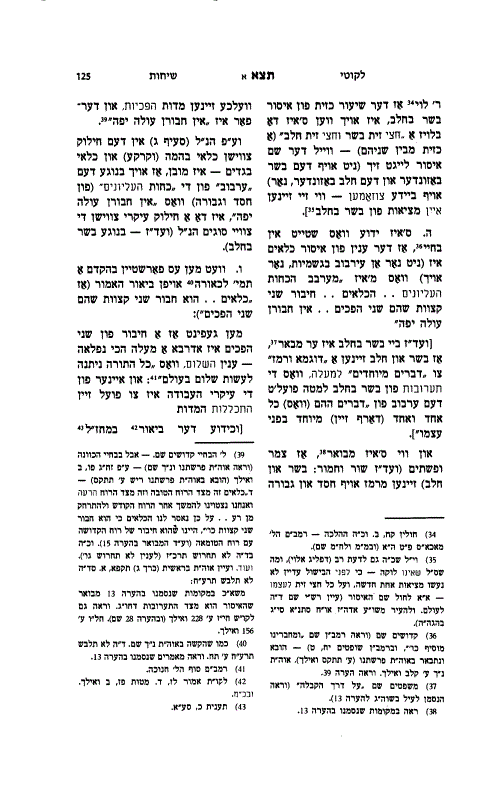
The Bachya explains that the reason for the prohibition of kilayim is that the two species represent two supernal forces — chesed and gevurah — which cannot intermingle.
Therefore, specifically in holiness, where there is bittul, chesed and gevurah can be integrated, because they are “the same kind” — everything is batel to Hashem. Thus, kilayim can be permitted for a mitzvah.
In worldly matters, however, where this bittul is absent, it is regarded as the joining of unlike kinds, and therefore kilayim is forbidden.
This is why kilayim involving plants and animals remains forbidden even in matters of mitzvah. Kilayim of plants and animals nullifies the identity of the species through the effect of the mixture, namely, “to produce strange and altered species in their offspring.”
Kilayim in clothing, however, does not change the species themselves. Therefore, in matters of holiness these two forces can be joined, because their joining produces peace and unity.
And regarding meat and milk, since there is a possibility that it belongs to the category of kilayim in clothing, there is likewise a possibility that meat and milk might be permitted in connection with kodshim.
The Bachya further states that in the future the prohibition of meat and milk will be nullified.
It may be said that the reason is that in the present era only the external dimension is revealed. Therefore, it appears that through cooking, meat and milk become a new entity.
In the future, however, when the inner dimension is revealed, the true reality of meat and milk — the spiritual forces within them — will be seen, and the joining of those spiritual forces is an expression of peace.