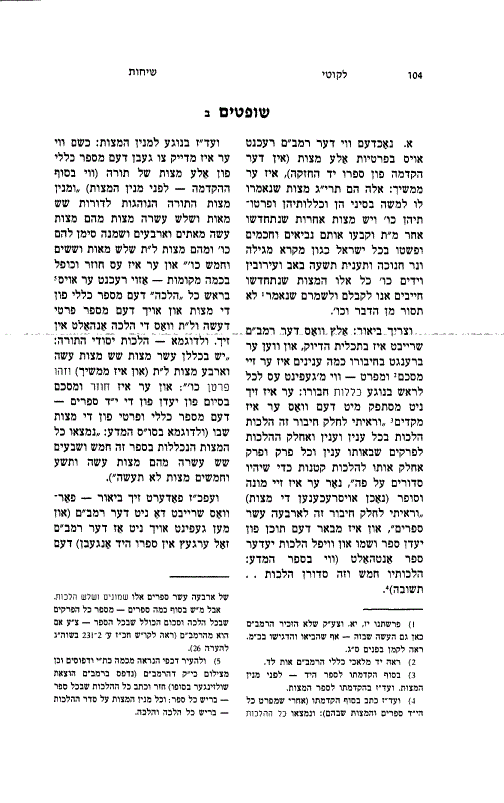
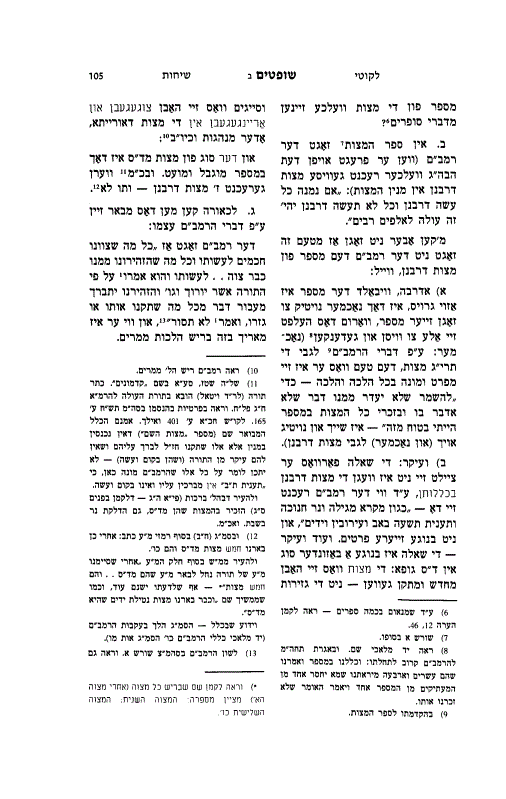
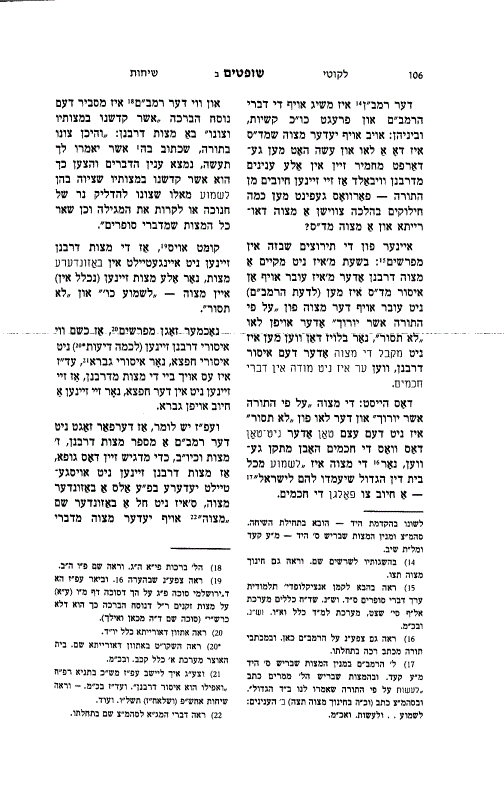
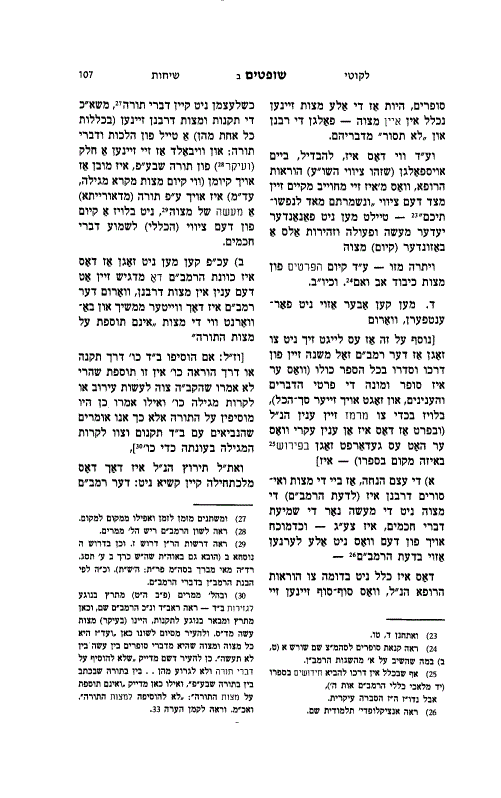
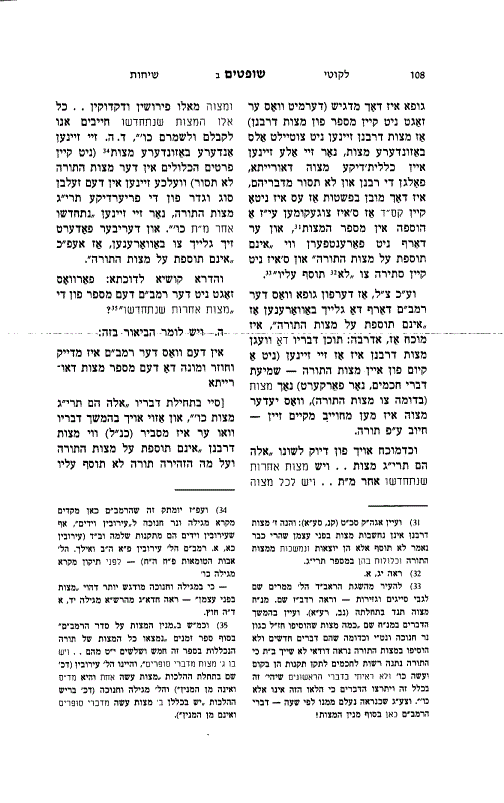
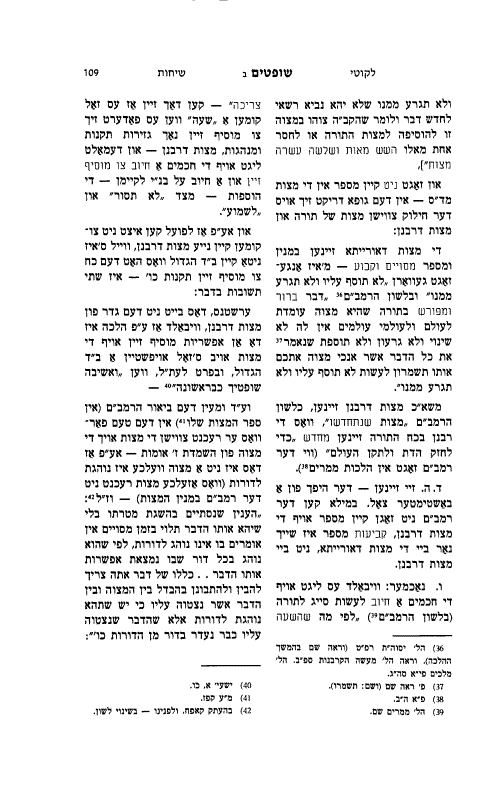
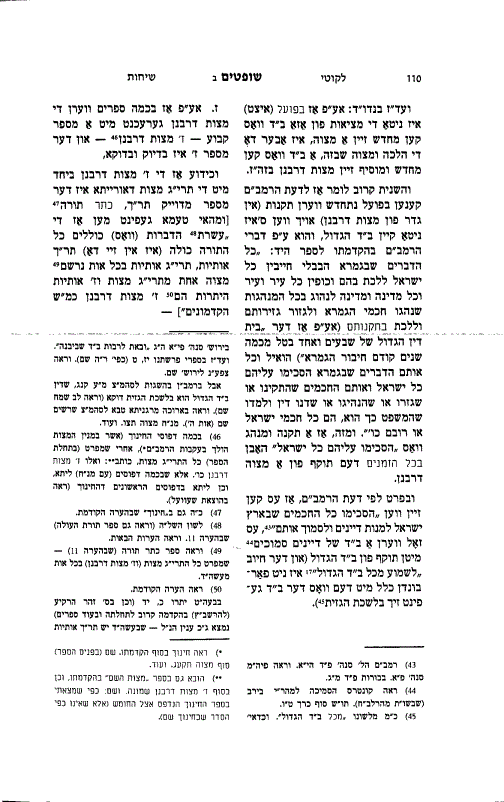
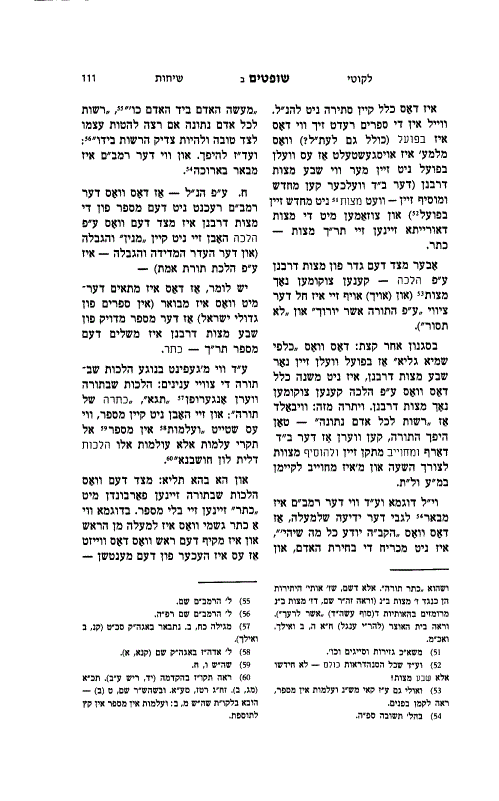
We must understand why the Rambam, in his Mishneh Torah, does not count the number of Rabbinic mitzvos, as he does with the Torah commandments, whose number he states several times—at the beginning of the work and at the beginning and conclusion of the various sections.
The explanation is as follows:
The Torah commandments have a fixed and specific number. As the Rambam emphasizes, “There is no subtraction from it and no addition to it.”
Rabbinic mitzvos, however, are different. Although in practice there are seven Rabbinic mitzvos, it may be said that according to the Rambam there remains the possibility that an additional Rabbinic mitzvah could be instituted if the entire Jewish people were to accept it upon themselves.
This is especially understandable according to the Rambam’s view that all the sages in Eretz Yisroel could renew semichah. Accordingly, the number seven is not inherently fixed and final.
One might argue that before Heaven it is already known that there will in fact be only seven Rabbinic mitzvos. This is why it is explained that the 613 Torah commandments together with the seven Rabbinic mitzvos equal 620—the numerical value of Kesser, and corresponding to the number of letters in the Ten Commandments.
Nevertheless, this does not alter the essential definition of Rabbinic mitzvos.
Their very nature allows for the possibility of additional enactments. Therefore, unlike the 613 Torah commandments, their number is not intrinsically fixed and absolute.