On the verse:
"Their meal offerings and their libations for the bulls..." (Numbers 29:19),
Rashi comments:
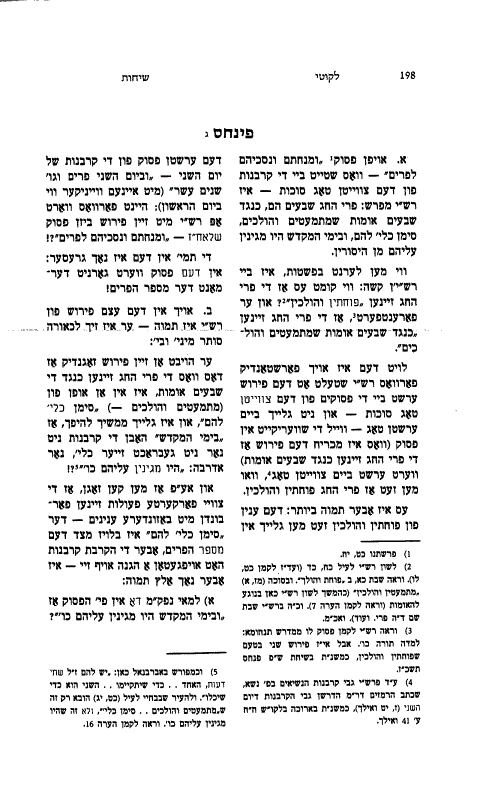
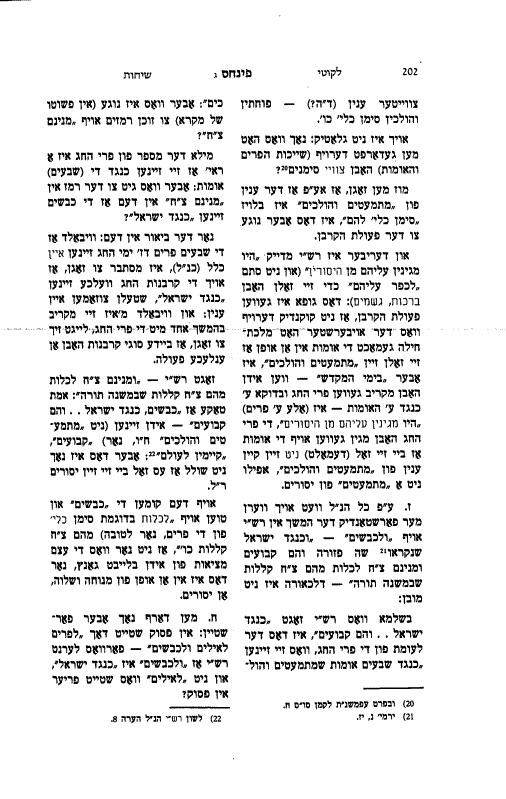
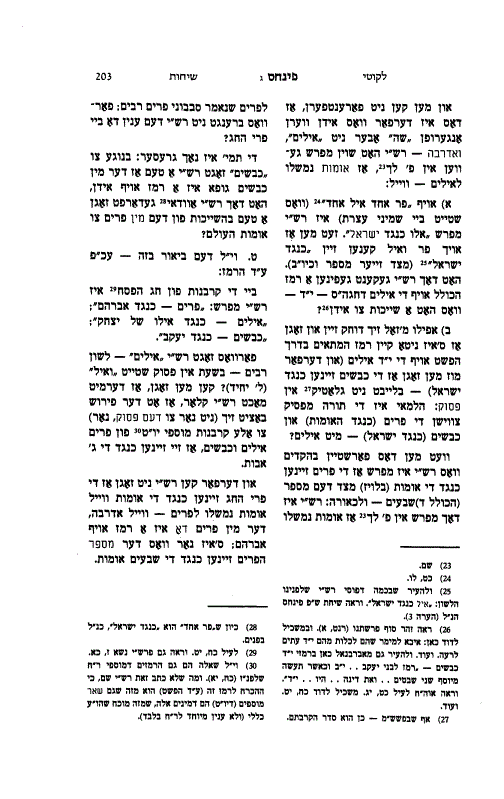
"The bulls offered during the festival total seventy, corresponding to the seventy nations. Their number decreases day by day, symbolizing the eventual decline of the nations. Yet, while the Beis HaMikdash stood, these offerings protected them from suffering."
This requires explanation.
Why does Rashi not explain the significance of the decreasing number of bulls on the second day of Sukkos, when it first becomes apparent that the number is decreasing?
Why does he wait until the second occurrence of the verse "their meal offerings...", where the Torah does not even mention the number of bulls?
Furthermore, Rashi first explains that the decreasing numbers are "a sign of their destruction," yet immediately afterward says the opposite—that while the Beis HaMikdash stood, these offerings protected the nations from suffering. How do these two ideas fit together?
The explanation is as follows.
On the simple level of the Torah's meaning, there is no need to explain the reason for the number of sacrifices.
It is natural to assume that each day's offerings have their own symbolism, but that symbolism is beyond the scope of the straightforward interpretation.
Therefore, there is initially no difficulty in the fact that each day features a different number of sacrifices.
However, when the five-year-old student reaches the repeated verse:
"Their meal offerings... according to their number, according to the prescribed law,"
a new question arises.
If each day's sacrifices represent a different idea, why does the Torah group them all together under one common formula:
"According to their number, according to the prescribed law"?
This wording suggests that all the sacrifices share a single underlying theme.
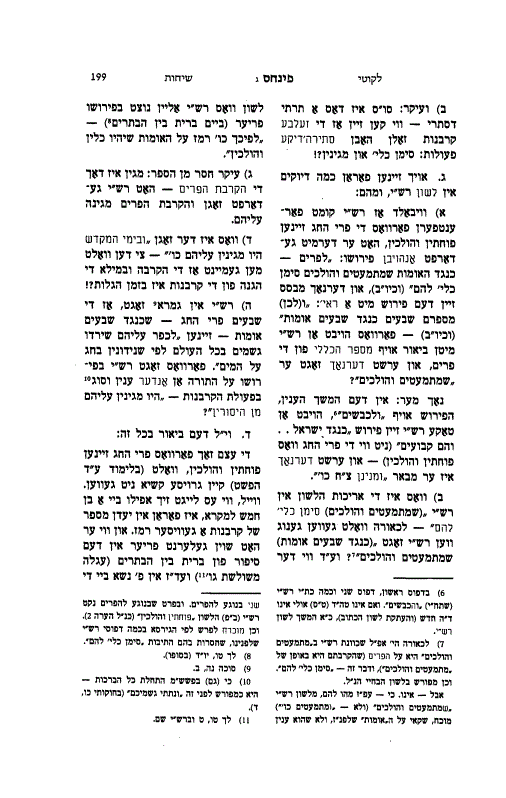
Therefore, Rashi explains that all the bulls together represent one idea:
They total seventy, corresponding to the seventy nations of the world.
Once this is established, another question naturally follows.
If all the sacrifices express one common idea, why does the number decrease each day?
Rashi therefore continues:
"Their number decreases day by day, symbolizing the decline of the nations."
However, this presents another difficulty.
Generally, sacrifices bring atonement or blessing.
How can these sacrifices symbolize destruction?
Rashi therefore explains:
"While the Beis HaMikdash stood, they protected the nations from suffering."
The symbolism of destruction does not arise from the sacrifices themselves.
Rather, it relates to the seventy nations, whose very number alludes to their eventual decline.
The function of the sacrifices was precisely the opposite:
They protected those nations from the suffering associated with that destiny.
Rashi then continues:
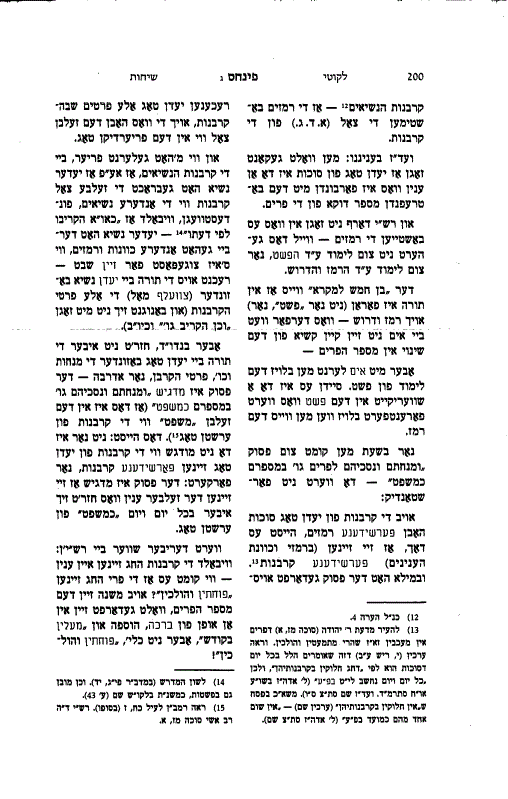
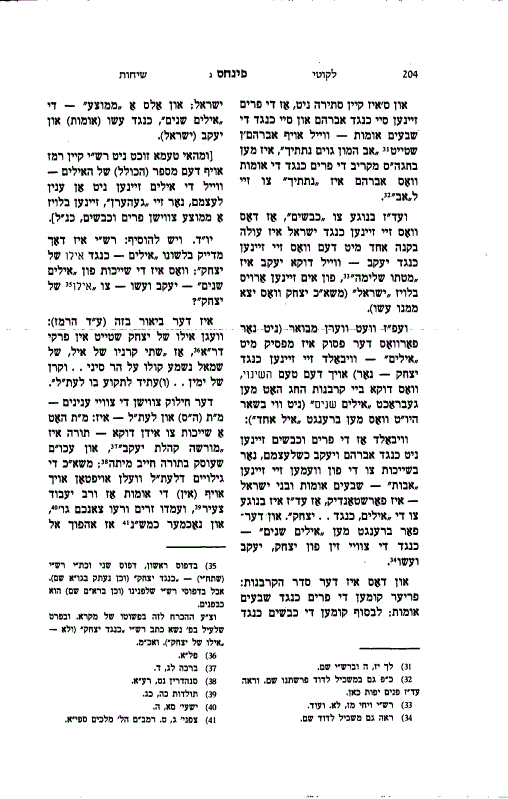
"The sheep correspond to the Jewish people, who are called 'a scattered sheep,' and their total number is ninety-eight, corresponding to the ninety-eight curses in Mishneh Torah, to remove them from Israel."
Just as all the bulls together express one unified theme—protecting the nations from suffering—so too all the sheep together express one unified theme:
To remove the ninety-eight curses of Devarim from the Jewish people.
A further question remains.
The verse says:
"For the bulls, for the rams, and for the sheep."
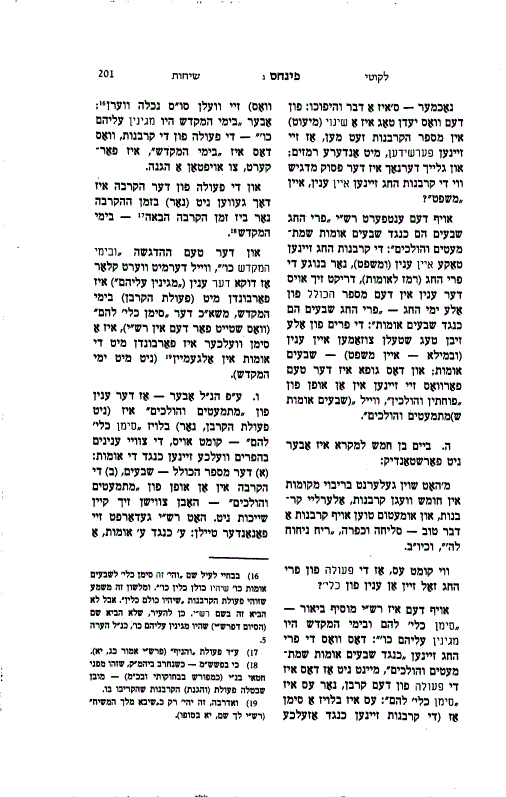
Why are the rams mentioned between the bulls, which correspond to the nations, and the sheep, which correspond to Israel?
The explanation follows Rashi's interpretation of the festival offerings of Pesach.
The bulls correspond to Avraham, concerning whom Hashem said:
"The father of a multitude of nations."
Since Avraham is the spiritual father of many nations, the seventy bulls correspond to the multitude of nations associated with him.
The two rams correspond to the descendants of Yitzchak:
Yaakov and Esav.
Finally, the sheep correspond to the Jewish people, who descend from Yaakov, whose offspring were entirely righteous, for only the tribes of Israel came from him.
Wine of Torah
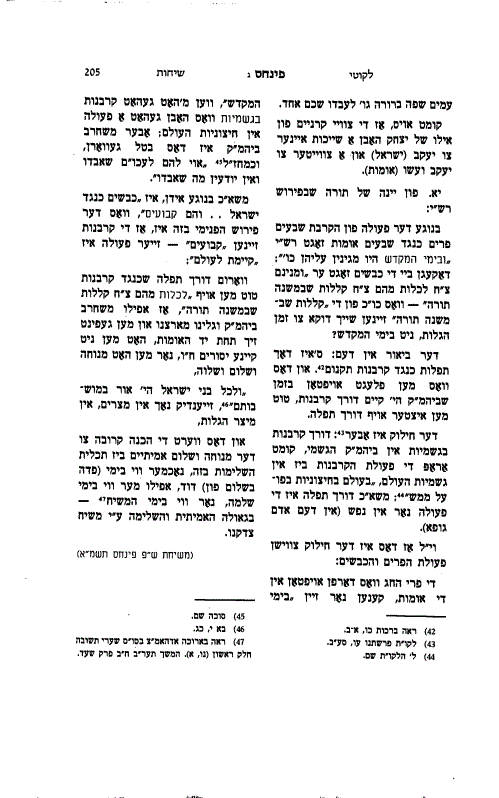
The physical sacrifices offered in the Beis HaMikdash protected the nations only as long as the physical Temple stood.
The spiritual effect represented by the ninety-eight sheep, however, continues even during exile.
Although the Temple no longer stands, the inner effect of the sacrifices remains through prayer, for the daily prayers were instituted in place of the sacrificial offerings.
Thus, even today, through prayer, the spiritual power of the Temple offerings continues to remove the effects of the ninety-eight curses and bring blessing to the Jewish people.