Likkutei Sichos Vol. 19 – Ha'azinu 1
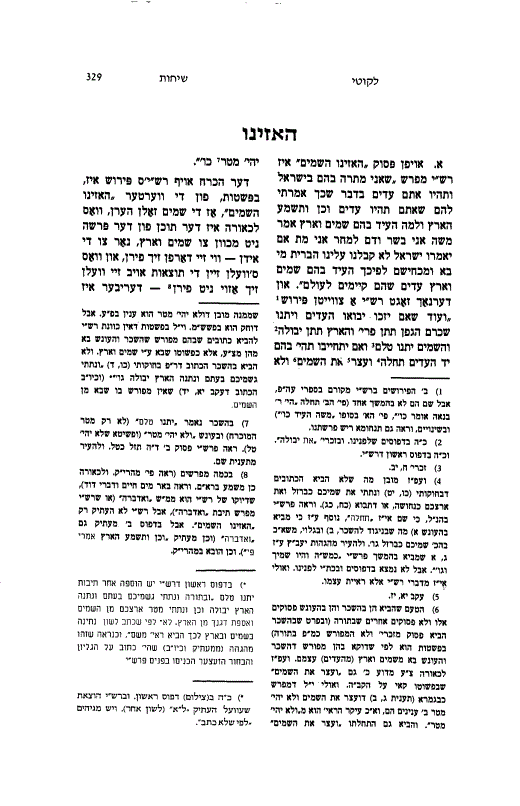
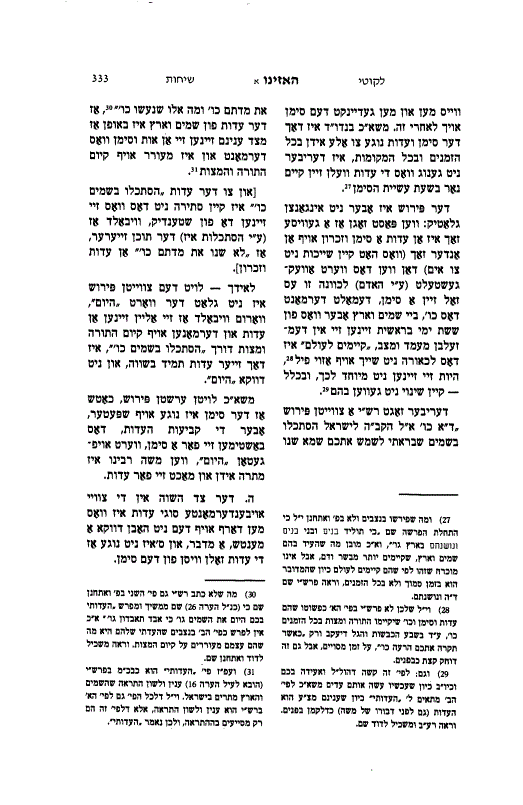
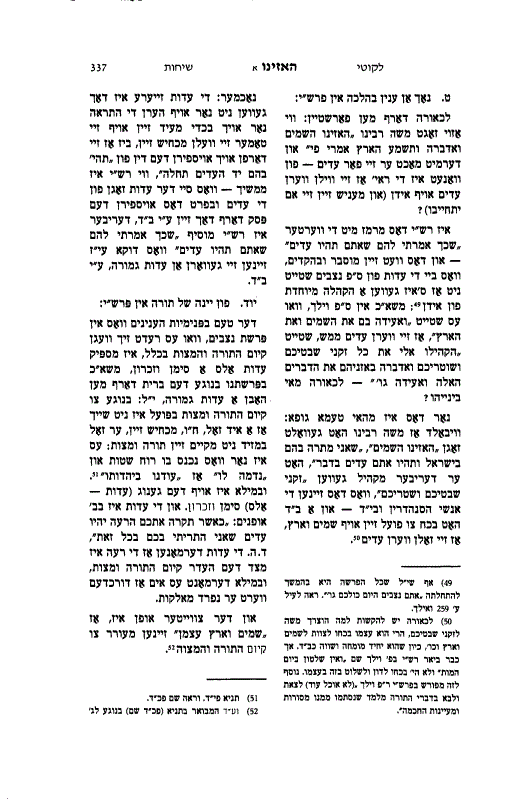
1. At the end of the parsha, it is recounted, "And the L‑rd spoke to Moses on that very day, saying: Go up to this mountain of Abarim, Mount Nebo, etc., and die on the mountain, etc." Rashi focuses on the words "on that very day" and explains that "on that very day" is mentioned in three places. He brings down the other two instances where this phrase is used: at the entrance of Noah into the ark ("on that very day Noah came, etc.") and at the Exodus from Egypt ("on that very day the L‑rd brought, etc."). Just as in those instances, it means that the contemporaries of Noah and the Egyptians said, "If we feel it, we will not let him enter the ark," and "we will not let the Jews leave Egypt," as Rashi elaborates on the details. The Holy One, blessed be He, said, "I will bring him in at midday, and whoever has the power to protest, let him protest."
Similarly, regarding the passing of Moses, the Jews said, "We will not let him go". The Holy One, blessed be He, said, "I will bring him in at midday, etc."
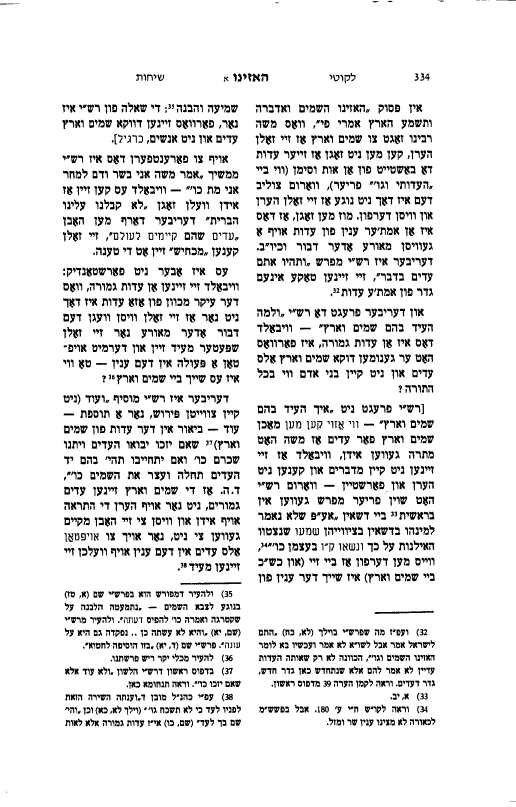
The reason Rashi needs to seek an explanation for "on that very day" is straightforward, as the words seem superfluous. It is already stated at the beginning of the matter (in Parshas Vayeilech) "I am one hundred and twenty years old today," and since he passed away on that day, it is understood that everything that happened afterward was on "that very day." And if it is because of "on that very day"—what difference does it make?
Therefore, Rashi says that this hints that the Jews did not want to allow this (the passing of Moses), and in response, the Almighty said, "I will bring him in at midday, etc."
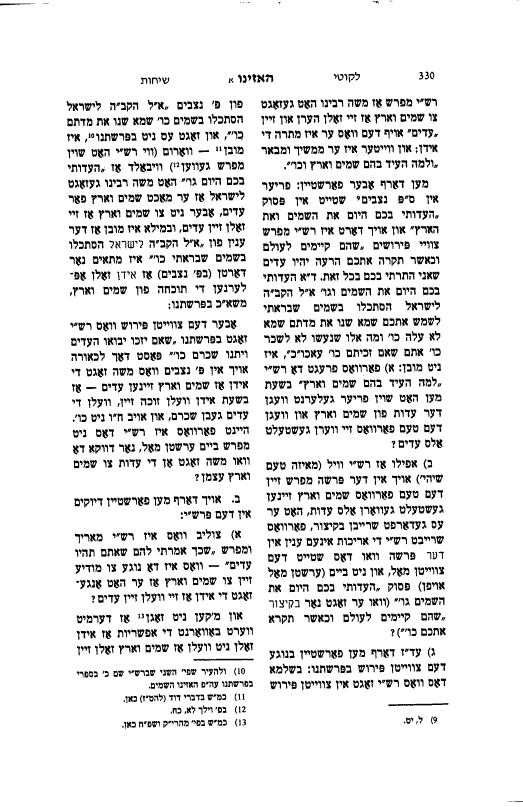
However, we need to understand:
a) It is understandable that the contemporaries of Noah could think they had the power to prevent Noah's entry into the ark:
2. Similarly, the Egyptians could convince themselves that they would not allow the Jews to leave Egypt, since they were the majority. But how is it conceivable that the Jews could think they could prevent the passing of Moses, something entirely not in the hands of flesh and blood?
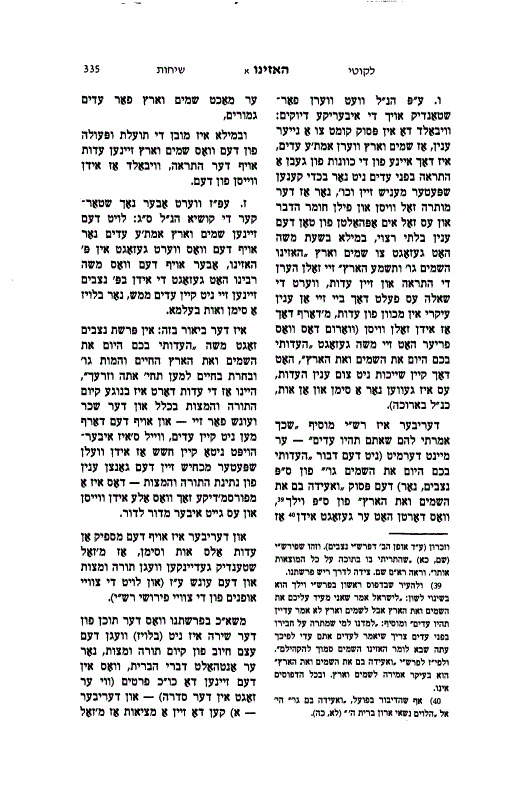
3. Why does Rashi need to explain here that "in three places it is said 'on that very day'" (and furthermore, bring the entire elaboration related to the other two places)? He should have simply explained the straightforward meaning of the verse—only our verse (that the Jews did not want to allow the passing of Moses, "The Holy One, blessed be He, said, etc."), especially since he does so in his commentary on the words in Parshas Noach, where he explains, "The verse teaches that the people of his generation, etc., the Holy One, blessed be He, said, 'I will bring him in the sight of all, etc.,'" and does not bring an example from another place (that this is the meaning of "on that very day").
Moreover, all the more so, if the first time he explains the words in this way he does not need an example or proof, how much more so the third time!
Furthermore, in Parshas Bo, Rashi does not explain at all on the verse "on that very day the L‑rd brought"—the simple reason is that he relies on his explanation
in Parshas Noach; so why here, in our description, does he need to explain what the verse means with "on that very day" (and even with examples and proofs and at length)?
We must say that in our verse, the explanation is not straightforward, but since we find this explanation on the same words in other places, it is proof that also in our verse, the explanation is the same.
[Therefore, Rashi is precise to say (after bringing the examples from Noach and Egypt) "also here, etc."—not like in the Sifrei, the source of this Rashi, where it states "and what did he see to say here, etc."—to emphasize that only after we find that this is the explanation by Noach and Egypt, "also here" the explanation is the same.]
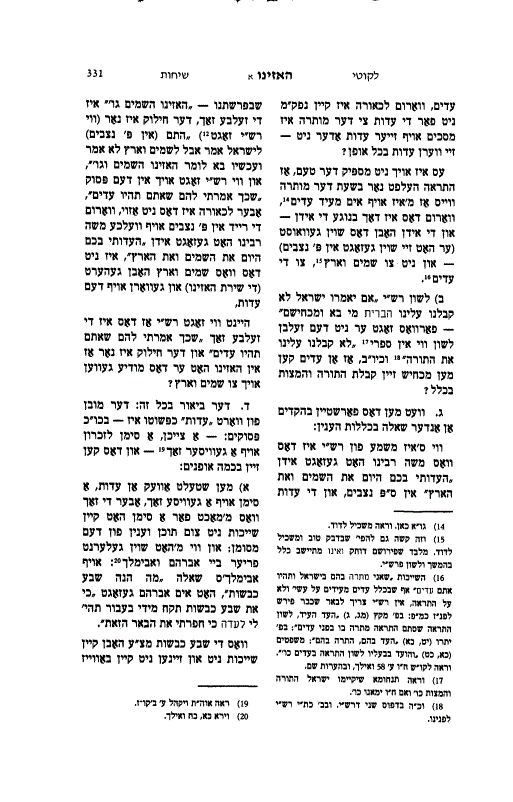
2. Additionally, there are several nuances in Rashi's language, and some of them are as follows:
a) In the cases of Noach and Egypt, Rashi does not provide reasons why the people of Noach's generation and the Egyptians said, "We will not allow, etc." This is because it is self-evident. However, regarding Moshe, Rashi does explain the benefits that Moshe provided for the Jews, which led them to say, "We will not allow him." Why is it not obvious and straightforward that the Jews would not want Moshe's death?
b) In the cases of Noach and Egypt, Rashi does not suffice with stating that they said, "We will not allow, etc." (as in our case), but he adds: regarding Noach, "Moreover, we will take axes and hatchets and break the ark," and regarding Egypt, "Moreover, we will take swords and weapons and kill them." This means that not only would they not allow the entry and exit, etc., but they would also nullify the possibility of entry and exit ("break the ark," "kill them").
c) What is the reason that in this addition itself, "Moreover, we will take, etc.," Rashi mentions two details (both for Noach and for Egypt): for Noach — (1) axes (2) and hatchets; for Egypt — (1) swords (2) and weapons?
d) In the cases of Noach and Egypt, Rashi brings the entire conclusion (from "G‑d said, etc.") "And whoever has the power to protest, let him come and protest," whereas in our case, he only writes, "G‑d said, I will bring him in the middle of the day (and continues) etc." Seemingly: since in Egypt Rashi writes the conclusion explicitly (not relying on what he said earlier regarding Noach), why here does he only hint at it with "etc."? Either in both cases, he should write "etc.," or in both cases, he should conclude explicitly.
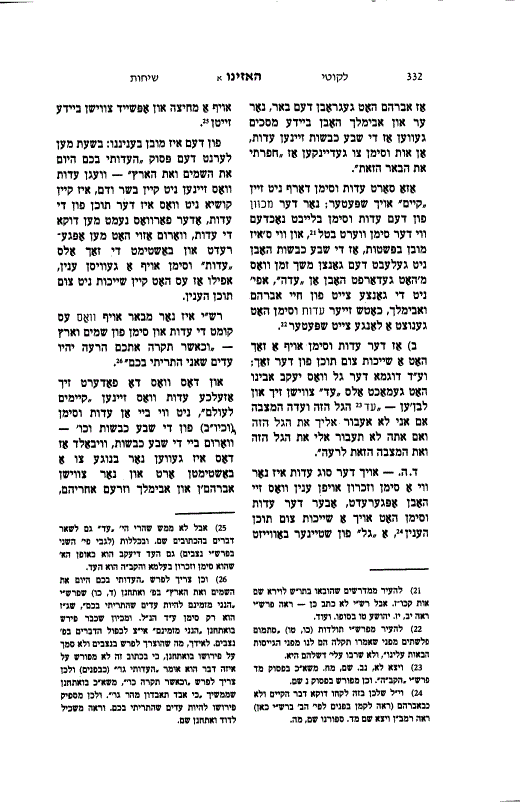
e) When Rashi enumerates the benefits that Moshe Rabbeinu did for the Jews, why does he specifically choose these benefits: "He took us out of Egypt, split the sea for us, brought down the manna for us, provided the quail for us, brought up the well for us, and gave us the Torah"? During the forty years that the Jews were in the desert, Moshe Rabbeinu did many other benefits for the Jews (for example: sweetening the bitter waters at Marah, conquering the land of Sichon and Og, etc., etc.).
f) Furthermore: in the Sifrei here, it also states "and performed miracles and mighty deeds for us" — why does Rashi omit this?
[To explain: although Rashi's language — which contains the above nuances — is taken from the Sifrei, since Rashi explains according to the simple meaning of the text, and especially since Rashi does not indicate here that the explanation is from the Sifrei, we must say that all these nuances clarify the simple meaning of the verse.]
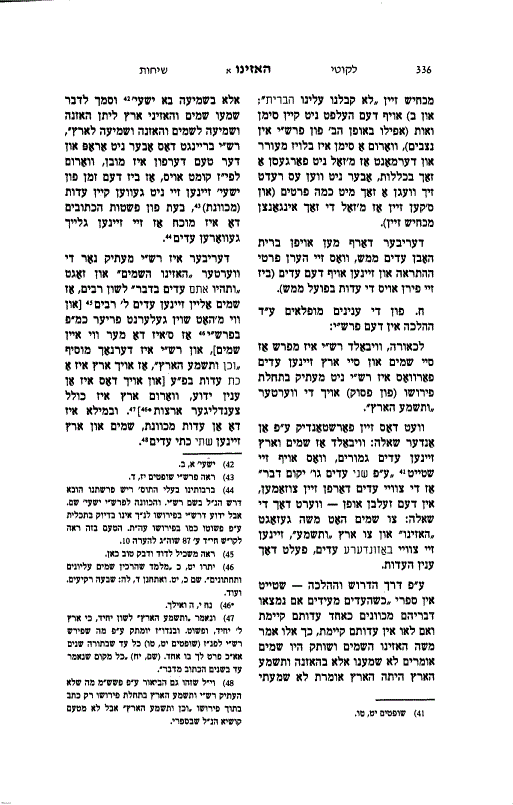
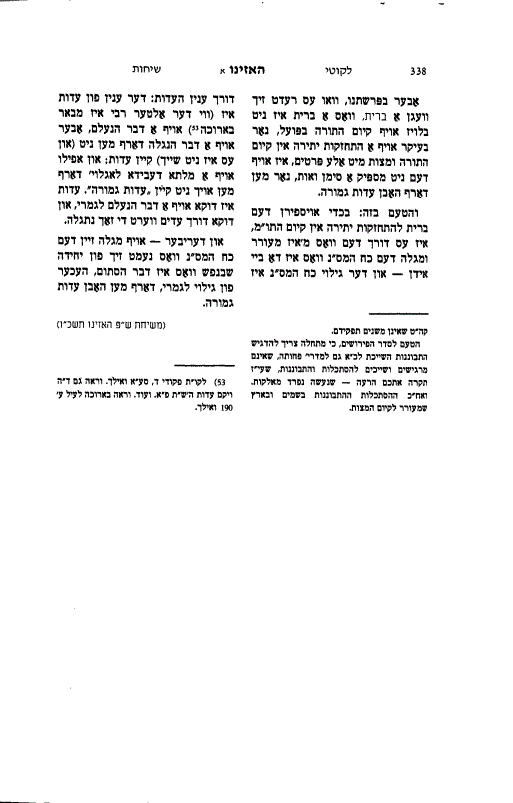
6. The explanation of all the above is as follows: The main point of Rashi's commentary is to clarify the simple meaning of the text. Therefore, when Rashi lists the benefits that Moshe Rabbeinu did for the Jews, he selects those that are directly relevant to the context of the verse. The verse in question speaks about the kindnesses that Moshe Rabbeinu performed for the Jewish people, and Rashi aims to highlight those that are most pertinent to the simple understanding of the text.
Rashi's choice to list specific benefits, such as taking the Jews out of Egypt, splitting the sea, bringing down the manna, providing the quail, bringing up the well, and giving the Torah, is because these are the primary and most significant acts that Moshe Rabbeinu performed for the Jewish people. These acts are directly related to the survival and spiritual elevation of the Jewish people during their time in the desert.
Moreover, Rashi's omission of "and performed miracles and mighty deeds for us," as mentioned in the Sifrei, is because these are general terms that do not add to the specific understanding of the verse. Rashi's goal is to provide clarity and specificity, focusing on the direct actions that Moshe Rabbeinu took, which are explicitly mentioned in the Torah.
Thus, Rashi's commentary is tailored to the simple meaning of the text, emphasizing the chronological order of events and the direct impact of Moshe Rabbeinu's actions on the Jewish people, rather than listing them by their importance or including general terms that do not contribute to the understanding of the verse.