Likkutei Sichos Vol. 19 – Vayeilech 3
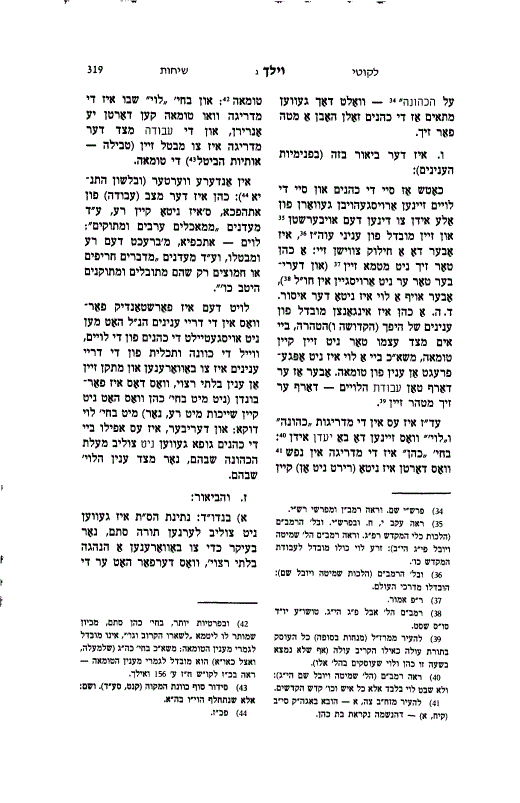
1. In the verse "Give ear, O heavens, and I will speak; and let the earth hear the words of my mouth," where Moses addresses the heavens and the earth to listen, we cannot say that their testimony here consists merely of a sign or symbol (as with "I call heaven and earth to witness against you" earlier), because it is not relevant that they should hear and know about it. We must say that this is a true matter of testimony regarding a certain event or statement, and so forth. Therefore, Rashi explains, "And you shall be witnesses in this matter," indicating that they indeed fall within the category of true witnesses.
And therefore, Rashi asks here, "Why did he call the heavens and the earth as witnesses?" Since this is complete testimony, why did he specifically choose the heavens and the earth as witnesses and not human beings, as is usual throughout the Torah?
[Rashi does not ask "How did he make the heavens and the earth witnesses?" — how can the heavens and the earth be made witnesses, since they are not speakers and cannot hear and understand — because Rashi has already explained earlier in Bereishis regarding vegetation, "Even though it was not said to them explicitly, they understood the command and reasoned by themselves," from which we know that with them (and certainly with the heavens and the earth), the concept of hearing and understanding is applicable. Rashi's question is only why specifically the heavens and the earth are witnesses and not people, as usual.]
To answer this, Rashi continues, "Moses said, 'I am flesh and blood; tomorrow I will die,'" — since it could happen that the Jews will say, "We did not accept this covenant upon ourselves," therefore, there is a need for "witnesses who will exist forever," so they can refute this claim.
However, it is not understood: Since they are complete witnesses, whose primary purpose is not only to know about the statement or event but to later testify and thereby effect an action in this matter — how is this applicable with the heavens and the earth?
Therefore, Rashi adds, "And furthermore (not a second explanation, but an addition — further explanation in the testimony of the heavens and the earth) that if they merit, the witnesses will come and give them their reward, etc., and if they are guilty, the hand of the witnesses will be upon them first, and the heavens will be restrained, etc." This means that the heavens and the earth are complete witnesses, not only to hear the warning to the Jews and to know whether they have fulfilled it or not, but also to act as witnesses in the matter on which they testify.
5. The concept of the heavens and the earth serving as witnesses is further clarified by Rashi's explanation that their role is not merely to observe and testify, but also to actively participate in the consequences of the testimony. If the Jewish people merit, the witnesses will come and reward them. Conversely, if they are guilty, the witnesses will be the first to act against them, as the heavens will be restrained, and the earth will not yield its produce. This dual role of the heavens and the earth as witnesses underscores their completeness in this function, as they are not only passive observers but also active participants in the fulfillment of the covenant.